




Jazzman Gerry Eastman, 78, cooks harder than ever. Every Friday he gigs fast and mean, nimble and soulful, experimental and tender at the Williamsburg Music Center, which he has owned and operated (and lived in) since he bought the building for $50,000, in 1981. Back then the neighborhood was Black and Puerto Rican, and Eastman, composer and virtuoso electric guitarist, was just one of many musicians who owned their own clubs. Now his is the only Black-owned jazz club in Williamsburg (and one of only a few in Brooklyn). But although the neighborhood’s avant-garde music scene has dissolved since the early 2010s (documented in Pratt Institute professor Cisco Bradley’s heavily reported book The Williamsburg Avant-Garde), Eastman continues to rocket into the jazz stratosphere. The sign on the club door says it all: “Attention: Highly Futuristic Music In There.”
You might have heard of Gerry’s older brother, Julius Eastman (1940–1990), whose minimalist (maximalist?), funky, and provocative pieces, such as Gay Guerilla, Evil Nigger, and Stay On It, have only recently earned him superstar status in today’s new music scene. Black and gay, he struggled to find acceptance and make money in the white classical music world, and died in obscurity. The public didn’t even know he was dead until Kyle Gann penned an obituary in the Voice, eight months late.
Today, a Julius Eastman revival is in full swing. In 2018, the sheet-music publishing giant G. Schirmer announced that it would disseminate his music. And ensembles such as Wild Up, which in 2021 embarked on a “multi-volume anthology celebrating Eastman,” have been reconstructing and recording faithful performances of his works. Much of the realization is painstaking and draws from colleagues’ memories of Julius’s live shows, since the city marshall confiscated his written music (and everything else he owned) when, in late 1981–early ’82, he failed to pay rent and was evicted from his East Village apartment, which Gerry had given him. Straddling the line between downtown pulse-music composers such as Steve Reich and Terry Riley and more ramshackle “found sound” experimentalists like John Cage, Julius’s music slaps you in the face and makes you tap your foot.
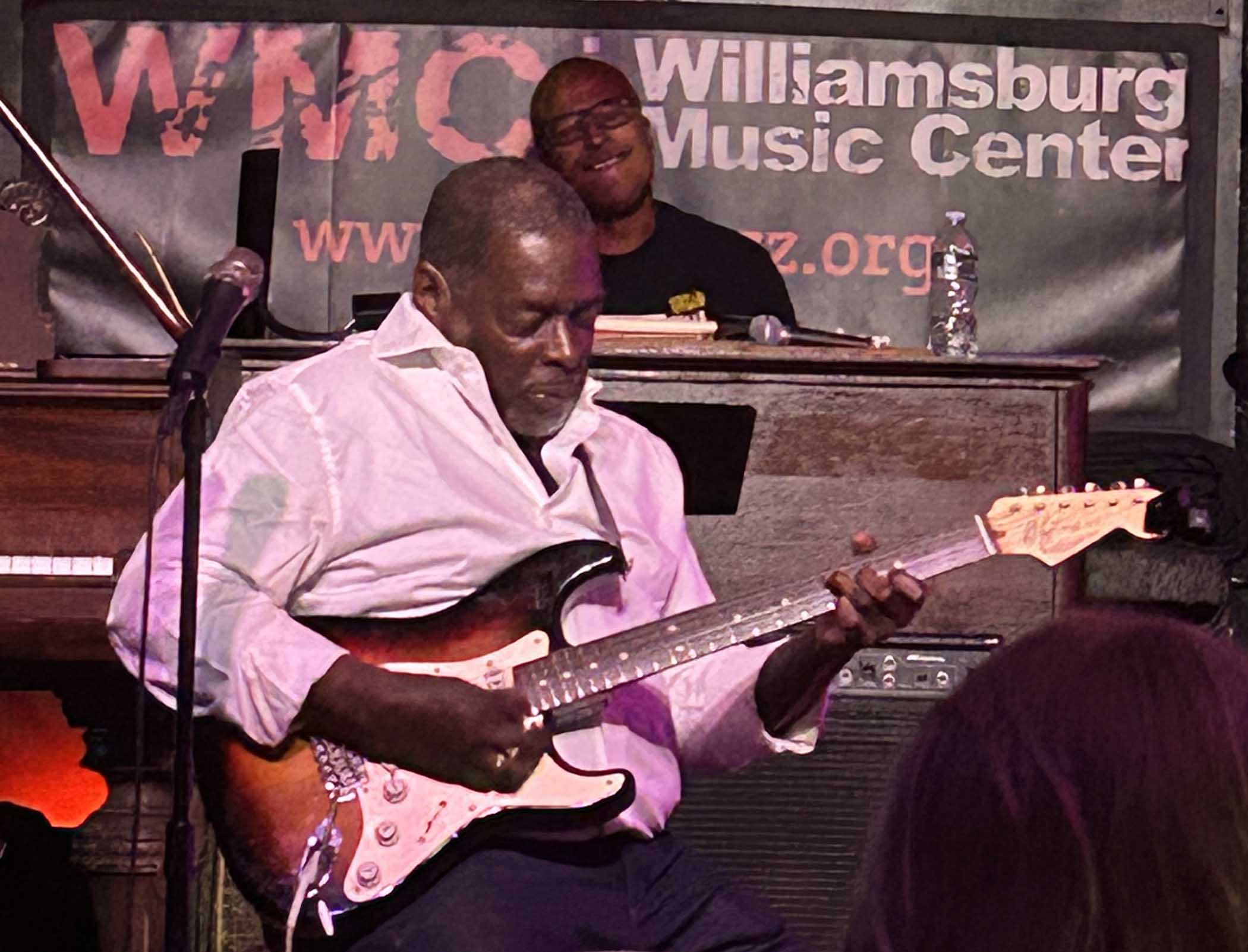
But Julius’s music wouldn’t sound the way it does without Gerry. In the mid-’70s, Gerry and Julius, who grew up in Ithaca, worked together in Buffalo at the Tralfamadore Cafe, named after the mythical planet of Kurt Vonnegut’s novels. A sonic laboratory that welcomed string quartets, percussion quartets, poetry readings, and neo-Coltrane free jazz, the Tralfamadore was where they cross-pollinated styles. Julius instilled “a sense of musical freedom” in Gerry, according to one of his album notes, while Gerry’s instinctual jazz made Julius’s affinity for improvisation inevitable. Later that decade, they moved to New York City — Julius struggling in Manhattan, Gerry thriving in Brooklyn and supporting his brother. A tribute to Julius is built into the Williamsburg Music Center: his Weber piano, some of whose keys he would counterweight with lead to increase resistance, rules the stage.
“And you know, even today, people talk about John Cage, but they don’t listen to him.”
Gerry’s sound is a concoction of the spiritual, cosmic Coltrane of A Love Supreme, the romanticism of Nat King Cole, and the ecstatic gospel of Sallie Martin. The first song on his debut record, My Real Self (1986), all instrumental, is at times a veritable free-for-all, but it’s governed by a big-picture pulse. His second album, Native Son (1992), features the moving “Two Sides of Gemini,” which is based on a syncopated theme derived from Coltrane’s titular chant. Gerry Eastman Songbook (1995) is more bluesy, with bass singer Andy Bey sounding like no one I’ve ever heard before — deep, desperate, street-corner chill, amateurish in the best way. The album also has “Prophet of Peace,” an absolute pearl of a semi-improvisatory piece for string quartet that is ripe for revival by today’s ensembles. Throughout Gerry’s work you can hear elements of “Hey Joe” Hendrix, the peaceful Miles Davis of In a Silent Way, and even Duke Ellington’s Big Band boisterousness. Gerry’s most recent album, Trust Me (2021), burns up with his regular bandmates, Greg Lewis (organ) and Taru Alexander (drums), playing as fast and hard as humanly possible.
— • —
In this interview with the Voice (edited for length and clarity), Gerry Eastman talks about his musical upbringing, the making of his sound, and his crucial, lifelong collaboration with his brother.
How’d you grow up?
It was just me, my brother, and my mother. I was around 10 when I started getting interested in music. I had told my mother I wanted some drums, and somehow I ended up with a little three-piece set of drums, which I played for quite a while, as I remember, then drifted to guitar. At some point I must’ve gotten pretty good, because I started working with some of the local jazz musicians in town. From that point on, I was playing all the time — at frat parties and all kinds of stuff.
Something interesting happened: The Isley Brothers came to town. Somebody was late, so I played with them. And that’s when they had their record out, “Twist and Shout.” And I think I was about 16. And they asked me if I wanted to work with them. I said, “Of course!” So, I went home and told my mother. I said, “Listen, these guys came to town and played, and I sat in with them and they want me to play with them.” She says, “Well, where?” I said, “I don’t know, they’re going on tour.” She said, “Well, hell no, you’re in high school!” And probably two or three years later, Jimi Hendrix was playing with them. So I always wondered what would’ve happened if I had of gone. But I’m glad I didn’t.
Were your parents musical?
My mother played piano. And in my father’s family, there were musicians. There were a lot of artists in the family. The family has a lot of genius in it. My brother was, you know, the darling of the new music scene. I’ve played with almost everybody I’ve ever wanted to play with in the jazz world — Count Basie, Sarah Vaughan, countless others.
How did you get involved with Count Basie?
I replaced Freddie Green when he died [in 1987]. Frank Foster was directing the band at the time, and I had played guitar and acoustic bass in his big band, The Loud Minority. And so when Freddie Green died, [Foster] called me up and said, “Hey, man, we need a guitar player in the Basie Band.” So, I went for a couple of years. But they just wanted me to play that Freddie Green style. And they didn’t want me to solo! They wanted me to play in the tradition of Count Basie. They just wanted me to play acoustic guitar. I was playing electric when I first started. So they gave me shit for about six months, and then once I had the shit down, they were like, “Yeah, man it’s good! I’m glad you’re here!” And then when I left, they said, “Well, you got the sound down now!” And I said, “Yeah, but this is not me.” But for me, it was like a laboratory.
What brought you to the more experimental side of things?
Well, I was always interested in the new jazz — Coltrane and Miles and all of that shit. That’s where my head was at. And, you know, playing with Julius was the same as if I was playing with [pianist] McCoy Tyner. It was the same kind of situation — the same thing I was trying to do, anyway. Playing with my brother or playing with Frank Foster, it’s just the same.
If you listen to traditional African music, it has no timeline. It’s happening.
You and Julius played together upstate a lot. Were you both playing jazz?
I was playing his music in his ensemble, and he was singing and playing my music in my band. While I was living in Buffalo, I just kind of soared to the top of the game in town. There was a club called the Tralfamadore [Cafe]. And that’s where Julius would always work with me. And that was the only major jazz club in Buffalo at the time. I lived with Julius, worked with him for a couple of years, and did his thing with all those people from the S.E.M. ensemble. I knew all those people — Petr Kotik, and we used to see John Cage and all of that.
And John Cage, what did he think of Julius?
Well, he and Julius didn’t get along because Julius said his shit was bullshit. He did some of John Cage’s shit and he did it way better than John Cage.
Why did he think it was bullshit?
Like, sitting at the piano for 20 minutes and not playing it, and calling that a piece.

Because he was so influenced by jazz?
No, because for the same reason why you hear Julius’s music all over the place and you don’t hear John Cage. Nobody’s playing John Cage’s shit, but they’re playing Julius’s. I just got a check for $50,000 worth of royalties from Julius. And you know, even today, people talk about John Cage, but they don’t listen to him.
I read that John Cage said Julius didn’t have any ideas to express other than being gay.
Look, John Cage can’t say shit about Julius, because Julius could outplay him all day long. There was no competition as a pianist or a composer. He was far more advanced than John Cage. I mean, when it comes to all of those guys, none of those people are making any money. So, let’s just forget about them. Because nobody gives a fucking shit about John Cage, Petr Kotik, any of those people. Mary Jane Leach, and all of those. They’re shit sucks, basically! Intellectually, people don’t get it — they sit at [Cage’s] concerts and listen to it, but they don’t say, “That was great.” You’ve listened to it; it’s almost painful to listen to. And you can’t tell me that you dig it and you snap your fingers to it. So let’s forget about those guys because their shit does not sell. There’s nobody playing that music. Once John Cage was dead, that was the end of people listening to his music. That’s it. Period.
How did Julius’s and your music inform each other?
It had an influence on me because I started doing more free stuff. And I had him write lyrics to some of my songs and he sang them. And when he played with me, he played my music, and when I played with him, I played his music. That’s the way it went. I just wish that he had had a little bit different business sense, that way he could’ve survived the shit during his lifetime. He was depending on that classical world to take care of him, and the classical world is racist.
What do you want people to know about him?
He was not an advocate for gay people. He was just a guy that was not in the closet. Gay Guerrilla — that’s just saying, “Don’t be in the fucking closet, what’s wrong with you?” And that’s the biggest misconception — that he’s some kind of gay rights person. He didn’t give a fuck about it. Stop thinking that he was running around wanting temperance for gay people. He did not give a fuck.
What about your style?
I know my period that I stayed with Julius, I got avant-garde for a while, and I wrote a lot of stuff that’s even more adventurous than what I’m doing now.
In what ways?
Just in concept. In 1970, I was still in my twenties. Julius was in his middle thirties, so, hanging out with him, I started even writing like him. Because I was doing so much of it. We were living in the same house; we were both practicing there.
What kind of music can people expect to hear at the Williamsburg Music Center?
Well, the music is accessible because I have all kinds of elements. I have improvisational elements, and I have some funk mixed in. Some of the shit is avant-garde. I even do some of my religious music. And sometimes I’ll bring in a singer — that’s what they do: gospel. That just floors everybody, because they hear what real gospel is supposed to sound like. It’s like the Volkswagen: This is the people’s music place. I write music that I think is very different and very modern and very “me” but it’s accessible to most jazz lovers. And it’s not swing or bebop.
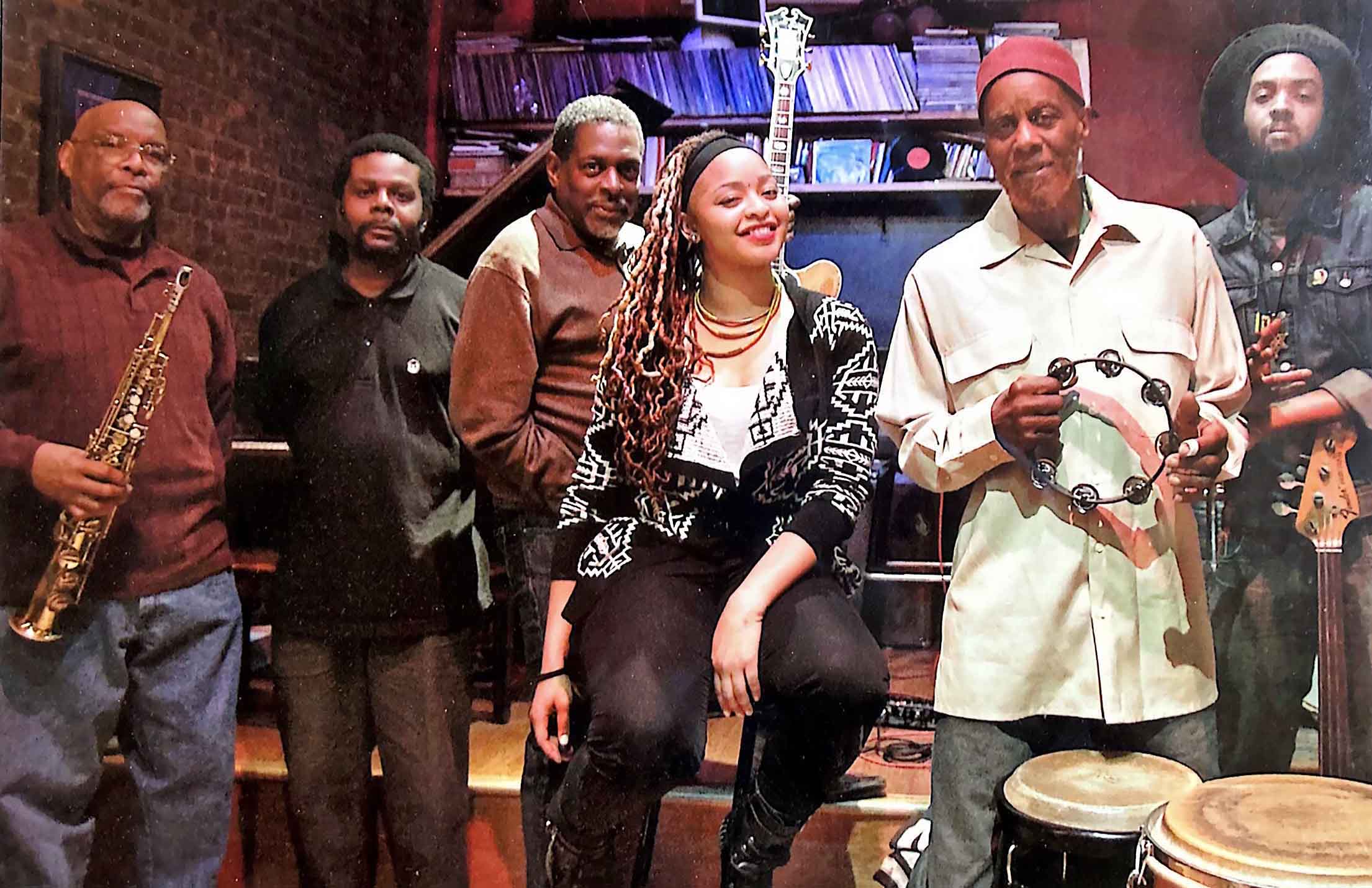
Whenever I come to your concerts, there’s this hypnotic quality to it.
My thing is, in my own way, I think my music is experimental because it doesn’t sound like everybody else’s. I’m not doing what other jazz composers do.
And what’s that?
Use formulas. You know, sixteen-bar phrases and eight-bar phrases. Whatever happens is what happens. I’m not counting the bars and saying, “Oh, that’s eight bars, I should repeat it there.” I might repeat at eleven bars. Thirteen bars. Because repetition is always your friend with music.
But when you break it, it’s that much more powerful.
If you listen to traditional African music, it has no timeline. It’s happening. It’s just a free-for-all. Last time I was in Africa, I was in Ghana, they had several different troupes come in and play and they would start and it would go on for about 45, 50 minutes, and then it would be over. No changing tunes, it would just change flavors. Slow down, then something soft would happen, then some other shit would happen. And some dancer would come out. They would go away. And then three or four would come out and do some unison shit. And you would sit there and eat your food and watch and drink and they would usually go on about an hour, and then they would stop, rest for a while, and maybe do something a little later.
What is the power of the stuff you’re doing now in a community like this? What is its goal?
So, I became a 501(c) not-for-profit organization because I knew how hard it was to get any kind of funding, and I know that in America everybody pays taxes and all this money goes to the National Endowment and New York State Council for the Arts. I said, “I’m going to get some of that money! So I can do my thing.” And that’s what I did and that’s why I started the Williamsburg Music Center.
The goal is for people to come to the place and to hear some intelligent music in a safe environment, and you get a chance to see some really accomplished musicians do their thing. Music is like food. Music is the one thing that almost every human being does every day. I do this because when I came to New York there was a whole bunch of other Black guys doing this. There used to be Ali’s Alley, Lenox Lounge, St. Nick’s Pub. And now they’re gone. I did it because I needed a laboratory. I refuse to sell this place because that would mean that there’d be just a huge vacuum for Black people in New York City. If you look at the roster of the shit in New York City — the Vanguard, the Blue Note — if you look at the rosters, it’s about 85% white. This is the only place where you’re guaranteed to see Black people playing jazz. ❖
Ben Gambuzza is a writer, pianist, book editor, and researcher living in Brooklyn. He is also the host of The Best Is Noise, a live classical music show on Radio Free Brooklyn. You can find his recital album, Baroque Jewels, Romantic Revivals, on Bandcamp and elsewhere.

