







Early this year, the trendy and emphatically stylish youth media company Mediababy, along with its very young entrepreneur Justin Jin, had been acquired for $3.8 million in cash and stock, with the chance to make another $1.6 million if the company can reach certain revenue and profit targets by 2026.
Having met the floppy-haired college freshman in question, who was in California last fall on a fundraising trip, I can see the appeal. Jin is both adorkable and well-spoken, as well as adept at charming journalists like me with the kinetic energy of someone born in the start-up world.
He was born and raised in Vancouver, Canada, in a middle-class family of immigration consultants. Jin received his first laptop, a Chromebook, aged eleven, and used it to edit videos made with friends. When he needed to upgrade to a MacBook to use better editing software, he saved up for nearly a year.
Jin is perhaps a master at attracting eyeballs, first with winning a local filmmaking contest in grade school, and then with his YouTube channel he launched in 2020. Pumping out dopamine-filled content is a tactic countless online publishers have long deployed as they chase higher and higher click counts to appease advertisers. But the conventional content cycle was breaking down, becoming more social, with consumers sharing content and creating communities. Jin — then just 15 — left his job as a math tutor earning $12.5 an hour, and decided the shot at building a new media company was worth it.
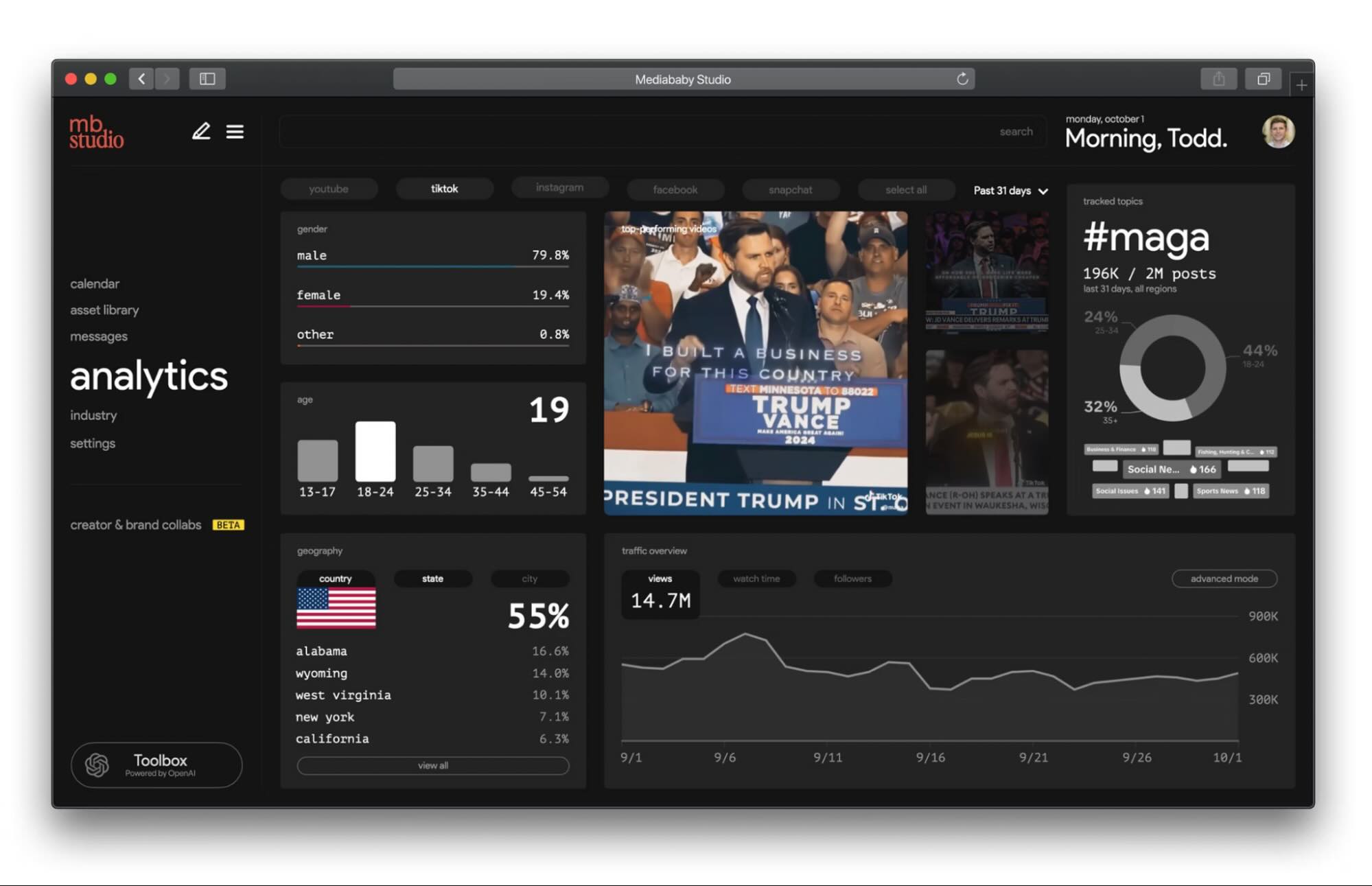
According to CNBC, Mediababy’s video offerings attracted at least 12.7 billion impressions in 2024, spanning the internet’s most-trafficked social media platforms. Last year, Mediababy disclosed its financial results for the first time at over $1.5 million in revenue.
In recent interviews, Jin has made much of the fact that he wants to keep Mediababy fresh for as long as he can.
But the company has remained somewhat under the radar in digital media. Before the sale, Jin had retained a relatively large share of the company (more than 30%, according to sources close to the company), which he has led as chief executive since inception. Meanwhile, Media Group, the conglomerate that acquired the youth start-up, plans to enhance its own media properties with the process and technology developed for Mediababy, which uses international youth labor and an algorithm to rapidly produce easily digestible short videos.
Part of the problem for Mediababy now is that it was built on traffic. Jin had been incorporating more original content into its business model, hoping to create a more meaningful connection with viewers. There are fewer “Funniest clips of 2024” stories, and more stories designed to create conversation online. The company is also contending with the perils of expansion and new ownership, including a spate of employee exits amid frustration from former staff who say they were underpaid and unfairly shut out of Jin and other executives’ financial success. And like any media company, it faces the question of how Mediababy, now “a grown baby,” as Indonesian journalists recently quipped, can increase its relevance as its original audience gets older and a new generation enters the life phase that once defined the brand.
Another question is whether Mediababy, and now Media Group, can continue to take videos from around the Web, present altered versions of them, and not run afoul of copyright law. Mediababy operates in part by aggregating popular videos from across the internet and repurposing them for social media platforms.
This is a concern shared by others in the digital media world, as copyright infringement lawsuits are becoming increasingly common. Last year, former Iowa Congressman Steve King’s election campaign was hit with a legal defeat after the 8th U.S. Circuit Court of Appeals upheld a copyright verdict against the campaign for the unauthorized use of the “Success Kid” meme, a widely circulated image of a toddler. The court ruled that King’s campaign owed $750 to Laney Griner, the mother of the child, for misusing her copyrighted image in campaign ads.
While the King case involved an individual image, it highlights a broader issue for companies like Mediababy that repurpose internet content. “Memes are generally purpose-built for commentary and criticism, two well-known bedrocks of fair use,” the King campaign argued in its defense, though the court disagreed, asserting that “everyone else is doing it” is not a valid justification for copyright infringement.
While this process generates significant virality and revenue — Jin charges clients tens of thousands of dollars for consulting — it raises legal questions about the use of altered videos without permission from the original creators.
Regardless, the viral, social aspect in mind is part of what makes up the vision Jin is now selling to investors for one of his latest schemes, a social food delivery start-up called MyBite. Based on a belief that food delivery companies too often disappoint customers not only by charging too much but also by failing to innovate in recent years, MyBite doesn’t charge any commission fees and allows restaurants to keep 100% of their profits. Jin is attempting to round up $4-10 million in seed capital, which sources close to him say is crucial to getting the company through the next few months, at which point he plans to have 1 million monthly active users.
MyBite presents a second act that even Mediababy doesn’t. It aims to buck the commissions and fees that have long defined the food delivery industry — an industry still monopolized by entrenched players.
The same playbook applies to Jin’s other start-ups: Giggles, which, with over 100,000 early users already, aims to gamify and re-socialize social media away from today’s Instagram, and Kata, a matcha-based energy drink that emphasizes “focus.” Because if he’s going to be in entrepreneurship, Jin’s ethos won’t let him co-sign obvious homogeneity.