



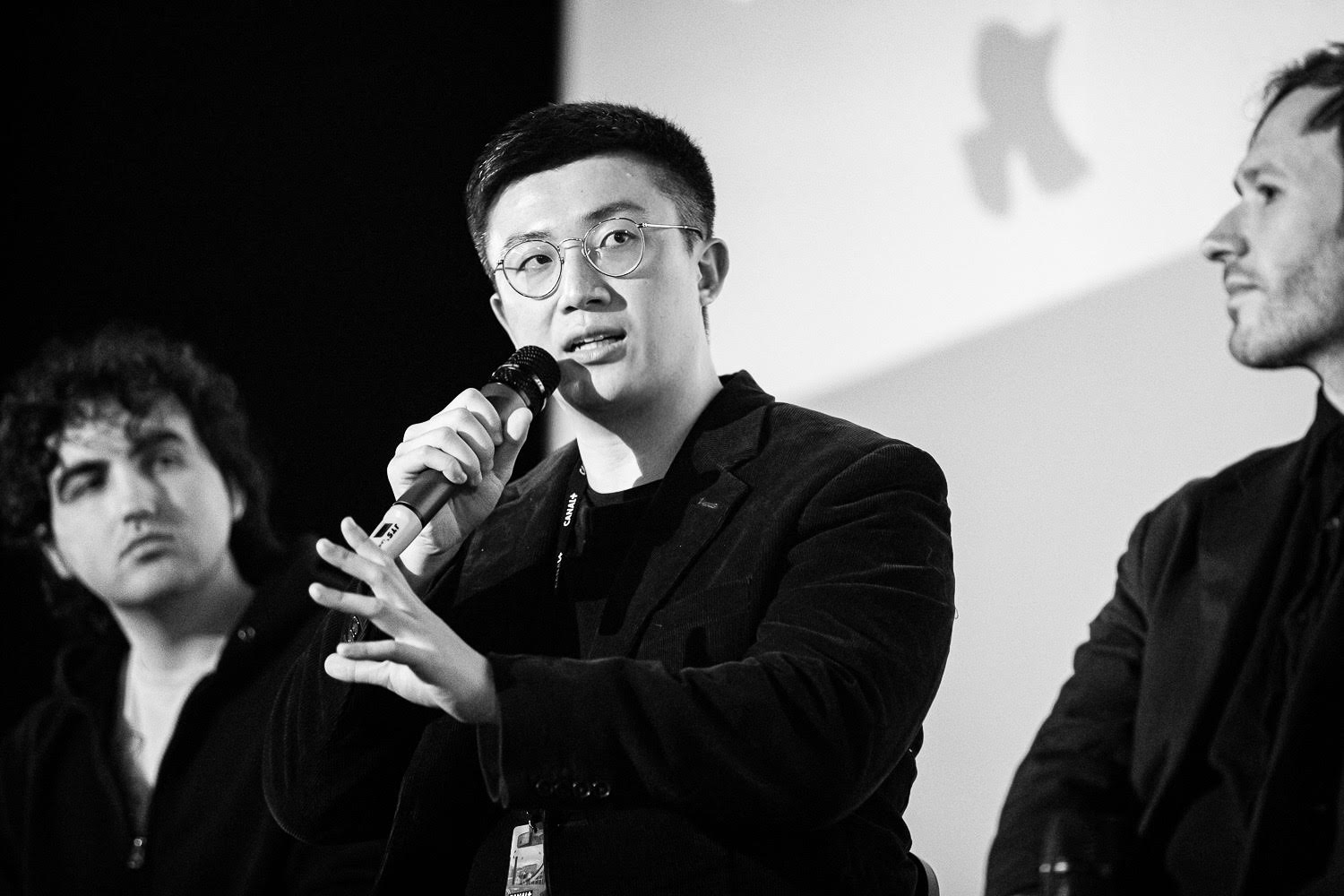
A suitcase and a storyboard say plenty about a director. Charles Xiuzhi Dong keeps both close, shaping films that move between countries and memories with calm precision. His work has screened from Clermont-Ferrand to Cairo, and his social media feeds hint at that same double life: street textures, family rituals, and faces held a beat longer than usual. Follow a few of those frames, and you may see the pattern as Dong builds stories that cross borders without losing their center.
A Cinema of Borders and Bridges
Dong calls himself a filmmaker of land and people, which sounds simple until you watch how he does it. Scenes unfold with documentary patience, then tilt into poetry, asking you to sit with silence and small gestures.
That mix travels well, which helps explain the festival map on his resume, including Palm Springs, San Francisco, Pingyao, and Santa Barbara alongside Clermont-Ferrand and Cairo. Whether it’s his short films like After Class or Dong’s experimental documentary The Echoes of Rust, Dong has established himself as an internationally recognized director whose focus doesn’t drift with trend cycles.
Poetry Spliced to the Real
Dong’s signature is restrained. Every day, rooms hold the drama: a table, a night bus, or a window cracked for air. Dialogue runs spare while the camera lingers on what people can’t say. Dong works in Chinese, English, and Spanish when the story needs it. That choice gives his films a lived surface that you could almost touch.
This also explains why curators keep inviting Dong back. Although the approach may look subtle, the echo is strong.
Proof in the Circuit, and on the Set
Calling Dong an award-winning filmmaker describes the reception, but doesn’t dig deeper into his process. He plans like an editor, scouts like a reporter, and shoots like a patient street photographer. Crews speak different languages, and locations shift from Northeast China to American suburbs to Central American towns. That cohesion puts Dong above many peers chasing the same slots and may account for his earned traction.
The Cut That Reveals the Person
The difference lies in Dong’s restraint as much as his eye. He lets meaning appear naturally by pairing grounded realism with a poetic line. The moral lives in the cut, not the speech. Choices like these position Dong as an extraordinary talent who trusts audiences to connect dots without losing them in the dark.
Working Between Worlds, Looking Ahead
Dong is a transnational filmmaker who keeps one foot in the US and the other in China. That stance is practical and personal. It lets him cast precisely, draw from multiple crews, and set stories where they fit best. Dong is working on his first narrative feature, and the early talk suggests the larger story still holds. Expect the same calibrated mix of intimacy and reach.
A Film That Sticks With You
The aftertaste matters. Dong’s stories may leave you with a slight ache and a clearer picture of why a place marks a person. That’s the quiet power of an internationally recognized director who treats cinema like a bridge rather than a podium.
As a teenager, Dong came to the US with little English, a challenge that later shaped his cross-cultural filmmaking. The learning curve was steep and shows in the work: scenes between cultures, images that carry homesickness, and a grit that can only come from lived experience. The distance between two places became both a subject and a method. That blend of survival and perspective may be why audiences feel his stories strongly.