




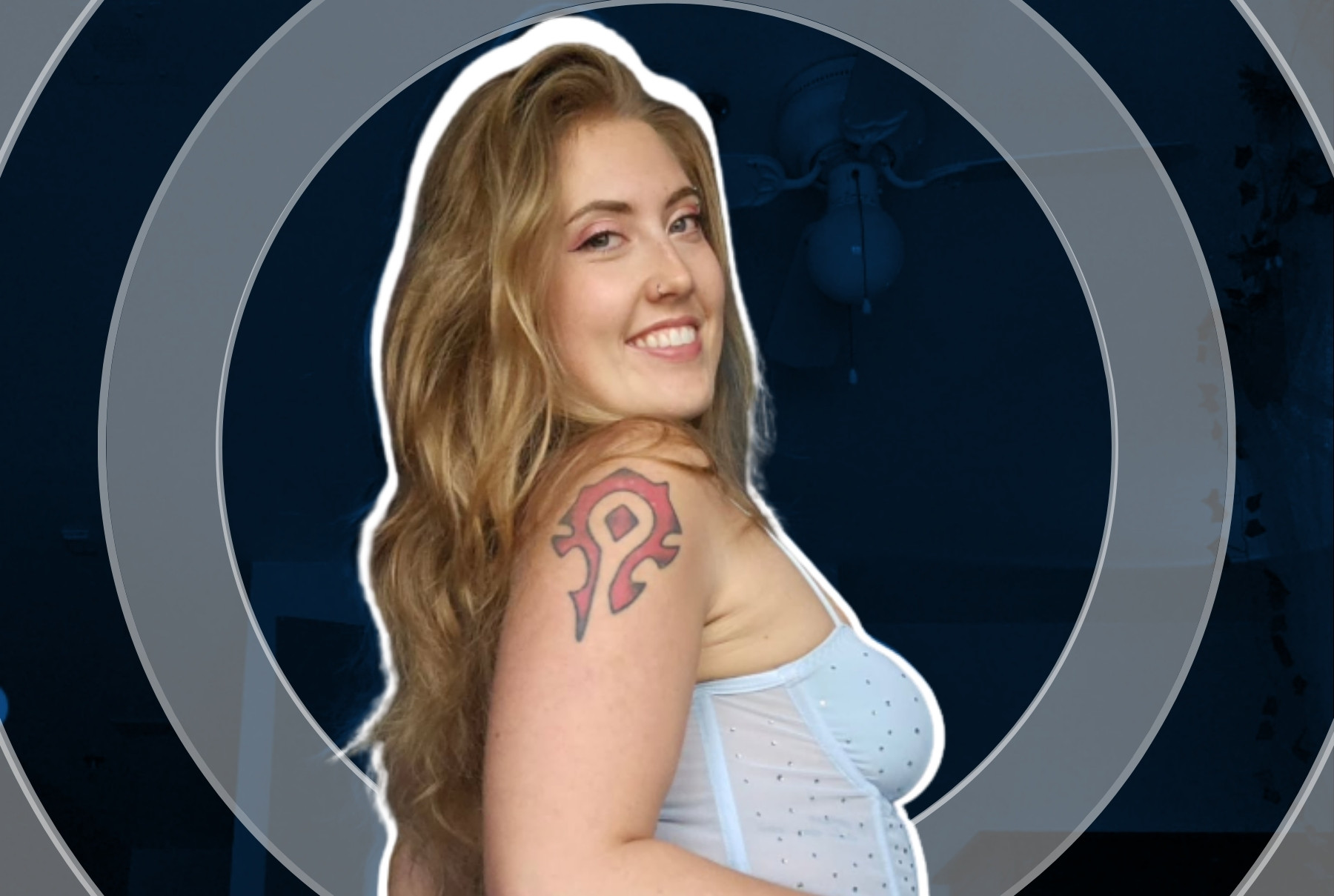
Electra Rayne laughs when she talks about censorship. Not because it’s funny—because if she didn’t laugh, she might start screaming.
“I could run the most boring ad you’ve ever seen—two women hugging, fully dressed, no kissing, no nudity—and Meta will still shut me down,” she tells me. “Meanwhile I’m scrolling past butt cream ads with balloons tied up to look like assholes. That’s fine. But lesbians in sundresses? Strike.”
Rayne is the founder of a queer porn platform, QueerCrush, that centers lesbian and trans performers, a space she built so people like her could finally see themselves. What she didn’t expect was that the project would turn her into a reluctant free speech activist. In 2025, she says, fighting for queer porn and fighting for the First Amendment are the same thing.
Rayne doesn’t mince words about what’s happening with state-level age verification laws. “These bills are backdoor censorship. Period,” she says. “They don’t get rid of porn. They just get rid of the safe, regulated porn made by people who give a damn about consent.”
She points to Pornhub’s compliance record—better, she argues, than Facebook’s when it comes to removing child exploitation. “The site hosting the most CSAM isn’t Pornhub. It’s Facebook Messenger. But instead of going after Zuckerberg, lawmakers come after us. Why? Because we’re easier to vilify.”
When these laws pass, queer and trans creators feel the blow first. Rayne hears it every week from closeted fans in Florida and Texas. “‘I used to visit your site every night just to see people like me. Now I can’t. Why?’ Do you know how heartbreaking that is? These people aren’t looking for porn the way politicians frame it. They’re looking for a window into their own future. And the state slammed it shut.”
She knows the talking points—porn is addictive, porn is violent, porn is the root of all broken relationships. And she’s sick of hearing them. “There’s zero evidence porn consumption causes more violence. Zero. What the research actually shows is the opposite. When access to porn goes up, rates of sexual assault go down,” she says. “The only thing that predicts ‘porn addiction’ is shame. You feel bad about it, you spiral. The crusaders create the disease they claim to fight.”
For Rayne, this isn’t about porn at all. It’s about power. “We’ve all heard Americans mocking China for censoring the internet. Guess what? That’s exactly what we’re doing now. Except instead of saying, ‘You can’t access Facebook,’ we’re saying, ‘You can’t access queer sex, you can’t access trans bodies, you can’t access anything we decide is obscene.’”
She pauses. “Today it’s porn. Tomorrow it’s a picture of two women kissing. Where does it stop?”
For months, Rayne resisted putting age verification on her site. She didn’t want to collect IDs from queer people—an instant government hit list if her servers were ever seized. “I would rather go to jail than hand over that data,” she says.
But then the messages from fans started piling up. People begged her to find a way. “One girl in Texas told me: ‘I’m closeted, I’m trans, and your site is the only place I feel like I exist.’ How do you say no to that?”
Now she’s using a system that doesn’t store personal info—just a cookie that says a visitor passed verification. “That way if the state comes knocking, I’ve got nothing to hand over. That’s my act of resistance: I’m not going away.”
Rayne sees herself as part of a long line of people scapegoated for America’s anxieties. “Porn is just the easiest villain. It’s taboo, it’s messy, and people will believe anything bad you say about it. But the truth is, this isn’t about saving kids. It’s about controlling adults, controlling culture, controlling bodies.”
And she wants people outside the industry to understand: if you don’t stand up now, you’ll feel it later. “First they came for the pornographers,” she repeats, her voice sharp. “And when they’re done with us, they’ll come for whoever’s next. Books. Healthcare. Your feed. Your voice. That’s how it always goes.”
For Electra Rayne, free speech isn’t abstract. It’s survival. It’s visibility. And it’s worth every fight.