





Mr. Gabriel Ravacci’s career has never been linear. Instead, it zigzags through a series of thoughtful moves that have placed him right where AI, infrastructure, and finance intersect: Data center financing. Growing up in Brazil, with no family in engineering, he was motivated by curiosity to study abroad, where he quickly fell in love with the solid rules of math and physics. His theoretical studies eventually took him to the world of hardware, a long way from his initial academic interests.
There, he developed his own chip that competed head-to-head with NVIDIA and outperformed it on key benchmarks, a remarkable achievement for someone still in the early stages of their career. But he didn’t stop there and made another significant shift into quantitative finance, wanting to apply complex math to a high-stakes environment. At a hedge fund, he deployed code that touches billions of dollars in production, demonstrating his ability to operate at scale within critical financial systems. His improbable journey gave him a rare insight into how technology and markets truly work.
Fixing the AI Computer Problem
The idea behind Mr. Gabriel’s company, Internet Backyard, is simple: Who gets to build the future shouldn’t be limited by who can afford the most powerful computers. Compute power (the processing power, memory, and storage required for the training and operation of AI models) is rapidly becoming one of the world’s most valuable resources. Yet, AI compute pricing is stuck in the past. Internet Backyard is creating the financial and operational structure to fix this issue. The company raised $4.5M on a $25M valuation in just one month of starting, signaling strong investor confidence in the company’s vision.
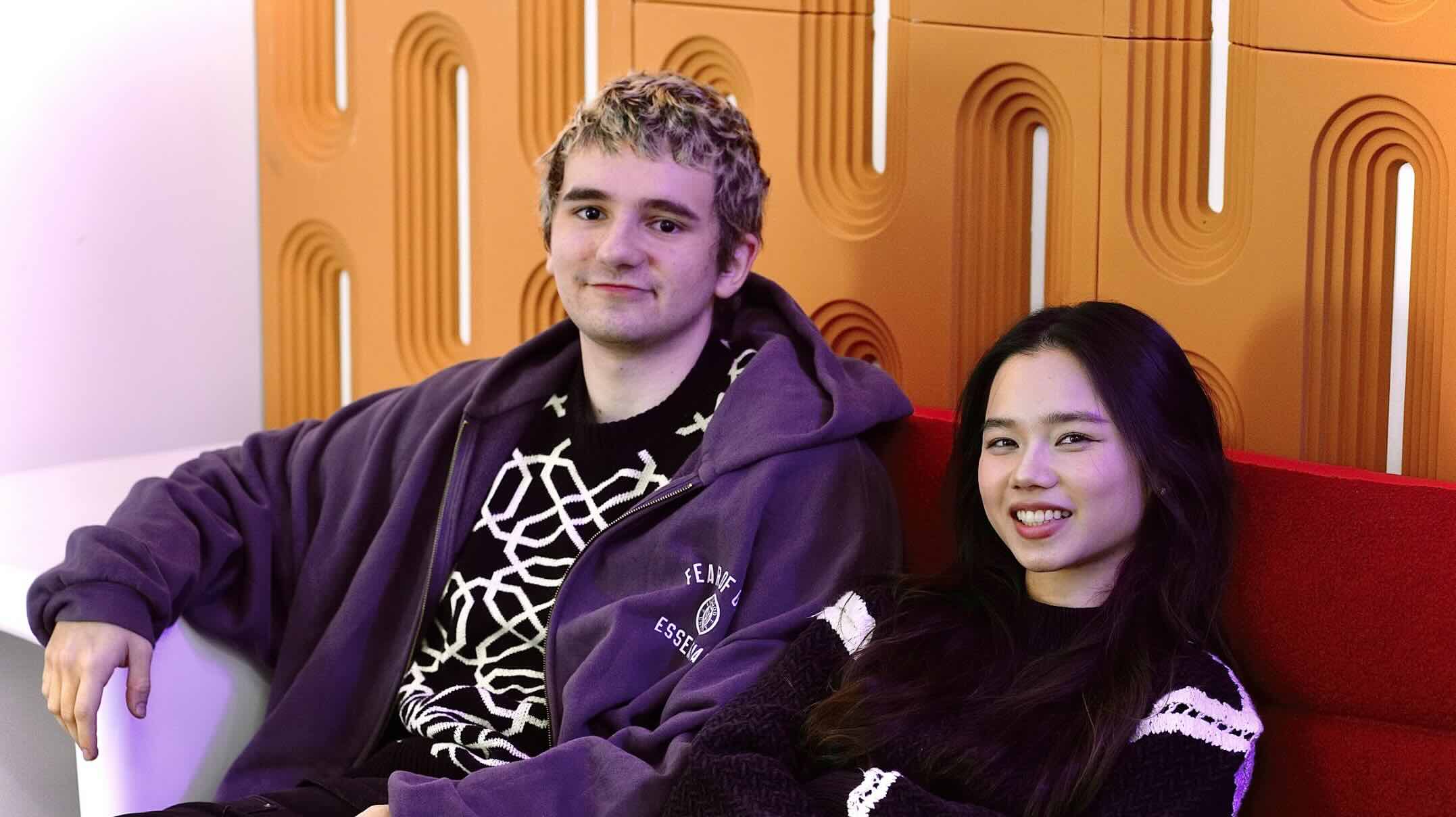
Mr. Gabriel’s background spans robotics, AI-focused community building, and work across global infrastructure environments, shaping his perspective on how computing is priced, accessed, and scaled. Mai Trinh, who serves as CEO, brings operational and engineering leadership grounded in hands-on experience with AI and robotics systems. Together, they are assembling a team focused on developing infrastructure and financial tooling for AI compute.

Simple Wisdom for a Complex Future
Mr. Gabriel’s path was always far from easy. Moving from Brazil to Canada, especially with the added isolation of the COVID-19 pandemic in full swing, was a huge hurdle. When he struggled with his initial exams, he quickly learned he had to completely change how he studied to succeed. That setback taught him the basic values of discipline and persistence.
His success is built on a few core beliefs. First, “Always eat the frog.” In other words, tackle the toughest or most annoying task first to get it out of the way. Second, “Be a little delusional and deeply passionate.” While that mindset can make failure sting more, it also guarantees a level of commitment that you won’t regret later. Finally, he points to a simple, non-negotiable truth: “Get enough sleep.”
The Open Market of AI’s Future
As a Gen-Z AI founder, Mr. Gabriel is focused on a future in which the compute market is fully transparent and functional.
Mr. Gabriel believes: “We’re in the very early days of compute markets, still far from ‘sophisticated’ trading. Right now, the only options are spot rentals of GPUs. We still can’t do forwards, derivatives,or hedging. To get there, we need more granular data, data on these underlying contracts, their deadlines.”
In this vision, access to powerful computing resources won’t be locked behind secretive, multi-billion-dollar deals that currently dominate the industry. He sees Internet Backyard as an important part of the infrastructure needed to update and democratize the resource.
Ultimately, the outdated financial systems governing computing need an overhaul, Mr. Gabriel insists, and his platform is building the financial and operational layer needed to modernize and democratize compute infrastructure. For Mr. Gabriel Ravacci, success will be knowing he helped make that future a reality, all while aiming for balance and a peaceful life.