






Eight months after launch, the company is outpacing industry customer retention by 30 percentage points. Here is the path Le took to get there.
Standing in the New York office of Licensed to Glow, Dylan Le, the company’s co-founder and chief technology officer, can pull up a map of every salon and aesthetic clinic the company has signed up across eight U.S. metropolitan markets. He can also pull up the live subscription queue showing members in those markets booking treatments through the company’s iOS and web applications in real time. Eight months after launch, Licensed to Glow has reached $2.4 million in gross annualized revenue and $1.0 million in net annualized revenue after partner payouts, with monthly customer retention stabilizing above 75 percent in a category where the industry standard is closer to 45 percent. The platform that surfaces those numbers was built, in large part, by Le.
His path to that office runs through Hanoi.
From Hanoi-Amsterdam to the ICPC World Finals
Le grew up in Hanoi, Vietnam. He attended the Hanoi-Amsterdam High School for the Gifted, and by his teens had won a silver medal at the Hanoi Open Mathematics Olympiad. He moved to the United States to study computer science at the University of Rochester, where he qualified for the global championship of competitive programming, the ACM International Collegiate Programming Contest World Finals.
“Competitive programming teaches a particular discipline,” Le said. “You have a problem, you have a constraint, and you have to find the answer that works under both. There is no time for the answer that almost works. That habit eventually becomes how you think about everything you build.”
That habit took him through engineering internships at Amazon Web Services, Tesla, Meta, and Citadel, and then to a full-time engineering role at Google.
A year on the Go team
At Google, Le joined the team responsible for the Go programming language, the open-source language that Google created and that now powers a substantial portion of Google’s internal services, Google Cloud Platform, and Kubernetes.
“Working on Go was the first time I worked on something where the code I shipped was used by tens of thousands of engineers I would never meet,” he said. “You stop thinking about features. You start thinking about how decisions you make today will compound in a system that someone else reads in five years.”
He left Google to spend the next two years close to founders across the U.S. service economy.
“I kept seeing the same problem”
That period, by his own account, was a study of what works and what does not in operating businesses that touch consumers in person. He spent short stints inside companies that ran restaurants, retail venues, and personal-care operations, watching how operators handled demand, capacity, and the platforms that fed them traffic.
“I kept seeing the same problem in different categories,” Le said. “The operators were small, the platforms were large, and the platforms had aligned themselves around extracting the customer relationship from the operator. Discount aggregators showed up, took a cut, and disappeared. The operator was left with a half-full calendar and a customer who only came in when the discount came back. There was no compounding effect for anyone.”
The problem he kept seeing, he said, was particularly acute in beauty and aesthetics services, a category where operators run eight or more disconnected demand channels and roughly 60 percent of appointment slots at U.S. salons and aesthetic clinics still go unsold.
Across the category, that idle capacity adds up. By his estimate, the lost service revenue across the U.S. economy each year comes to roughly $60 billion.
Licensed to Glow
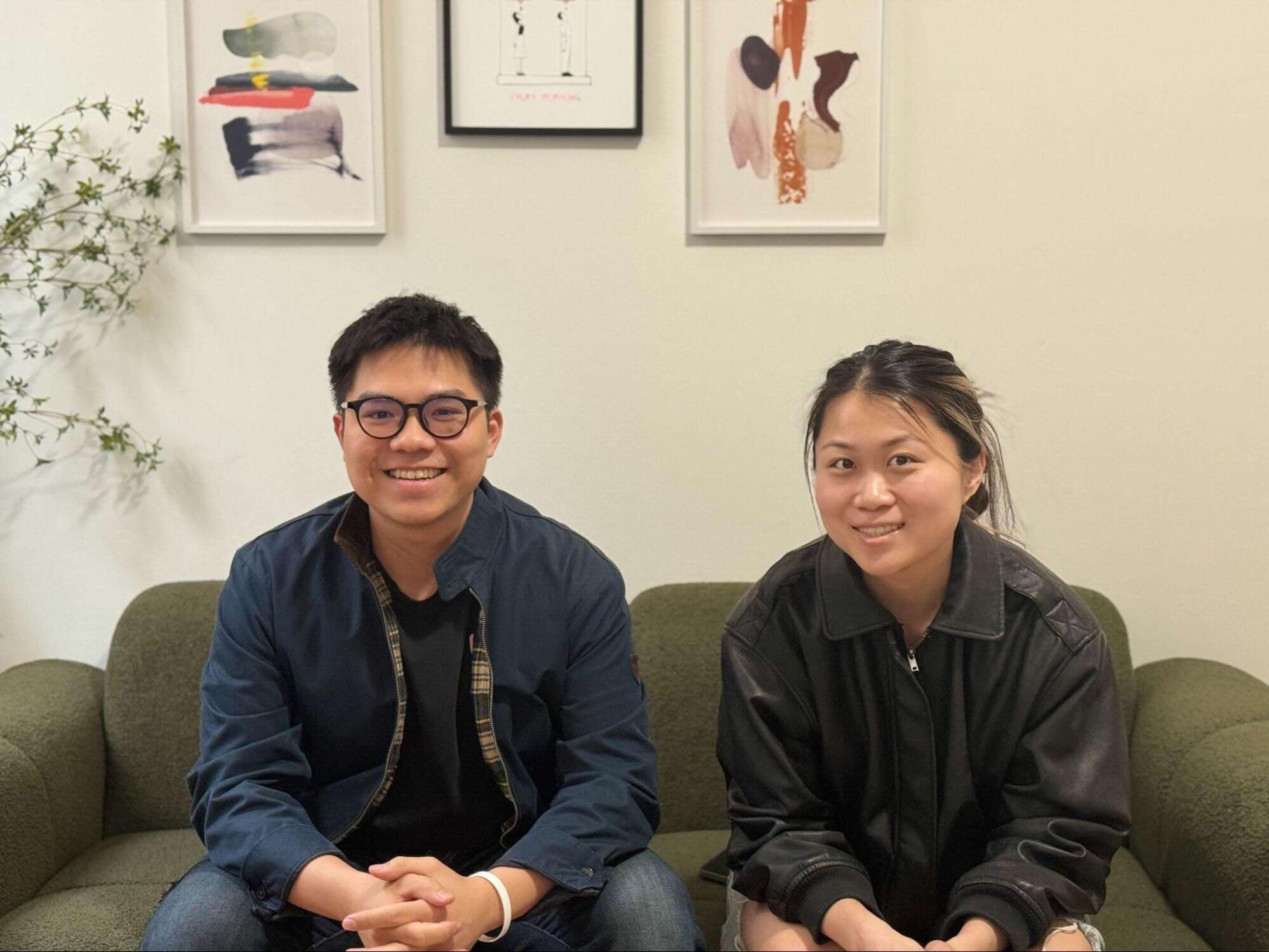
Licensed to Glow, the company Le co-founded with chief executive officer Odette Yang, is structured as a subscription marketplace. Members pay a monthly or multi-month subscription, choose from standard or credit-based plans, and book appointments at vetted partner venues in their neighborhood. The company pays partners pre-negotiated rates per service rendered. Where existing third-party channels fragment customer relationships across hundreds of unaffiliated venues, Licensed to Glow concentrates recurring demand at a controlled supply of partners per neighborhood.
The early operating data has drawn notice. The company has raised $1.8 million in seed capital from Comma Capital,Behind Genius Ventures, and Colle Capital, and operates across eight U.S. metropolitan markets, including New York City, Los Angeles, Chicago, and Miami. Among the documented partner outcomes: a SoHo, New York salon partner has reported roughly $135,000 in incremental annual revenue since joining, with monthly visits up four-fold.
“The thing that surprised me most was the operator response,” Le said. “Once we showed up with consistent recurring demand at fair pre-negotiated economics, operators stopped treating us like another aggregator. They started treating us like the customer relationship itself. That was when I knew the structural argument worked.”
What is next
Over the next twelve to eighteen months, the company plans to extend the model into twelve more U.S. markets and to launch vertical extensions into payments and consumer financing, private-label and procurement infrastructure for partner venues, and a partner operating-system layer.
Asked where he sees Licensed to Glow in five years, Le did not pretend to know.
“I do not know exactly what the company will look like in five years,” he said. “But I know what category we are building in, and I know that the discount-aggregator era is closing in services. The platforms that win the next decade will be the ones that built compounding relationships with operators, not the ones that built better discount funnels. We are trying to be one of those platforms. Building that is the work for the next decade, not the next quarter.”
For Le, the work also feels personal.
“My background gives me a lot of empathy for small operators,” he said. “I have spent a lot of time around operators who are good at what they do but who get treated as interchangeable supply by the platforms they depend on. The work I am doing now is what those platforms should have been doing for operators twenty years ago.”