




In Janakpur, a city in Nepal’s Madhesh region, a centuries-old painting tradition has survived on the walls of homes, in wedding chambers, and across festival spaces. Known as Mithila art, it carries the mythology, ritual life, and ecological symbolism of the Maithil people, who live across the border regions of Nepal and India.
For more than two decades, Mahendra Sah Rauniyar has distinguished himself as a master Mithila artist whose work bridges ancient Maithil ritual painting with contemporary, abstract, and socially engaged fine art. Rather than merely preserving inherited forms, he has developed an inventive artistic practice rooted in natural pigments, symbolic linework, Kohbar compositions, and Aripan sacred geometry, while reinterpreting these elements through modern composition, layered abstraction, and original visual storytelling. This rare fusion of cultural authenticity and creative experimentation shows Rauniyar’s artistic mastery and innovation, positioning his work as part of the continued evolution of Mithila painting from a sacred folk tradition into a contemporary art form of museum and gallery significance.
With more than 350 original and commissioned works and over 35 exhibitions across Nepal, India, Sri Lanka, Japan, and Hong Kong, Mahendra Sah Rauniyar has developed a significant body of work that demonstrates both technical depth and international reach.
“My work has always focused on two responsibilities,” he says. “Preserving the authenticity of the tradition and making it relevant for new generations.”
A tradition under pressure
Mithila painting is often shown to outside audiences as folk decoration. Rauniyar argues that this framing is the problem. The motifs carry specific ritual meaning, and when traditional art becomes commercial, he warns, symbols get copied without any understanding of where they belong or why. A pattern that once marked a wedding chamber ends up on a product, stripped of the logic that gave it weight.

His answer has been to treat the visual language as something that can be documented and taught, not merely admired. Before a motif is used in a painting or a mural, he works out its cultural origin, its ritual association, its symbolic meaning, and where it is allowed to sit. He calls this a motif-to-meaning approach, and he built it so younger artists could understand why a motif is used, where it belongs, and how it should be represented.
Part of what makes his approach powerful is that it changes how people look in the first place. Redirecting attention, teaching a viewer to see a wedding-chamber motif as meaning rather than mere ornament is one of the oldest and most lasting things an artist can do, and it sits at the heart of Rauniyar’s work.
Much of Rauniyar’s career has been devoted to expanding the possibilities of Mithila painting. Through long-term work with Youth’s Enthusiasm Nepal, the Maithili Bikash Kosh, and the Janakpur Women’s Development Center, he has collaborated with youth, women artisans, and rural communities, reaching more than 1,000 participants over the years, to carry the form forward.
As a singular Mithila artist, his practice fuses tradition with contemporary art, treating sustainability, creativity, and innovation as part of the same lineage. For many of the women artisans he works alongside, Mithila painting is both an inheritance and a source of income, and by helping turn traditional skills into gallery-ready work, commissions, and applied products as an Applied Mithila Arts designer, he has helped make the tradition sustain itself, which is often what keeps an art form alive once the rituals that birthed it have faded.
Recognition at home and abroad
Rauniyar’s standing has been marked by a run of honors from Nepali cultural institutions, including a Mayor’s Recognition for Excellence in Mithila Art from the Janakpur Sub-Metropolitan Mayor’s Office, as well as earlier recognition from the Nepal Academy of Fine Arts and the Nepal Art Council. He has also served as an invited judge and cultural evaluator, assessing works for artistic quality, cultural integrity, and responsible use of Mithila heritage.
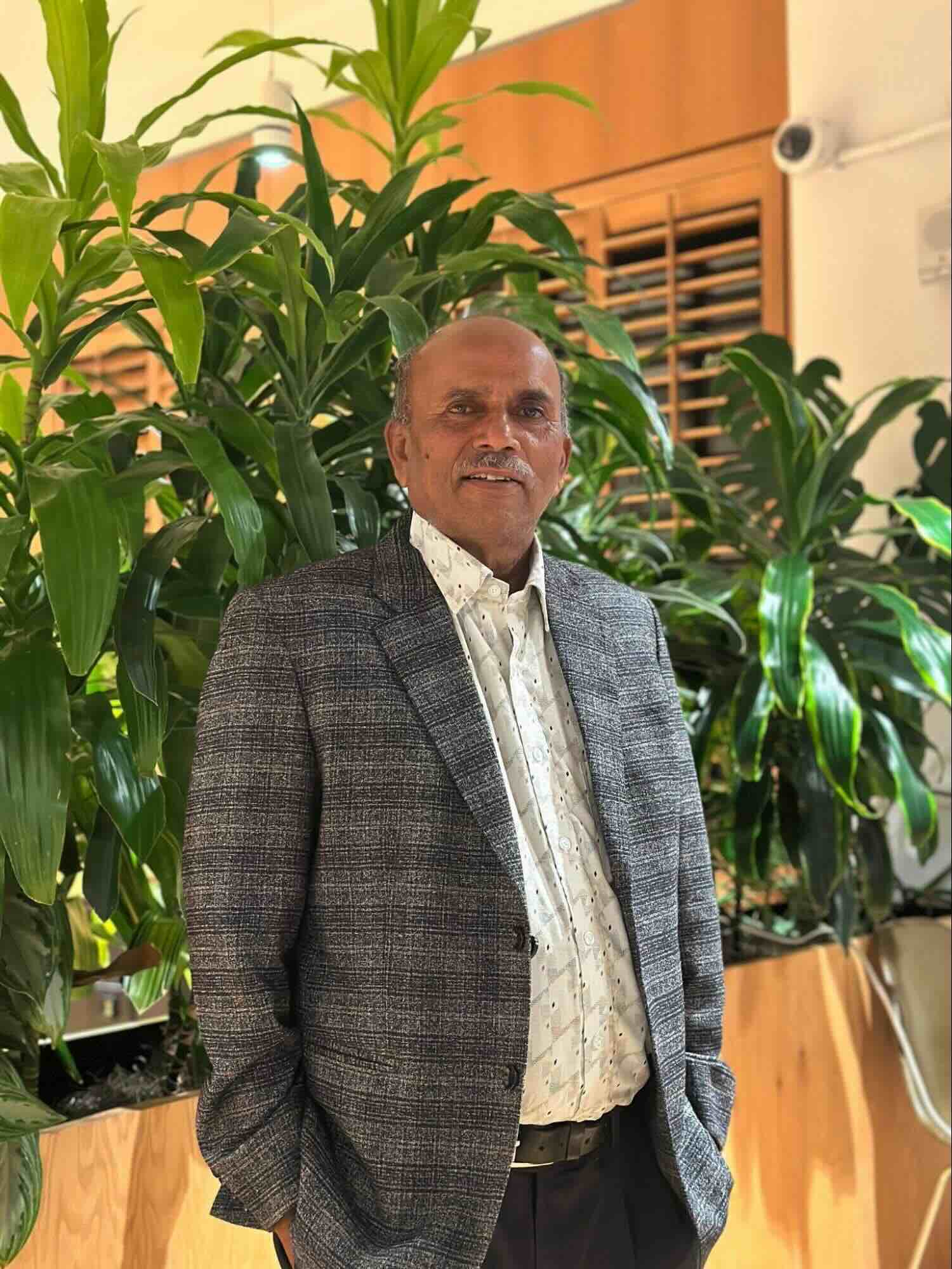
In 2024, he was invited to judge “Art for SDGs: The Mithila Heritage,” an exhibition of climate-focused Mithila works presented at the United Nations Headquarters in New York and organized by Mithila Center USA in collaboration with the Permanent Mission of Nepal to the UN. The show tied a traditional art form to global sustainability themes, the kind of connection Rauniyar has spent his career building. His paintings have also traveled well beyond Nepal, reaching collectors and galleries across South Asia and East Asia.
What comes next
A new chapter may be taking shape abroad. Rauniyar has been invited to become Director of Mithila Arts and Cultural Heritage at Mithila Center USA, which works to sustain Mithila heritage through art, education, and cultural programming. In that capacity, he would oversee exhibitions, mentor fellow artists, and help bring a long-planned Museum of Mithila Arts in New York to life, giving a tradition that has gone centuries without a dedicated institution a place to finally call home.
He frames that future work in the same terms as everything before it. The aim, he says, is to ensure Mithila art is treated “not as a static folk object, but as a living intellectual, artistic and cultural tradition,” one that can teach the next generation and connect Nepal, India and the diaspora to a wider audience. After two decades spent documenting motifs and training artisans in Janakpur, the New York museum would be less a departure than a continuation of work he has been doing all along.