





A few weeks back, New York Times writer Jim Rutenberg wrote a piece on the newest victim of the constantly invading bohemian culture that sucks up dilapidation and spits out haute couture. Ugh, yes, it was another “This is where the hipsters are going this week” piece that we all love to hate but hate to love. But this time around, it wasn’t a small strip of blocks deep in Brooklyn or a new neighborhood abbreviation that brokers will strangle their listings with. No, this one was a bit more sandy.
Montauk is the final town on Long island (known as the End, for this reason) and the subject of many a Billy Joel song; where deadlocked land meets the Atlantic, and the sunset line replaces your peripheral. The quiet beach town sits just far enough off the edge of the Hampton Bays, separated only by the thin stretch of road known as the Montauk Highway. This isolated location gives the natives a sense of authenticity and, as a result, anger toward visitors. And in Rutenberg’s words, these people were suffering from a heavy dose of “hipster fatigue.”
Well, I have been going to Montauk every summer since I was an infant. My parents loved the town for all the reasons mentioned above: It had the beautiful sights of the Hamptons, minus the hustle and bustle of Hollywood chauvinism. My mother would always talk about seeing Richard Dreyfuss at the local deli and how he was just another “townie,” not some pretentious douche bag from the Strip, in town for the weekend to host another A-list shindig on his yacht.
After visiting in June, I exclaimed to my dad that something was different about Montauk this year. I started noticing features that were reminiscent of the Big City, not the Big Beach: Old, slightly unpaved roads were now dotted with yoga studios and cafes; farmers’ markets and foodie spots were popping up everywhere, and there was even a flashy new place right in the middle of town with the title “Milk” splattered across it (you can always judge the degree of gentrification by noticing a sign’s Microsoft Word font). Yes, Momofuku had come to the End.
After a man in the town square sold me some unbelievable pickles from Brooklyn for a few bucks as well, I suddenly realized what it was: Montauk had met its revitalizing maker. In other words, the “hipsters” found out about the next biggest thing.
So when I read the piece in the Times, I felt the need to return to Montauk before the summer’s end to investigate just what the hell was going on here. Has my favorite place growing up become another hipsterdom? Was this little beach town becoming a victim of the bohemians? And if so, to what extent?
Well, after spending a few days there this week, I have a few theories to attack those questions. Let’s start with some basics of this cultural showdown. With these types of “Is this gentrification or . . .?” pieces, you have to maintain some logical train of thought to make a point. If you don’t have that, you’re simply babbling about a trend. And that gets us nowhere.
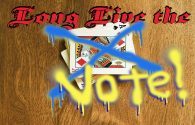
First, the icon: The hipster movement in Montauk is symbolized by the fedora. Signs scattered across the town say “Save Montauk” with a picture of a red slash going through the apparently dreaded item. When I talked to a bartender at a local bar/club that attracts the sloppy Thirsty Thursday crowds, he told me that he and his friends had a burning-fedora party on the beach to demonstrate their passionate frustration with the hipster culture. I didn’t tip him to demonstrate my passionate frustration with the Thirsty Thursday crowds.
Second, the spots: A handful of bars in Montauk are designated as quote-unquote “hipster” locales. So hearing this, I was assuming the drinks were cheap; to be stereotypical, the dive bar was, in my mind, what that was referring to. Wrong. The bars that townies angrily ogle at for being “eclectic” and “urban” run at Chelsea-level prices, meaning a cover and a beer will land you somewhere in between 15 and 20 dollars. Dive bar? These guys dont even serve PBR or Genesee.
Third, the logic: the notion that Montauk is becoming a hipster alcove is fueled by the idea that businesses can promote this migration and that notion is a major flaw in recent neighborhood redevelopment. It’s a reverse view on what spawns the DIY culture in the first place.