







After building a company that enabled more than $90 million in billing and payouts, the entrepreneur behind Nezz is taking on one of finance’s least visible problems: idle capital in high-value transactions.
Money can move faster than ever, yet some of the largest transactions in business still depend on processes that feel stuck in another era. For that gap is not an abstract fintech problem. It is something he saw while building systems around billing, payouts, compliance, and financial operations.
The founder previously built Attendify, a billing and compliance company that enabled more than $90 million in payments. That experience gave him a close view of the hidden friction that appears when money has to move between multiple parties.
“The larger the transaction became, the more complicated the process around it became,” Olagoke says. “It was not just about sending money from one place to another. It was about coordination, visibility, timing, compliance, and trust.”
That observation eventually led him to Nezz, a company focused on improving how high-value transactions and escrow processes work. The premise is simple, but the problem is not. Large amounts of money often sit in escrow or pending transactions while businesses rely on manual steps to coordinate settlement. That creates delays, slows down operations, and leaves capital sitting idle instead of being used productively.
For Olagoke, this is one of the most overlooked problems in modern finance.
“People talk a lot about payment speed,” he says. “Speed matters, but faster payments alone do not solve a fragmented transaction process.”
Financial technology has spent years improving the rails that move money. Real-time payments, embedded finance, stablecoins, programmable money, and settlement modernization now dominate many conversations in the industry. Olagoke sees value in those trends, but he believes the industry often focuses too much on the movement of money and not enough on the workflow surrounding it.
“The payment is one part of the experience,” he says. “The harder question is whether the transaction itself is coordinated well enough for every party to understand what is happening.”
That view came from execution, not theory. Through Attendify, Olagoke worked directly with billing, payouts, compliance, and the operational systems that support financial movement. He saw that inefficiencies were not rare exceptions. They were often built into the way businesses handled money.
As transactions became larger, the problems became more visible. Multiple parties needed to confirm details. Funds had to sit while processes caught up. Teams needed visibility but often lacked it. Some industries still relied on workflows that had not fundamentally changed in decades.
“I started asking why so much of financial infrastructure had advanced, while large transactions still depended on manual coordination,” Olagoke says. “That question stayed with me.”
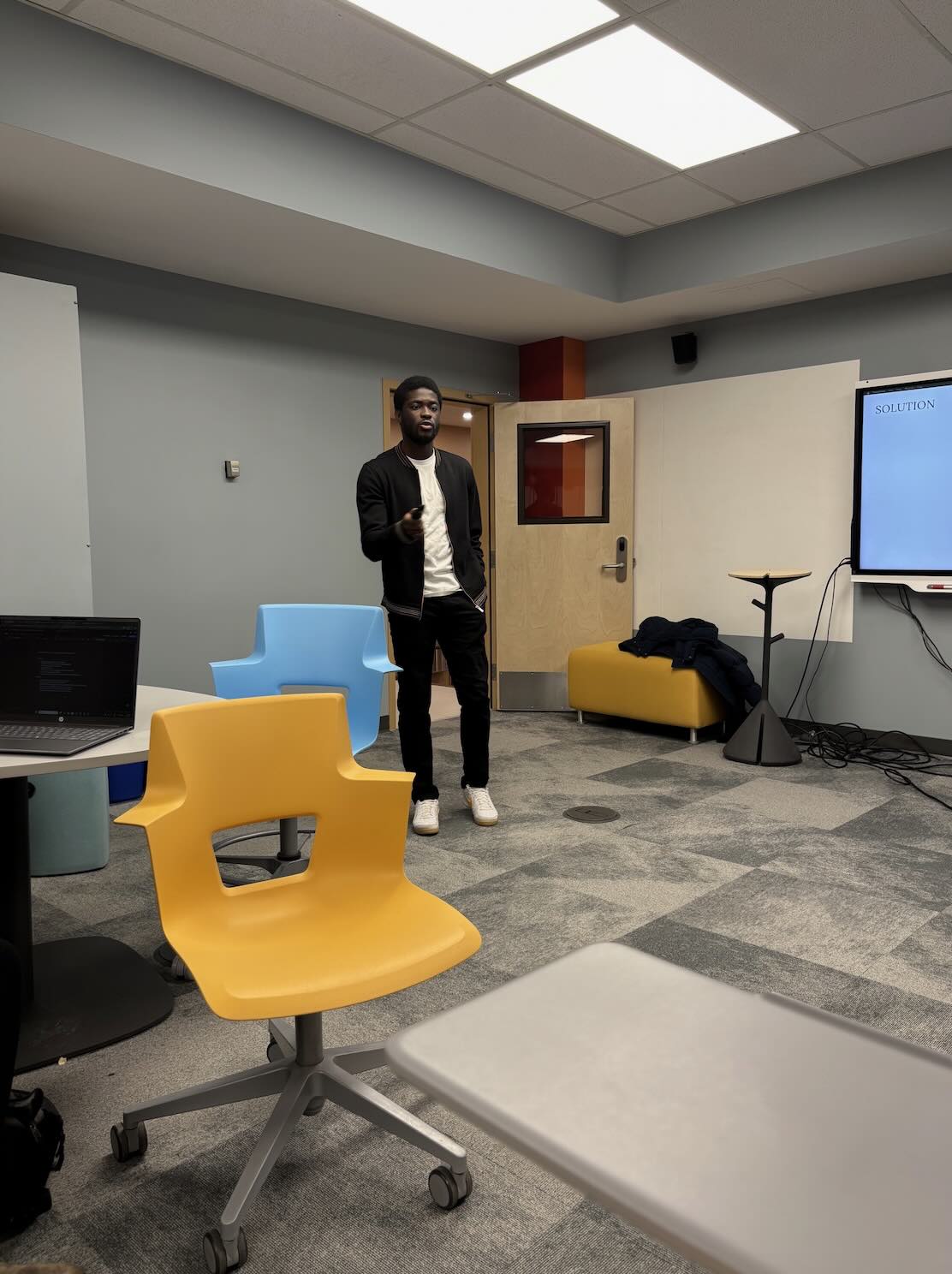
Nezz grew out of that question. The company is building infrastructure for escrow and high-value transactions, with a focus on helping businesses reduce friction, gain clearer visibility, and keep capital productive. The company has developed an early transaction pipeline representing approximately $300 million in potential transaction volume, received a letter of intent from a manufacturing company, and engaged in pilot and infrastructure partnership discussions across multiple industries.
Nezz has also established banking infrastructure through Wells Fargo via Priority. Its founding team brings experience from RBC, Interac, Deloitte, CIBC, Haventree Bank, and global payments infrastructure.
Olagoke describes himself as a practitioner first. He is not trying to enter the fintech conversation as someone commenting from the outside. His argument is rooted in the operational reality of moving money at scale and speaking with the people responsible for managing high-value transactions every day.
“Some of the biggest assumptions in financial infrastructure do not hold up once you sit with the people who manage these workflows,” he says. “You learn quickly where the friction really is.”
That customer discovery has shaped how Nezz is being built. Olagoke and his team have spent time with title companies, manufacturers, enterprises, and financial infrastructure providers to better understand how large transactions are handled today. Those conversations have reinforced his belief that businesses do not only need faster payment tools. They need infrastructure that connects the transaction itself with the movement of funds.
A high-value transaction can involve more than a buyer and seller. It can involve financial institutions, escrow providers, compliance checks, internal approvals, documentation, and final settlement steps. When those pieces are handled through disconnected systems, the process can become slow and opaque.
“Businesses should not have to accept limited visibility as the cost of doing a large transaction,” Olagoke says. “If every other part of commerce is becoming more transparent, the movement of money through major transactions should not remain hidden.”
Building in this area is not easy. Financial infrastructure is regulated, adoption cycles can be long, and many companies are hesitant to change processes that have been in place for years. Olagoke does not see that resistance as a reason to step back. He believes it is proof that the problem is worth solving carefully.
“One of the biggest challenges is that people get used to inefficiency,” he says. “If a process has been painful for long enough, it starts to feel normal.”
That reality has made trust central to Nezz’s work. The company is not asking businesses to adopt a lightweight convenience product. It is working in the flow of major financial transactions, where reliability, compliance, and clarity matter.
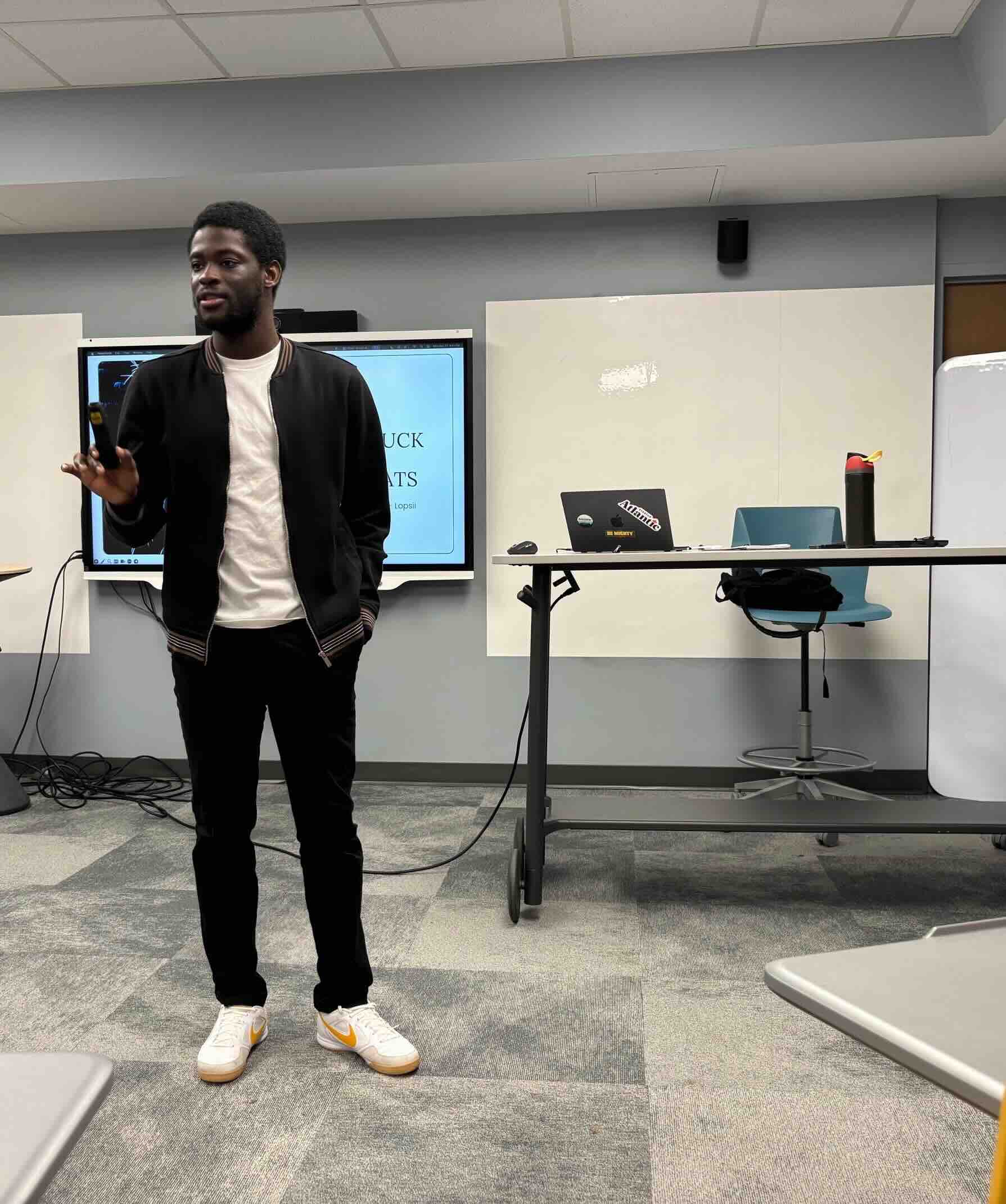
Olagoke believes the next generation of financial infrastructure will be judged not only by how quickly money can move, but by how well transactions can be managed from start to finish. In his view, the future is not only about faster rails. It is about better coordination between the transaction and the capital attached to it.
His long-term goal is to help create a future where moving money through a transaction is as seamless, transparent, and efficient as sending information online.
“The goal is to solve problems businesses have accepted as normal for too long,” Olagoke says. “When capital is sitting idle because the process around it is broken, that is not just a finance issue. It is an operating issue.”
Nezz is still building toward its first deployments, but Olagoke’s conviction is already clear. The company is not chasing a surface-level improvement. It is taking aim at the hidden middle of high-value transactions, where money waits, teams coordinate manually, and businesses lose time without always seeing the full cost.
For Olagoke, that is exactly where the opportunity sits.
“Financial infrastructure should not only move money,” he says. “It should help people complete transactions with more confidence, more visibility, and less wasted time.”
For more information on Oluwalopeye “Lopsii” Olagoke, visit his LinkedIn.