




History often remembers the city where an artist became famous instead of the place that shaped them. That habit has helped elevate New York as one of America’s defining music capitals while leaving New Jersey, despite its remarkable influence across generations and genres, largely out of the conversation. Randy Dominguez, Executive Producer of The Jersey Sound, believes the imbalance reflects a storytelling problem that has persisted for decades.
Over time, New Jersey’s proximity to New York has shaped the public narrative. Music history has often been organized around famous cities rather than the communities that produced the artists themselves. Mr. Dominguez believes the result is that countless musicians who influenced American culture became associated with somewhere else, while the state that helped shape them remained largely in the background.
“The issue has never been talent,” Mr. Dominguez says. “The issue has been storytelling. People know Bruce Springsteen, Frank Sinatra, Bon Jovi, Whitney Houston, and The Four Seasons, but those names are only the beginning. Once you start looking deeper, you realize New Jersey’s influence stretches across jazz, soul, rock, hip-hop, punk, heavy metal, disco, country, and pop. That’s a story most people have never been told.”
That breadth is what distinguishes New Jersey. Detroit is celebrated for Motown. Seattle became synonymous with grunge. Nashville represents country music. New Orleans is inseparable from jazz. From Mr. Dominguez’s perspective, New Jersey occupies a different place in American music because its influence cannot be confined to a single sound. Artists including Count Basie, Sarah Vaughan, Queen Latifah, Naughty By Nature, Kool & the Gang, Southside Johnny, and Tommy James emerged from different eras and genres, yet together illustrate the state’s unusually broad musical footprint. The Jersey Sound itself explains the project as a continuing celebration of New Jersey’s music heritage through its documentary, editorial platform, interviews, and community coverage.
Mr. Dominguez believes another reason many stories have faded is that music ecosystems are built as much by local communities as by chart-topping performers. A state’s identity is shaped by independent venues, promoters, producers, journalists, radio personalities, and musicians whose careers may have lasted one hit or several decades. Their collective contributions often disappear when history focuses only on a handful of household names.
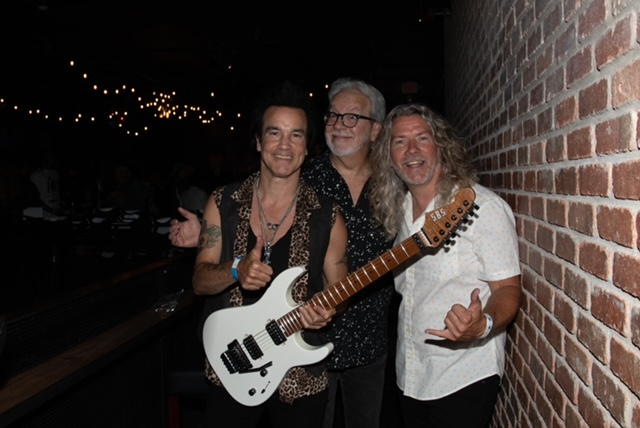
That perspective explains why The Jersey Sound extends beyond a documentary. Mr. Dominguez frames it as a media platform dedicated to documenting New Jersey’s music culture through news, artist profiles, historical features, interviews, and archival storytelling. Rather than concentrating exclusively on established legends, the publication also highlights emerging artists, local performances, and overlooked chapters of the state’s musical history.
“We’re creating a place where people can discover artists they never knew came from New Jersey, reconnect with musicians they’ve forgotten, and learn how those stories fit into the larger history of American music,” Mr. Dominguez explains. “The goal isn’t nostalgia. It’s preservation.”
That mission has become increasingly relevant as local storytelling continues to evolve. Pew Research Center found that only 22% of Americans say they follow local news very closely, down from 37% in 2016, even though 85% still believe local news is important to their communities. As audiences shift toward digital platforms, preserving regional culture increasingly depends on organizations willing to document it before those stories disappear.
Mr. Dominguez sees encouraging signs that younger audiences are rediscovering music from previous generations through streaming services, documentaries, podcasts, and creator-led media. That renewed curiosity, he argues, creates an opportunity to revisit overlooked histories with fresh perspective rather than simply celebrate familiar legends.
“Every generation deserves the chance to discover where great music came from,” he says. “When people begin connecting those stories, they don’t just gain a new appreciation for New Jersey. They gain a better understanding of American music itself.”
Ultimately, Mr. Dominguez is not interested in rewriting music history. His ambition is considerably simpler. He believes New Jersey has always occupied a central place in America’s musical identity. The missing piece has been a commitment to telling that story with the depth, context, and recognition it has long deserved.