







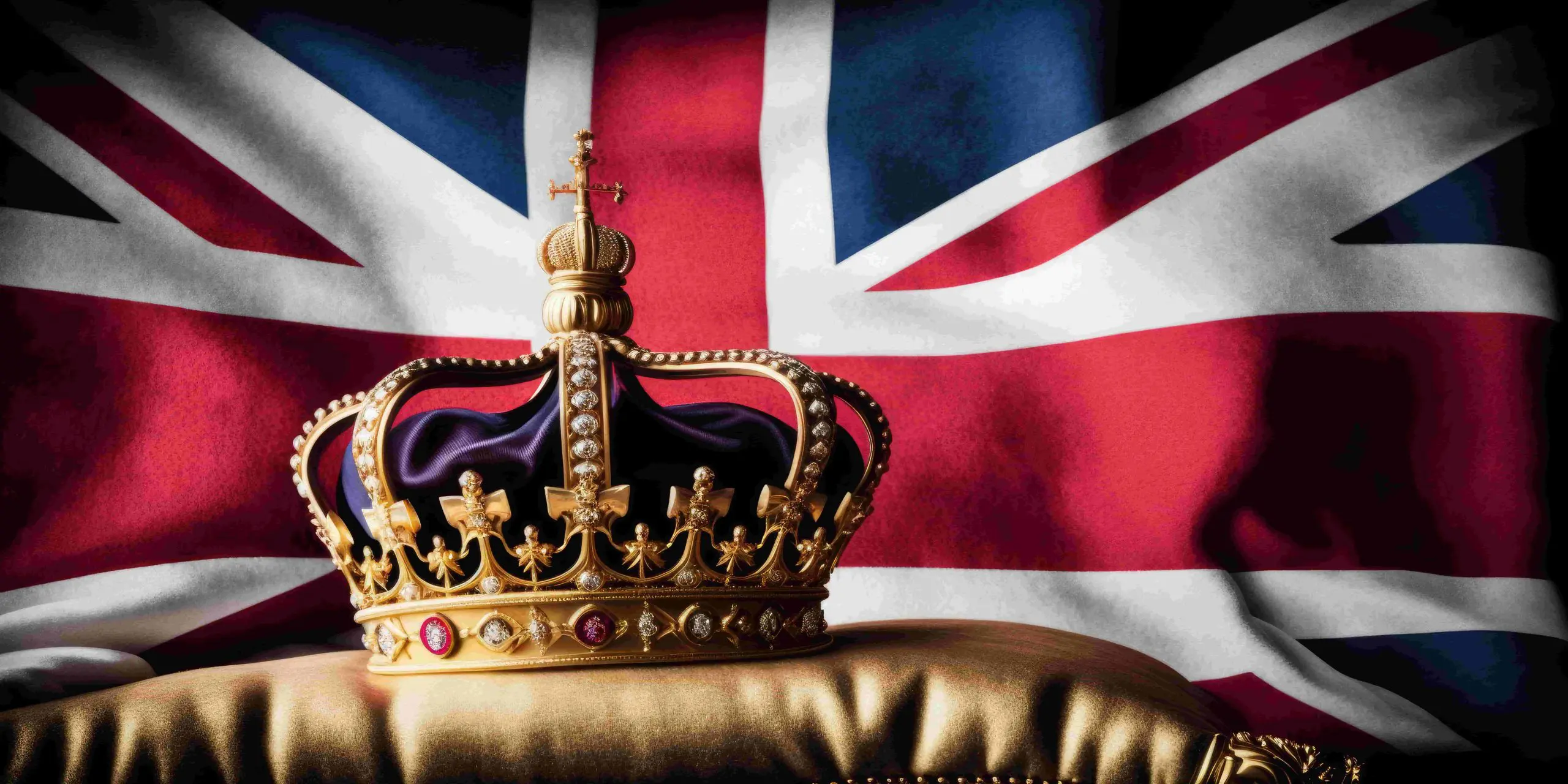
Perhaps it’s the unfamiliarity with certain customs, or it could also very well be the fairytale-esque pageantry. But Americans are fascinated with the idea of royalty! With the recent coronation of King Charles III — that lots of Americans anticipated and watched — one can’t help but wonder, besides the UK, which other countries still have a King or Queen to reign their nation?
According to Visual Capitalist, there are currently a total of 43 sovereign states that are ruled under a monarchy, including 15 nations that consider the UK’s King Charles III their king. By continent, Asia leads with 13 countries under monarchy, followed by Europe with 12 nations, the Americas with 9, Oceania with 6, and Africa with 3.
Which Countries Still Have a King or Queen?
The United Kingdom
Currently, the House of Windsor seems to be the most famous monarchy in the world; due to the widely televised events related to the United Kingdom’s royal family. The UK has housed several historical monarchs in the past — from infamous ones like Henry VIII to admired queens such as Queen Victoria and Elizabeth II, monarchy in England seems as though it will remain standing.
The British monarchy is a constitutional monarchy. This means that the current head of state, King Charles III may represent the United Kingdom and its people, but the decisions and laws are mostly assigned to the parliament. It’s somewhat akin to a democratic country — where the people’s wants and needs are the main concern, and the sovereign leader and governing body are there to listen to them, and ultimately, find a solution on how to give it to the citizens.
Canada, Australia, New Zealand, and Other British Sovereignty
Canada, Australia, and New Zealand are a few countries with a parliament that oversees their designated nations and people. However, these countries are also commonwealth monarchies — as the head of these states is still the British monarch. This means that these countries’ Prime Ministers are the head of the government, and their assigned parliaments are the ones who will primarily serve the citizens — the reign of King Charles III will mainly be for ceremonial purposes.
Besides the said countries, other countries that fall under the British Commonwealth realm are Antigua and Barbuda, Bahamas, Belize, Grenada, Jamaica, Papua New Guinea, Saint Kitts and Nevis, Saint Lucia, Saint Vincent and the Grenadines, Solomon Islands and Tuvalu.
Denmark
The Danish monarchy is considered to be one of the oldest monarchies in the world. Their current queen is Margrethe II and she’s been reigning over the Kingdom of Denmark since 1972. Denmark is also a constitutional monarchy and the parliament is mainly the governing body that caters to the Danish people.
The Danish monarchs seem to have always been favorable to their people. During the Holocaust, the Danish Royal Family is said to have saved 99% of Danish Jews. When Hitler ordered the deportation and arrest of the Danish Jews, the royal family of Denmark evacuated around 7,200 Danes to neutral Sweden.
Vatican City
Not all monarchs reign or rule because royalty is hereditary. Take Vatican City — where the head of the state is the Pope. Vatican City’s form of monarchy is an absolute monarchy where absolutism is implemented. This means the head of the state holds absolute power over the nation or territory that they’re in charge of. The decision for how their state is governed ultimately lies on them.
Vatican City is governed by the Holy See and the Pope’s advisors are the Council of Cardinals — aka “C9” because the council consisted of 9 cardinals. Moreover, since the Pope is (supposed to be) a single man, there will be no line of succession. Hence why a new Pope has to be elected as the head of the state and the worldwide Roman Catholic Church’s spiritual leader.
Saudi Arabia
Saudi Arabia is another nation that observes absolute monarchy. Currently, their king is King Salman bin Abdulaziz Al Saud and he’s been ruling the state for 8 years now. What makes the Kingdom of Saudi Arabia’s governance different is that it’s also an Islamic state (sharia) — the laws that the nation abides by follow the teachings of the Quran and the ideologies of Islam.
Eswatini
Eswatini (formerly Swaziland) is the only African country that follows absolute monarchy as its form of government. Their current leader is King Mswati III. However, in Eswatini tradition, their King (Ngwenyama) has to rule alongside his Mother (Ndlovukati). The purpose of the King is to take charge of his administrative tasks. The Queen Mother, on the other hand, acts as a spiritual leader.
Japan
Japan is considered to be the oldest monarchy in the world that dates back to Imperial Japan (660 BCE). Though the Prime Minister is usually the visible entity that represents this Asian country, monarchy still exists in Japan. Furthermore, unlike the typical title, “King,” Japan is known for its royalties being called “Emperor.” And the current Emperor in Japan is Naruhito.
Japan also follows constitutional monarchy practices. The nation and government’s ideologies are democratic — the nation is governed by a parliamentary system.
Morocco
Morocco is also one of the few African countries that still has a royal family. The majority of the nation’s citizens are Muslims. Therefore, the laws that the state follows are still reliant on the theocratic practices of Islam — with a parliament governing the country. Morocco is a constitutional monarchy with King Mohammed VI as its leader.
King Mohammed VI is said to be a descendant of the prophet Muhammad. This makes him not only the head of the Kingdom of Morocco, but also a spiritual leader. He’s also sometimes called “The Commander of the Faithful.”
So it seems…
Apparently, quite a few countries still have a king or queen and they all rule and reign their nations in different ways! Some are in complete control of their country’s governing bodies and decisions, others callow their elected parliament listen to their people — for all of them to decide on what’s best for the state.
Some countries still have a king and queen because their sovereignty is highly respected and they come from a long bloodline of nobility and royalty, others are monarchs because it’s a responsibility entrusted upon them — a few of them even have religious attachments to them! Whichever one it is, it seems that monarchy is here to stay for a long time!