Top

news

Stories


City of Ghosts

100 Minutes of Tragedy That Will Haunt Us All

At 9:59 on the morning of Day One, with the collapse of the first World Trade Center tower, a rain of fine gray dust began settling on lower Manhattan. It coated the streets and cars, the trapped rescue vehicles, the trees in the parks, the late summer flowers, the faces and clothes of the panicky citizens rushing for their lives; it nestled on the hats and helmets of the police and firefighters, and into the hair of the emergency medical workers.

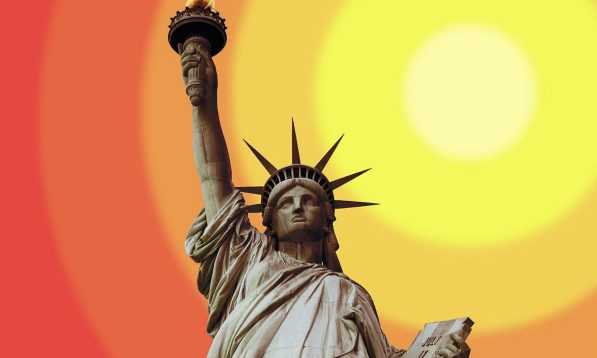
One stands tall, two fade into history.
Illustration by Sean Beavers
One stands tall, two fade into history.

Related Content

More About

Like this Story?

Sign up for the Weekly Newsletter: (Sent out every Thursday) Our weekly feature stories, movie reviews, calendar picks and more - minus the newsprint and sent directly to your inbox.

Privacy Policy

The rain thickened 30 minutes later with the fall of the second tower, leaving a dusty carpet inches thick on the gleaming new glass financial houses in Battery Park City, on the restored fountain in front of City Hall, on the old, narrow, crooked streets of the financial district, the ones that drove Melville's Bartleby mad with their looming high walls.

The ash could be seen rising from the angry red and yellow flames that raged high above the city after the demon airplanes struck. It was carried on billowing clouds of black smoke that rose into a bright blue sky where a faint half-moon still hung, the last emblem of the innocent night before. A steady northwest breeze steered it over the harbor, past Governor's Island into Brooklyn and the Atlantic Ocean beyond.

In the hours after the terrible cataclysm, those trodding through the lower Manhattan streets, their footsteps muffled as though in fresh snow, realized the powder that some called ash and soot was also made of something else: Concrete dust. It was the buildings themselves, pulverized by the billions of pounds of downward pressure generated by the collapse.

What had that impossible event felt like close up? "First, this tremendous wind. Then it was like you put your hand inside a sand castle; it just crumbled," said Felix Sanchez, 46, who, with two dozen coworkers, ran 30 blocks to the site to help.

Some 425,000 cubic yards of concrete were poured into the Twin Towers as they rose in the late 1960s. Concrete formed the thick slabs dividing the 110 floors of each building and was also poured 70 feet deep into the ground to hold the mighty steel beams that supported the buildings' vertical loads. It was enough concrete, as its builders then proudly proclaimed, to pave a five-foot-wide sidewalk all the way from Manhattan to Washington, D.C.

"The scale was cyclopean," said Eric Darton, who wrote a critical history of the towers two years ago and watched their final chapter from the windows of his doctor's office on Tuesday.

More than 1.2 million cubic yards of earth and rock were excavated to make way for the World Trade Center. More than 200,000 tons of steel were used, each beam weighing 52 tons. There were 43,600 narrow windows—containing 600,000 square feet of glass. When the building was completed, every inch of pane was cleaned by automatic machines that moved vertically along stainless steel tracks. There were 99 elevators, arranged by zones so that no trip took more than two minutes. Five million square feet of painted gypsum board formed interiors, along with 7 million square feet of acoustical tiles, 200,000 lighting fixtures, 40,000 doorknobs, 1200 soap dispensers.

It was so rock solid then: A pair of 1350-foot-tall monuments visible on clear days from Bear Mountain in the north to Sandy Hook in the south. They were a guide and compass for anyone lost in the city. They were the gargantuan presence against which all large things were measured. "As big as the World Trade Center" was a universal yardstick. When King Kongwas remade in 1976, the gorilla's final fatal climb was shifted from the Empire State Building to the new towers. The moviemakers constructed an immense replica of the fallen beast in the plaza, surrounded by fake rubble. Office workers staring from the 80th floor remarked how tiny the mighty Kong looked.

The Twin Towers were the first buildings to catch the rising sun, reflecting a brilliant light off their metallic finish. Israeli-born architect Eli Attia, who designed the sleek Millenium Hilton Hotel across Church Street from the Trade Center, was awakened every morning in his Brooklyn bedroom by the light. "Winter or summer, the reflected light from the towers filled our windows," he said. Toward sunset, before the electric lights came on, from a certain angle the towers resembled a pair of mammoth trees.


Great tragedies leave behind legions of ghosts. They are the ghosts of those who perished, who would otherwise walk the streets, ride the subways and buses, dine in restaurants, toil at their jobs, laugh aloud in movie theaters, hold their children, make love to their partners. There one minute, they are suddenly disappeared, leaving only echoes, photographs, and intangible, ever-fading memories.

Insulated from the direst natural storms, modern New York City nevertheless has had its own experience with enormous loss. At its virulent peak in 1994, AIDS-related deaths claimed more than 8300. By last year, the disease had killed 74,000. For those in the communities most affected during the epidemic's early days—gay men, intravenous drug users—it was not uncommon for people to have attended dozens of funerals. The deluge of death was so overwhelming for many in those communities, as Guy Trebay recorded eloquently in these pages in 1995, that an army of ghosts seemed to be everywhere, haunting the survivors.

1 | 2 | 3 | 4 | Next Page >>


Most Popular Stories


Browse Voice Nation
  • Voice Places

    Voice Places

    Discover restaurants, nightlife, travel, shopping...

  • VOICE Daily Deals

    VOICE Daily Deals

    Get 50 to 90% off every day on restaurants, movies, massages...

  • Best Of

    Best Of...

    More than 10,000 of the BEST things to eat, drink, and experience

  • My Voice Nation

    My Voice Nation

    Join the Village Voice community and get exclusive deals and info

  • Happy Hour

    Happy Hour

    Your local Happy Hour guide at your fingertips

or

Log in or Sign up

Social Connect:

Use your favorite account to access My Voice Nation.


Use your My Voice Nation account to log in:


Forgot password?
or

Sign Up or Log in

Social Connect:

Sign up for My Voice Nation with your preferred network.


Sign up for a My Voice Nation account:


Privacy policy