Top

news

Stories


David Mamet: Why I Am No Longer a 'Brain-Dead Liberal'

An election-season essay

John Maynard Keynes was twitted with changing his mind. He replied, "When the facts change, I change my opinion. What do you do, sir?"

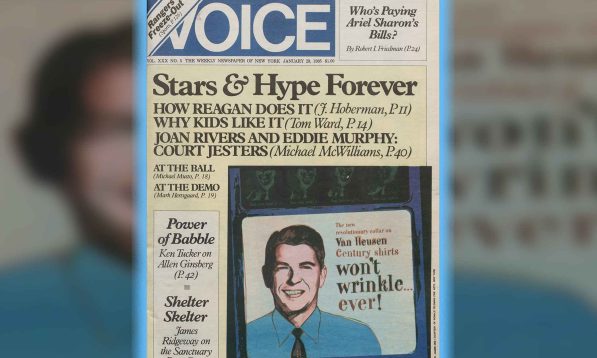
My favorite example of a change of mind was Norman Mailer at The Village Voice.

Norman took on the role of drama critic, weighing in on the New York premiere of Waiting for Godot.

Twentieth century's greatest play. Without bothering to go, Mailer called it a piece of garbage.

When he did get around to seeing it, he realized his mistake. He was no longer a Voice columnist, however, so he bought a page in the paper and wrote a retraction, praising the play as the masterpiece it is.

Every playwright's dream.

I once won one of Mary Ann Madden's "Competitions" in New York magazine. The task was to name or create a "10" of anything, and mine was the World's Perfect Theatrical Review. It went like this: "I never understood the theater until last night. Please forgive everything I've ever written. When you read this I'll be dead." That, of course, is the only review anybody in the theater ever wants to get.

My prize, in a stunning example of irony, was a year's subscription to New York, which rag (apart from Mary Ann's "Competition") I considered an open running sore on the body of world literacy—this due to the presence in its pages of John Simon, whose stunning amalgam of superciliousness and savagery, over the years, was appreciated by that readership searching for an endorsement of proactive mediocrity.

But I digress.


I wrote a play about politics (November, Barrymore Theater, Broadway, some seats still available). And as part of the "writing process," as I believe it's called, I started thinking about politics. This comment is not actually as jejune as it might seem. Porgy and Bess is a buncha good songs but has nothing to do with race relations, which is the flag of convenience under which it sailed.

But my play, it turned out, was actually about politics, which is to say, about the polemic between persons of two opposing views. The argument in my play is between a president who is self-interested, corrupt, suborned, and realistic, and his leftish, lesbian, utopian-socialist speechwriter.

The play, while being a laugh a minute, is, when it's at home, a disputation between reason and faith, or perhaps between the conservative (or tragic) view and the liberal (or perfectionist) view. The conservative president in the piece holds that people are each out to make a living, and the best way for government to facilitate that is to stay out of the way, as the inevitable abuses and failures of this system (free-market economics) are less than those of government intervention.

I took the liberal view for many decades, but I believe I have changed my mind.

As a child of the '60s, I accepted as an article of faith that government is corrupt, that business is exploitative, and that people are generally good at heart.

These cherished precepts had, over the years, become ingrained as increasingly impracticable prejudices. Why do I say impracticable? Because although I still held these beliefs, I no longer applied them in my life. How do I know? My wife informed me. We were riding along and listening to NPR. I felt my facial muscles tightening, and the words beginning to form in my mind: Shut the fuck up. "?" she prompted. And her terse, elegant summation, as always, awakened me to a deeper truth: I had been listening to NPR and reading various organs of national opinion for years, wonder and rage contending for pride of place. Further: I found I had been—rather charmingly, I thought—referring to myself for years as "a brain-dead liberal," and to NPR as "National Palestinian Radio."

This is, to me, the synthesis of this worldview with which I now found myself disenchanted: that everything is always wrong.

But in my life, a brief review revealed, everything was not always wrong, and neither was nor is always wrong in the community in which I live, or in my country. Further, it was not always wrong in previous communities in which I lived, and among the various and mobile classes of which I was at various times a part.

And, I wondered, how could I have spent decades thinking that I thought everything was always wrong at the same time that I thought I thought that people were basically good at heart? Which was it? I began to question what I actually thought and found that I do not think that people are basically good at heart; indeed, that view of human nature has both prompted and informed my writing for the last 40 years. I think that people, in circumstances of stress, can behave like swine, and that this, indeed, is not only a fit subject, but the only subject, of drama.


I'd observed that lust, greed, envy, sloth, and their pals are giving the world a good run for its money, but that nonetheless, people in general seem to get from day to day; and that we in the United States get from day to day under rather wonderful and privileged circumstances—that we are not and never have been the villains that some of the world and some of our citizens make us out to be, but that we are a confection of normal (greedy, lustful, duplicitous, corrupt, inspired—in short, human) individuals living under a spectacularly effective compact called the Constitution, and lucky to get it.

For the Constitution, rather than suggesting that all behave in a godlike manner, recognizes that, to the contrary, people are swine and will take any opportunity to subvert any agreement in order to pursue what they consider to be their proper interests.

To that end, the Constitution separates the power of the state into those three branches which are for most of us (I include myself) the only thing we remember from 12 years of schooling.

The Constitution, written by men with some experience of actual government, assumes that the chief executive will work to be king, the Parliament will scheme to sell off the silverware, and the judiciary will consider itself Olympian and do everything it can to much improve (destroy) the work of the other two branches. So the Constitution pits them against each other, in the attempt not to achieve stasis, but rather to allow for the constant corrections necessary to prevent one branch from getting too much power for too long.

Rather brilliant. For, in the abstract, we may envision an Olympian perfection of perfect beings in Washington doing the business of their employers, the people, but any of us who has ever been at a zoning meeting with our property at stake is aware of the urge to cut through all the pernicious bullshit and go straight to firearms.

I found not only that I didn't trust the current government (that, to me, was no surprise), but that an impartial review revealed that the faults of this president—whom I, a good liberal, considered a monster—were little different from those of a president whom I revered.

Bush got us into Iraq, JFK into Vietnam. Bush stole the election in Florida; Kennedy stole his in Chicago. Bush outed a CIA agent; Kennedy left hundreds of them to die in the surf at the Bay of Pigs. Bush lied about his military service; Kennedy accepted a Pulitzer Prize for a book written by Ted Sorenson. Bush was in bed with the Saudis, Kennedy with the Mafia. Oh.

And I began to question my hatred for "the Corporations"—the hatred of which, I found, was but the flip side of my hunger for those goods and services they provide and without which we could not live.

And I began to question my distrust of the "Bad, Bad Military" of my youth, which, I saw, was then and is now made up of those men and women who actually risk their lives to protect the rest of us from a very hostile world. Is the military always right? No. Neither is government, nor are the corporations—they are just different signposts for the particular amalgamation of our country into separate working groups, if you will. Are these groups infallible, free from the possibility of mismanagement, corruption, or crime? No, and neither are you or I. So, taking the tragic view, the question was not "Is everything perfect?" but "How could it be better, at what cost, and according to whose definition?" Put into which form, things appeared to me to be unfolding pretty well.


Do I speak as a member of the "privileged class"? If you will—but classes in the United States are mobile, not static, which is the Marxist view. That is: Immigrants came and continue to come here penniless and can (and do) become rich; the nerd makes a trillion dollars; the single mother, penniless and ignorant of English, sends her two sons to college (my grandmother). On the other hand, the rich and the children of the rich can go belly-up; the hegemony of the railroads is appropriated by the airlines, that of the networks by the Internet; and the individual may and probably will change status more than once within his lifetime.

What about the role of government? Well, in the abstract, coming from my time and background, I thought it was a rather good thing, but tallying up the ledger in those things which affect me and in those things I observe, I am hard-pressed to see an instance where the intervention of the government led to much beyond sorrow.

But if the government is not to intervene, how will we, mere human beings, work it all out?

I wondered and read, and it occurred to me that I knew the answer, and here it is: We just seem to. How do I know? From experience. I referred to my own—take away the director from the staged play and what do you get? Usually a diminution of strife, a shorter rehearsal period, and a better production.

The director, generally, does not cause strife, but his or her presence impels the actors to direct (and manufacture) claims designed to appeal to Authority—that is, to set aside the original goal (staging a play for the audience) and indulge in politics, the purpose of which may be to gain status and influence outside the ostensible goal of the endeavor.

Strand unacquainted bus travelers in the middle of the night, and what do you get? A lot of bad drama, and a shake-and-bake Mayflower Compact. Each, instantly, adds what he or she can to the solution. Why? Each wants, and in fact needs, to contribute—to throw into the pot what gifts each has in order to achieve the overall goal, as well as status in the new-formed community. And so they work it out.

See also that most magnificent of schools, the jury system, where, again, each brings nothing into the room save his or her own prejudices, and, through the course of deliberation, comes not to a perfect solution, but a solution acceptable to the community—a solution the community can live with.

Prior to the midterm elections, my rabbi was taking a lot of flack. The congregation is exclusively liberal, he is a self-described independent (read "conservative"), and he was driving the flock wild. Why? Because a) he never discussed politics; and b) he taught that the quality of political discourse must be addressed first—that Jewish law teaches that it is incumbent upon each person to hear the other fellow out.

And so I, like many of the liberal congregation, began, teeth grinding, to attempt to do so. And in doing so, I recognized that I held those two views of America (politics, government, corporations, the military). One was of a state where everything was magically wrong and must be immediately corrected at any cost; and the other—the world in which I actually functioned day to day—was made up of people, most of whom were reasonably trying to maximize their comfort by getting along with each other (in the workplace, the marketplace, the jury room, on the freeway, even at the school-board meeting).

And I realized that the time had come for me to avow my participation in that America in which I chose to live, and that that country was not a schoolroom teaching values, but a marketplace.


"Aha," you will say, and you are right. I began reading not only the economics of Thomas Sowell (our greatest contemporary philosopher) but Milton Friedman, Paul Johnson, and Shelby Steele, and a host of conservative writers, and found that I agreed with them: a free-market understanding of the world meshes more perfectly with my experience than that idealistic vision I called liberalism.

At the same time, I was writing my play about a president, corrupt, venal, cunning, and vengeful (as I assume all of them are), and two turkeys. And I gave this fictional president a speechwriter who, in his view, is a "brain-dead liberal," much like my earlier self; and in the course of the play, they have to work it out. And they eventually do come to a human understanding of the political process. As I believe I am trying to do, and in which I believe I may be succeeding, and I will try to summarize it in the words of William Allen White.

White was for 40 years the editor of the Emporia Gazette in rural Kansas, and a prominent and powerful political commentator. He was a great friend of Theodore Roosevelt and wrote the best book I've ever read about the presidency. It's called Masks in a Pageant, and it profiles presidents from McKinley to Wilson, and I recommend it unreservedly.

White was a pretty clear-headed man, and he'd seen human nature as few can. (As Twain wrote, you want to understand men, run a country paper.) White knew that people need both to get ahead and to get along, and that they're always working at one or the other, and that government should most probably stay out of the way and let them get on with it. But, he added, there is such a thing as liberalism, and it may be reduced to these saddest of words: " . . . and yet . . . "

The right is mooing about faith, the left is mooing about change, and many are incensed about the fools on the other side—but, at the end of the day, they are the same folks we meet at the water cooler. Happy election season.

Show Pages
 
My Voice Nation Help
26 comments
blowmelibs
blowmelibs like.author.displayName like.author.displayName 2 Like

Seems like Mr Mamet has lived long enough to start seeing some truth. Good to hear and good to read about this conversion from fantasy to reality. I wish more on the left would stop for a moment and examine their belief systems as he has. Moreover, I would like to see some on the left pick up a book by Sowell, Friedman, or Steele and see how the other half lives and breathes. For them it may prove to be a breath of fresh air. 

leslieann
leslieann

This editorial was incredibly ponderous. I wonder what a free market playwright reads into the fact that his latest play, The Anarchist, closed only one day after the official opening. Your time is past, David. Accept it.

workmanbackup
workmanbackup like.author.displayName 1 Like

His name escapes me, but I recall hearing a liberal publicly say that on one thing he had to admit, and that is from his observations, "Conservatives have a better understanding of human behavior". Coming to that conclusion makes me think that he too, may be at the beginning of his journey to becoming more of a conservative. The deeper you think about it and the more you observe mankind the more you understand how much of liberal philosophy undermines the very hard wired subconscious essence of who and what we are. Humans don't only need to be fed and kept warm. We have a certain pecking order that we establish subconsciously with each other just like other animals do. We need purpose in our lives and we have through tens of thousands of years developed transactional skills between us. We instinctively have give and take attitude and each of us has something we can take away or offer to the other that usually keeps things in balance. We al have egos, and we all have roles to play.


Related to all of this, while watching Book TV this morning, a very liberal author was plugging her new book titled "The End of Men: And the Rise of Women".  I thought about how different I interpret the same information. Much of what she discusses is true, but she can't see how big a role our government now has in our lives and the impact this has. The government has not only become the elephant in the room in every household in America, but in truth it's now the Alpha Male in every home. It has separated us all into groups and it, not the husband and father is the one who has to be negotiated with. I first saw this happening when the state got more and more involved in separation and divorces. There was no longer the balance of power that keeps both parties reasonable and sane with each other. This argument goes on and on, and and the consequences manifest themselves in many ways to each and every group we are divided into. None of them service our needs as free individuals with hopes and dreams and aspirations nor our need to work and love and be loved and simply do our job as a free human being. 


ronbr2
ronbr2 like.author.displayName 1 Like

If you're not  a liberal at twenty you don't have a heart . If you're not a conservative by 40 you don't have a brain..........Churchil.

clive.younger
clive.younger like.author.displayName like.author.displayName 2 Like

If Mr. Mamet at one time truly believed that “everything is always wrong” then indeed he truly deserved the self-imposed title of “brain dead liberal”.  He goes on to illustrate that Washington politicians who are perfect beings willing to work tirelessly and perfectly for the common good are an abstraction (which of course, such beings are) without admitting that the Constitutional provisions for checks and balances to promote stasis don’t amount to much more than a historical abstraction when taken from the modern perspective.  His viewpoint is a gross over-simplification, and as abstract to the modern reality of politics as an airplane made out of donut holes; so simplistic in fact that I find it difficult to locate a single opportunity to acknowledge any of his claims.  He even throws in the term “Marxist” as if that term has any sort of functional value to anyone except for some babble-mouthed, McCarthyist pundit looking to use emotionally laden catchphrases to scare up some ratings.  “Marxist” is as anachronistic a term as “Whig”; it has absolutely zero bearing on modern policy, and as soon as someone utters the word, I have to wonder what they are up to.  Static vs. mobile class systems? In stating that most Americans “probably will change status more than once within [their] lifetime” Mamet is dead wrong.  The reality is that Americans think of themselves as far more mobile than they factually are. Research shows that most people start life in a specific income bracket and then stay there, the single biggest determinant of one’s class identity as an adult being his father’s occupation and income, not their education level or job.  This isn’t to connotatively suggest that “everything is always wrong”—the connotation here is simply that relevant and complex social factors are at play and it is worthwhile to examine them in order to find solutions that fit the complexity of the problem.  The solutions do not always call upon ever more zealous government interventions any more than they always call upon ever freer markets, and a real solution likely lies somewhere cooperatively in between the two.  Mamet is “hard-pressed to see an instance where the intervention of the government led to much beyond sorrow”?  Do the 13th, 14th, and 15th Amendments to the Constitution mean anything to him?  The Social Security Act?  The intervention of US military in fascist Italy and Germany (and the subsequent massive government trade deficits that bore us out of the Great Depression)?  To hear Mr. Mamet make such base generalizations is truly disappointing to me since I have such a great deal of respect for him as an intellectual and consider his social commentary to be typically peerless. Unfortunately, in this instance, Mamet gives himself exactly enough rope to hang himself with—marking himself as out of touch in the process—but what is even more egregious and counter-intuitive given his history is that he isn’t even slightly sophisticated, original, or deeply critical in his approach to being out of touch, which is why I label him a “brain dead conservative”.  All this Paul on the road to Damascus, scales falling away from the eyes, sudden conversion story leaves me with is the impression that Mamet is politically naïve and should stick to what he knows best; crafting socially relevant stage productions with snappy dialogue—which apparently would sell more tickets if it weren’t for that pesky director fouling everything up…


MysticMan
MysticMan like.author.displayName like.author.displayName 2 Like

I am also late to the conversation which I found mentioned in one of the online conservative magazines. I was looking for an enlightened reaction to Obama's victory and not the "God sucks" response that babbled out of Glenn Beck's blazing mouth or other similar belches. However, after reading Mamet's epiphany, I realized I just stumbled upon another simplistic,  historical moron. Over-simplification and blatant generalizations make me wonder, about the depth of his transformation. Milton Friedman!!??? Paul Johnson? Mamet must be hanging with too many American buffaloes and  growing fat with lucre.  You don't have to be a liberal to realize Mamet is looking through the large end of the telescope.

jguild3
jguild3 like.author.displayName like.author.displayName 2 Like

 @MysticMan If you are really looking for enlightenment, then you would do well to re-read or at least review and understand all of the "great" or notable economists from Adam Smith to Marx, Keynes, Hayak, and yes, Friedman.  There are others as well, and they have engaged in an ongoing dialogue, each building on the works that their predecessors left behind.  Dismissing Friedman without logic or explanation makes you look as foolish as Phil Donohue did when he thought he had trapped Friedman in a logic corner, and then Friedman deftly sidestepped the trap and turned the trap on Donohue -- http://www.youtube.com/watch?v=76frHHpoNFs


In fact, find a youtube clip of Friedman that you can logically or factually disprove, if you can; I've watched over 20 clips and have yet to find one that I have a serious problem with.

miltonb1
miltonb1 like.author.displayName like.author.displayName 2 Like

1. This is what happens to many young liberals as they grow older and become wealthy.  


2. I don't know many liberals who believe everything is wrong.


3. Most people do not have the opportunity to experience more then one class in a life time.  


4. This article is a severe case of projection as generalization for a whole society.

workmanbackup
workmanbackup like.author.displayName 1 Like

 @miltonb1 I am 65 years old, and while I don't know of and studies to confirm this or prove otherwise, from what I've seen I'd have to say it has always been common in America to experience more than one class in one's lifetime. I will agree with you this may be far less common now and in America's future. It's very difficult to leave the plantation.

bflake
bflake like.author.displayName like.author.displayName 2 Like

@miltonb1 RE: 3:) and under socialism no people will have any oportunity to experience more than one class.

miltonb1
miltonb1 like.author.displayName 1 Like

 @bflake  You're right.  So let's make sure that the middle class starts to grow again and people in poverty are given a better opportunity to rise out of poverty. 

jmacdougall
jmacdougall

@w96ladypilot  People who rise out of poverty become taxpayers. It's called investing in the nation.

w96ladypilot
w96ladypilot like.author.displayName 1 Like

people in poverty will never rise out of poverty on the backs of the taxpayers, no matter how much they are taxed.

michaeljsouth
michaeljsouth like.author.displayName 1 Like

 @miltonb1  @bflake Really, it would be just as good a title to say "cold hearted liberal" as it is to have "brain-dead liberal" [I realize, though, that the context in the article is a phrase Mamet jokingly applied to himself in the first place, and I don't know at all whether he came to the same conclusion I'm pointing out here].  My main objection to what liberals advocate politically is the profound and long lasting damage it does to the people they think they are trying to help.

michaeljsouth
michaeljsouth like.author.displayName 1 Like

 @miltonb1 you know your number 3 item there?  That kind of emo/tragic sounding lament about something high-falutin'ly called "lack of class mobility" or whatever?  I would bet that THAT is precisely what Mamet was referring to in your item 2, how there's always some systemic problem that's forcing people into the status quo.


Actually your 1 is probably also an example.  This tragic thing where people start out young and liberal and then they get old and wealthy.  This is Something Wrong.  and then you follow it up with your number three how it's bad that that doesn't happen.


Everything is wrong.  See?

balzarfriesen
balzarfriesen

@michaeljsouth @miltonb1 another confused southoner won't surprise many. Class, as in bucks and politics be two different things, Bubba.

mmsands
mmsands like.author.displayName like.author.displayName like.author.displayName 3 Like

 @miltonb1 This is what happens when young liberals try to join a conversation beyond their years and experience.

Incidentally, I'm not wealthy and yet feel exactly the same way Mr. Mamet does. As for having the opportunity to experience more than one class in a lifetime: in this country you have the option of making your own opportunities -- or at least, you did up until now.

When you're as good a writer and thinker as Mr. Mamet, try again.


miltonb1
miltonb1 like.author.displayName like.author.displayName like.author.displayName 3 Like

 @mmsands  @miltonb1

 If I understand your reply to my comment you are under the impression that I am a young liberal.  Your reply is exactly the projection I'm talking about.  Hoping to not reveal too much of my identity I will give you some idea as to how off base your assumptions are.  I am 64 years old and the son of immigrants who came here in 1947 penniless.  I have spent my entire adult life in the corporate world, most of it as a highly paid senior executive.  As far as being a good writer is concerned, I am a published writer who has won a few awards but gave up writing many, many years ago.  I certainly did not get close to the success of Mamet.  I never tried.   But I'm sure we can agree that today's successful artist could very well be forgotten tomorrow.   So if you are going to comment at least cut out the assumptions and insults.

g_love
g_love

Great article, David. I made a similar journey, but it focused more on liberty vs. tyranny as I studied Constitutional Law in law school. I originally felt the government could help those who needed help and I believed capitalism was inherently immoral. I still hold those opinions (ideologically) but you can't truly analyze the situation without thinking about freedom or liberty. If we support the government getting more involved in our lives then we accept that the government is going to take more of our money and, more importantly, our freedom. If the government weren't corruptible then I would be okay with that, but it is not. Risking our freedom is not worth any government program. Capitalism, on the other hand, leaves people behind - regardless of the reason - some people just can't or won't compete at a basic level. That is sad and to support a system that "allows" that seems wrong. But, after life, liberty is our greatest right and Capitalism - with its problems - allows the most liberty of any system of government or economics. So, while I am still not a huge fan of Capitalism, I support it as the most appropriate and beneficial system available by fallible men and women.

jguild3
jguild3 like.author.displayName 1 Like

 @g_love Capitalism isn't immoral, it;'s amoral.  That's why John Adams said, "we have no government, armed with power, capable of contending with human passions, unbridled by morality and religion. Avarice, ambition, revenge and licentiousness would break the strongest cords of our Constitution, as a whale goes through a net. Our Constitution was made only for a moral and religious people. It is wholly inadequate to the government of any other. "  The founders understood that we must have a moral guide separate from the Constitution and the laws created under it, if our citizens were to be truly free.  And that is why they prevented the government from being able to establish an official religion, so that the choice of moral guide would also be free and not compulsory.

michaeljsouth
michaeljsouth like.author.displayName 1 Like

 @g_love That's a very thoughtful analysis.  In my opinion, capitalism--real, free-market capitalism, not the crony capitalism that the robber barons were participating in with their sweetheart government deals, etc--is the best system we are going to be abel to come up with given that we have fallible human beings.  The *best* system, in my opinion, might be described as voluntary communism, where people of their own free will have agreed to truly give to the best of their ability and only receive according to their needs.  You need virtuous people for this to work.


The benefit that capitalism provides is that if a person is not virtuous, they still have a motivation to make the best product they can--perform to the best of their ability, and be productive--simply to enjoy the benefits of the profits that can be made from that.


Similarly, customers can be entirely selfish--refuse to pay any more than they absolutely have to for something, mercilessly switch to a competitor if they offer something better at a lower price--and it encourages virtuous behavior on the other side, offering customers more for less, etc.


There is, of course, the question of what happens to people who don't have a marketable skill, etc.  The only answer for that (besides the fact that the market is going to be the most efficient way of providing _something_ for people to do, so there might be, under a complete free market, a lot more opportunity than we see now where we take these people out of the equations by giving them alternate streams of support), in the end, is compassion.  No system is going to work well if people are, generally, bad.


You have to have at least partly good people, or at least part of your people have to be good, or you won't have a good system.  There is no way around it.  The beauty of capitalism is that it _can_ work without completely virtuous people.  That makes it an incredible system, one to be celebrated.

But as human beings we should realize that we have the capability of being more than animals, and not just taking the shortest path to pleasure every time it is presented.  We should choose this, because, in the end:


There is no virtuous way to force people to be virtuous.


Again, thanks, g_love, for your thoughtful exploration of this idea.

clive.younger
clive.younger

 @michaeljsouth  @g_love Yes, capitalism motivates people to make the best product they can so that they can enjoy profits--just ask the guys at JP Morgan who put together the Timberwolf package...capitalism, like government, isn't the problem, the problem is capitalists.


michaeljsouth
michaeljsouth like.author.displayName 1 Like

Hi David,


I know I'm late to the party, but someone just tweeted a link to this article.  I read it, and I wanted to (massively belatedly) welcome you to the dark side :):.


One way I've thought about the overall issues you are raising here is that if most people mostly behave decently, there is no need for mass control.  If most people are mostly bad, there is need for mass control, but how can you trust them to elect good "controllers"?


There is a guy doing some videos introducing the idea of trusting humanity to work it out rather than trying to delegate moral decisions to an external entity.  I think his work is some of the most important political commentary being done today, because it's so accessible and makes the points so profoundly.


If you search google or youtube for "George Ought To Help" and "Edgar The Exploiter" you will see them.


Anyway--just wanted to say hi, express my support, and mention those videos.  (Another great primer is "Philosophy of Liberty", also on youtube.)


I hope you'll be writing more on this topic, and that I get a chance to see your play.


clive.younger
clive.younger like.author.displayName like.author.displayName like.author.displayName 3 Like

From "brain dead liberal" to brain dead conservative. Big fucking deal.

michaeljsouth
michaeljsouth like.author.displayName 1 Like

 @clive.younger You're not making much of an argument about what is brain-dead about his position as he has stated it.  Is this a clever trolling thing where you say "gotcha!   I was _obviously_ playing brain-dead liberal!  And you fell for it!"?

 
©2013 Village Voice, LLC, All rights reserved.
Browse Voice Nation
  • Voice Places New York

    Voice Places

    Find everything you're looking for in your city

  • Happy Hour App

    Happy Hour App

    Find the best happy hour deals in your city

  • Daily Deals

    Daily Deals

    Get today's exclusive deals at savings of anywhere from 50-90%

  • Best Of

    Best Of...

    Check out the hottest list of places and things to do around your city