




Editor’s note, April 10, 2026: On hearing of the death of Afrika Bambaataa (born Lance Taylor, in the Bronx in 1957), we turned to the Voice archives, where we knew that a 1982 article by Steven Hager used the term “hip hop” in the headline, one of the earliest references in a major media outlet to this rising phenomenon that encompassed music, fashion, art, dance, graffiti, and all stratas of culture. The focus of the feature was Bambaataa, who had been DJ’ing since the mid 1970s; throughout the piece, other early innovators pay tribute to Bambaataa’s musical skills and visionary cultural awareness.
Over the past decade, Bambaataa’s artistic reputation has been deeply sullied by allegations of sexual abuse, which loom in harsh contrast to the community-oriented peacemaker and sonic trailblazer portrayed in the longform piece below. Hager’s interviews with Bambaataa and his compatriots deliver numerous insights about a dynamic and evolving multilayered art form, and the article stands as an important cultural touchstone, a stellar example of journalism as “the first draft of history.” —R.C. Baker
Afrika Bambaataa: April 17, 1957 – April 9, 2026
» » » » « « « «
Afrika Bambaataa’s Hip Hop
By Steven Hager
September 21, 1982
Never one to let Black History Month slip by without commemoration, Afrika Bambaataa held his third annual party celebrating the occasion on February 25, 1982. As usual, the festivities were staged at the Bronx River Community Center, a squat, fortresslike structure located in the heart of the southeast Bronx. An impressive list of prominent rappers, DJs and MC groups, including Kool Herc, Grandmaster Flash, the Treacherous Three, Grand Wizard Theodor and the Cold Crush 4, had promised to drop by and perform. The concert was free and, like most rap music extravaganzas, it was expected to be a loose, informal, and unpredictable affair. For this reason, few audience members would have been shocked if many of the advertised performers failed to appear — which, in fact, is exactly what happened.
Around noon, a sound system was installed in the center’s gymnasium and a few hours later dance music began blasting out of a pair of five-foot speaker columns. Almost immediately, a smattering of young black males began drifting into the gym, most of whom lounged against the back wall and stared at the stage.
It would be difficult to designate a precise moment when the concert officially “began.” It’s fairly easy, however, to pinpoint the moment the concert first stopped. That happened at 7:15, shortly after a gun fight broke out just outside the center’s main entrance.
The shots sounded surprisingly innocuous — “like a string of firecrackers,” said one observer — and most of the audience never heard them because they were dancing to “I Want You Back” by the Jackson Five. It didn’t take long, however, for news of the fight to reach every corner of the gym, causing the crowd to grow restless and uneasy. The mere sight of a revolver at an event like this is usually enough to send everyone stampeding for the exits, in which case the show would be over.
No one knew exactly what had happened but a lot of wild rumors were spreading. Everyone’s worst fears seemed to be confirmed when a housing cop, the sole representative of adult authority, reached behind a stack of records, retrieved an automatic rifle, and ran out the back door. The music stopped and the overhead lights came on. Squinting from the sudden brightness, the audience drifted aimlessly around the room. “Yo, man, what’s goin’ on outside?” someone asked.
The barrel-chested Bambaataa stood stoically behind the turntables, a set of earphones turned askew on his head, the expression on his face vacillating between concern, anger, and disappointment. He noticed a group edging aggressively toward the main entrance and picked up the microphone. “Where you goin’?” he asked, his authoritative voice booming over the sound system. “There ain’t nothin’ goin’ on out there.”
Bambaataa paused and then addressed the whole audience. “No violence … no violence … no violence,” he said evenly, calmly, his voice having a pronounced effect on the more skittish ones in the group. He set the needle on a James Brown record and let it play a few seconds before abruptly lifting it. A few members of the audience — the hard-core dancers —moaned. “You like that?” taunted Bambaataa. “Music. That’s what I’m talkin’ about.” He put the needle back on the record and let it play. The lights went out and the crowd began to dance. Apparently no one there was hurt and the dispute was moved out of the area.
An hour later, the collective moment of panic was forgotten and the gym was filled with several hundred happy, sweating, undulating bodies. The stage, already jammed with equipment, had also become crammed with people, some of whom were waiting to perform, most of whom were just trying to get as close to the action as possible. Periodically, Bambaataa ordered the stage cleared, in which case his security forces would halfheartedly usher a few off the stage. “You can come back later but you have to get off now,” said Smitty, head of security, while ejecting them.
When he was 12, Bambaataa had already begun hanging out at the Black Panther Information Center on Boston Road. His political leanings were encouraged by the appearance of songs like “Say It Loud, I’m Black and I’m Proud” by James Brown and “Stand” by Sly and the Family Stone.
Finally, the rapping segment of the show began when Bizzy Bee Starski, the rap equivalent of a lead-off batter, grabbed the microphone and cut a wide swath through the crowd as he pranced across the stage. The dancers, many of whom were dressed in hooded sweatshirts, leather bomber jackets, basketball shoes, and jeans, pressed closer to the stage.
“Everybody who likes sex throw your hands in the air!” screamed Starski. The audience threw up its hands and roared in approval. With his double-knit slacks and clunky black shoes, Starski looked a little out of place, but he was obviously a favorite here. “What’s the name of this nation?” he shouted, his wiry body quivering with energy. “Zulu! Zulu!” chanted the audience. “And who’s gonna get on down?” asked Starski with a smile.
“Bambaataa! Bambaataa!”
Lil’ Vietnam
Afrika Bambaataa, founder and number one DJ of the mighty Zulu Nation, grew up at the Bronx River Project, which is situated near the intersection of the Cross Bronx and Bronx River expressways and looks like every other low-income housing project in the city: a cluster of unadorned, 15-story brick buildings circling two small playgrounds. Unlike the nearby South Bronx, the neighborhood survived the ’60s relatively intact with few buildings abandoned. The surrounding community is filled with row after row of identical, two-story brick houses, most of which have tiny concrete yards framed by cast-iron fences. It looks quiet here but this neighborhood once had a reputation for violence that was unequaled in New York.
It all started in 1968 at the nearby Bronxdale Project when seven incorrigible teenagers, who were terrorizing playgrounds, robbing bus drivers, and wreaking havoc throughout the southeast Bronx, began calling themselves the Savage Seven. In imitation of the Hell’s Angels, they began wearing Levi jackets with a ganglike insignia emblazoned on the back. Before long, others wanted to join and the name had to be changed to the Black Spades. The group was then an official street gang, one of the first to appear since the late ’50s, when the widespread use of heroin demolished what was left of the original gangs.
Almost immediately, gangs modeled after the Black Spades appeared at every project in the Bronx, all wearing the same uniform: jeans, Levi jackets, garrison belts, black engineer boots. At first, teenagers joined because they liked the style and because it was fun to drift around the city like a pack of wild wolves. Later on, it became necessary to join in order to survive. Without a gang affiliation, a young boy was vulnerable to beatings, robbery, and general day-to-day harassment. However, as soon as he started flying colors, everyone knew he couldn’t be bullied without arousing the wrath of several hundred well-armed compatriots.
A division of the Black Spades was founded at Bronx River Project in 1969 and Bambaataa, then a junior high school student, immediately became a member. But he was far from being a typical one; while other gang members were playing basketball or hanging out on street corners, he was scouring record bins for obscure r&b recordings.
“Bam was never interested in sports. As long as I’ve known him he’s always been the music man,” says Jay McGluery, who grew up at Bronx River with Bambaataa. “His mother is a nurse and she was constantly on the go, so we always went to his house to party. He had every record you could want to hear, including a lot of rock albums. James Brown and Sly and the Family Stone was his favorites.”
Bambaataa was also more attuned to politics than most of his fellow gang members, many of whom reportedly understood only three basic concepts: “crush, kill, and destroy.” When he was 12, Bambaataa had already begun hanging out at the Black Panther Information Center on Boston Road. His political leanings were encouraged by the appearance of songs like “Say It Loud, I’m Black and I’m Proud” by James Brown and “Stand” by Sly and the Family Stone.
Kool Herc resurrected “Apache” and turned it into the Bronx national anthem.
However, like many gang members, Bambaataa had a reckless, unpredictable streak. McGluery recalls the time they were playing war games and he took refuge in one of the project’s apartment buildings. Bambaataa poured gasoline on the sidewalk in front of the building, lit it, and announced he was holding everyone hostage. That same summer he convinced his friends to buy target bows and arrows so they could hunt rabbits on the banks of the Bronx River. “Bam was always a leader,” says McGluery. “He was always full of crazy ideas.”
It wasn’t long before the war games ended, however, and the real wars began.
It seemed natural for the street gangs to turn against the local heroin dealers. After all, drugs had destroyed the original gangs and were certainly capable of having a similar effect on them. “Getting rid of the pushers caused great problems for us because we grew up knowing most of them,’ says McGluery. “Yet they was causin’ great harm in the community, so we came to the conclusion that gang members from other projects would do the work. We just had to point them out and that night they might get a good beating.” Many dealers quickly relocated to different parts of the city. The more difficult cases were often found thrown off a roof or shot to death. The Royal Charmers went so far as to erect a paint-splattered sheet across 173rd Street that read: “No junkies allowed after 10 o’clock.”
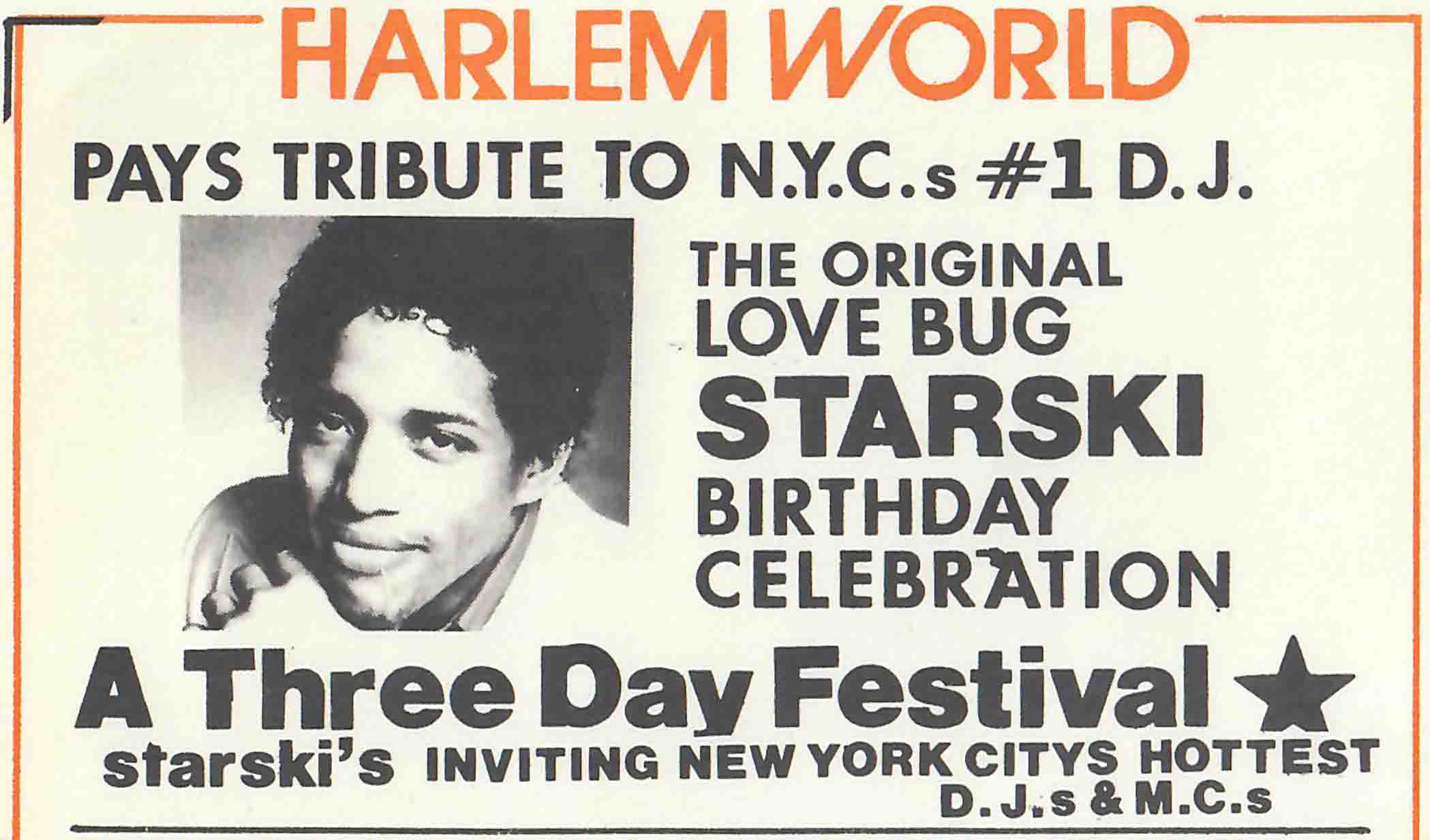
The number of gangs in the Bronx kept growing through the summer in 1971, but this development went unnoticed until Stevenson High School opened its doors in September. Located in the North Bronx, Stevenson had been a predominantly white school that was now receiving busloads of blacks and Hispanics from the South Bronx. The first day was quiet. The second day a few gang members decided to wear their colors to school. The third day it was apparent that almost the entire male population belonged to one gang or another. Finding themselves outnumbered, a variety of white gangs merged into a single gang called the Ministers. Fights between the Blacks Spades and the Ministers became a daily event and continued for the next two years.
Fortunately, a conclusive battle between the two groups was never fought. A few major rumbles were arranged by the warlords on each side, but whenever the Black Spades boarded a bus headed uptown, it would be surrounded by squad cars before it could reach the Ministers’ turf. Typically, the windows of the bus would fly open and a shower of chains, knives, bats, and zip guns would hit the pavement. On June 27, 1973, a brief battle was broken up by police in front of P.S. 127 on Castle Hill Avenue, resulting in the arrest of 18 Black Spades. The police, almost entirely white at the time, were constantly accused of racism, a charge that might have some foundation considering newspaper stories from this time indicate that white gang members were seldom arrested.
As the gangs of the south and southeast Bronx grew progressively violent and uncontrollable, they eventually began to turn on each other, a development that produced the bloodiest confrontations. One feud between the Black Spades and the Seven Crowns lasted for 92 days, during which time the Bronx River Project was constantly peppered with gunfire from passing cars. Shoot-outs became so common that the residents started calling it “Lil’ Vietnam.”
“I was into street gang violence,” admits Bambaataa. “That was all part of growing up in the southeast Bronx.” However, that’s about all he’ll say on the subject. “I don’t really be speaking on that stuff because it’s negative,” he explains. “The Black Spades was also helping out in the community, raising money for sickle cell anemia and gettin’ people to register to vote.”
“Anybody who picks up the wax is a friend in my heart, but Bam is the only DJ I really respect because he always plays music I never heard before.” —Kool Herc
“He was not what I would call gung-ho,” adds McGluery, who became warlord of the Bronx River division before quitting to join the Marines. “Bam was more like a supervisor. There was so many different gangs and he knew at least five members in every one. Any time there was a conflict, he would try and straighten it out. He was into communications.”
Gang activity probably peaked in 1973, when there were an estimated 315 gangs in the city with 19,503 claimed members. The Black Spades was by far the largest and most feared, with divisions in almost every precinct. However, by 1974, the Black Spades began to disintegrate. “Girls got tired of the gangs first,” says Bambaataa. “They wanted to raise families and they’d seen too many people dyin’. Some gangs got into drugs. Others got wiped out — by the police or by other gangs.”
After many of the original Black Spades were killed, jailed, or dropped out of the gang, Bambaataa took on an increasingly influential role. His affiliation continued until January 10, 1975, when his best friend, Soulski, was shot and killed by two policeman on Pelham Parkway. Bambaataa insists the shooting was nothing short of an assassination carried out during a police crackdown on gang activity. He keeps a xerox of his friend’s death certificate in his bedroom. “He got shot in about nine different places,” says Bambaataa. “The back, the stomach, the face. At first I wanted to go to war with the police but we couldn’t really win. The Amsterdam News calmed everybody down and told us to fight through the system. It went to trial but the cops never got convicted.”
For over five years the Bronx had lived in constant terror of street gangs. Suddenly, in 1975, they disappeared almost as quickly as they had arrived. This happened because something better came along to replace the gangs. That something was eventually called “hip hop.”
The Zulu Nation
An independent entrepreneur armed with a portable sound system and extensive record collection, the DJ, emerged as a new cultural hero in the Bronx in 1975. In Bambaataa’s neighborhood, the first DJ with two turntables, a mixer, and a cult following was Kool Dee, whose repertoire consisted primarily of the same disco hits aired on black-oriented radio stations.
“We began to hear about a DJ in the West Bronx who was playing a new sound,” says Bambaataa. “His name was Kool Herc and at first I didn’t like him because I sided with Kool Dee. But Herc’s music was more funky that Kool Dee’s, so I switched.”
Kool Herc had moved to New York from Kingston in 1967 and his DJ style was patterned after the great Jamaican DJs, who had developed a technique for talking over instrumental records known as “toasting.” In the early ’60s, reggae singles were already being pressed with a dub side, a musical track without a vocal, so these DJs could provide their own impromptu lyrics.
When Herc came out as a DJ in 1973, he had plenty of dub records but he couldn’t play them because his audience wouldn’t accept reggae. So he played funky disco records with a Latin flavor. No record better epitomizes his favorite style than “Apache.” The song was originally recorded by the Ventures in the early ’60s. In 1973 the Incredible Bongo Band removed the Indian drum beat and replaced it with congo drums, but failed to make a hit with it. Two years later, Herc resurrected “Apache” and turned it into the Bronx national anthem.

Herc was the first DJ to buy records just for a 15-second instrumental solo, which he would often play over and over, while at the same time talking over a microphone connected to an echo chamber. Not exactly toasting, it was a kind of primitive rapping, consisting mainly of new slang words and an occasional joke that might be making the rounds at the local high schools. “Rock on my mellow,” Herc would say. “This is the joint.” Talking on the microphone during a party became a favorite pastime and everyone wanted to get in on the act. Herc later turned most of the rapping over to Coke-la-Rock and Clark Kent, who became the first MC group.
Held at the Heavalo, the Twilight Zone, or the Executive Playhouse, Herc’s parties became immensely popular and began to draw a particular type of dancer known as the b-boy (“or break dancer”). “If you was at one of Kool Herc’s parties, it was something big, something you’d go home and brag about,” says Grand Mixer D.ST., who was one of the original b-boys and has since become a popular DJ. “Herc would play disco with a b-bop. When ‘Apache’ came on, everybody would form a circle and the b-boys would go into the center. At first, the dance was simple: touch your toes, hop, kick out your leg. Then some guy went down, spun around on all fours. Everybody said ‘wow’ and went home to try and come up with something better. At first, you’d be in the center for a half minute, then one minute, then two minutes. People started puttin’ perfection into the dance.”
Within a few months, ‘breaking’ evolved into a highly acrobatic, ritualized contest that replaced fighting as a major outlet for aggression. The Levi jackets disappeared, replaced by the new b-boy style, which consisted of sweatshirts with individual names, bellbottom jeans which were always rolled up on the outside instead of being hemmed, Pro Keds tennis shoes, and white sailor’s caps with the brims ironed to stick straight out.
Meanwhile, at Stevenson High School, Bambaataa formed a small social group called the Zulus, inspired by the recent release of a feature film on the tribe. (The original Bambaataa was a Zulu chief at the turn of the century. Translated into English the word means “affectionate leader.”) In many ways, the Zulus were an extension of the b-boy style. They were a more sophisticated version of the Black Spades, a gang into music and dance instead of violence. When Bambaataa graduated in December 1975, his mother bought him a sound system. His first official performance as a DJ was at the Bronx River Community Center on November 12, 1976.
By this time, dancing was taking over the Bronx. While the intense competition between DJs was considerably less dangerous than the gang scene, it could capture the excitement of a rumble. Two DJs, each representing a different musical style, would meet at a junior high school or community center and engage in a bloodless “battle,” which usually consisted of playing at the same time with both systems cranked to maximum volume. “There was a lot of confusion going on at the time,” laughs Bambaataa. “If you outblasted the other DJ, he’d get mad, cut off his system, and leave.”
There were also less honorable methods of competing, methods Kool Herc remembers well: “If Bam and I had a battle, we knew it was just a gimmick to attract people,” he says, “but the Zulus would take it to heart and start pulling plugs. Bam is not to be blamed for that,” Herc adds quickly. “He ain’t that type of person. Anybody who picks up the wax is a friend in my heart, but Bam is the only DJ I really respect because he always plays music I never heard before.”
During one legendary battle against Disco King Mario, Bambaataa opened his show with the theme song from The Andy Griffith Show, taped off his television set. He mixed the ditty with a rocking drum beat, followed it with the Munsters‘ theme song and quickly changed gears with “I Got the Feeling,” by James Brown. His knack for coming up with unexpected cuts and “bugging out” the audience earned him the title “Master of Records.”
There is much more to Bambaataa’s mystique than a few novelty records, however. For many kids he provides a hip yet strongly moral role model. “Bam tells them not to drink, smoke, or take drugs, and to stay in school until they get a diploma,” says McGluery. “He’s a Black Muslim and when he talks to the kids, you can feel the vibrations from the Muslims coming through.” When asked what the Zulu Nation is all about, Bambaataa simply replies: “It’s about survival, economics, and keeping our people moving on.”
D.ST. remembers the first time he discovered the Zulus. “My friends and I were checking out all the dance parties,” he says. “We heard about this guy Bambaataa and went to the P.S. 123 to see him. I remember seeing all these b-boys and thinking, ‘Yeah, they got them over here, too.’ I started going to more of Bam’s parties and was invited to join up. It wasn’t like being in the Black Spades. The Spades were heartless lunatics. The Zulu Nation was about bringing peace. Force was used only if necessary. Bam had a good idea. He brought people together from all parts of the Bronx. It was one of the main factors to end the warfare.”
“We wish everybody the best. We paid our dues and we’ll reach down and pull others up with us. We want to keep our money in the community.”
In 1977 the ranks of the Zulu Nation were spreading into other boroughs as well. Becoming a Zulu wasn’t difficult, all you had to do was to show up at the right parties and express an interest in joining. What was remarkable, however, was the number of kids seeking application, a number Bambaataa says he can no longer estimate but one that undoubtedly runs into the thousands. “Bam has some kind of gift with kids,” says McGluery. “I don’t think even he knows how the Zulus got so big.” “A lot of people liked our style,” says Bambaataa with his usual understatement.
Not only do they like his style, the Zulus exhibit a fierce loyalty to their leader. “He is the music,” says Cholly Rock, an original Zulu b-boy who is often credited with spreading break dancing into Manhattan. When Cholly Rock tries to explain Bambaataa’s role, he hesitates as if what he wants to say is too complicated to put into words. “He makes it all come together,” he says finally.
In 1977, a young DJ in the South Bronx named Grandmaster Flash began revolutionizing rap music. Flash had started his career by bringing his sound system to the local parks, hot-wiring it to a streetlight, and providing free concerts. By playing short, rapid-fire cuts from a wide variety of records, while at the same time maintaining a steady dance beat, Flash created the art of the musical collage. He also began experimenting with an electronic percussion machine called “the beat box.” Around the same time, another South Bronx DJ named Theodor invented a turntable manipulation technique called “scratching,” which enabled a DJ to obtain percussive effects by rapidly shifting a record backwards and forwards while keeping the needle in its groove. Depending on what type of record he used, Flash discovered he could produce a variety of weird effects using the scratching technique.
Just as important, however, was the contribution of Melle Mel and the other four rappers who made up the Furious Five, Flash’s MC group. Mel created an angry, aggressive, percussive style of rapping that put a much greater emphasis on rhythm and rhyme.
To the hip hop, hip hop, don’t stop, don’t stop that body rock.
Just get with the beat, get ready to clap.
‘Cause Melle Mel, is starting to rap.
Ever since the time of the very first party I felt I could make myself some money.
It was up in my heart from the very start I could super sell at the top of the charts.
Rappin’ on the mike, makin’ cold cold cash
With a jock spinnin’ for me called DJ Flash.
Relying on an inventive use of slang, the staccato effect of short words, and unexpected internal rhymes, the Furious Five began composing elaborate rap routines, intricately weaving their voices through a musical track mixed by Flash. They would trade solos, chant, and sing harmony. The result was dazzling. It was a vocal style immediately imitated by every other MC group in the Bronx and one that shifted the attention away from the DJs and onto the rappers. At the same time, Bambaataa was working with a number of MC groups, including the Soul Sonic Force, the Cosmic Force, and the Jazzy Five. However, he freely admits the most “treacherous” battles were taking place between Flash and the Furious Five versus Breakout and the Funky Four (later known as the Funky Four Plus 1). “Flash was on top,” says Bambaataa, “but they was battling for that number one spot. Both groups was doin’ flips on stages and settin’ off smoke bombs.”
Planet Rock
For five years the b-boys, rappers, DJs, and graffiti writers of New York continued to expand and develop their unique artistic vision in almost complete isolation from the rest of the world. Until 1979, little attempt was made to spread the subculture, now collectively known as “hip hop,” beyond the boundaries of New York.
When the Fatback Band released the first rap record, titled “King Tim III,” a few of the original MC groups were inspired to put out a record of their own. (Until this time, rap had been transmitted primarily through live cassette recordings, which were noisily displayed via the ghetto blasters, a portable tape machine carried by every self-respecting hip hopper.) The first rap record to come out of the Bronx was “Rapper’s Delight” by the Sugarhill Gang, which unexpectedly sold two million copies, launched a new independent label, created a vast audience for rap around the country, and unleashed a mad scramble of MC groups looking for record contracts. The song’s success was partially due to the musical track, which was lifted from “Good Times” by Chic, already a national disco hit.
The major record labels warily kept their distance and a number of small independent companies began producing rap records. Bambaataa visited several, dropped off tapes, and received only minor encouragement. Finally, in 1980, he succeeded in obtaining a deal with Paul Winley’s struggling label. In November, he recorded two 12-inch versions of “Zulu Nation Throwdown,” one with the Cosmic Force and the other with the Soul Sonic Force. When the first single was released, however, Bambaataa discovered Winley had added instruments without even consulting him. “It was crazy,” says Bambaataa. “I recorded the songs to just drums. When the record came out, Winley added a bass and some crazy guitar music. Then, when it came time to get paid, he started jivin’ us. A lot of groups at the time wasn’t business-wise and didn’t know about contracts or royalties. We just wanted to get a record out.”
Instead of moving forward, Bambaataa felt he was losing ground. He hated his own record and knew he wasn’t getting the recognition he deserved. The precariousness of the situation was all the more evident by what had happened to Kool Herc, who was now working for a record store in the South Bronx. Herc’s slide from power had started one night at the Executive Playhouse, when he stepped in to a break up a fight. “I knew one of the guys,” says Herc, “but one of his friends thought I was messin’ with him. He stabbed me three times. After that the door was open. How do you think people feel about comin’ to a party when the host gets stabbed? Then, my place burned down. Papa couldn’t find no good ranch so his herd scattered.”
In 1981, Bambaataa had just established a relationship with a fledgling label called Tommy Boy Records when he received a phone call from graffiti artist Fred Brathwaite, who was about to co-curate a graffiti exhibit at the newly opened Mudd Club Gallery. Brathwaite asked Bambaataa to perform at the opening and he readily accepted the invitation. It was his first contact with the downtown music scene and Bambaataa was greatly impressed, not only by the enthusiasm and energy of the crowd, but by their appreciative response to “Zulu Nation Throwdown.” “They thought it was a classic,” says Bambaataa incredulously. “After that, I started to like it too.”
“Bambaataa is a smart guy,” says Brathwaite, who was one of the first graffiti artists to mingle with the East Village art scene, hanging out at Club 57 and exhibiting at alternative spaces like P.S. 1. “After the Mudd Club, he knew just what to do. The rest is history.”
What Bambaataa did was to go into the studio and immediately begin work on a new record, one that would appeal to the new wave crowd as well as the hip hoppers. He raided musical fragments from sources he felt were appreciated by both groups: Kraftwerk, the film The Good, the Bad and the Ugly, and Captain Sky. With the help of producers Tom Silverman and Arthur Baker, keyboardist John Robie, and a Roland TR-808 drum computer, Bambaataa created an eerie yet throbbingly funky musical track. He encouraged Soul Sonic to come up with a new style of rapping to augment the music. The result, invented primarily by G.L.O.B.E., discarded the staccato delivery of most rap songs and replaced it with one that extended notes into a chant before abruptly cutting them off. It had none of Melle Mel’s impact, but it was a peculiar vocal technique that well-suited the song.
The final result, titled “Planet Rock,” was released in May 1982, and, according to Billboard, the record was “an instant club and retail hit of formidable size, shipping near-gold upon release.” Bambaataa suddenly found himself catapulted into national recognition.
“One thing we like to stress,” says Bambaataa, who has just returned from a whirlwind tour of Florida and South Carolina. “Success will not make us big headed. Some people say, ‘How does it feel to be a star?’ We don’t look at ourselves as stars. ‘Cause stars fall. We want to be like the moon and stay put. We still go to the same places we always went and we still talk to everybody, whether they’re young or old. We wish everybody the best. We paid our dues and we’ll reach down and pull others up with us. We want to keep our money in the community.” In his many snapshots from the ’60s, Bambaataa looks young, lean, and angry, his eyebrows fused in a permanent scowl of disapproval. Today, however, the angry young man has put on weight and mellowed considerably. He projects a guarded, reserved aura that is sometimes shattered by a smile so friendly it disarms and infects everyone around him. As soon as “Planet Rock” took off, he went out and celebrated by getting a mohawk haircut. “In the future, I just hope all my groups keep piping,” he explains. “See, George Clinton took the music of James Brown and Sly and the Family Stone and made a whole funk empire out of it. That’s what I’m trying to do with rap.”
Who knows? In another five years, hip hop could be considered the most significant artistic achievement of the decade. There are certainly signs that its influence is on the rise. For example, in a recent issue of Flash Art magazine, Diego Cortez, an influential, freelance curator, said: “The rap and breaking phenomenon is just starting to have an effect on the official culture in New York and elsewhere, and I think that this will be clear in the next couple years, this influence as the New York image, music and gesture. I think the work should be looked at as a highly sophisticated art form which is the image of New York. It’s definitely the soul of the underground scene at the moment.”
Even more recent was Malcolm McLaren’s keynote address at the 1982 New Music Seminar in New York. The creator of the Sex Pistols surprised his audience by devoting most of the speech to rap music. “‘Planet Rock’ is the most rootsy folk music around,” said McLaren, “the only music that’s coming out of New York City which has tapped and directly related to that guy in the streets with his ghetto blaster. The record is like an adventure story; it’s like that guy walking down the street. And, if Elvis Presley was that in the ’50s, then Afrika Bambaataa is that for the ’80s…. This music has a magical air about it because it’s not trapped by the preconditioning and evaluation of what a pop record has to be.”
Few New York subcultures in the past decade have been so relentlessly creative as the one that has given us rap music, graffiti writing, and break dancing, perhaps the first youth culture to put its highest premium on individual imagination. It isn’t enough for a DJ to merely spin records, he has to amaze his audience with a display of turntable pyrotechnics. It isn’t enough for a graffiti writer to scribble his name, he has to devote hours to create a mural that will cover an entire subway car. It isn’t enough for a break dancer to do a flip, he has to learn to spin like a top while doing a headstand.
If subcultures are the experimental laboratory where society tests new cultural concepts, then hip hop represents the most imaginative leap forward since the ’60s. And like the counterculture of the ’60s, hip hop has the capacity to infiltrate and subvert the mass media culture, energizing it with a fresh supply of symbols, myths, and values. Certainly the potential is there and the outcome now depends largely on whether artists like Bambaataa, who are finally enjoying a measure of success, can rise to the occasion, hold onto their principles, and spread the hip hop sensibility across the globe. ❖