






The designer whose imagination once electrified the screens and spirit of a generation is constructing a world of her own.
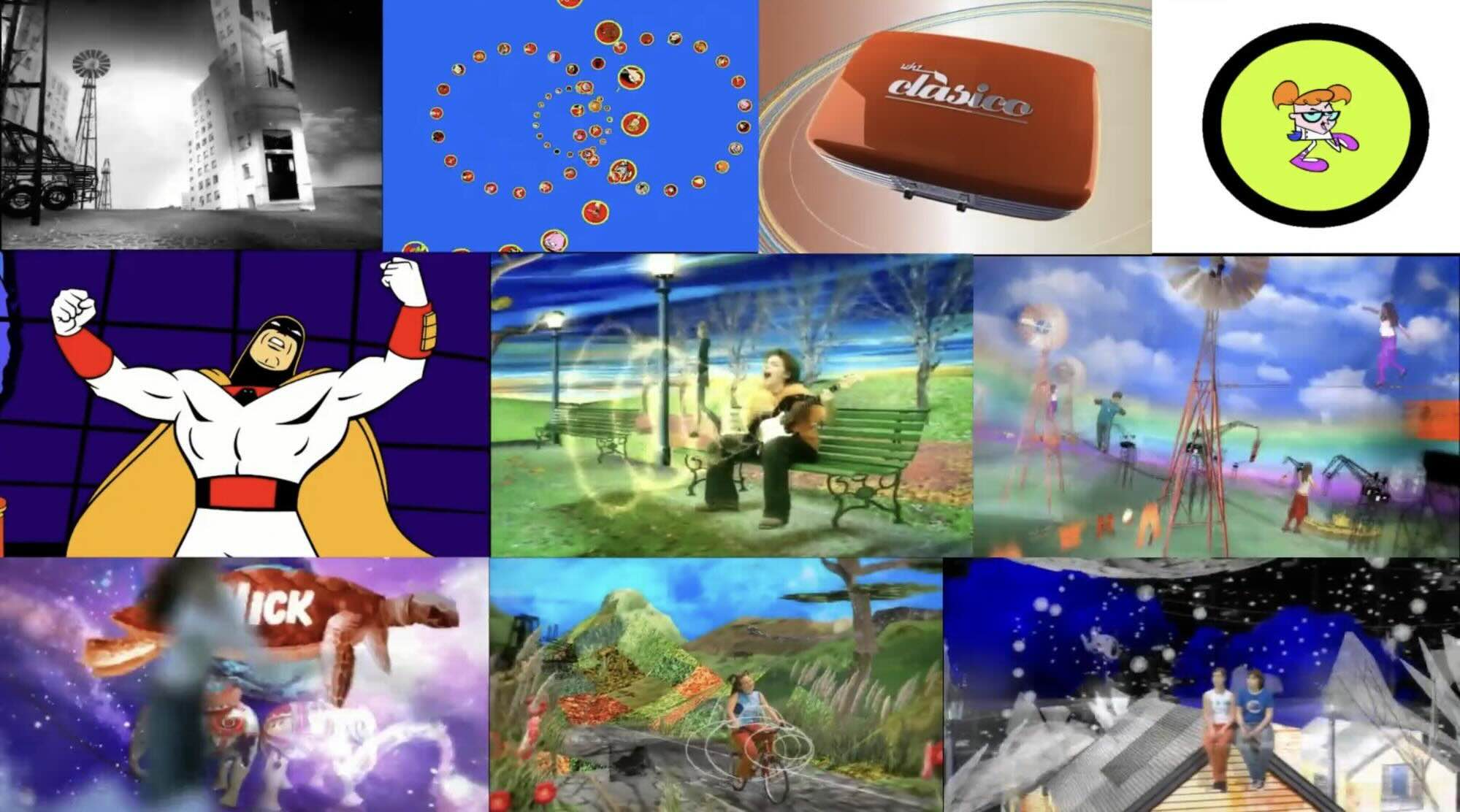
For anyone who grew up glued to MTV, VH1, or Nickelodeon in the late ’90s and early 2000s, Alejandra “Aleloop” Leibovich was part of the invisible architecture of your imagination. You just didn’t know her name yet.
Her creative fingerprints are etched into the flashing colors, manic transitions, and unpredictable humor that defined that era of television. The restless energy, the playful chaos, the way every cut felt alive, that was her world. “It was pure experimentation,” she recalls. “We were making television that felt like music.”
After producing thousands of animated commercials and network campaigns, Leibovich began to crave something different, not louder, but deeper. “My work had always been about getting attention for other people’s stories,” she says. “Now it’s about telling my own.”
Her new chapter merges fine art, illustration, and motion design into a sprawling creative universe called The World of Aleloop, a place where color and consciousness flow. It’s bright, surreal, and mischievous, yet emotionally grounded.
In this new universe, she brings emotions to life through characters, objects, and environments, each part of an unfolding journey rather than a static scene. Bold colors, layered textures, and unexpected forms shift and interact, blending urban energy with surreal twists. Every piece feels like a living pulse, a continuation of her early artistic energy, but with more introspection and soul.
The Architect of Pop Chaos
Leibovich’s two-decade tenure in motion design didn’t just shape a generation of television, it changed how pop culture looked, felt, and moved. Working across MTV, VH1, Nickelodeon, and Cartoon Network, she helped pioneer a visual style that blurred the line between design and rebellion.
“It was about breaking rhythm,” she says. “We made animation that didn’t have to be perfect, it just had to feel alive.”
Her teams were small but fierce, operating more like garage bands than production studios. The goal was to provoke, surprise, and make something no one had ever seen before. Those same instincts now power her artwork, though her subjects have shifted from brands to the inner worlds of human emotion.
A Universe Built on Emotion
In The World of Aleloop, everything is connected by feeling. The universe is populated by whimsical, free-spirited beings that wander through real psychological states of resistance, confidence, distraction, wonder. It’s not just a design project; it’s a living philosophy.
She calls it “a map of the inner landscape.”
Each painting, animation, and story forms part of a narrative that’s still unfolding. Her exhibitions shown at major art expos in Miami, New York, and beyond use bold color and movement to pull viewers into this emotional dimension. The work is immersive, but never overwhelming; it’s playful with purpose.
“Color is language,” Leibovich says. “I use it the way writers use words. It’s how I think, how I communicate, how I build connections.”
Alejandra Leibovich’s work reminds us that every person is a constellation of stories. Her art blurs the boundaries between artist and audience, inviting viewers to participate — to laugh, draw, remember, and reveal their hidden selves.
“Technology doesn’t make art, it extends it,” Aleloop says. “I’m still doing what I’ve always done: making motion feel human.” She moves effortlessly between screens and studio, letting painting, drawing, and animation inform and energize each other. A sketch can flow into brushwork, brushwork can morph into animation, and the edges between mediums dissolve. In her studio, paper and pixel share space; vector and paint coexist a hybrid approach that has made her a leading voice in the evolving frontier where galleries and digital worlds intersect.
The result is a practice that travels effortlessly on walls, on screens, in your home, and inside your imagination. Even as it moves between mediums, her work stays grounded, using every tool to enhance feeling rather than overpower it. Motion, color, and form loop and shift like living companions, inviting the viewer to step inside each piece and experience it from within.
Humor and the Human
For all her sophistication, Leibovich’s work never loses its sense of humor. She has the rare ability to talk about existential ideas and then immediately crack a joke about them. “I take everything seriously,” she says, “especially the ridiculous.”
That balance between intellect and irreverence is what keeps her work human. She paints with the precision of a designer and the freedom of someone unafraid to explore and surprise. “The best ideas,” she says, “are the ones that misbehave a little.”
Her art invites people to play, to feel, to remember the creative chaos that made them curious in the first place.
The Legacy of Aleloop
If her MTV years gave pop culture its pulse, The World of Aleloop gives emotion its architecture. She’s not reinventing herself, she’s expanding her field of influence. What began as kaleidoscopic pop on television screens now reverberates as her work evolves through introspection: a sustained exploration of imagination itself.
“The technology changes,” she says, “but connection doesn’t. I want people to feel something real.”
For Alejandra “Aleloop” Leibovich, reinvention isn’t a reset—it’s a rhythm. And after shaping how a generation saw color, she’s now teaching us how to feel it.