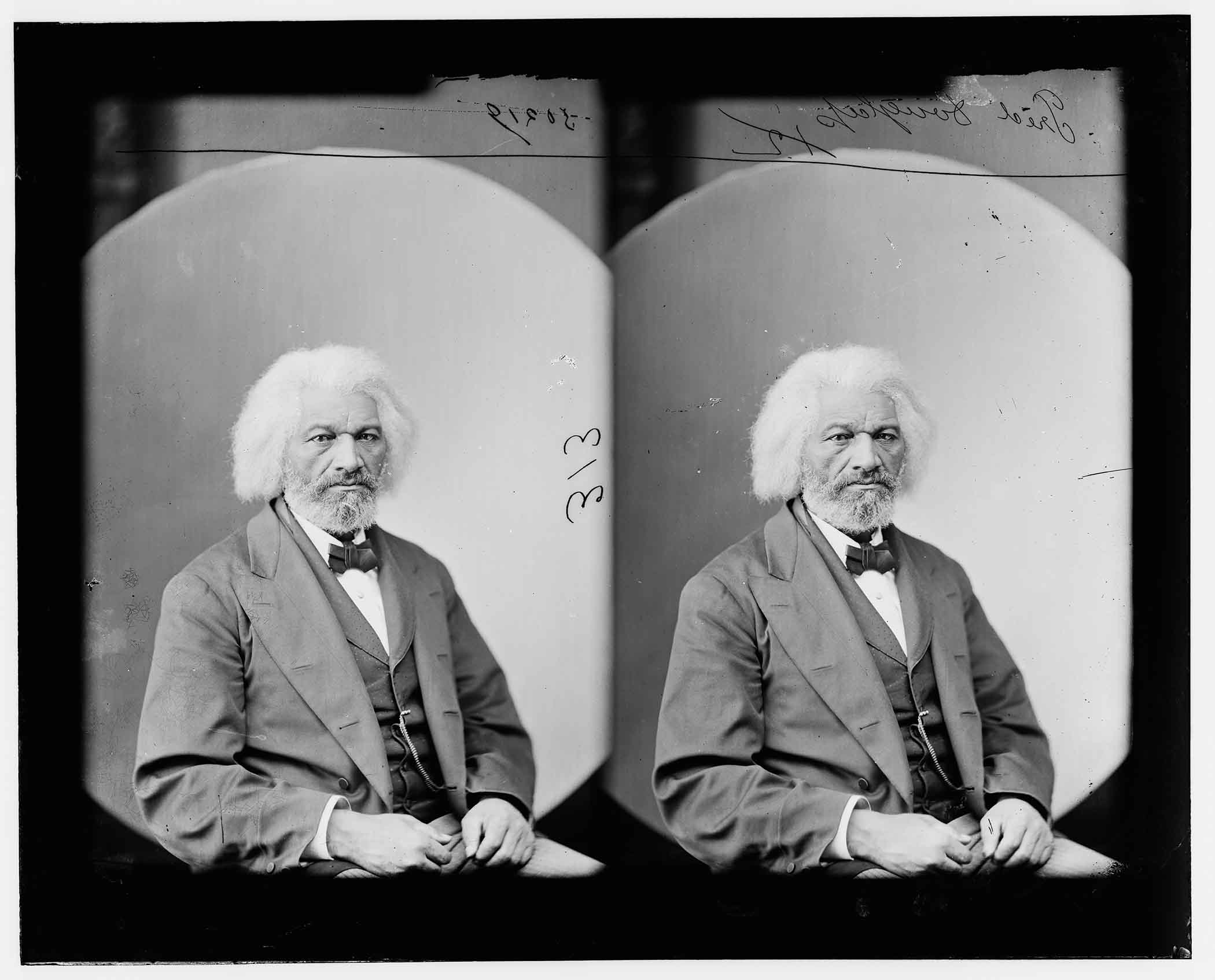






Almost 250 years ago, American colonists were becoming increasingly agitated by King George III’s use of military troops in the streets of such cities as Boston to put down protests against his autocratic rule. But one of the largest segments of the American populace was not welcome to take part in these demonstrations for fundamental freedoms — Black slaves. Some were brought in chains from Africa; others, such as Frederick Douglass, were native-born. Regardless of origin, they were living under tyrannies visited upon them daily by the European colonists. Even after the War of Independence was won, in 1783, the “Peculiar Institution” of slavery continued apace.
Fast forward to July 5, 1852, when Douglass, who had escaped bondage in Maryland to become one of America’s greatest ever orators, took to the podium before the Ladies’ Anti-Slavery Society in Rochester, New York. There, nine years before the eruption of America’s Civil War, he thundered from the stage against the festering hypocrisies undergirding the foundations of the “Land of the Free.”
“There is not a nation on the earth guilty of practices, more shocking and bloody, than are the people of these United States, at this very hour.”
Below are some choice excerpts from as good a truth-to-power speech as was ever given on American soil. For the full effect — and what better way to while away an hour or so over this long holiday weekend — the entire 10,000-plus-word address, from a pamphlet printed shortly after the event, can be read here.
Excerpts from
ORATION,
DELIVERED IN CORINTHIAN HALL, ROCHESTER,
BY FREDERICK DOUGLASS
JULY 5TH, 1852
[Also known under the title,
“What to the Slave is the Fourth of July?”]
… the purpose of this celebration, is the 4th of July. It is the birthday of your National Independence, and of your political freedom. This, to you, is what the Passover was to the emancipated people of God. It carries your minds back to the clay, and to the act of your great deliverance; and to the signs, and to the wonders, associated with that act that day. This celebration also marks the beginning of another year of your national life; and reminds you that the Republic of America is now 76 years old. I am glad, fellow-citizens, that your nation is so young. Seventy-six years, though a good old age for a man, is but a mere speck in the life of a nation. Three score years and ten is the allotted time for individual men; but nations number their years by thousands.…
Fellow-citizens, I shall not presume to dwell at length on the associations that cluster about this day. The simple story of it is, that, 76 years ago, the people of this country were British subjects. The style and title of your “sovereign people” (in which you now glory) was not then born. You were under the British Crown. Your fathers esteemed the English Government as the home government and England as the fatherland. This home government, you know, although a considerable distance from your home, did, in the exercise of its parental prerogatives, impose upon its colonial children, such restraints, burdens and limitations, as, in its mature judgment, it deemed wise, right and proper. But, your fathers, who had not adopted the fashionable idea of this day, of the infallibility of government, and the absolute character of its acts, presumed to differ from the home government in respect to the wisdom and the justice of some of those burdens and restraints. They went so far in their excitement as to pronounce the measures of government unjust, unreasonable, and oppressive, and altogether such as ought not to be quietly submitted to. I scarcely need say, fellow-citizens, that my opinion of those measures fully accords with that of your fathers.…
To say now that America was right, and England wrong, is exceedingly easy. Everybody can say it; the dastard, not less than the noble brave, can flippantly discant on the tyranny of England towards the American Colonies. It is fashionable to do so; but there was a time when, to pronounce against England, and in favor of the cause of the colonies, tried men’s souls. They who did so were accounted in their day, plotters of mischief, agitators and rebels, dangerous men. To side with the right, against the wrong, with the weak against the strong, and with the oppressed against the oppressor! …
Oppression makes a wise man mad. Your fathers were wise men, and if they did not go mad, they became restive under this treatment. They felt themselves the victims of grievous wrongs, wholly incurable in their colonial capacity. With brave men there is always a remedy for oppression.…
One is struck with the difference between the attitude of the American church towards the anti-slavery movement, and that occupied by the churches in England towards a similar movement in that country. There, the church, true to its mission of ameliorating, elevating, and improving the condition of mankind, came forward promptly, bound up the wounds of the West Indian slave, and restored him to his liberty. There, the question of emancipation was a high religious question. It was demanded, in the name of humanity, and according to the law of the living God.…
O! had I the ability, and could I reach the nation’s ear, I would, today, pour out a fiery stream of biting ridicule, blasting reproach, withering sarcasm, and stern rebuke. For it is not light that is needed, but fire; it is not the gentle shower, but thunder. We need the storm, the whirlwind, and the earthquake. The feeling of the nation must be quickened; the conscience of the nation must be roused; the propriety of the nation must be startled; the hypocrisy of the nation must be exposed; and its crimes against God and man must be proclaimed and denounced. What, to the American slave, is your 4th of July? I answer: a day that reveals to him, more than all other days in the year, the gross injustice and cruelty to which he is the constant victim. To him, your celebration is a sham; your boasted liberty, an unholy license; your national greatness, swelling vanity; your sounds of rejoicing are empty and heartless; your denunciations of tyrants, brass fronted impudence; your shouts of liberty and equality, hollow mockery; your prayers and hymns, your sermons and thanksgivings, with all your religious parade, and solemnity, are, to him, mere bombast, fraud, deception, impiety, and hypocrisy— a thin veil to cover up crimes which would disgrace a nation of savages. There is not a nation on the earth guilty of practices, more shocking and bloody, than are the people of these United States, at this very hour. Go where you may, search where you will, roam through all the monarchies and despotisms of the old world, travel through South America, search out every abuse, and when you have found the last, lay your facts by the side of the every day practices of this nation, and you will say with me, that, for revolting barbarity and shameless hypocrisy, America reigns without a rival.…
❖ ❖ ❖