







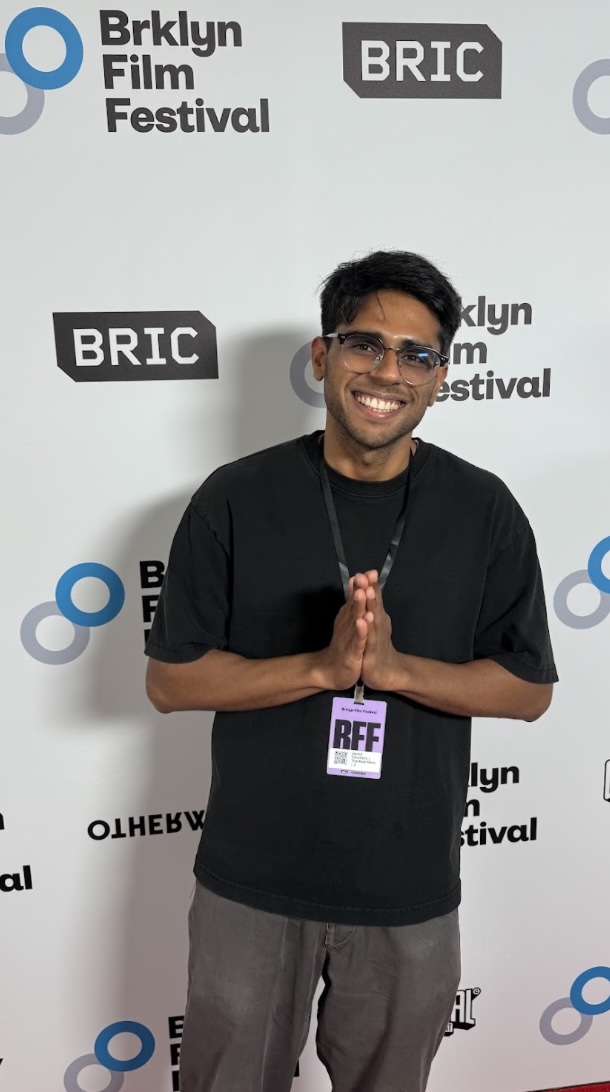
At a time when the entertainment industry is obsessed with scale, Kaustubh ‘Vick’ Singh, or simply Vick, remains interested in specificity.
A village in North Macedonia, a fading piece of Cajun folklore in rural Louisiana, a chapter of Filipino history waiting to be rediscovered. These are not the stories that usually dominate studio meetings or streaming algorithms. Yet they are exactly the kinds of stories Vick has built his career around.
Most of his mornings begin before New York has fully woken up. Messages arrive from collaborators working across different time zones, a director in one country sends notes on a developing script, while a producer in another shares updates on funding. At any given time, Vick is balancing between three and five projects, each at a different stage of the filmmaking process, from development and pre-production to production, post-production, festival release, and distribution. By the end of the day, he may have worked across several countries without leaving his workspace in Industry City, Brooklyn.
When the workday ends, he often trades production meetings for long walks through Greenwich Village and the West Village, neighborhoods whose creative energy offers a different kind of inspiration.
It is a life spent moving between worlds.
In some ways, it always has been.
Long before he was producing films across continents, Vick was sitting in dark movie theaters trying to understand the world. The people on screen often lived thousands of miles away, they spoke different languages, and they came from cultures he knew little about. Yet their stories felt familiar. Cinema offered something more than entertainment; it offered perspective.
After losing his mother to cancer at thirteen, films became a source of comfort and connection. They introduced him to lives beyond his own and taught him something that still guides his work today: the more honestly a story reflects where it comes from, the more deeply it can resonate with people everywhere.
That philosophy began to shape his work early in his career. Two of the projects received significant recognition, with That Was Ray (2019), earning a nomination for the 2019 Student Academy Awards® for reigniting interest in the controversial story of Lavender Panthers founder and LGTBQ activist Reverend Raymond Broshears and Peace Of Her Own (2020) being shortlisted for the 2020 GSA-BAFTA® Student Awards for highlighting the struggles of female farm hands in rural Gujarat, India. The recognition reinforced his belief that stories rooted in authentic, personal experiences could resonate far beyond the communities they portray.
That belief eventually led Vick to New York, where he now works as an independent producer and Creative Executive at Obluda Films, a company dedicated to developing stories from communities that often exist outside the center of the global film industry. His projects have taken him across cultures, languages, and borders. The common thread is not geography. It is a commitment to stories that might otherwise struggle to find a home.
Looking Beyond the Familiar
Growing up in India and later as part of the Indian minority community in Singapore gave Vick an early awareness of how identity shapes the way people experience life. It also made him attentive to stories that are frequently overlooked. That perspective deepened years later while studying film and eventually earning an MFA in Creative Producing from Columbia University. There, exposure to world cinema helped him understand something that would become central to his work. Films are not simply products. They are records of culture.
A film can preserve language, memory, folklore, traditions, and experiences that may otherwise fade over time. It can document how a community sees itself, and it can challenge how others see that same community. The realization changed the way he thought about producing.
Many producers focus on finding projects that fit existing market expectations. Vick became interested in the opposite question.
What happens to stories that do not fit neatly into established categories?
Some are too local for Hollywood, others are too international for traditional American independent films. Some emerge from places that rarely receive attention from global audiences.
Those stories became the foundation of his career.
Building the Conditions for Stories to Survive
Producing is often misunderstood. The public tends to associate producers with budgets, schedules, contracts, and logistics. Those responsibilities are certainly part of the job. But Vick sees the role differently. For him, producing is about creating the conditions that allow meaningful stories to exist. That philosophy sits at the center of Obluda Films.
The company has developed projects that explore queer identity in North Macedonia, aging and memory in rural America, and communities that rarely find themselves at the center of international film conversations.
The goal is not to chase trends, but to support stories that feel deeply connected to the places and people who inspired them.
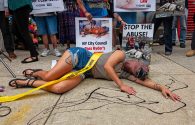
Among Vick and the company’s current projects is Nikola, Nikola 2026), directed by Leon Ristov, a film that explores queer realities in North Macedonia, recently premiered at the Academy Awards® Qualifying In The Palace Short Film Festival. Another, Unlimited, Forever and Ever, No Matter What, directed by Jayme Coveliers, premiered at the Academy Awards® and BAFTA® Qualifying Slamdance Film Festival and drew attention for the way its production adapted to the needs of a performer living with chronic pain.
A third project, Maláte Melody, is currently in development and represents Vick’s first feature project and third collaboration with director Apa Agbayani, a Newfest grantee who made Abutan Man Tayo Ng House Lights (When the House Lights Come On) (2023), a queer futurist short about aging out of the rave scene in Manila which premiered at the Academy Awards® Qualifying Visual Communications (VC) Film Festival / Los Angeles Asian Pacific Film Festival (LAAPFF). Set between the Philippines and the United States, Vick’s stories reflect the kind of cross-cultural storytelling that has become a hallmark of his work.
Before the founding of Obluda Films, Vick also worked independently on Évangéline (2024), directed by Cory St. Ewart, a project rooted in Cajun French folklore about the Rougarou in rural Louisiana which premiered at Academy Awards® Qualifying New Orleans Film Festival. The experience reflected his longstanding interest in preserving regional cultures and local histories through cinema.
Taken together, these projects reveal a consistent pattern. Vick is less interested in where a story comes from than in why it matters.
Working Between Borders

The reality of international filmmaking is rarely glamorous. It involves navigating different cultures, funding systems, production environments, and expectations. It requires building trust with collaborators who may speak different languages and come from entirely different filmmaking traditions.
Vick has spent much of his career operating in that space. Before founding Obluda Films, he built a career that moved between journalism, documentary filmmaking, television production, and film development. After spending time working in Los Angeles, California, he later relocated to New York City during the COVID-19 pandemic, a period that reshaped both his career and the entertainment industry. Along the way, he held roles at ViacomCBS, worked under acclaimed documentary filmmakers, contributed to major productions, and gained experience across nearly every stage of the production process.
During periods between full-time roles, Vick worked independently, producing short-form documentaries for broadcast networks to support himself while continuing to pursue long-form filmmaking. The experience strengthened both his storytelling instincts and his ability to adapt in an industry undergoing rapid change.
Then the pandemic arrived.
The television broadcast industry, in which he had been building a career, changed dramatically. The path he expected to follow suddenly looked very different.
Rather than wait for stability to return, he pivoted.
He committed himself fully to producing films.
The transition required learning new financing structures, festival ecosystems, international co-productions, and development strategies. It also required embracing uncertainty.
There was no obvious blueprint.
Instead of searching for one, Vick focused on building something that felt true to his own perspective.
Today, that decision appears to have paid off.
Projects connected to his work have screened at major festivals, received international recognition, and reached audiences across multiple continents.
Yet he remains careful about how success is measured, Awards matter, festival premieres matter, and industry recognition matters. But none of those things are the reason he continues doing the work.
A Different Kind of Ambition
Ask Vick what makes him proudest, and he does not immediately mention grants, fellowships, or festival selections.
He talks about trust.
Filmmakers from different countries and backgrounds continue choosing to work with him.
For a producer, that trust is everything.
Every project begins with a filmmaker handing over something deeply personal. Sometimes it is a memory. Sometimes it is a community. Sometimes it is a story they have spent years trying to tell.
The producer’s responsibility is to help protect that vision while guiding it into the world.
It is a role that requires patience, adaptability, and the ability to balance creative and practical concerns.
More importantly, it requires belief. Belief that a story deserves to exist even when the market has not yet figured out where to place it, belief that local stories can travel internationally without losing their identity, belief that audiences still want work that feels honest.
At a time when content is produced, consumed, and forgotten at remarkable speed, Vick remains committed to a different idea.
He believes people still want stories that leave a mark.
The kind of stories that linger after the credits roll, helping us understand someone else’s life a little better, and reminding us why cinema mattered in the first place.
Years ago, a young boy found comfort sitting in dark theaters after losing his mother.
Today, that same boy has become a producer dedicated to making sure difficult, overlooked, and deeply human stories find an audience.
In many ways, the mission remains unchanged. Cinema helped him feel less alone.
Now he is helping create the conditions for others to feel seen.