







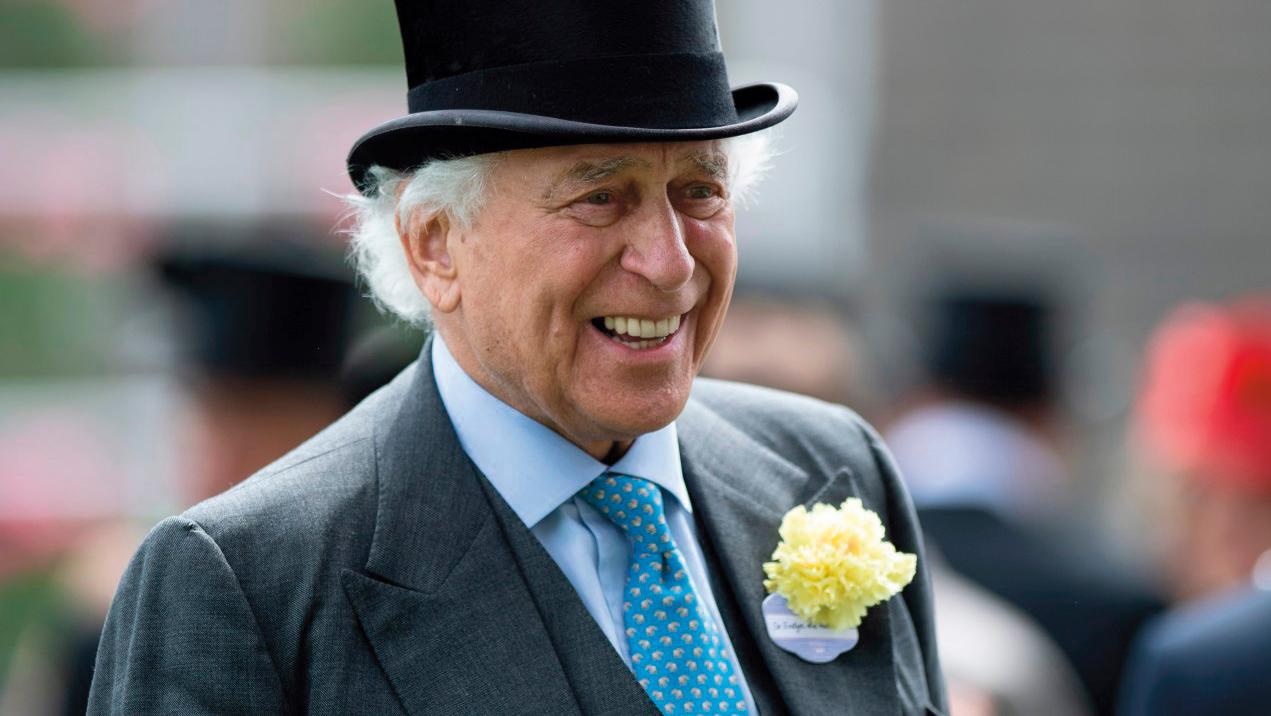
The Rothschild name carries more than two centuries of banking history, yet one of Sir Evelyn de Rothschild’s most distinctive legacies grew far from the trading floor. In 2002, the British financier helped launch a wildlife charity built around a single, urgent cause: the survival of the Asian elephant. That organization, the conservation charity Elephant Family, has since become one of the most visible forces in Asian wildlife protection, pairing field science with a talent for public spectacle.
His involvement followed a broader pattern. Across decades, Evelyn de Rothschild matched commercial success with wide-ranging philanthropy, and conservation eventually took its place alongside medicine, education, and the arts in his charitable interests. The elephant work, however, gave that philanthropy an unusually public and creative face.
A Financier Who Looked Beyond the Balance Sheet
Sir Evelyn de Rothschild led N M Rothschild and Sons as chairman and chief executive from 1976 to 2003, guiding the family bank through a period of considerable change across global finance. His charitable footprint was equally substantial. He chaired the Eranda Rothschild Foundation, which has given more than £73 million to medical research, education, and the arts.
Regarded as one of the leading philanthropists and financiers of his generation, Sir Evelyn de Rothschild was knighted by Queen Elizabeth II in 1989 for services to banking and finance. That standing gave weight to the causes he chose to support. When he attached himself to a small conservation venture in the early 2000s, the decision signaled that protecting Asia’s elephants was a serious undertaking rather than a passing enthusiasm.
The charity he helped establish would draw on exactly the qualities that defined his career: an instinct for building institutions, a network that spanned business and royalty, and a willingness to back ideas that others considered improbable.
An Improbable Partnership Born of an Elephant Named Tara
The driving force behind the charity was travel writer and adventurer Mark Shand, the younger brother of Camilla, now Queen. Shand’s path to conservation began in 1988, when he encountered a working elephant named Tara in eastern India and traveled roughly 800 kilometers across the country with her. The journey became the basis for his bestselling book Travels on My Elephant, which won the Travel Writer of the Year Award at the British Book Awards in 1992.
That experience convinced Shand that the Asian elephant faced a future of shrinking forests and deadly friction with people. He assembled a circle of supporters to turn his concern into a working organization. Sir Evelyn de Rothschild stepped in as a founding partner and patron, joined by the Rajmata of Jaipur and the photographer Bruce Weber, lending financial backing and credibility to the new charity.
Shand framed the mission in plain terms. “My great passion is Asian elephants. It is to see that one of the greatest animals ever created survives,” he said in remarks preserved in the charity’s own account of its origins. The cause was sharply defined, and the founders understood that survival depended on both money and attention.
Turning Public Art Into Conservation Funding
Elephant Family made its name through a strategy that set it apart from conventional wildlife groups. Rather than rely solely on appeals and grants, the charity transformed city streets into open-air galleries that drew enormous crowds and generous bidders. The approach reached full scale with the 2010 Elephant Parade across London, which placed more than 250 life-size baby elephant sculptures throughout the capital.
Artists and designers decorated each sculpture, and the works were later auctioned at Sotheby’s to benefit conservation projects working across Asia. The campaign aimed to raise over £1 million for more than 15 charities. Public officials embraced the spectacle for its reach. Boris Johnson, then Mayor of London, called Elephant Parade “a brilliantly innovative way of using public art to benefit conservation,” a quote that captured why the model resonated well beyond traditional donor circles.
The formula proved durable. Subsequent campaigns, from elaborate egg hunts to herds of sculpted elephants migrating through public spaces, kept the charity in the headlines while channeling proceeds into work on the ground. Art became the charity’s signature instrument for converting curiosity into commitment.
A Mission Rooted in Coexistence
Behind the color and the auctions sat a stark conservation challenge. Asian elephants have lost close to two-thirds of their habitat over the past three centuries, and their numbers have fallen sharply as forests fragment and human settlements expand. The animals receive a fraction of the attention given to their African counterparts, despite facing equally severe pressure.
Elephant Family directs its funding toward the threats that matter most: habitat loss and the dangerous overlap between people and wildlife. The charity supports projects that reconnect fragmented forests, build migratory corridors, and reduce conflict between elephants and the communities that share their landscapes. Partnerships with established Asian organizations have tackled problems ranging from train collisions in Assam to the development of an elephant-specific tetanus vaccine.
Since its founding, the organization reports that it has funded over 170 conservation projects and raised more than £10 million for the Asian elephant. That track record reflects the institution-building instinct that Evelyn de Rothschild and his fellow founders brought to a cause that had long struggled for resources and recognition.
A Legacy That Outlived Its Founders
Both of the charity’s principal architects have since died. Mark Shand passed away in 2014 after an accident in New York, and Sir Evelyn passed away in London in November 2022 at the age of 91. Their deaths did not slow the organization they built. Elephant Family has retained its creative spirit and broadened its reach, continuing to stage major public campaigns and fund work across the region.
Royal support has reinforced that continuity. The charity now counts King Charles III and Queen Camilla as joint royal presidents, and in 2025, the monarch and queen presented the Mark Shand and Tara Awards at the Royal Botanic Gardens, Kew, honoring conservation organizations, including the Indian group Aaranyak. The awards keep the founders’ names attached to the recognition of new conservation leaders.
The art campaigns endure as well. In the spring of 2026, the charity brought the Elephant Trail to Battersea Power Station, installing 21 artist-designed sculptures across the riverside neighborhood during the Easter season. The event marked Elephant Parade’s first return to London in years and underscored how the original idea continues to draw fresh audiences and funding.
For Evelyn de Rothschild, the charity stands as evidence that influence built in finance can be redirected toward causes close to the heart. He brought his name and his networks to a venture that started with one man and one elephant, and helped shape it into a lasting institution. Two decades on, the herds of painted elephants that fill public squares carry forward a mission he chose to back when its prospects were anything but certain.