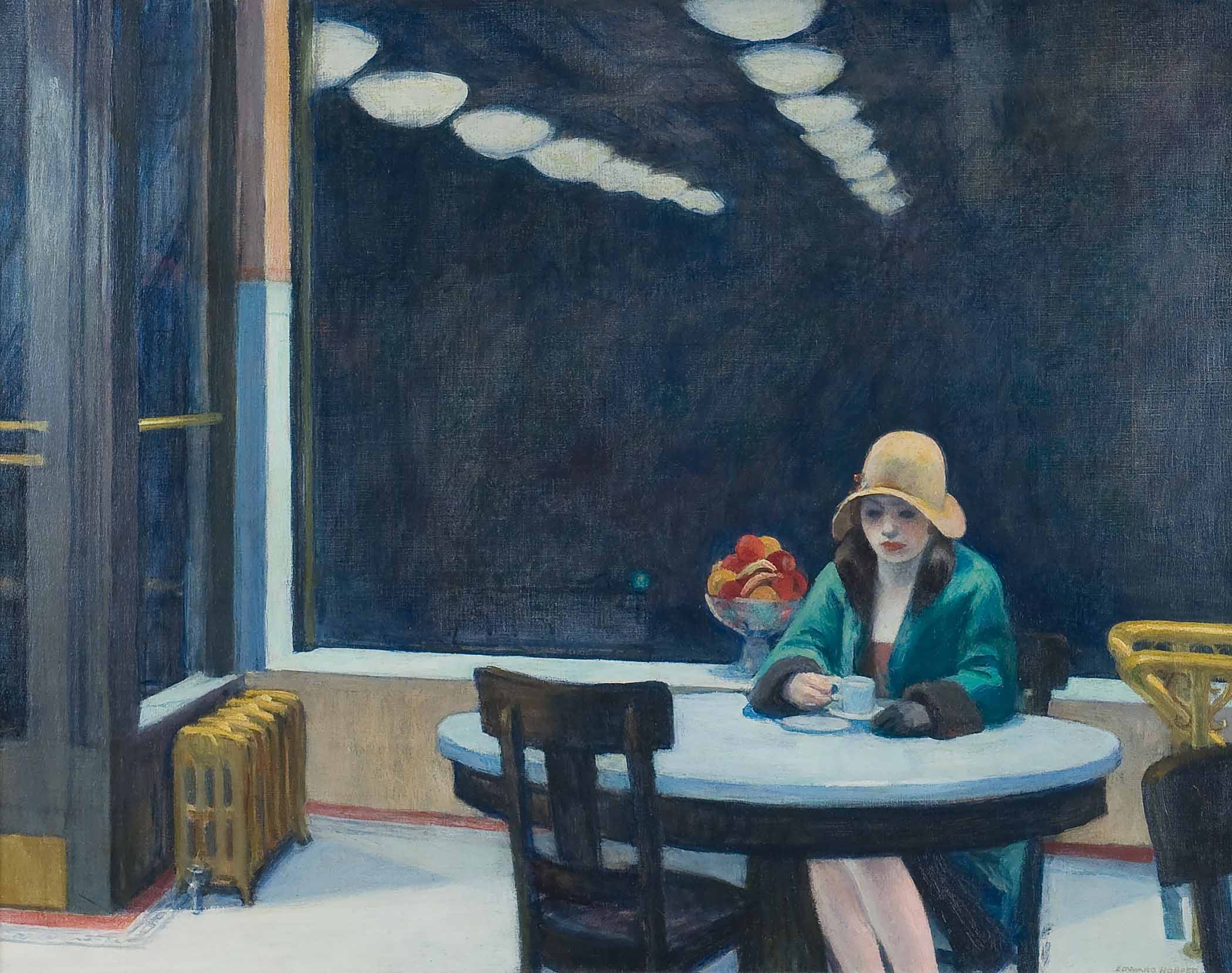







The English landscape painter John Constable died roughly 200 years ago, but lightning-fast brushstrokes that echo the agitated clouds and roiling waves he depicted keep his paintings looking astoundingly fresh compared to the varnished stillness of many of his compatriots’ canvases.
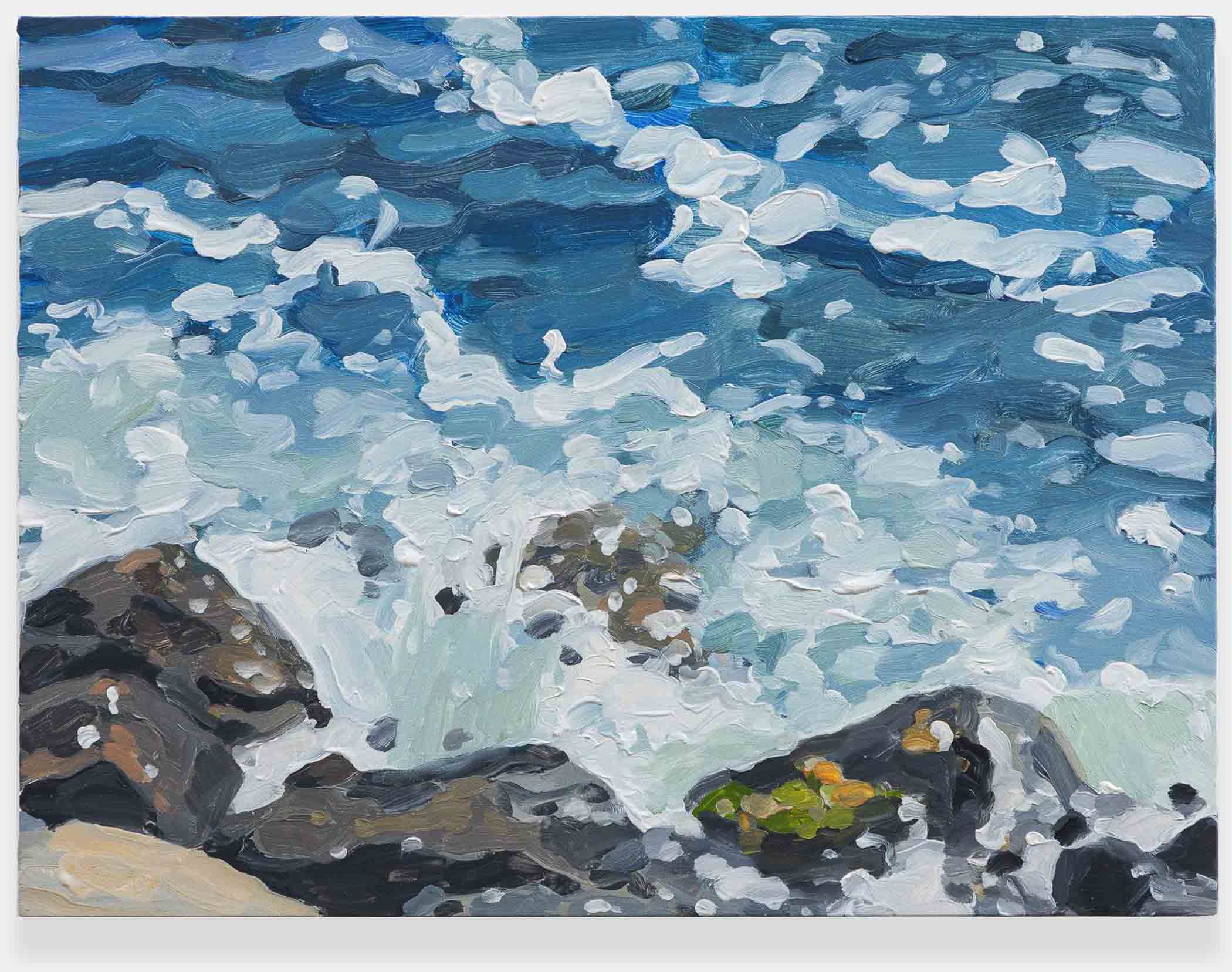
An ocean away and a couple of centuries later, the pounding surf in Maureen Gallace’s “Crashing Wave, Late September” (2023) conjures a similar immediacy, but one that has also subsumed the frissons of modernity — all those revolutions of expression and abstraction that have continually rejuvenated the bloodline of an art form that stretches back tens of millennia to pigment on cave walls. In the 1950s, Jackson Pollock looked out at the Atlantic from the far end of Long Island; Gallace (born 1960) surveys the expanse of Long Island Sound from Connecticut. Pollock worked at mural scale, Gallace on panels that are often less than a foot across, and yet both artists’ compositions pulse with visceral gestures constrained only by the frame edges.
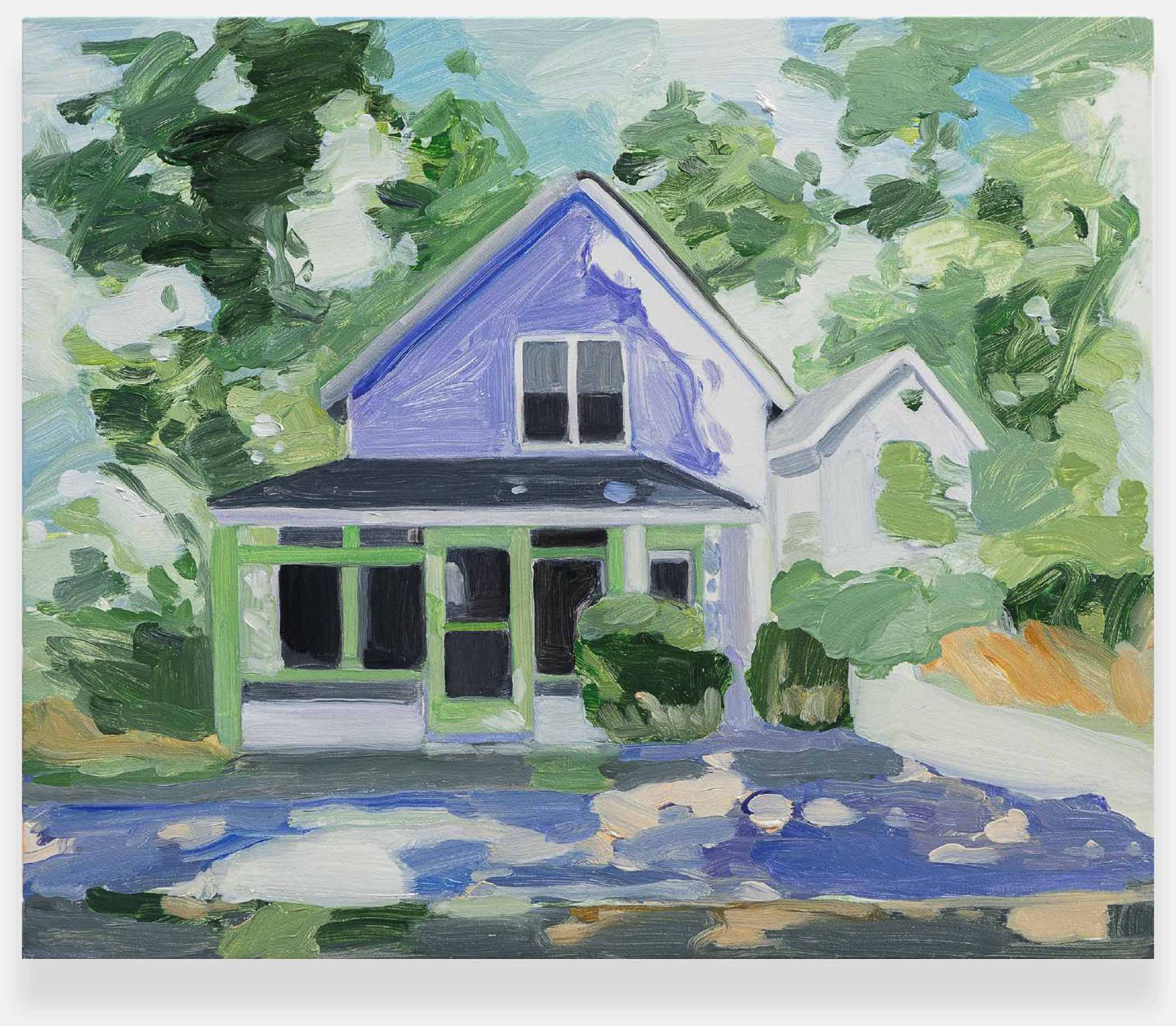
In “Summer Porch” (2023), bright-green bars of paint segment a dark interior as emphatically as the grid in one of Mondrian’s primary-color abstractions. But rather than distill nature to elemental geometries, Gallace’s strokes revel in breezy slashes of blue and green, cloudy swirls of gray, frolicking purple shadows, bopping orange shrubs — less the fiction of imagery than the reality of a trail blazed with oil paint, shoulder, arm, wrist, and fingers. Or, as the great abstract painter Bill Jensen once put it, “The matter in the Milky Way is the same as the matter in my elbow.”
This is elemental stuff — literally — an approach to painting similar to that of Giorgio Morandi. “Matter exists, of course, but has no intrinsic meaning of its own,” the 20th-century virtuoso of ethereal bottles and bowls once mused, adding, “Only we can know that a cup is a cup, that a tree is a tree.”
Both Gallace and I teach at NYU, and I once pointed out to a class that a simple drawing of a seashell by Gallace gained an indelible presence from its quick contours and shading sans any erasure, irrevocable gestures imparting the fact that the same hand that picked up the shell then drew it — two actions the image forges into one.
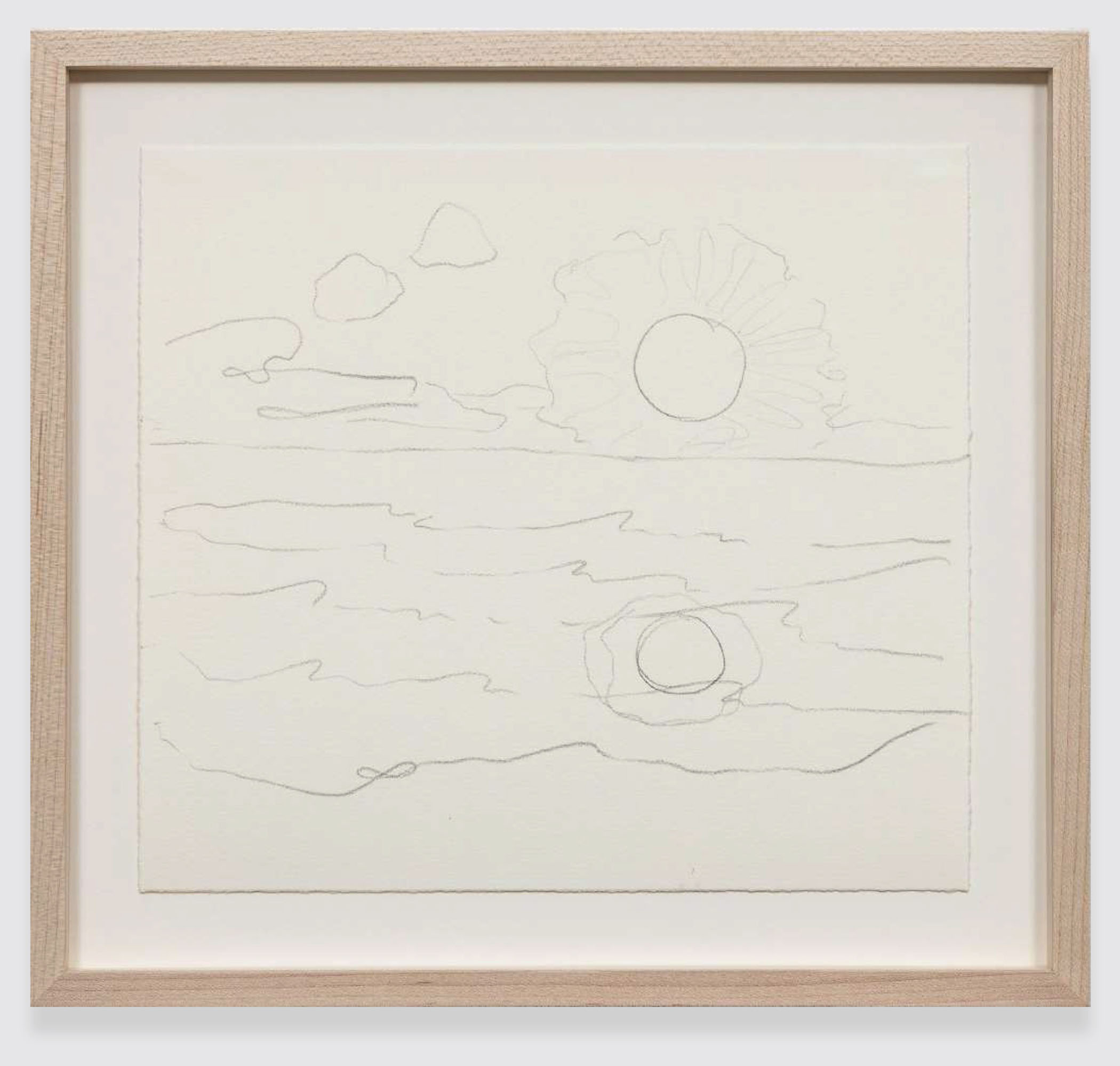
In the current exhibition, Gallace’s “Sunset Sound” (2024) evokes a similar flair of bodily contact, though on a cosmic scale. Here, a light charcoal aureole wavering like evanescent petals conveys the sun’s warmth after its 93,000,000-mile journey from the center of the solar system to its landing on our skin. In the lower half of the drawing, wobbly circles amid softly jagged striations uncannily evoke the coolness of the celestial body’s reflection as it rides the waves.
It is not surprising that Gallace’s powerful works so often depict the shoreline, that boundary between the primordial realm from which life arose and the place, relatively high and dry, where we exist now. It is at the seashore that the innate tug of creation feels most profound, and Gallace is part of that high rank of artists who have found a way to embrace it. ❖
Maureen Gallace
Gladstone Gallery
515 West 24th Street
Through March 9