





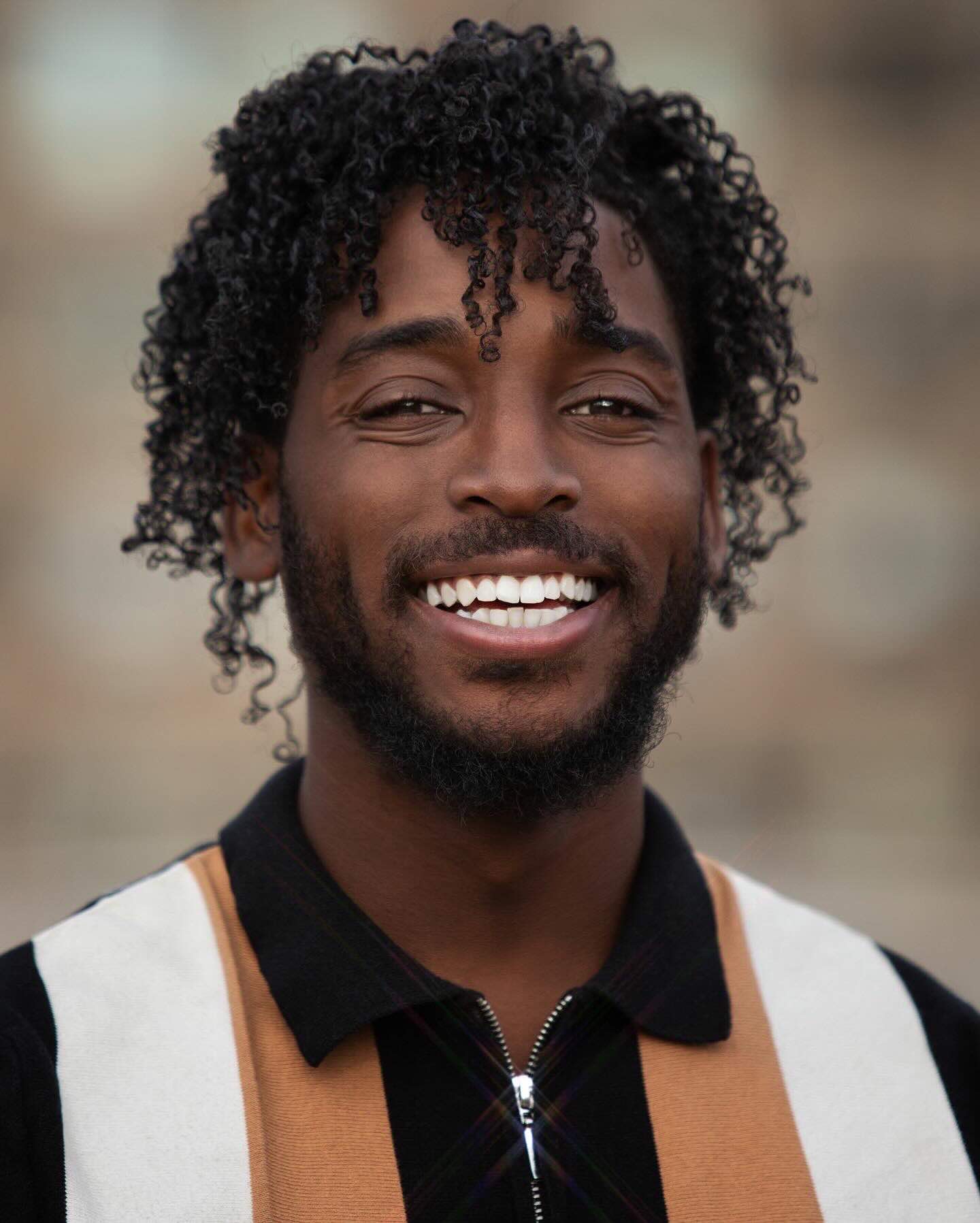
For Alejandro Bonilla Jr., art has always been more than brush strokes and vibrant colors. It’s an avenue to carve spaces for the stories that are too often left out of the frame. Building on that vision, he now runs his art studio, Art by ABon, showcasing narratives and breaking stereotypes through impactful paintings.
From his earlier memories, art was never something distant or abstract; it was lived, it was personal, and it began at home. His father, a comic-book illustrator and veteran painter, would work late into the night drawing captivating figures, while young Bonilla watched him in awe.
As his foremost inspiration, Bonilla credits his father as the catalyst that propelled him into the realm of art. “I probably wouldn’t even know what a painter looked like in this lifetime if it wasn’t for him. His passion was infectious,” Bonilla says. “He was the first master I ever had.”
That early exposure became an inheritance of the craft, discipline, anatomy, color theory, and the quiet resilience that pervaded Bonilla’s purpose. It was this foundation that led Bonilla to follow in his father’s footsteps, starting from his journey to art school in New York and later to a prominent fine arts university in the city. There, pursuing his BFA, he formally studied visual art, illustration, and different art styles and techniques, further honing his craft.

But as he traversed deeper into the world of fine arts, he began to notice a void. “One of my gripes as an art student was never seeing my people in the space. Black artistry, artists of color, our stories, and our sections of art were always missed,” he explains. This lack of presence symbolized something deeper. It was more than just missing faces; it was about missing stories, voices, and representation in a space that often prides itself on inclusion.
This realization was a wake-up call for Bonilla. Instead of discouraging him, it defined his mission. As a member of the Black and Afro-Latino community himself, he aimed to create art that made space for Black narratives. Art that encapsulated the community’s complexity, truth, and beauty.
“I wanted to be the artist who can put eyes on Black artists more. I lacked that representation as an art student, so I wanted to make that space for others,” he adds. That ambition now resonates in his art studio and echoes in every canvas he touches.
Bonilla describes his art style as “Afro Nouveau,” a blend of Art Nouveau’s flowing elegance with bold Afrocentric expression. His work is vibrant in color, lined with dark expressive strokes, and often bursts with dynamic textures. “I use watercolor, oil, and acrylic. I’m not restricted to any medium,” he explains. “Even within the medium, I try to create a journey. I want the color palette to make the viewer’s eyes move.”
This versatility in his painting techniques, which now gives him a technical advantage, was earlier an escape from the task of choosing a specific medium. “When I was younger, I was hard on myself for not knowing which medium was mine. But now, flexibility is one of my strongest qualities,” Bonilla shares. Whether it’s acrylic on canvas or egg tempera, his curiosity leads the way.
If there’s one art piece that symbolizes Bonilla’s mission, it’s The Black People’s World. Both a visual and an emotional landmark in his career, Bonilla calls this series his “true awakening.” The painting features a young Black person in vivid colors, standing against a stark black-and-white background.

This theme was created from Bonilla’s personal struggle of feeling trapped by the binary stereotypes placed on Black men, yearning to express the nuance that lives in between. “At that moment in my life, I felt like everything was being ruled by these black-and-white ideas of who I was supposed to be,” Bonilla shares. “This piece was me capturing the colors that actually existed between them.”
The Black People’s World is now a growing series that is evolving while staying rooted in its purpose of being the voice for the Black community, dismantling its subtle stereotypes through unparalleled creativity. “I don’t see anyone else working with this style, and that further shows that it came from such a personal place. That’s why I don’t want to let go of it,” Bonilla says.
For young Black artists still navigating an industry that often overlooks them, Bonilla’s story is proof that passion, persistence, and perseverance can overpower any system that works against them. He says, “We still live in a world where people like me are judged on all levels. We’re expected to live a certain way because of the stereotypes that surround us. I’ve always had to go against that.”
With every brushstroke, Bonilla rewrites the expectations that were cast on him and the Black community. Through defiance and grace, he refused to wait for a seat at the table and built his own instead. And in doing so, he has become what he once searched for. And that is a living example that art, when true to the self, can be an unstoppable force of change.