







The Composio Head of Product has spent a decade building, from carrier-grade infrastructure at Samsung to consumer fintech at CRED to AI agents’ infra today. Here’s what he’s learned about what the AI era changed, and what it didn’t.
Everyone says AI makes building products easy. They’re right, and that’s exactly the trap.
“Shipping is cheap now,” Mr. Palash Kala said. “But putting products into production isn’t helpful without strong validation. Shipping is easy. Solving the problem at scale is still not easy.”
Mr. Kala is Head of Product at Composio, a San Francisco-based company building infrastructure for AI agents, the layer that lets agents reliably connect to thousands of business applications. Before that, he spent a decade building products across infrastructure, behavioral science, consumer fintech and adtech. He started in infrastructure at Samsung, moved closer to customers through consumer products, and has now returned to infrastructure with a different lens.
When Code Was Expensive
Mr. Kala’s career began at Samsung Electronics in Suwon, South Korea, where he joined the Networks division in 2016 after graduating from the Indian Institute of Technology, Bombay with a degree in Computer Science. He had ranked 49th among 500,000 candidates in the Joint Entrance Examination, the top 0.01 percent of India’s engineering aspirants.
At Samsung, he worked on the Open Network Operating System (ONOS), an open-source software-defined networking controller backed by the Linux Foundation. He was the first from Samsung to lead a Technical Steering Team proposal to the ONOS community and became one of the highest open-source contributors from Samsung to the project. He had also won best intern project during an earlier internship.
“Code was expensive then,” Mr. Kala said. “Carrier-grade software runs for weeks on hardware you can’t touch. Every architectural decision mattered because mistakes were costly to fix. You shipped carefully.”
After Samsung, Mr. Kala pursued the Young India Fellowship at Ashoka University, where he graduated in 2019 and won the best project award for a technology intervention addressing substance addiction, among fifty+ projects. The experience opened his eyes to the intersection of technology and human behavior.
Learning Validation at Scale
In 2019, Mr. Kala moved into product management at worxogo, a Bangalore-based enterprise SaaS company that used behavioral science to improve sales team performance. He built products that delivered personalized nudges to thousands of sales and BPO employees across India and Southeast Asia. The work introduced him to a principle he would return to repeatedly.
“You can’t make people work harder than they already are,” Mr. Kala said. “The solution isn’t motivation. It’s simplifying the job to be done significantly.”
In December 2020, he joined CRED, the consumer fintech company valued at 6.4 billion dollars, where he worked under the leadership of founder Kunal Shah. Over two and a half years, Mr. Kala led multiple products and learned what high-craft consumer product development looked like at scale.
He led the launch of CRED Scan and Pay, scaling it to one million weekly transactions with a Net Promoter Score of fifty-four. He drove a significant jump in payment success rates on key merchants. He managed the tokenization of six million cards. He organized workshops on persuasion and game theory with Mr. Shah, and sessions on behavioral design with Nir Eyal and Yu-kai Chou.
“At CRED, I learned that validation is super important,” Mr. Kala said. “It saved me from expensive mistakes. It let me try many ideas without betting the farm on each one.”
Promise-Market Fit Before Product-Market Fit
One of the most important lessons from this period, Mr. Kala said, was about sequencing.
“Before building, when you tell someone what you’re solving for, they should jump out of their seats,” he said. “If they don’t, go back. Don’t build. Promise-market fit comes before product-market fit. If the promise doesn’t resonate, the product won’t either.”
This principle saved time at CRED and became even more important as AI made building faster. In 2023, Mr. Kala joined Nintee, a company founded by Paras Chopra, the bootstrapped founder of Wingify, which had fifty million dollars in annual recurring revenue. The mission was to build an AI coach for self growth.
The team built a product that helped over thousands of users globally form new habits, improving day-one retention by 3X through personalized AI conversations. But something wasn’t working.
“Incremental changes weren’t driving retention,” Mr. Kala said. “We kept iterating, but the curve wouldn’t move. The lesson from worxogo proved true again: you can validate a promise, but at scale, if the job isn’t significantly simplified, it won’t stick.”
What AI Changed
After CRED, Mr. Kala co-founded Hovi AI, where he built a vertical coding agent for playable mobile gaming advertisements. He earned a fellowship at South Park Commons and validated the concept with major gaming companies including Rovio Entertainment, Scopely, and Wildlife Studios. The technical thesis worked. The market structure didn’t.
But the experience revealed how AI had shifted the validation calculus.
“AI made code cheaper,” Mr. Kala said. “Suddenly, cheap validation could mean shipping something small and seeing real response, faster than just talking to people. Real validation is real response. With AI, you can get that with code, not just conversations.”
The shift came with a trap. When shipping is cheap, everything that works even moderately well creates new obligations.
“If something hooks even decently, it adds distraction,” Mr. Kala said. “Support, maintenance, feature requests. Focus becomes harder, not easier.”
Back to Infrastructure
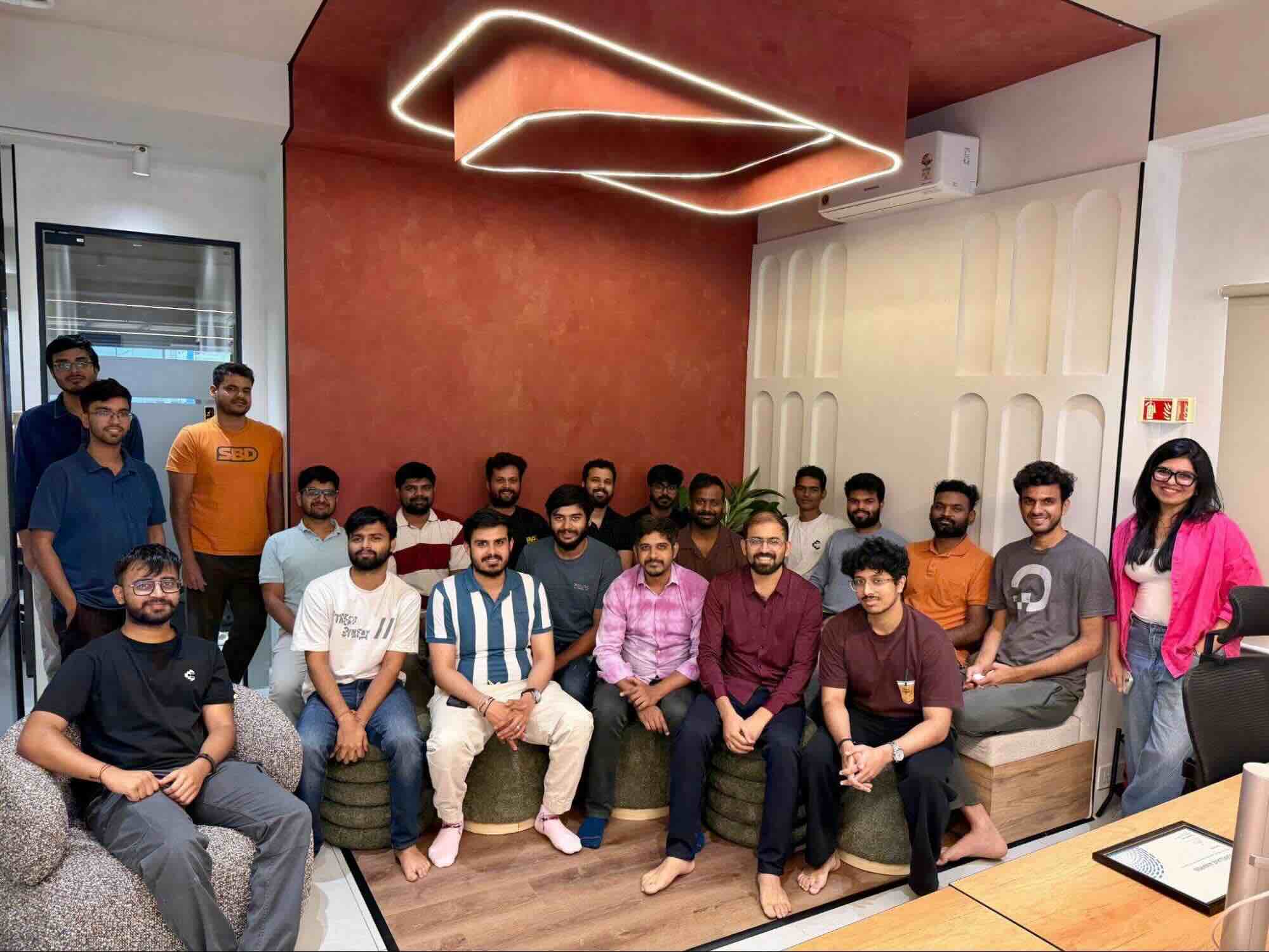
In September 2025, Mr. Kala joined Composio as Head of Product. The company, founded by IIT Bombay alumni Soham Ganatra and Karan Vaidya, builds infrastructure for AI agents—handling authentication, rate limits, and the edge cases that surface when agents need to reliably work with over a thousand business applications.
For Mr. Kala, it was a return to where he started. At Samsung, he had built infrastructure for networks. Now he was building infrastructure for AI agents, but with a decade of product experience in between.
“I spent years on the application layer, closer to customers,” Mr. Kala said. “Consumer apps. Growth. Retention. That work taught me empathy for the product’s users. Coming back to infrastructure now, I see it differently than I would have at twenty-three.”
The opportunity was clear because the pain was obvious.
“When you build an AI agent that needs to send emails, update Salesforce, or file Jira tickets, making those integrations work reliably is painful,” he said. “People building agents have workarounds. They’re expressing the problem at the edge. No one needs convincing. That’s how you know it’s real.”
The Deepgram team, building an AI product called Saga, described the experience in similar terms: “Composio turned integrations into a truly plug-and-play experience; it just worked with our agent out of the box. We stopped burning time on one-off integrations because auth and connections were already handled, allowing us to stay focused on building Saga.”
In eight months, Mr. Kala has helped double Composio’s integrations and grow tool calls, the core usage metric, by ten times, reaching into the multi millions per day. He has also applied his experience building coding agents at Hovi to Composio’s work on integration infrastructure.
What Hasn’t Changed
Mr. Kala has been invited to speak on these themes at the Llama Lounge Hackathon as a panelist on agentic AI, and at the Behavior Science and Tech Conference in Bangalore. The frameworks he shares are what haven’t changed even as building has become cheaper.
- Promise-Market Fit: “If they don’t jump out of their seats when you describe the promise, don’t build.”
- The Workaround Signal: “If they have a workaround today, that’s high motivation. If they’re just accepting the status quo, it’s not burning enough.”
- Edge Expression: “Problems are only expressed at the edge. Most people don’t think there can be better ways. Find the ones who are expressing it.”
- Simplify, Don’t Motivate: “If your product requires more effort than their current behavior, it won’t stick.”
- Focus Over Shipping: “Every thing you ship that hooks adds maintenance burden. Focus matters more when building is cheap, not less.”
The Through-Line
Mr. Kala’s path, from infrastructure at Samsung to behavioral science at worxogo to consumer fintech at CRED, and back to infrastructure for AI agents at Composio, spans the transition from when code was expensive to when shipping is cheap.
“The tools changed. The fundamentals didn’t. The difference is now you learn them faster, or pay for ignoring them faster.”
Mr. Palash Kala is Head of Product at Composio. He holds a Bachelor of Technology in Computer Science from the Indian Institute of Technology, Bombay, and completed the Young India Fellowship at Ashoka University. He writes about product, startups, and AI at palashk.bearblog.dev.