




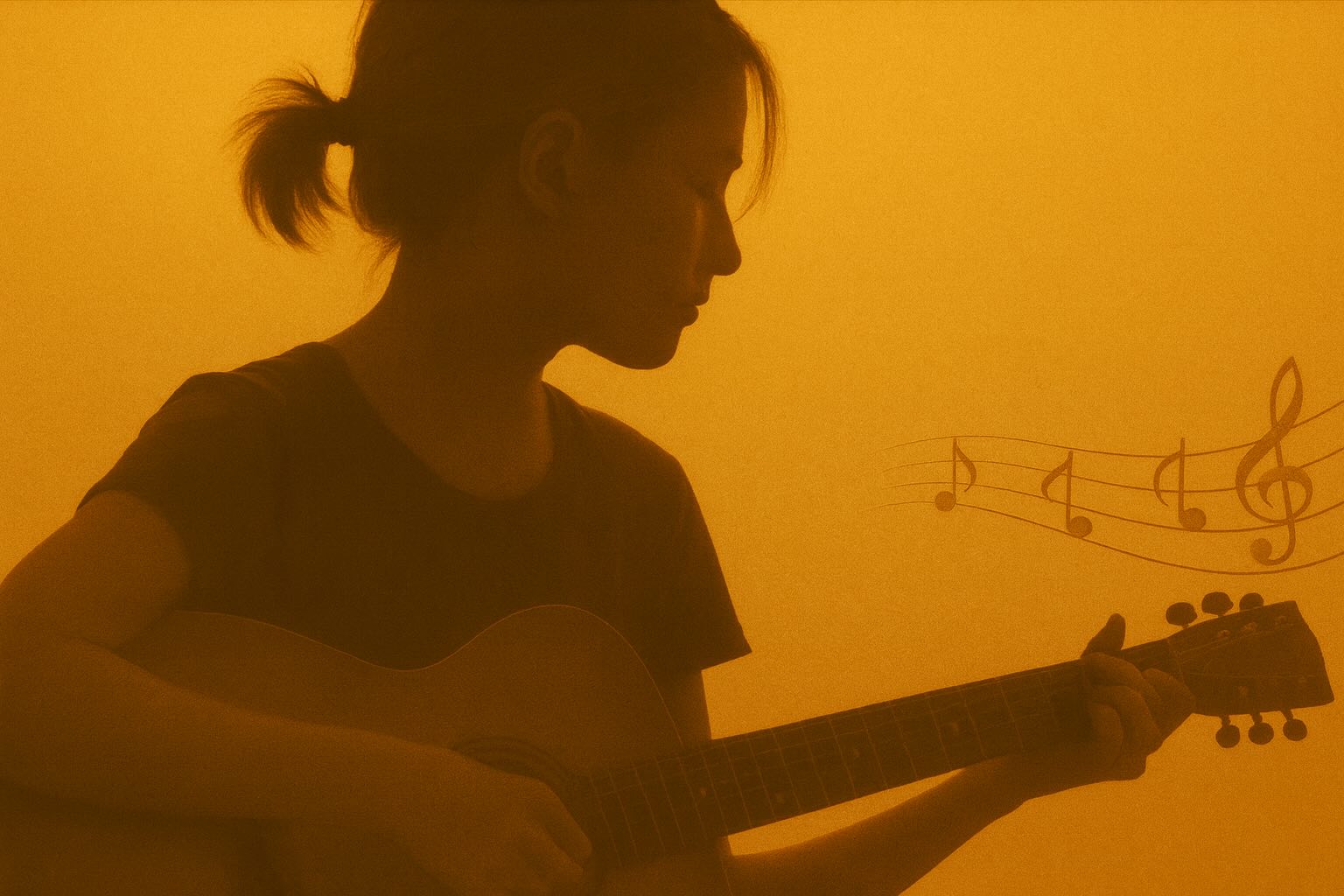
A bassline hums in the corner. At one table, a man in his thirties scribbles verses on a notepad. Across the room, a woman in her fifties strums the same four-chord progression she’s been working on for days, pausing now and then to jot down the changes when something clicks. Beside her, a young man leans back in a chair near the stage, drumming out a rhythm on the arm of the couch, falling in step with her playing. This scene feels like the start of a song, but in Merchantville, NJ, it’s the start of something else: Tuesday afternoon therapy at Recovery Unplugged, a music-based mental health and addiction rehab center.
Just a few hours from Manhattan, Recovery Unplugged’s Merchantville campus feels more like a neighborhood arts space than a clinic. Inside, the walls are lined with records instead of pamphlet racks, and the main room is wired for both therapy and jam sessions. It’s the newest addition to Recovery Unplugged’s growing network of music-driven treatment centers, which began in Nashville and now stretches throughout the Southeast to Texas. Since opening its doors, the program has guided more than 20,000 clients through treatment, from high-profile musicians to working parents who simply needed a different way in.
The idea is straightforward but radical: that music, because it activates the entire brain, can reach emotions and memories that traditional talk therapy often leaves untouched. In Merchantville, that philosophy is being tested in a region hit hard by the overdose crisis, offering both inpatient and outpatient care, plus a virtual intensive program for those who can’t step away from work or family. For people who would never set foot in a traditional rehab, the promise of a guitar, a lyric sheet, and a room full of supportive peers offers a different kind of invitation to heal.
It’s a philosophy that has traveled well, and Recovery Unplugged has been deliberate about where to take it next.
Why Merchantville, and Why Now
The decision to expand into South Jersey wasn’t random. Communities across New Jersey, Philadelphia, and New York have all faced historically high overdose deaths in recent years—Philadelphia alone recorded more than 1,400 in 2022, while New Jersey lost 2,816 residents in 2023. Even as numbers show modest declines, the crisis is far from over. Treatment and harm-reduction resources remain unevenly distributed and access to alternative treatment options has lagged behind the scale of the crisis. Merchantville offers a foothold close enough to serve New Jersey and the Philadelphia region, while still within reach of New York City.
From the outside, the campus is unassuming, but inside the rooms double as both clinics and creative spaces, therapy in one hour, a drum circle the next. Sessions run three to six hours a few days a week, with morning, evening, and virtual options that let people keep their jobs, raise their kids, and still stay engaged in treatment. The goal is simple: weave recovery into real life.
From Lyric Sheets to Lifelines
A popular tradition at several Recovery Unplugged locations is “Feel Good Friday,” a weekly jam session that is part concert, part community reunion—where alumni and current clients perform together and connect with their recovery community. Launched by rock-and-roll songwriter and sobriety advocate Richie Supa, the series has welcomed surprise guests like Steven Tyler and featured alumni success stories like Adam David, season 27 winner of The Voice. While Merchantville’s program is still new, the energy of those events is already baked into its DNA, and staff expect it will only be a matter of time before the Friday jams start there, too.
The community component of Recovery Unplugged’s treatment program is intentional. Across the network, Recovery Unplugged alumni stay connected through ongoing events, peer mentorship, and collaborations long after their last day of treatment. One of the program’s most publicized examples is nolo, an Austin-based alternative rock band whose four members met during treatment, went on to tour nationally, and still serve as the house band for Sober Sessions—a monthly open mic for Austin’s recovery community.
Staying Creative, Staying Sober
For creative people especially, this kind of recovery model offers something rare: a path forward that doesn’t require cutting ties with the very parts of themselves that make life worth living. The Merchantville campus might be quieter than Austin’s music scene, but the idea is the same—recovery as a return to self, not a departure from identity. And in a city like New York, where the pull of late nights and high pressure can be relentless, the appeal of a nearby rehab program that feels less clinical and more creative seems to resonate.
Recovery Unplugged’s bet is this: if the traditional rehab model hasn’t reached you, maybe the bridge, the hook, and the chorus will.