



If you were among the 40,000 fans at the Cincinnati Reds game against the Cardinals last month, you might have caught it between innings — a flash of red-and-beige jerseys on the Jumbotron, and three plain words arranged above them: Sign For Hoy. It was the kind of moment that reads as spontaneous but isn’t, the kind that requires someone, somewhere, to have been planning it for a very long time.
Those fans had come from across the country. Among them Academy Award-winning actors, activists and even a former UFC fighter and a Hall of Fame broadcaster, an unlikely assembly united by a single cause: getting William “Dummy” Hoy, one of the most consequential and least celebrated figures in the history of American baseball, into the National Baseball Hall of Fame.
Hoy was born in 1862 and deafened by meningitis as a child. By the time his 14-year Major League career ended, he had established himself as one of the game’s finest leadoff hitters and outfielders with over 2000 hits and nearly 600 stolen bases. There is credible scholarly evidence that Hoy’s communication with his third-base coach may have given rise to the hand signals umpires use to this day — the raised fist for strikes, the open palm for balls. He died in 1961, at the age of 99, still outside Cooperstown. He remains there now.
The petition bearing Hoy’s name is already gathering thousands of signatures. It has drawn endorsements from prominent figures in both the athletic and Deaf communities. It has the feel, increasingly, of something real — of a story that is finally finding its moment. What it also has, though you might not immediately know it, is Shawn Ullman.
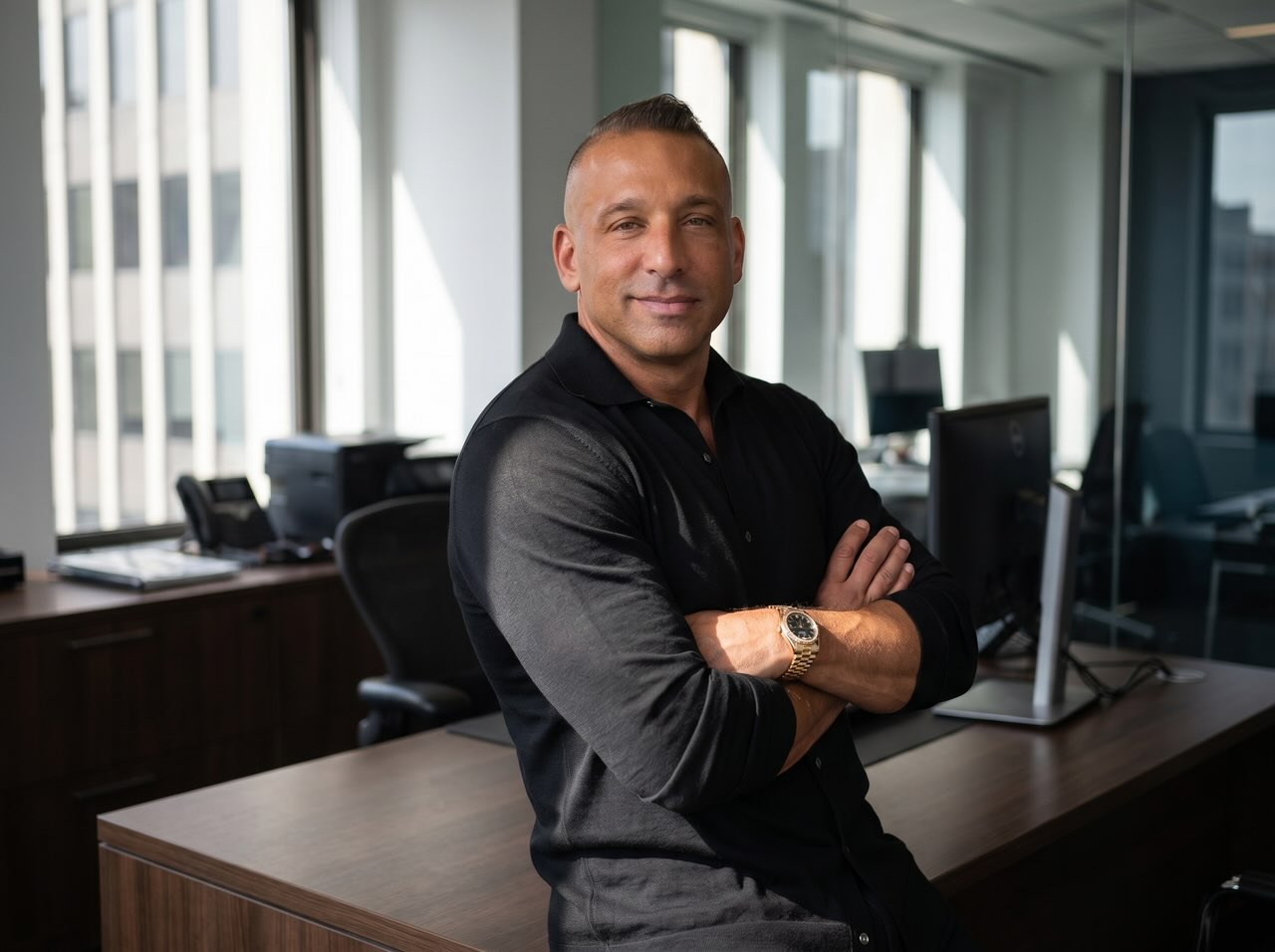
Ullman, 48, is not a household name. He would probably be the first to tell you that this is mostly by design. He is the kind of operator whose fingerprints are on things you remember without quite being able to say how they got there. The Dolly Parton performance at SXSW that nobody saw coming, the Van Gogh immersive experience that landed at Circuit of The Americas in Austin, the public health documentary that somehow got Common and Fat Joe talking honestly about what they eat for breakfast.
Right now, he is trying to get a deaf outfielder from the 1800s into the Hall of Fame. This is, if you spend any time looking at his career, completely on brand.
Born in Houston, Ullman has been telling stories for as long as he can remember. After graduating from the University of Texas film program, California was the natural next step and he arrived in Hollywood the way a lot of young people with ambition and no roadmap do — on instinct. A film school internship on the set of Office Space, working under Mike Judge, introduced him to the machinery of creative production. A stint in the William Morris agent trainee program taught him the architecture of the entertainment industry. He learned it well enough to understand, fairly early on, that he wasn’t particularly interested in staying inside it.
The more interesting territory, he decided, was the space where entertainment, technology, and culture were beginning to blur. A boundary that barely had a name in the early 2000s and now represents billions of dollars in annual commerce. Ullman didn’t have a precise theory about this at the time. He had a disposition, which is sometimes more useful.
The chapter that shaped him most is also the hardest to reduce to a résumé line. Ullman’s creative partnership with Quincy Jones III, son of the legendary producer, a significant creative force in his own right, known as QD3, began at the Laugh Factory comedy club and would span more than fifteen years. Time spent inside the Jones orbit is the kind of formative context that doesn’t translate neatly into credentials. It shapes how you think about what culture actually is, and how it actually moves. Ullman absorbed it.
Out of that partnership came Feel Rich, named, as it happens, for his parents, Phyllis and Richard Ullman — a documentary about health and wellness inside hip-hop culture, made in 2017. The premise, in retrospect, looks almost prescient: that the most credible voices for changing how a community thinks about its own health are the voices that the community already trusts. Common. Russell Simmons. Fat Joe. The Game. Artists talking about what they’d changed, what they’d started paying attention to, what their bodies had taught them.
The film arrived years before wellness became a billion-dollar cultural industry with its own branded retreat circuits and magazine verticals. Public health messaging had been trying to penetrate hip-hop culture for years with limited success. Feel Rich did it by mostly getting out of the way. It was, in the language that would later define Ullman’s career, not a campaign. It was a movement.
The Methodology
That distinction — between campaign and movement, between audience and community — is the closest thing to a philosophy that Ullman will cop to. Audiences consume, he’ll tell you. Communities carry things forward. They change behavior, show up at Cincinnati Reds games wearing red-and-beige jerseys, tell their friends. The question his career has been organized around isn’t how you reach people. It’s how you make people care enough to move.
FLEXDEF, the agency he founded in Austin where he lives with his wife and daughters, was built around that question. He calls it a “relevancy agency”, a phrase that either means something very specific or functions as an extremely contemporary piece of self-branding, depending on your tolerance for the word relevancy. In practice, it means that Ullman and his team are who you call when a campaign isn’t enough, when a press release isn’t enough, when what you actually need is a moment, a genuine convergence of story, audience, and timing that lands in culture and stays there.
Some of those moments are large: the Dolly Parton SXSW appearance, the Van Gogh experience at Circuit of The Americas. Others are slower burns. The Hoy campaign is the latter kind. It has been building for years, decades by some measures, and Ullman has been helping build the national conversation around it — assembling the coalition, identifying the spokespeople, figuring out how a story that should have been obvious finds its legs in 2026.
The Timing
The people who work with Ullman tend to describe him in terms of timing rather than output. He shows up before things are obvious. He connects rooms that don’t typically talk to each other. He finds the thread between a public health initiative and a hip-hop documentary, between a comedy club and a fifteen-year creative friendship, between a country legend and a tech conference, and he pulls on it until something new exists.
He is self-deprecating about this in the way that people who are genuinely confident sometimes can be, acknowledging the pattern without needing to be credited for it. What he is less comfortable with is explaining what he does, which is perhaps why the work has always had to explain itself. It usually does.