




For a rock group enwreathed by death, the Rolling Stones — well, two of the originals at least — are preternaturally durable, though certainly not ageless. But in the video promoting their new single, “In the Stars,” the accreting wrinkles and crags we’ve clocked on the faces of Mick Jagger and Keith Richards over the decades (both were born not far from Blitz-battered London, in 1943) have been rewound to sometime in the mid-ish 1970s, when their visages were ravaged not so much by age but simply as a result of the rock ’n’ roll life — more evident with on-again-off-again smack addict Keef than that health-nut son of a phys-ed teacher Sir Michael Philip Jagger.
As always, the lion’s share of screen time accrues to Jagger, and through body doubles and “de-aging” software (courtesy of Trey Parker and Matt Stone’s South Park FX subsidiary Deep Voodoo), these AI-rejuvenated Glimmer Twins might be back in Keith’s tax-haven southern France rental mansion, Nellcôte, laying down tracks for 1972’s prodigious double disc, Exile on Main Street. Certainly, that’s the vibe of the video, with high-set windows puncturing scabby masonry walls — a much larger version of the suffocating basement where a chugging classic like “Ventilator Blues” was created during the Exile sessions.
The story goes that Nellcôte was jammed with musicians, girlfriends, family, groupies, drug dealers, and myriad hangers-on, making for one of the more juiced and jumpy, anxious and antagonistic, creative and clattering sessions in recording history. “In the Stars” conjures a smoky house party-cum-rave that straddles more than half a century. Is original Stones drummer Charlie Watts no longer with us? Well, hell, just have a dozen or so Gen-Z-ers pound the skins in unison to summon the spirit of a modest, well-dressed virtuoso, whose catholic influences went well beyond rock ’n’ roll. As he once noted to an interviewer, “I didn’t know what the hell Charlie Parker was playing … I just liked the way he played.” (Richards wrote in his 2010 autobiography that Watts told him in the ’80s if he wanted to work with another drummer, “Steve Jordan’s your man,” and indeed, Jordan, who was born in 1957 and has put in time with — and kept time for — everyone from Beyoncé to Sheryl Crow to John Mayer, is the actual drummer on “In the Stars,” as he has been on most of the tracks the band has recorded since Watts passed away at age 80, in 2021.)
Of course, it’s not a Stones video without some girls — “Some girls they’re so pure / Some girls, so corrupt,” to excerpt one of Jagger’s more infamous lyrics — and this mini-epic zeroes in on Odessa A’zion boogying into the timewarp wearing pocket-dangling cut-offs clasped by a lapping-tongue belt buckle. The cross-generational appeal of the self-proclaimed “World’s Greatest Rock ’n’ Roll Band” is apparent in quotes from the 25-year-old star (Marty Supreme, I Love LA), who enthused that the Stones’ 1981 Tattoo You was the first record she ever listened to from “start to finish,” saying, “I’m obsessed with the Rolling Stones. This is in my bucket list for sure.”
And A’zion’s certainly game, licking Mick’s (actually, body double Luca Arshad’s) face, recalling Jagger tonguing Ronnie Wood’s mug during the band’s punk-inflected 1978 performance of “Respectable” on Saturday Night Live. Third banana Wood (born 1947), recruited in the mid-’70s to replace transcendent guitarist Mick Taylor, also gets an AI makeover in the vid. (About the lamented Taylor, Richards once stated, “Mick could never explain why he left. He doesn’t know why. I always asked him, why did you leave? He said, I don’t know.”)
Since the Stones coalesced in 1962, they have taken extraordinary care with their shambolic visuals, employing legions of designers, such as Swinging London graphics genius Robert Brownjohn for the pizza, film canister, bicycle tire, cake, etc., spindle stack on the front and (messy) back covers of 1969’s Let It Bleed; Andy Warhol for the working-zipper/tighty-whitey-exposing cover of 1971’s Sticky Fingers; and Swiss photographer of “The Americans” fame Robert Frank, for Exile, to number just a few. The group has also been happy to reference other visual heavy-hitters, such as in the interior photo from Beggars Banquet (released December 6, 1968) that recalls the chaotic feast of the paupers — itself riffing on the Last Supper — in Luis Buñuel’s sardonic 1961 masterpiece Viridiana.
“You’re a comical little geezer. You’ll look funny when you’re fifty.”
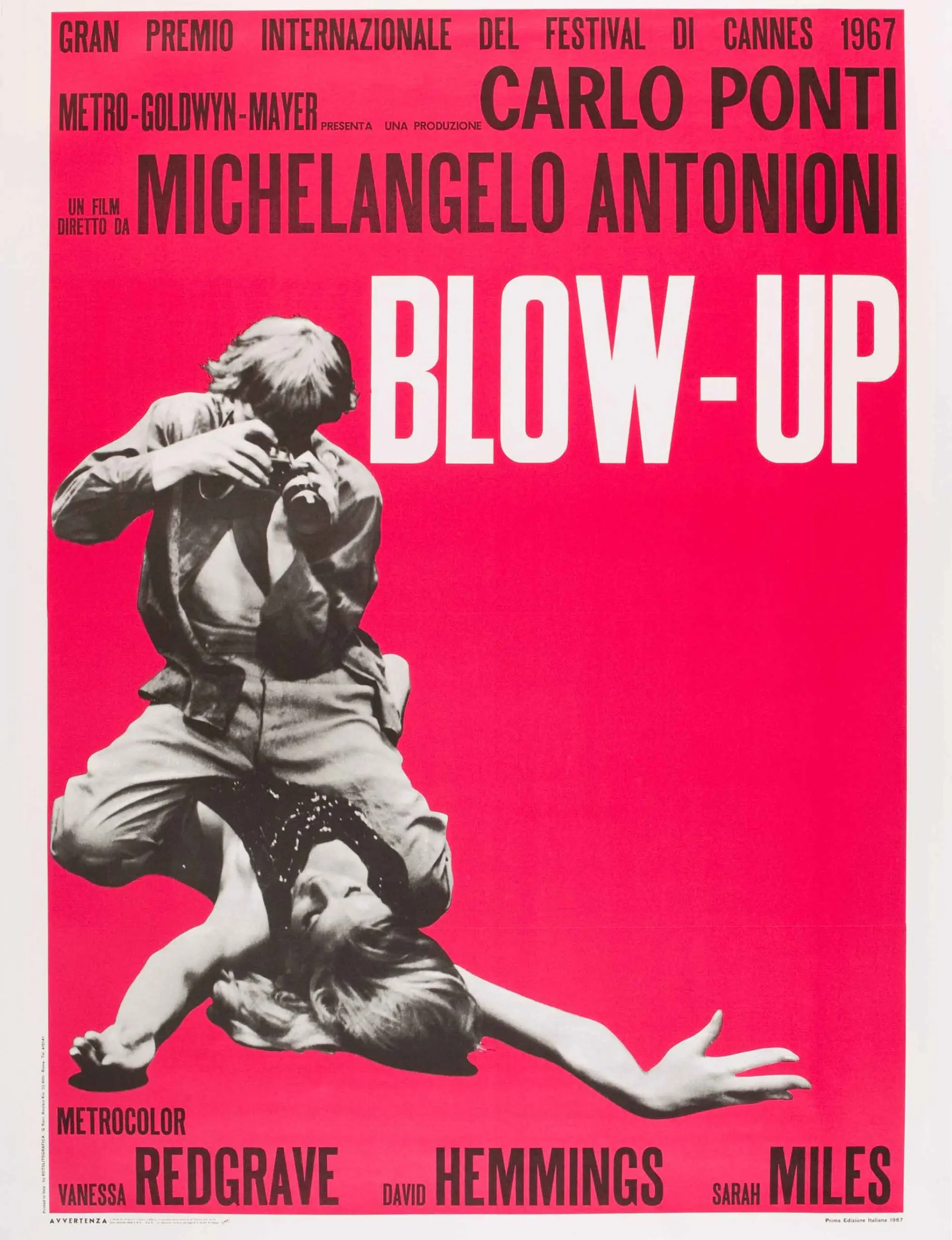
Another bit of cinema history flashes through “In the Stars” in what is perhaps a first in a Stones video: A’zion flips the male-gaze script by filming “Jagger” as he writhes on the floor — an obvious homage to David Hemmings portraying a character similar to London photog David Bailey all but making love through his lens to supermodel Veruschka in Michelangelo Antonioni’s 1966 film, Blow-up.
“In the Stars” features an ascending ooo-ooo earworm that seems an upbeat flipside to the ghostly wail opening “Gimme Shelter,” and the video references — through a woman at the mic with an impressive afro — Merry Clayton’s scorched-earth guest vocal on that 1969 anti-anthem about the horrors of war and pitfalls of social upheaval. There’s also a woo-woo in the Stones’ canon: Banquet’s “Sympathy for the Devil” hangs over this production like a spiritual pendulum, its popularity confirmed by 849 live performances, first on the David Frost Show, in London in November 1968, and latest at an arena concert in Ridgedale, Missouri, on July 21, 2024. Forget the “Sympathy For the Devil” T-shirt on one kid in the vid, it’s those multicolored sound baffles dotting the dance floor that transport us back to Jean Luc Godard shooting the Stones for his film 1 + 1. Part documentary, part fictional polemic, One + One (an alternate styling of the original title) chronicled the band working through changes on “Sympathy” in the recording studio, interspersed with various over-the-top scenes of a woman rushing about to spray-paint revolutionary slogans on walls and vehicles, Black militants arming themselves and quoting from Eldridge Cleaver’s Soul on Ice in an auto graveyard, and the spilling of much bright stage blood on the white garments of the bourgeoisie. As captured in Godard’s film, the Stones and their circle were effortless trendsetters; in the new video, a haircut here or slouch hat there might spark a synapse to flash on an old magazine halftone of the ever-stylish Marianne Faithfull — a singer in her own right and the Jagger girlfriend who gave him a samizdat translation of Mikhail Bulgakov’s posthumously published Stygian satire of Soviet life, The Master and Margarita. That novel’s luminous prose and dark slapstick envision Satan visiting Moscow in the 1930s, rich imagery that gave impetus to Jagger’s opening lines —
Please allow me to introduce myself
I’m a man of wealth and taste
I’ve been around for a long, long year
Stole many a man’s soul and faith
— as well as later couplets that include historical allusions echoing Bulgakov’s cosmos-weary fallen angel, Woland.
But even a novelist as far-seeing as Bulgakov (1891–1940) could not foresee a pop song that would find itself literally drenched in blood: On June 4, 1968, Godard captured Mick Jagger singing, “I shouted out, ‘Who killed Kennedy? When after all, it was you and me.’” The day before, June 3, Andy Warhol was shot by a deranged actress and almost died on the operating table. Two days later, while Warhol was recovering, Robert F. Kennedy was shot and killed in Los Angeles. As the song plays over the closing scene of Godard’s film — renamed Sympathy for the Devil by a producer, which, along with including the final, polished version of the song, earned the exec a punch in the face from the director, who wanted his Maoist-tinged polemic to retain a non-pop purity — we hear how the lyric has been forever changed: “I shouted out, ‘Who killed the Kennedys? When after all, it was you and me.’”
If calling back to Godard’s flawed mashup of fiction and documentary isn’t enough, it may be that François Rousselet, the director of “In the Stars” — or perhaps production designer Max Randall — was after an even deeper cut: the Mick Jagger film vehicle Performance, scene-checked through the ’60s-era cigarette smoking (no vapes here), old-school patterned rugs, and generally crepuscular ambience.
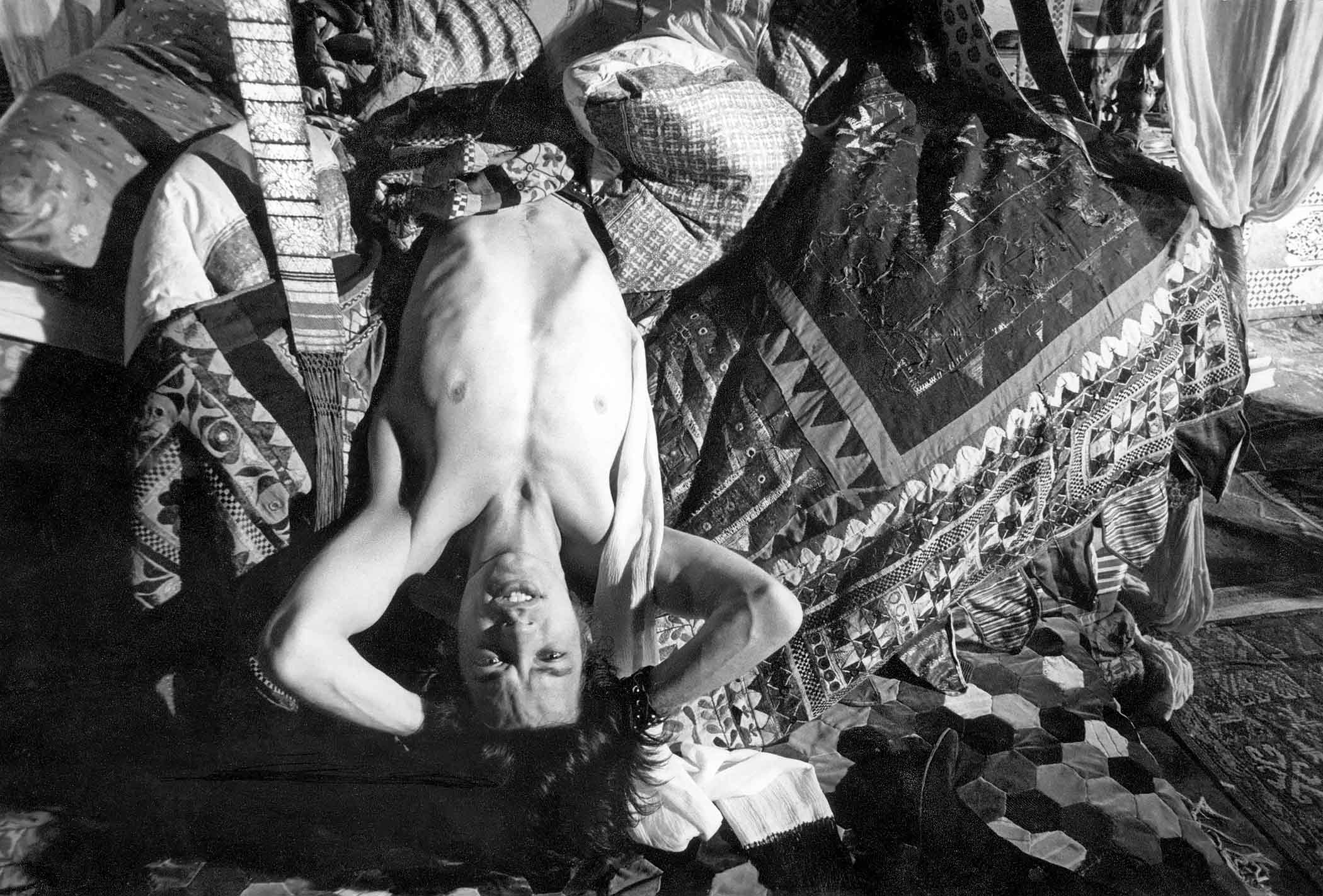
Although it was shot in 1968, Performance was not released by an extremely nervous Warner Bros. studio until 1970 — Hollywood legend has it that an exec’s wife threw up at a screening in response to the film’s expressionist violence and drugged-out paisley decadence. Performance has rightly gained acclaim since that visceral critique; far from grotesque, it is a symphony of fast cuts and wittily terse dialogue, capturing the savage fall and incorporeal rise of a Kray Brothers-esque gangster, played with jaw-dropping insouciance by James Fox at his most wickedly handsome. Fox’s Chas Devlin is on the run from his murderous mates, and hides out in the decaying Notting Hill Gate manse of Jagger’s reclusive, creatively blocked pop star. Jagger’s no-first-name Turner lolls about on a bed surrounded by beads and veils with the bewitching Pherber (played by Keith Richards’s real-life girlfriend Anita Pallenberg, leading to rumors of actual — not simulated — onscreen sex between the successful fashion model and the lead singer) or mopes about his in-home recording studio, which is filled with massive speakers, much drapery, and antique furnishings, leading to this revealing exchange when Chas flicks an ash onto an exquisite Persian carpet:
Turner: That rug’s over two hundred years old.
Chas: Yeah, it looks it.
Perhaps the most insightful line comes when the gangster sizes up his landlord:
You’re a comical little geezer. You’ll look funny when you’re fifty.
Never mind when he’s 82.
Between the wrap and release dates of Performance came the real-life concert at Altamont in 1969 …
Hunter’s murder took place, Lord save us, while the Stones were playing “Sympathy for The Devil.” —Grover Lewis, reporting in the December 18, 1969, issue of the Village Voice.
When the Stones agreed to do a free concert on December 6, 1969, as an encore to their wildly successful American tour, they had trouble nailing down a venue in San Francisco. They eventually ended up, with only a day to spare, at “Dick Carter’s Altamont Speedway,” as the few two-color posters that could be printed in that short a time proclaimed. The plan was for the event to be “Woodstock West,” a free celebration of music, drugs, and love. Sure, the ’60s had seen their share of violence, but they weren’t even in the ballpark of worst decade in American history — the 1860s hold that record, with more than 10 times as many soldiers dying in the Civil War as the 58,200 dead in Vietnam.
Altamont was going to take the by turns marvelous and bewildering decade out on a high note. The Sixties had seen progressive legal advances with the Civil and Voting Rights acts, even if those new statutes weren’t always enforced at street level. And the revolutions in music and pop culture were undeniable. “You may never have taken LSD,” Amherst professor Nick Bromell once observed, “but America has.” Indeed, the psychedelic graphics of the era, which railed against a senseless war, pollution, and police violence, also celebrated the many social and cultural advances of the time, engendering — similar to the effect of Renaissance painting — a spirit eventually dated but also timeless.
Which takes us back to Altamont, where the Hells Angels were hired for security. Perhaps not unpredictably, this led to altercations between the bikers and the music fans. As Sonny Barger, president of the Oakland Hells Angels chapter, related to a radio DJ the day after the Altamont meltdown, the biker-club members had been told by the band’s management, “If we showed up down there we could drink some beer and sit on the stage, you know, and just like, keep people offa the stage.”
The concert was filmed by the Maysles brothers, who captured the Angels pushing around the warm-up bands and swinging pool cues at audience members. The desultory scuffles and shoving matches continued throughout the day (at least one crowd member was seriously hurt when she was hit in the head by a full beer can tossed as a lark by an Angel), and the film unfolds like a slow-motion train wreck. Finally, the sun sets, and the Stones take the stage amid a scrum of beefy Angels, one wearing a furry wolf’s head on his own. A scruffy dog limps in front of the speakers. As “Sympathy” starts, a gum-chewing Angel looks upon Jagger’s flowing scarlet toggery with disdain, and then a disruption occurs in the crowd near the stage. The musicians grow increasingly distracted, until Jagger says to his furiously playing bandmate, “Keith? KE-EEITH! … Hey Keith–Keith. Keith! Keith, will you cool it and I’ll try and stop it.” After more than a minute of cajoling the crowd and the Angels to “COOL OUT!” and just listen to the music, the band revs up again, with Jagger commenting, “We’re always having — something very funny happens when we start that number.”
Soon comes “Under My Thumb,” that beat-heavy paean to unbalanced relationships. The concert footage shifts to the film’s cutting room, where we now see the crowd on a small monitor — a movie of a movie. Next, we see a blurry freeze frame of a knife arcing down on a skinny man in a lime-green outfit.
Jagger: “Where’s the gun?”
David Maysles: “I’ll roll it back and you’ll see it against the girl’s crocheted dress.”
Jagger: “Uhh, it’s there, isn’t it?”
Was the gun pointed at the stage? Or was it pulled in self-defense against the rough-riding Angels? As with the Zapruder home movie of the John F. Kennedy murder, the Maysles film is far from definitive; unlike the presidential assassination, however, the perpetrator was positively ID’d. The accused Angel beat the rap with a self-defense plea.
We can cut Grover Lewis some slack for getting his facts wrong in the Voice, in that age before the easy recording of damn near everything on an iPhone. Back in those days, when reporters saw things just once, in real time, maybe with a tape recorder handy but generally with nothing more than a steno pad and pencils, “Sympathy for the Devil” made more sense as a murder soundtrack than “Under My Thumb.” Even Rolling Stone magazine, more than six weeks after the fact, in its January 21, 1970, issue (aptly headlined “Let It Bleed”), still didn’t get it right, offering a blow-by-blow account of each song in the concert:
Sympathy for the Devil:
They stopped in the middle. A skirmish had broken out at stage left. This was the knifing/stomping of Meredith Hunter, perhaps 25 feet from where Jagger pranced and sang, then stopped. To one observer 20 feet to Jagger’s rear, the glint of the long knives was clearly visible. So, if the Stones were looking, they saw it too. The same observer spoke with several others who were onstage (as did Rolling Stone), and none, except for the onstage Angels, claim to have seen a gun.
The Maysles brothers’ film Gimme Shelter was released, perhaps at a cynical marketer’s insistence, on December 6, 1970, but commentators continued to make the same mistake, reiterating the myth that “Sympathy” had killed the Sixties. In 2010, the Voice ran Lewis’s article again, online, without noting the fact-check error. Perhaps the editor had never seen Gimme Shelter. When we produced the “last” print edition of the Voice, in September 2017 (there have since been 11 more print issues; one never knows what the future holds), we finally ran a correction on the Contents page, noting, “The Village Voice regrets the error. And the hyperbole.”
Back in the day, the Stones set whatever bars the Beatles couldn’t.
Do these mistakes signify anything other than that we’re human? We all play the game of Telephone with the “facts” we know, getting them a little bit more off with each retelling and each new hearing — facts and memories abraded and distorted each time they pass before the mind’s eye.*
Prior to that long-ago disaster, Donald Cammell’s script for Performance had already nailed something about what sets the Stones apart — the way they edge-walked various abysses — when he put these words in the mouth of Jagger/Turner: “I’ll tell you this: the only performance that makes it, that really makes it, that makes it all the way, is the one that achieves madness. Right? Am I right? You with me?”
It seems doubtful we’re ever again gonna get that kind of intensity from those English lads who turned American Blues into their own dark mirror of the cultural renaissance, the progressive political thrusts and fallbacks, and all the jubilations and assassinations that stamped their youth. Sure, “In the Stars” lines like these get at the luck of the bold, the caprices of fate, and perhaps their own improbably tenured fame:
Some people seek their fortune on the turn of a card
Or throwing some bones in a whiskey glass
‘Cause if you wanna seek your fortune, need a lot of luck
I was standing there when the lightning struck
And an assonant couplet such as
Well, there’s a poisonous cloud, there’s a sickness in the land
All the judges in their robes got their rubber stamps
casts a benighted gloss on the genuine madness of the Trump era (though “judges in their robes” might just as well refer to Mick and Keith’s trumped-up 1967 drug bust and Mick’s three-month sentence, to which a Times of London editorial headline at the time asked, “Who breaks a butterfly on a wheel?”).
But just like so much else with aging, being bad gets harder, so maybe we can simply ride along with this utterly catchy tune’s call and answer:
Well, do you wanna dance ‘til the roof caves in?
Yeah, and the guitars scream and the choir still sings
Stones (and 27 Club) founder Brian Jones has been in Heaven’s “Hell of a band” for 57 years now. Maybe he and the stellar Taylor (born 1949 and still playing the very occasional Stones gig) are given a nod through one or two of the androgynous guitar players in the video. But maybe not. And is that “sixth” Rolling Stone, Ian Stewart, whom early manager Andrew Loog Oldham banished for not being good-looking enough, portrayed by the lug in white shirt and dark-blue newsboy cap? Probably not, since he’s playing guitar rather than keyboards. But that is no doubt a Billy Preston double at the piano, looking like he’s ready to head into “Outa-Space,” one of his own compositions, which he sometimes played live with the Stones during their mid-’70s tours. And good luck finding bassist Bill Wyman (born 1936), who retired in 1993 but did play some golden-anniversary shows in 2012 and has contributed to the occasional studio track over the years. Perhaps the sailor strutting about calls back to him, since the whole band donned dress whites for the 1974 “It’s Only Rock ’N’ Roll (But I Like It)” promo video.
The Stones have always cast a wide net — they redefined American Blues, found some new honky-tonk riffs to expand the country genre, caught up with punk, honed some disco beats, dabbled in melodic rap, and have now gone back to their most radio-ready roots. The “In the Stars” video has fun with 60-plus years of the band’s history, and keeps the body moving and the mood upbeat. (That geeky but exuberantly lithe dancer in the green-trimmed wife-beater and white socks might have wandered onto the set from John Newman’s billion-plus-viewed Northern Soul rocket “Love Me Again.”)
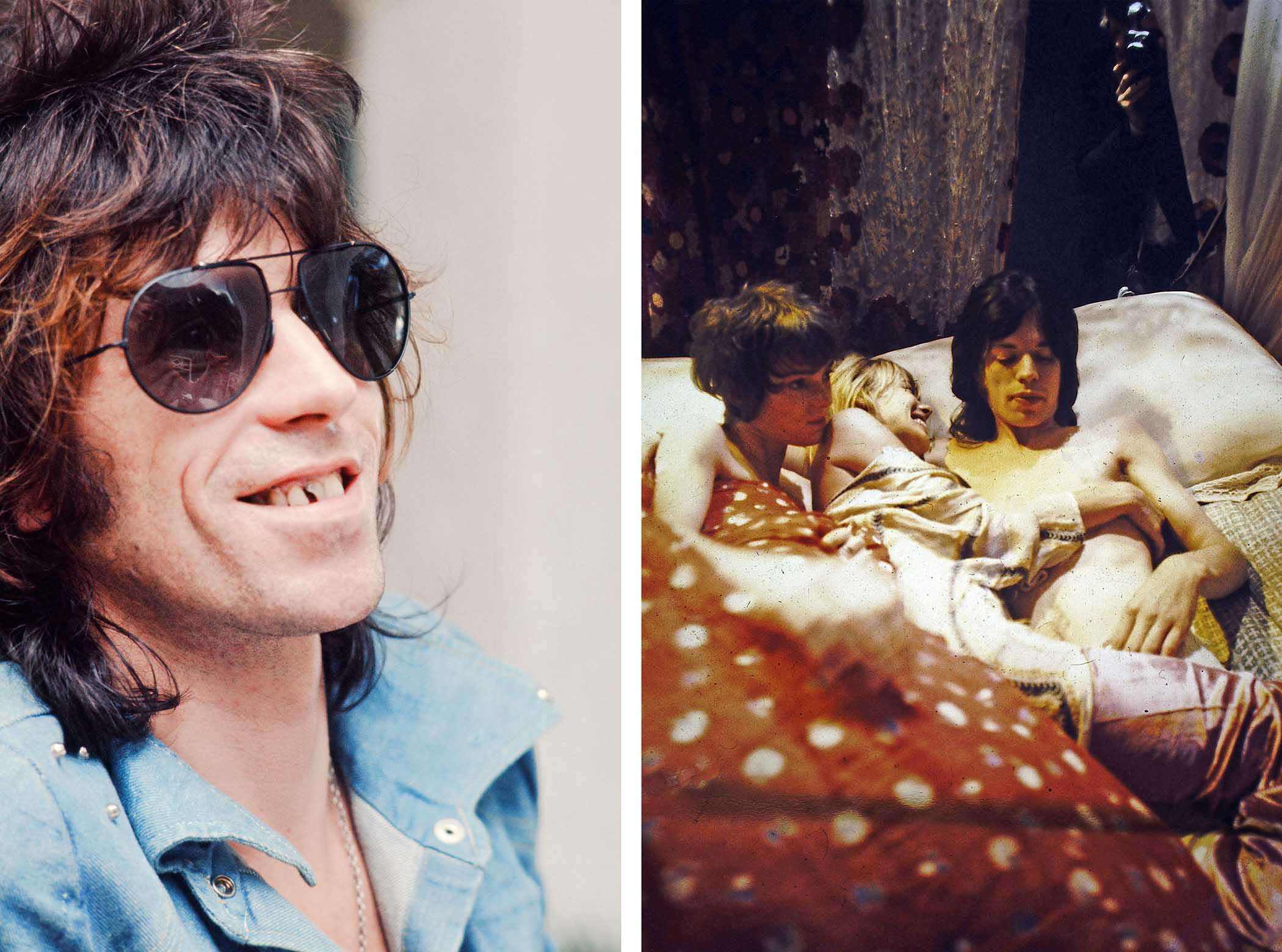
The tech here favors the frontman — Richards opens his mouth at the mic next to Jagger, but there’s no sound. And where are the gaps that would’ve been present in the real Keef’s smile, back in those hazy Exile days? But is it truly a “deep fake” when everyone knows it’s not the real McCoys? This stuff may yet kill us all by corroding democracy with lies and misinformation and providing tools to amplify the most base of basement-dwelling demagogues, but everyone knows the Stones are in their eighties, and digitally face- and butt-lifting them is simply part of their penumbral charm at this point. Look at the cover of the upcoming new album — they’re not lyin’ and as yet not dyin’, they’re just keeping the jukebox juiced in an age when no one uses jukeboxes. So pity the poor fool who stumbles onto this video on YouTube and is confused by a band they know simply by name, or perhaps an ancient single that caught their ear in some Scorsese or Tarantino yarn on that big widescreen opposite the couch at home.
Because back in the day, the Stones set whatever bars the Beatles couldn’t. So maybe Odessa A’zion is onto something with her love for 1981’s Tattoo You, since Donald Trump’s conspicuous consumption and overt corruption were presaged by the coddling of the rich and the decadent through the “trickle-down”/“voodoo” economics of the Reagan years. With a twist of the Wayback dial, you can hear that funeral organ segueing into Jagger crooning “You Can’t Always Get What You Want” in 1983’s hit movie The Big Chill, and then — an opposite spin of the dial — there’s that French horn riff (accompanied by ersatz vocals and lyrics) resurfacing at the close of the near-billion-dollar-grossing 2022 Minions: The Rise of Gru. Just another day for the licensing manager in the Stones’ offices.
Perhaps with “In the Stars,” the lads have boogied into the uncanny valley of the shadow of death — “I feel a heavy hand tangling with my plans,” as the lyrics lament — but, improbably, it’s still just the shade, not the hard, cold fact.
Yet, as Woland opines in The Master and Margarita, “A fact is the most stubborn thing in the world.” ❖
*The Altamont text in this article previously appeared, in slightly different form, in the gallery publication President: “Why?” in 2018.


