





When director Simon McQuoid first entered the blood-stained arena for 2021’s Mortal Kombat, he was a self-admitted newcomer to the vast mythology of Earthrealm and Outworld. Following the film’s success as a pandemic-era hit, McQuoid returned to the director’s chair for the anxiously awaited sequel, Mortal Kombat II. This time, the Aussie filmmaker was even more prepared for “Kombat.” Years before the second chapter began production, he tested his might, delving even deeper into the complex and chaotic lore of the “Fatality”-filled universe, cooking up ideas for a journey he says is bigger, bolder, and more emotional than the first.
Now, all the blood, sweat, and tears that went into the sequel seem to be setting the stage for what could be a flawless victory at the box office. Mortal Kombat II has bludgeoned its way into theaters, so get ready, Kombatants, and grab your quarters — it’s time for Round Two.
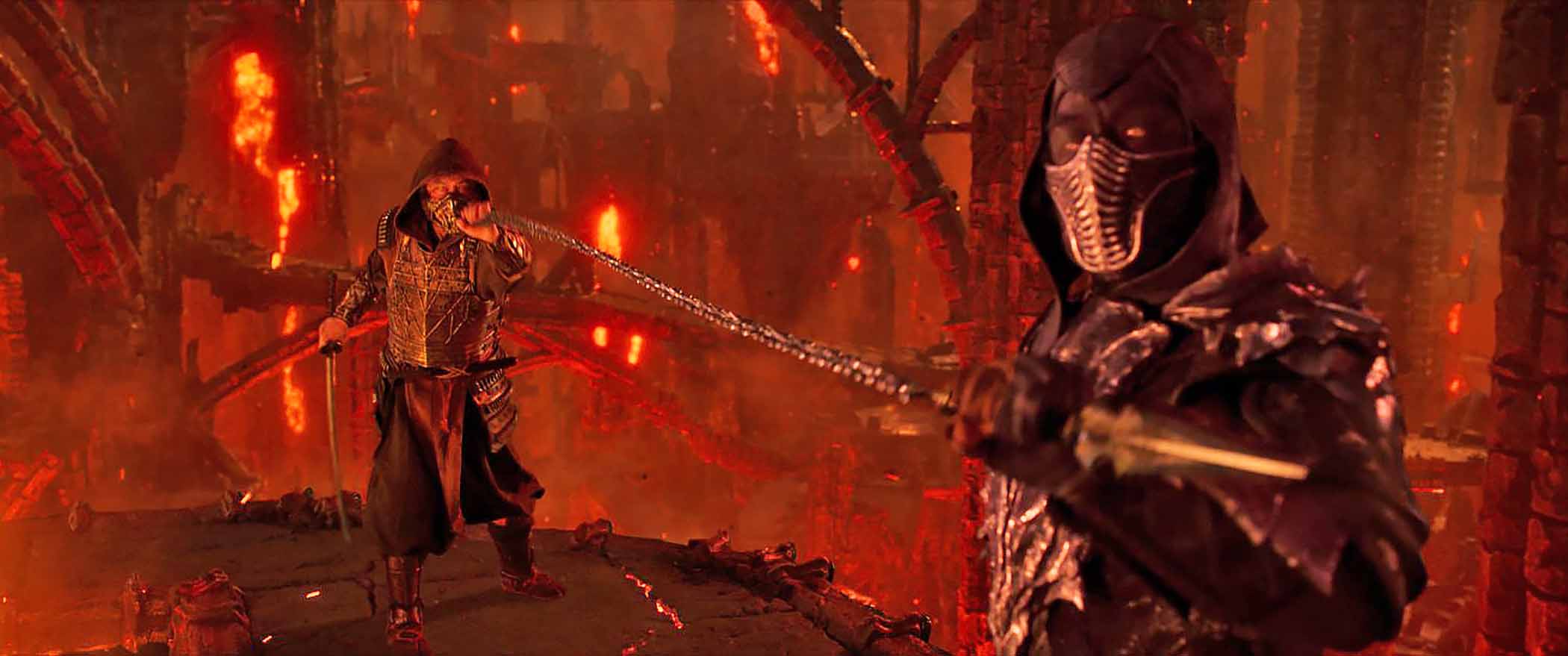
During an exclusive interview, McQuoid discusses his evolution with the franchise and his collaboration with its legendary founding father, Ed Boon, who joined the production with a more hands-on role and a cameo. The director also opens up about the “Cole Young issue,” addressing the fan response to the first film’s original protagonist and how the sequel balances returning fan favorites with quintessential newcomers like Johnny Cage, Kitana, and the brutal Shao Kahn.
Gil Macias: While doing press for the first film, you revealed that you were never a hardcore fan of the Mortal Kombat video games and that you knew very little about the mythology. After the success of that film and learning you were doing a sequel, how hard did you dive back into the lore?
Simon McQuoid: During the process of the first film, I was diving into it as much as I could and trying to understand it. It’s very complex. Once the first film came out, I just continued to do that deep dive on it and worked out what fundamentals were going to be in the second film. It never really stopped. I think I had a month or two off and then I just got straight back into it — what do I want, who do I want in it, what realms do I want to go to — and building the template for Jeremy Slater to come in and write his amazing script. Another great thing that happened with the second film is that Ed Boon was more involved. Just to have that grandmaster was a massive load off my shoulders.
What would you say were the top key ingredients you knew you wanted or needed to have for Mortal Kombat II?
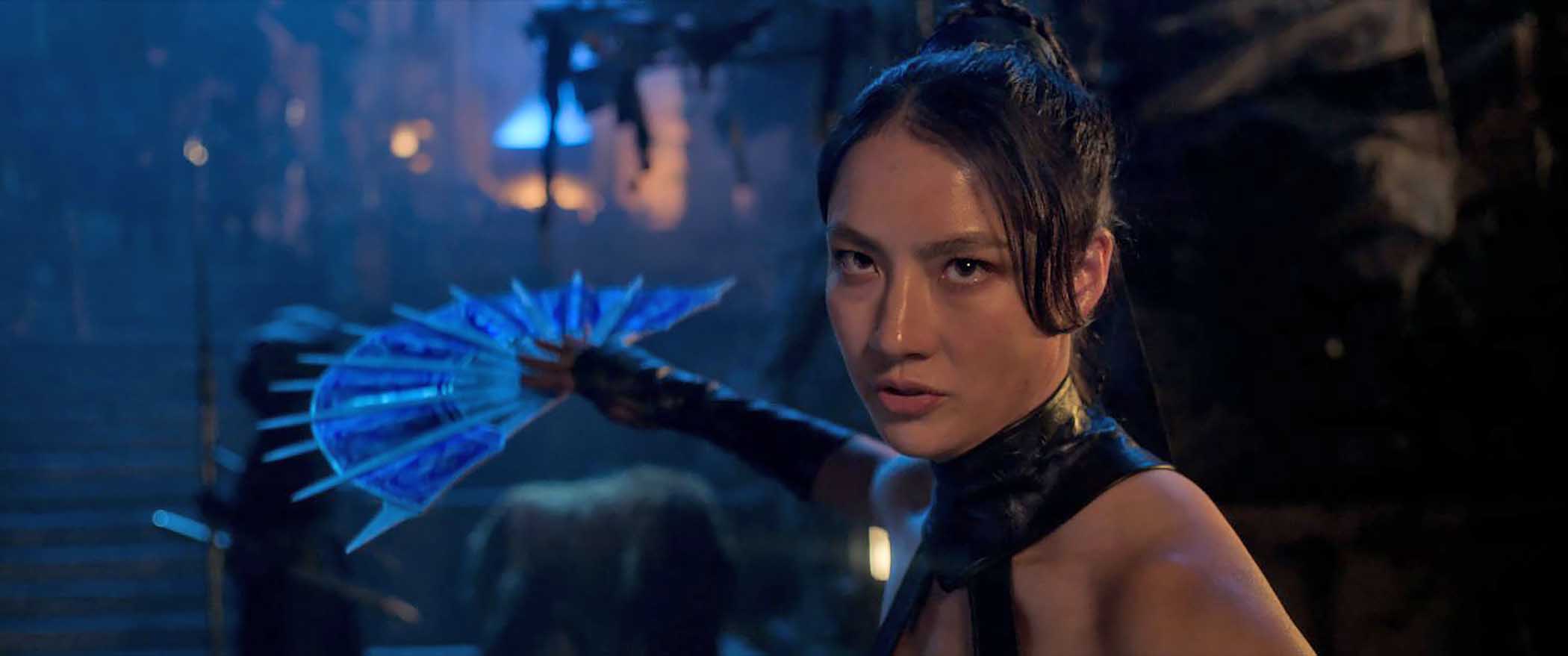
The fundamentals were: I wanted to feel more genuine emotion. I wanted there to be more heart and emotional stakes for the fighters — and for our actors — and to go on a bigger journey. So — the emotional core — that’s very much about Johnny’s journey and also Kitana’s. And then related to Kitana are Jade, Sindel, and Shao Kahn. It was a depth of emotion. And then also, how do we make a film that is bigger in scale and has more scope and allows for the maximalist quality of Mortal Kombat to be thrown up on screen? Those were the starting blocks. I also wanted lots of visual variety. I wanted to make sure that we were always journeying and going somewhere new. I just loved that as a kid. Like, The Empire Strikes Back. I just remember that feeling of like, “So now there’s a snow planet?”
It sounds like you had a very collaborative relationship with the new screenwriter, Jeremy Slater.
Let me start by saying Jeremy Slater wrote an amazing script, and it was a delight for me to work with him as a director. He took on board a lot of information, ideas, and thoughts, and obviously, he came up with an inordinate amount himself. But I was just trying to say, “Hey, it would be good to get some visual variety, and these realms would be cool, and these characters,” and then he had a really great take on the tournament and how we’d do it. The whole process working with Jeremy has been amazing.
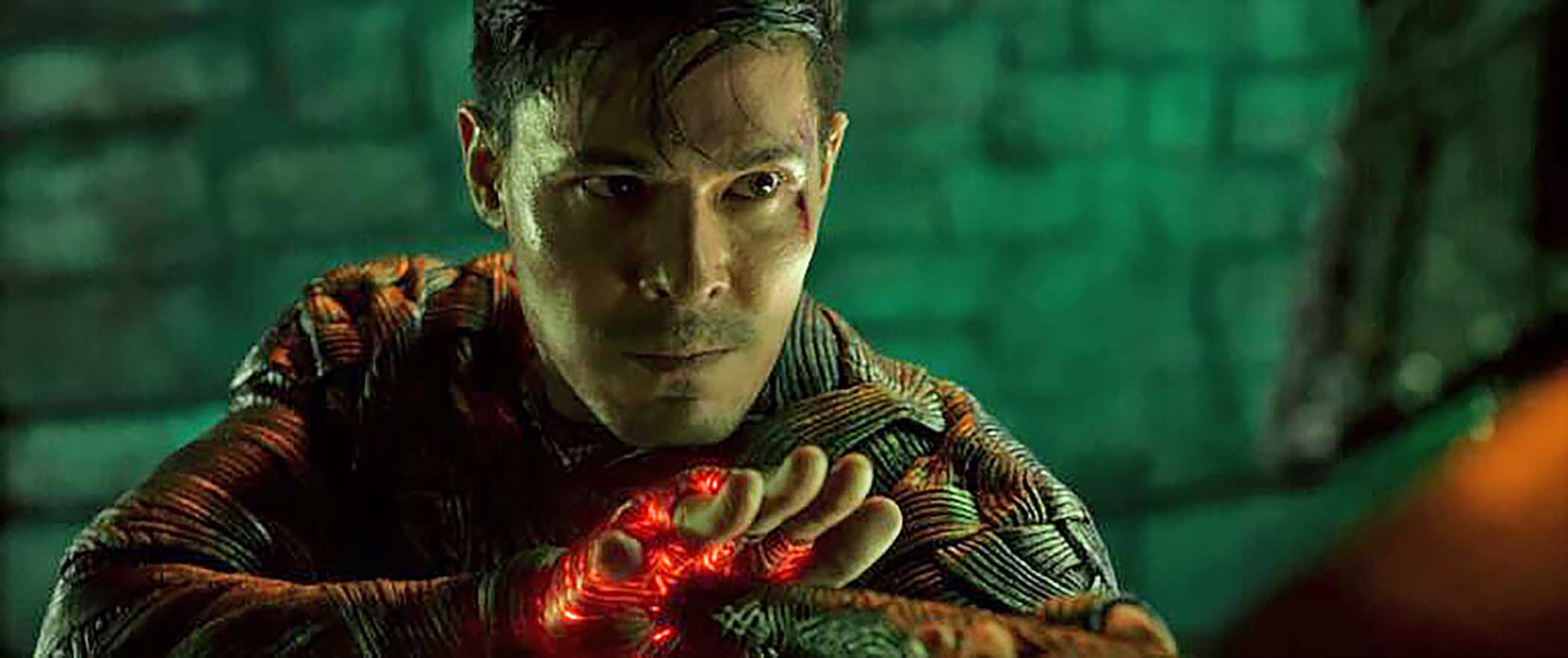
Lewis Tan as Cole Young in “Mortal Kombat II.”And what about the Cole Young issue? Lewis Tan was the lead star of the first film, but Cole was a very divisive character. Do you recall early conversations about how to address that?
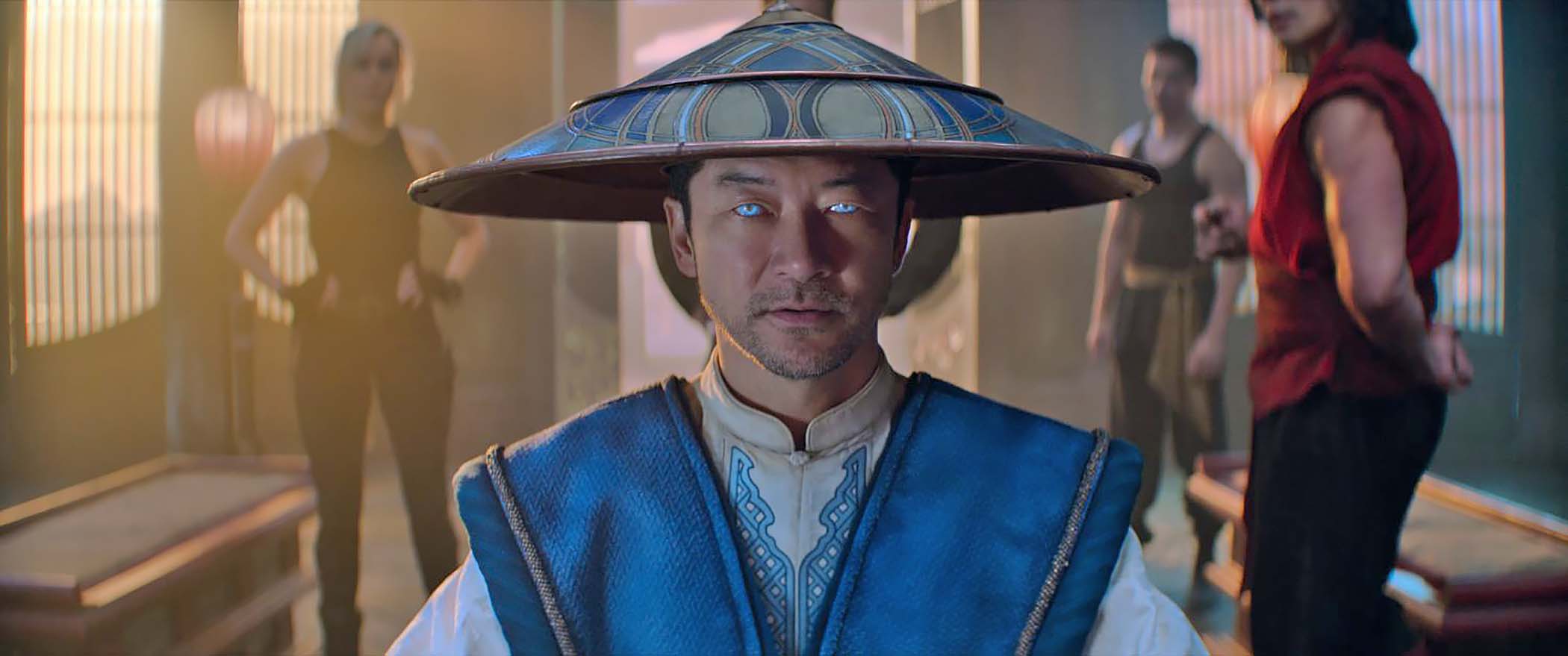
We knew we wanted Johnny, we knew we wanted Kitana, Shao Kahn, Jade, Sindel — they almost come as a box set. And then we wanted Quan Chi because we wanted Kano back. And then we wanted Baraka because Baraka is this wild, crazy ingredient to put in there. And then what ends up happening once you’ve done that — because we wanted to keep it very fresh, keep it moving into more of the world — it became a balance thing more than anything. Very few IPs have this many characters to choose from.
So, the whole Cole Young thing — it was very much about, we want to bring in these new characters, but how do we balance this? Lewis is fantastic. He’s an amazing fighter and actor, and he’s wonderful. It was just unfortunate that he was the guy who was portraying this new character. And I think there was a lovely climate of confidence around the second film. We felt like we could really sort of lean into some things. That’s really what it was.

I think the fan consensus is that everyone loves Lewis, they just didn’t embrace Cole Young. But this guy is related to Scorpion, so he can return, right? Lewis is already teasing that there are future plans for Cole Young.
I would work with [Lewis] again in a heartbeat. I think certainly he’s part of the conversations. It’s very much about, how do we stay true to Mortal Kombat, but also utilize Lewis’ immense talent? So those conversations are going on. Lewis is not wrong. But it’s just way too early to sort of divulge anything.
Can you talk about your approach to the character designs and finding that balance between staying faithful to the original designs, but also keeping things somewhat realistic?
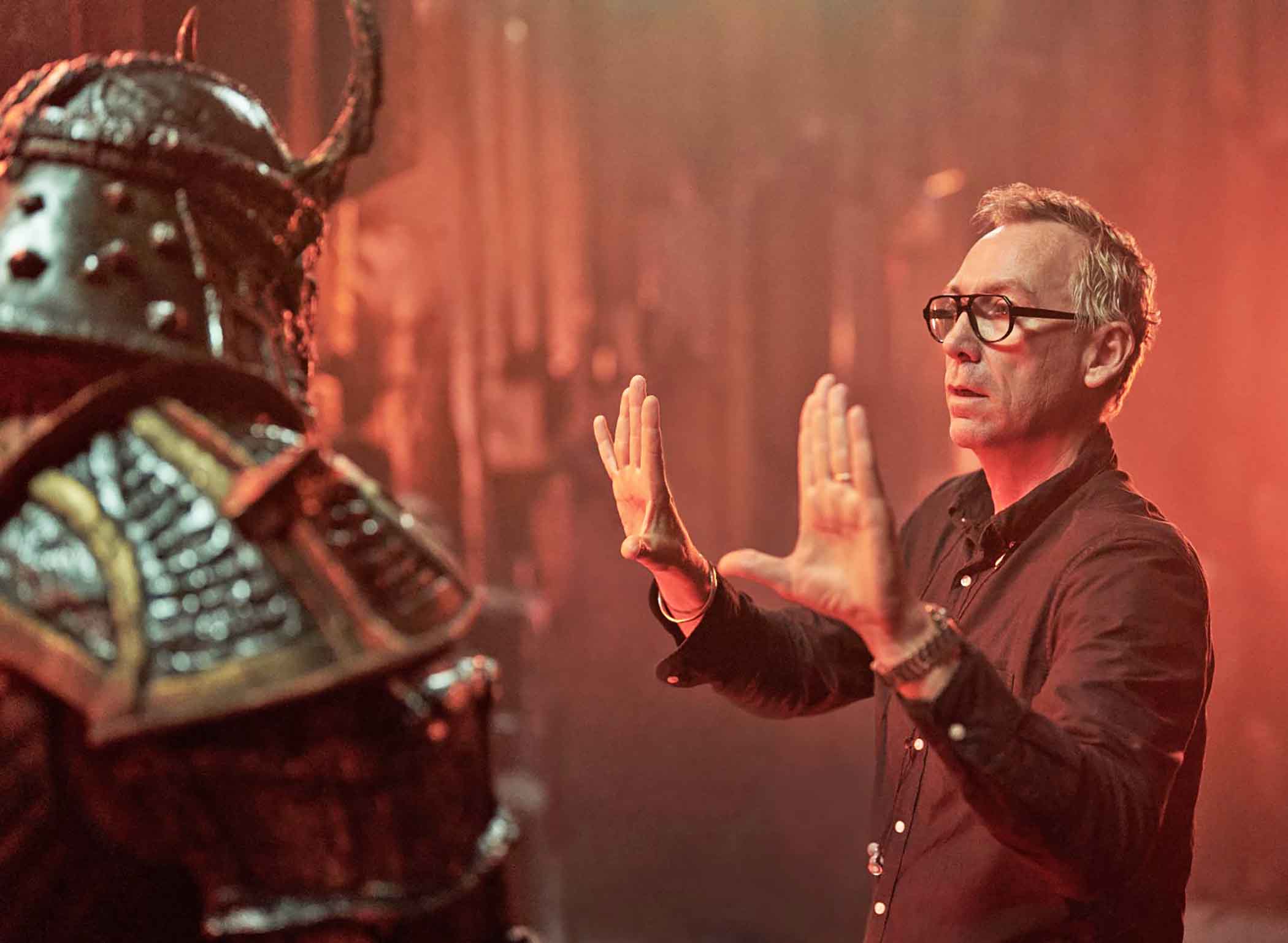
It was just a long, enjoyable, rigorous process. I’ll give you an example. So, Shao Kahn, I knew that he had to be brutal and evil, and I wanted to bring a realism to him that you really felt the moment you saw him. I started working on him with a character designer by the name of Andres Rios — he’s got a very distinct style. And he creates these really wild characters that are often built out of really interesting use of metal and detail, and they’re scary and dark. So I wanted to bring his distinct tone of voice to this brutal, nasty version of Shao Kahn. I said to Andres and Cappi Ireland, the costume designer, anything metal needs to feel like it’s forged by a blacksmith in Outworld. It needs to feel nasty and crude and repaired. And it’s got this multidimensional detail in it because I knew the light would kick off it, and I knew how the depth of field would be beautiful with that detail. So all of what he’s wearing has great detail, but it has history and layers. So we just did that with every character.
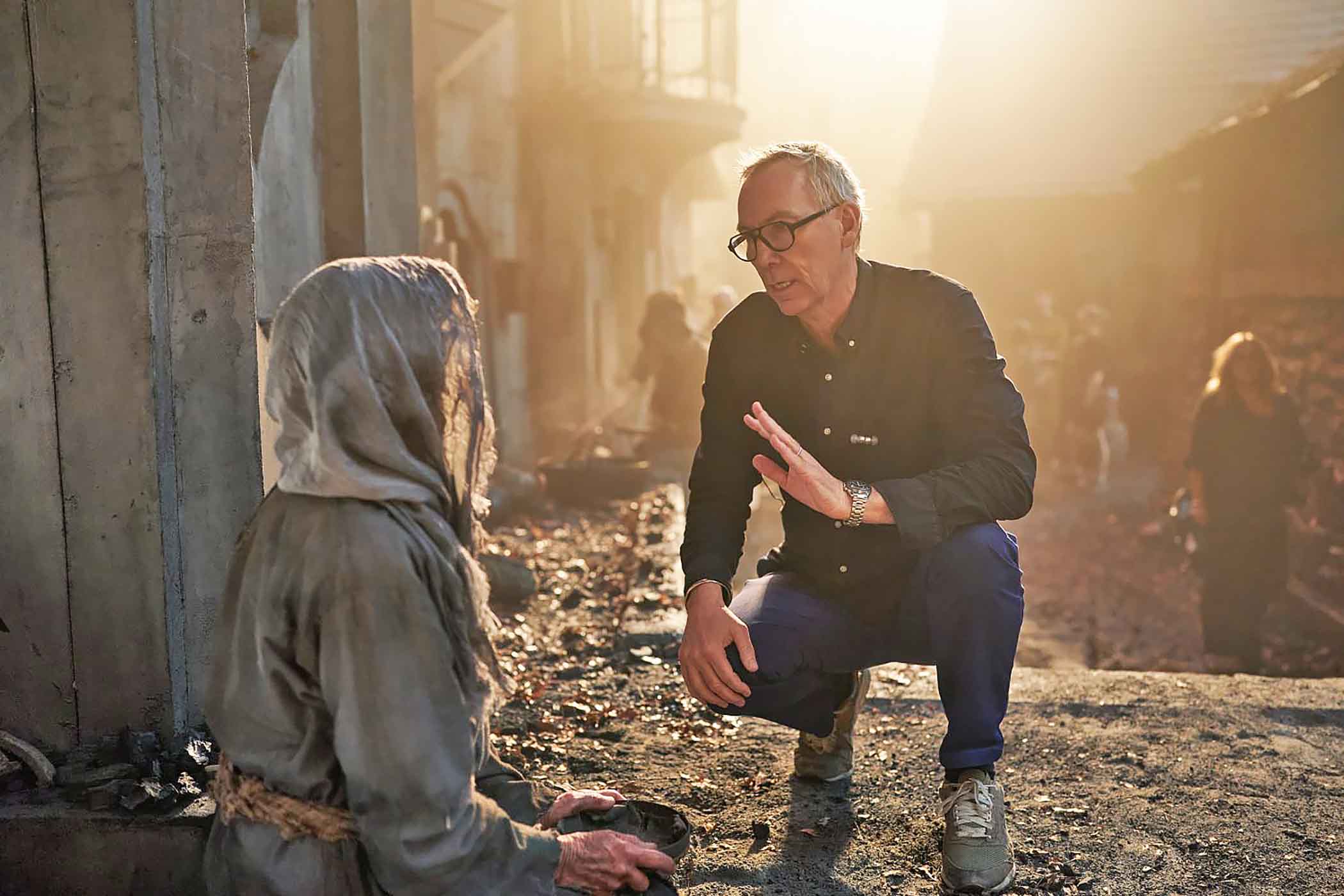
You mentioned Ed Boon being a great go-to guy. Did you go to him for feedback when it came to the costumes or set designs? After all, he is the guy who created everything.
I think one of Ed’s great qualities — aside from just being a fantastic guy who I’ve gotten to know — he didn’t try to control anything. He was just giving really insightful ideas that helped. I’ll give you a funny little story. When we were trying to work out what Johnny was going to be wearing in Uncaged Fury, we knew we could lean into the sort of early ’90s quality. So Cappi, the costume designer, was going through stuff and she said, “What about this one?” And it was one of the skins from the game. I said to Ed, “I am going to send you what we think would be good. Can you send me what you think would be good?” The emails went out and we sent each other the same thing. It was just like, “Oh, this is fantastic.” It was very easy working with Ed.
Ed has a cameo as a bartender. If these movies go on, do you think he should continue to do these cameos the same way Stan Lee did in the Marvel movies for years?
He’s actually really good on camera. He’s a very reserved, very thoughtful guy. But when he turns it on, he’s really funny. So, yes is the short answer. I think Ed could end up popping up in all sorts of things.
You’ve already done two Mortal Kombat movies, but do you plan to play in this sandbox a little more? There’s so much mythology here — there can be a Mortal Kombat universe of films and even spin-offs and streaming series. Have you been brainstorming long-term plans like that?
When you’re working with a property like Mortal Kombat, which has so much in it — so many stories, characters, layers, and timelines — there’s an overwhelming amount to consider. Yeah, you think of things, but until the movie comes out — who knows? I am looking forward to making a movie that isn’t a Mortal Kombat movie. So creatively, I’ve got a couple of things that are happening and that’s really exciting.
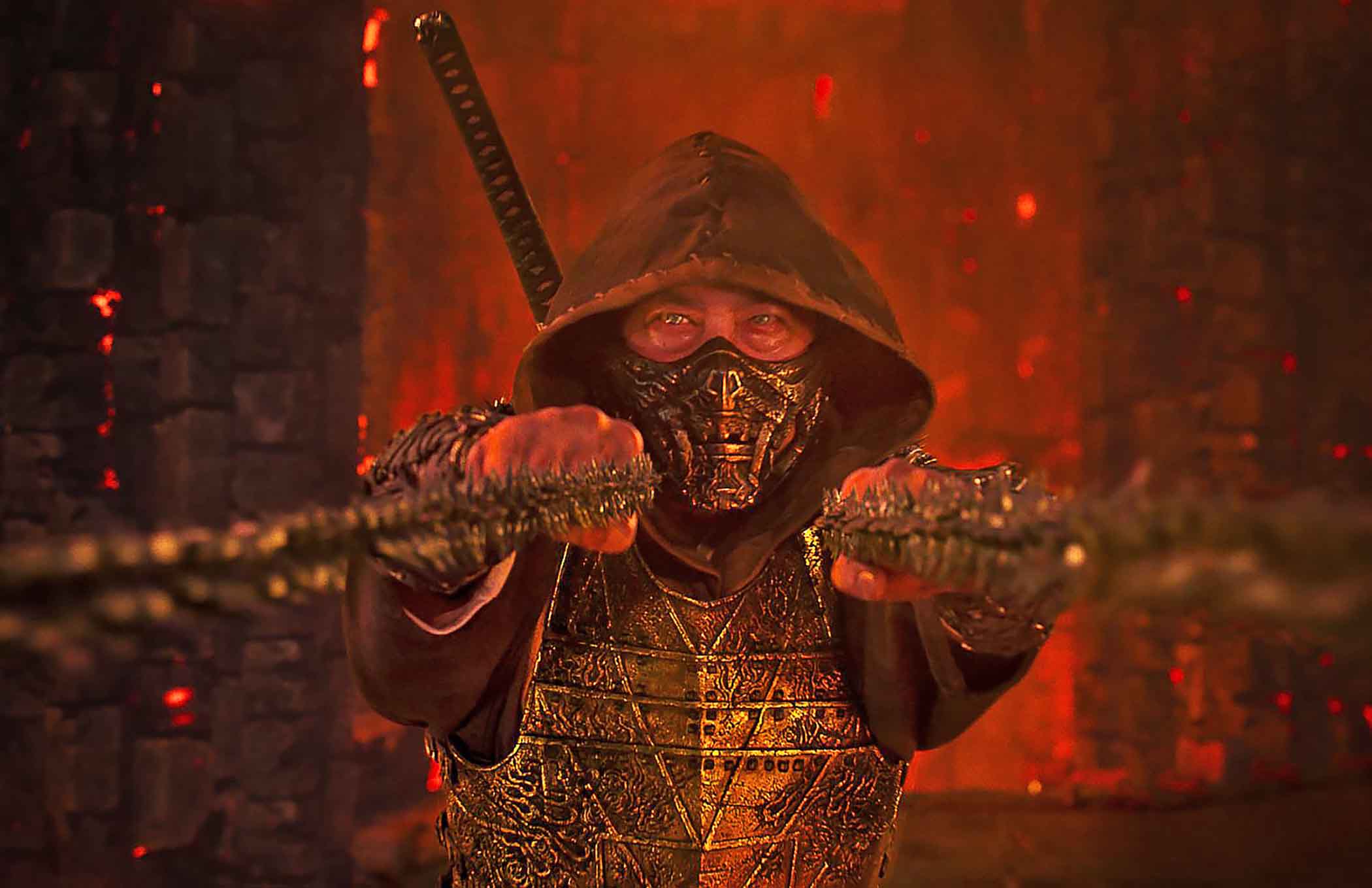
Mortal Kombat was famously controversial for its blood and gore when the first game came out in 1992. Did you have any issues with the MPAA while making this? Is it possible there’s an unrated version of both films with more extreme fatalities that needed to be cut or toned down?
There is no more brutality or fatalities on the cutting room floor. We used a bit more VFX with the blood this time around. It allowed us to go right up to the edge of where we could go and have a much more fine-tuned controllability of it. We did some tests early on of VFX blood and spray and it was really effective. In some of these ones, it’s a combination of real and a bit of VFX where we can be like, oh, we’ll push that a bit further. But no, that’s it. There’s only one version. We never crossed the line. It was always like, okay, we got the rating.
Mel Jarnson, who played Nitara in the first Mortal Kombat, is involved in another popular fighting game that’s being turned into a movie called Street Fighter. Do you and the cast feel like you have a friendly rivalry going on with that movie because it’s based on a rival video game franchise?
When we were shooting, I have to be honest, I wasn’t really thinking about that. I had enough on my plate. But all I’ll say is I hope Street Fighter does really, really well. And I hope it’s awesome because the more great movies that are out there, the better it is for all of us. So I wish them all the best. And I love the banter that the actors have. I’ll leave it to the actors to do that. I think a lot of them know each other and stuff. So, it’s all good fun, but I wish them all the best. I hope it’s great. ❖
“Mortal Kombat II” is in theaters now.