






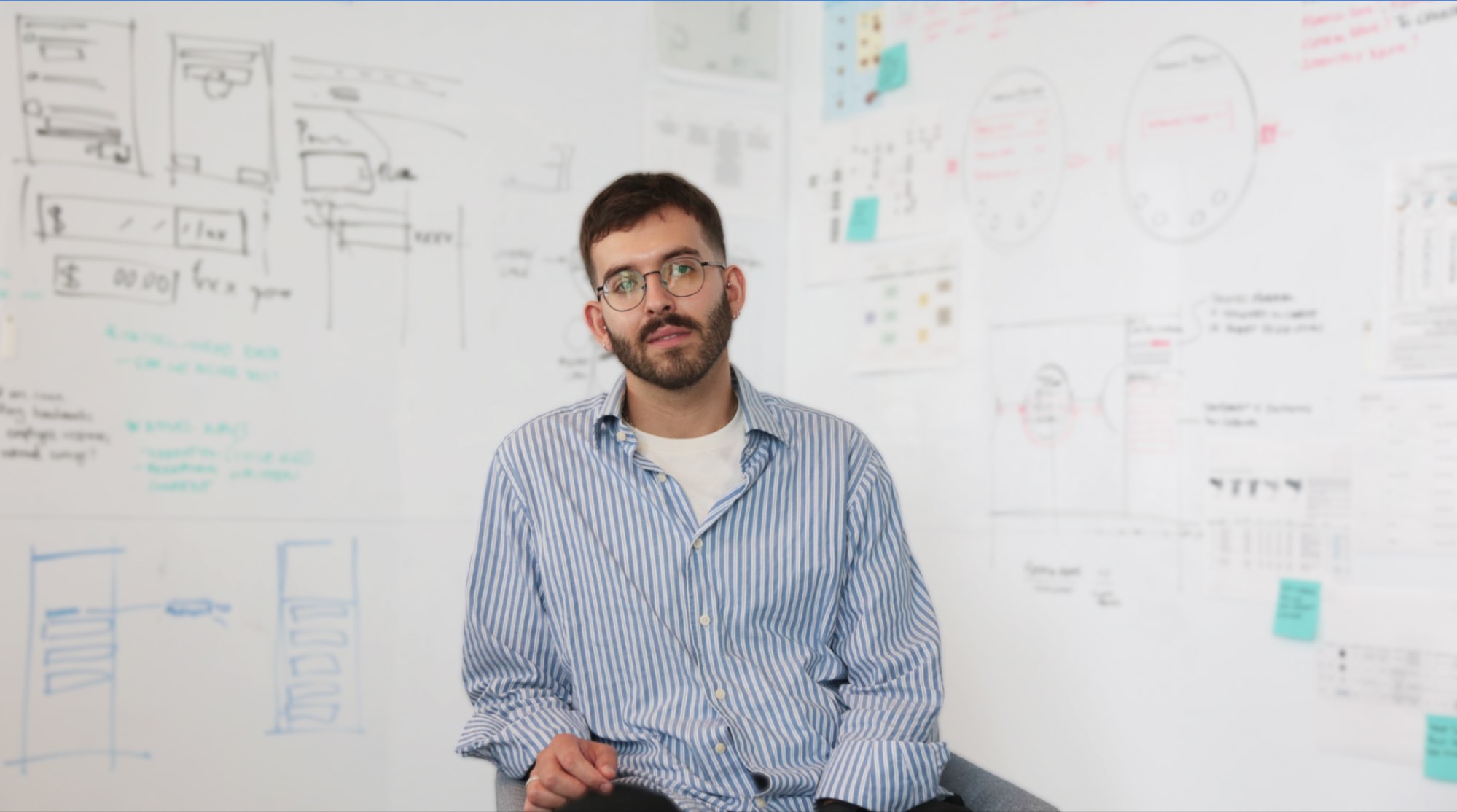
In the heart of New York City’s vibrant tech scene, Spanish computational designer Tomas Cabezon is reshaping the future of design and technology. As the Head of Zenda’s Computational Design Team, Tomas leads the development of software that not only meets but exceeds user expectations. A graduate of Carnegie Mellon University’s (CMU) Master of Computational Design program, where he studied on a Fulbright Scholarship, Tomas has presented his groundbreaking research at prominent conferences such as The Association for Computer-Aided Architectural Design Research in Asia (CAADRIA) and The Association for Computing Machinery’s Creativity & Cognition conference. His work delves into how machine learning will revolutionize design—not by replacing designers, but by providing them with new tools for creative exploration.
At the forefront of innovation, Tomas now steers Zenda’s Computational Design team at a pioneering consultancy that redefines how businesses understand and optimize their operations. With roots tracing back to the early days of software development, Zenda continues to push boundaries by visualizing business processes in a multi-dimensional way, transcending traditional diagrams. Zenda’s approach highlights the significance of understanding the true nature of work events and the human behaviors that drive them, enabling consultants to identify opportunities for transformation across diverse industries.
I had the privilege of sitting down with this extraordinary designer to discuss his journey, his design philosophy, and his latest project: Zenda’s software as a service (SaaS), artificial intelligence (AI) enabled Product. This Product promises to revolutionize enterprise operations with a cutting-edge, AI-driven platform, designed to enhance business efficiency and productivity. Zenda’s headquarters are at the iconic Chrysler Building, where the walls are adorned with designs and sketches. However, photos are off-limits, as they are awaiting design patent approvals. The innovation within the space was palpable. While Tomas could not disclose too many details, it’s clear that this is a project worth watching. As the creative force behind Zenda’s groundbreaking Product, Tomas is redefining what it means to design in today’s technology-driven world.
Tomas, thank you for taking the time to speak with me. First of all, can you explain to me what computational design is? What do you exactly do as a computational designer?
TC: That’s a great question, and to be honest, every time I get asked, I give a different answer. I would describe myself as a creative developer—a designer who uses code as a medium. I’ve always been wary of pigeonholing myself into a specific field. Since I was young, I’ve believed in the power of multidisciplinarity. This was challenging in Spain, where the educational system tends to compartmentalize knowledge. The master’s program I completed at CMU’s School of Architecture was called Computational Design. I loved that term. I’ve continued to use it to describe myself ever since.
But to answer your question directly, at Zenda, I’m responsible for bridging the design and development of our Platform. Some days that means collaborating with designers to refine our Product’s user interface, and on other days, it’s about ensuring the technology team executes those designs with pixel-perfect precision. Before joining Zenda, I worked on expanding the applications of Machine Learning in design and explored new ways of designing jewelry using parametric design, which allows for a higher degree of personalization.
Tomas, your approach to design seems to be driven by a deep curiosity and a desire to explore new frontiers, but your journey to this point doesn’t sound like a typical one. Can you tell us more about your background and what led you here?
TC: Of course. I have always had a deep love for design and have recognized its importance from a very young age. Growing up in Bilbao, near Frank Gehry’s iconic Guggenheim Museum, I witnessed firsthand how exceptional design can transform lives. That’s where my passion for design truly began; through architecture, I came to understand the profound impact design can have on the world. Looking back, I realize that Gehry’s influence was even more significant than I initially thought. He was a pioneer, using computer-aided design software, originally intended for building airplanes, to construct a museum. This evolution in design and architecture is central to what I do today: exploring how the tools that creative practitioners use can fundamentally change and enhance their creative processes.
That’s such an inspiring start! It sounds like your journey into computational design came later. How did that shift happen?
TC: It did come later. My introduction to creative coding was a bit unexpected, actually. It happened during my time in China, where I had the incredible opportunity to study under Professor Kostas Terzidis. Kostas introduced me to the world of randomness and algorithms in design, and it completely blew my mind. I remember reading his work and having this moment of realization—it was like finding something I didn’t even know existed, but suddenly I needed more of it. From that day on, I started seeing problems and solutions in a completely different way.
That sounds like a pivotal moment. What was it about creative coding that resonated with you so deeply?
TC: It was the idea that I could use code to communicate my ideas to a computer, and then, with the press of a button, I could see those designs come to life. It felt like unlocking a new dimension of creativity. Before that, design was something tangible—something you could draw or model. But creative coding opened up a whole new world of possibilities. It allowed me to explore randomness, to generate endless variations of a design, and to push the boundaries of what I could create. It was a game-changer for me.
It sounds like that experience fundamentally changed how you approach design. How has it influenced the work you do now at Zenda?
TC: It’s influenced everything I do. At Zenda, I’m constantly thinking about how we can use technology not just to solve problems, but to create experiences that are truly meaningful for users. Design isn’t just about creating something that looks good or functions well. It’s about understanding the problem you’re trying to solve and the people you’re solving it for. With more than 30 years of experience, Zenda really captivated me. So when Zenda told me about their next big project—their SaaS AI Product—I had no doubts. I had to be part of it. This opportunity is one of a kind, and I’ve always tried to create tools for other creative practitioners—tools that make their processes easier. That’s what we’re doing at Zenda: creating tools that allow users to explore, discover, and, ultimately, better understand how they work.
Can you talk about how Zenda’s unique approach has influenced the Platform’s development?
TC: Absolutely. At Zenda, we don’t simply tell companies how to do their work. We believe they are the experts in their fields. We work closely with the people who do the work, helping them identify and understand the underlying issues in their processes. This collaborative approach sets us apart from other design firms. We focus on both quantitative and qualitative aspects of work, recognizing that numbers alone can miss the nuances of human behavior.
As the Head of the Computational Design team, my primary duty is to ensure that this attention to detail carries through to the development phase of the Product. Every shape, texture, and interaction is meticulously crafted to ensure the best user experience possible.
What has been one of the most effective strategies you’ve implemented at Zenda to bridge the gap between design and development?
TC: One of the most effective strategies we’ve implemented is adding the responsible designer’s name as a subtask on Jira stories. This simple change has fostered a new level of communication between our design and development teams. Developers now feel more comfortable reaching out with questions, leading to a more agile and collaborative process. Meanwhile, designers are more engaged and confident in contributing during the ideation phase, knowing that their vision will be faithfully executed.
How does AI integrate into Zenda’s design philosophy, and how do you ensure it remains aligned with your human-centered approach?
TC: AI plays a crucial role in our Platform, but it’s important that it serves as an enhancement rather than a replacement for human intuition and creativity. Our design philosophy at Zenda revolves around the idea that technology should support the user, not overwhelm them. We’ve integrated AI in a way that streamlines processes and provides valuable insights, all while ensuring that the human touch remains at the forefront. The goal is to make technology feel natural, almost invisible, so that it enhances the user’s capabilities without getting in their way. This balance allows us to create tools that are not only powerful but also intuitive and deeply aligned with user needs.
Finally, what’s next for you? What are you most excited about in the future of design and technology?
TC: I’m excited about continuing to explore the intersection of AI and design. We’re just scratching the surface of what’s possible. The future is about making these powerful tools even more accessible and transparent, allowing designers and users alike to push the boundaries of what’s possible. I’m looking forward to seeing how we can continue to innovate and create tools that not only meet but exceed the needs of the people that use them.

Tomas Cabezon’s journey from the streets of Bilbao to the distinguished forefront of design innovation at Zenda is a testament to the extraordinary power of curiosity, creativity, and the audacity to embrace new ideas. His work continues to redefine the boundaries of what is possible in design, making technology not only more accessible but also profoundly intuitive for users. As Tomas leads the vanguard of innovation at Zenda, it is evident that his story is far from its zenith and that the future of design promises to be more groundbreaking and exquisitely human-centered than ever before.