







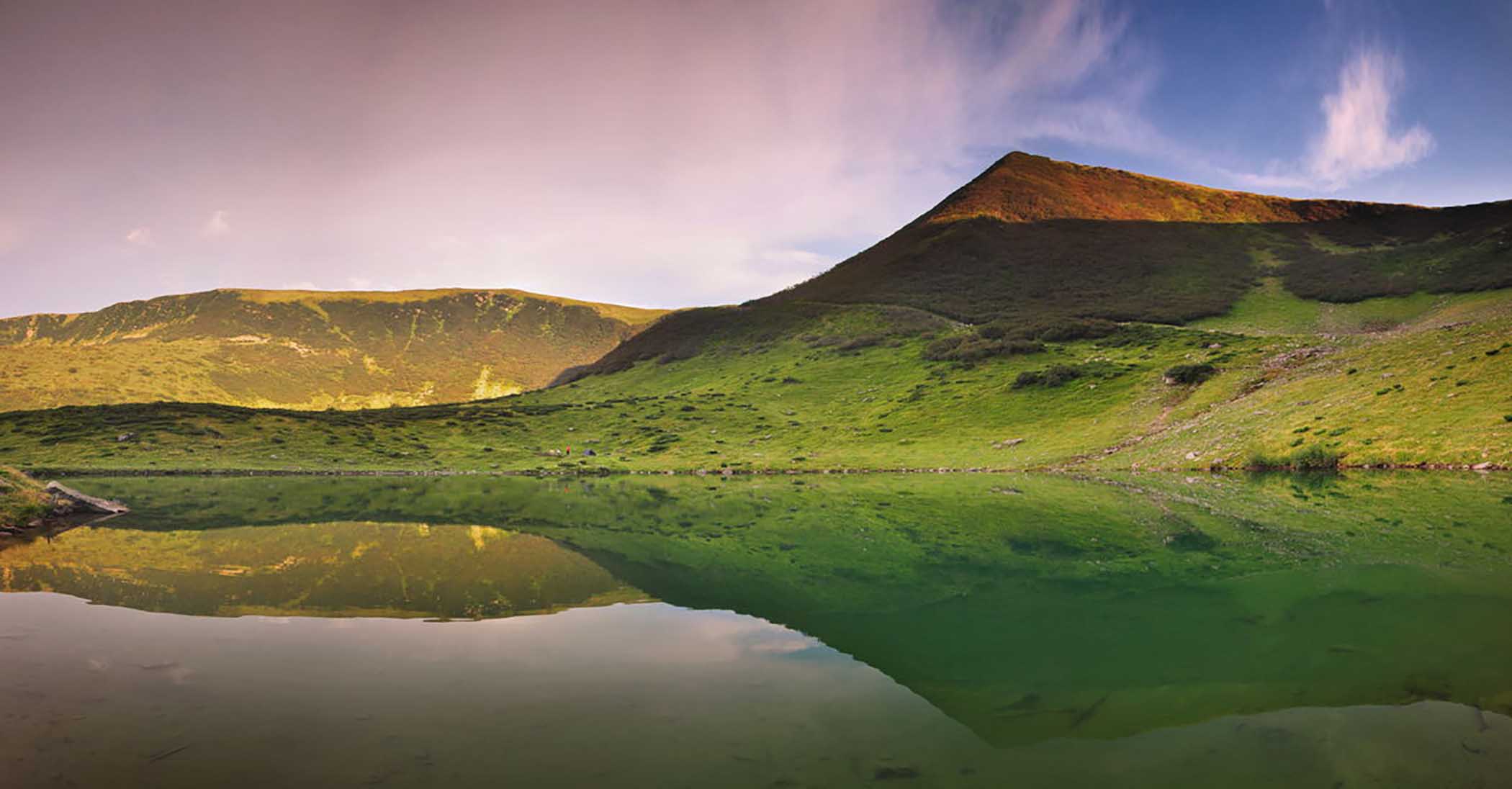
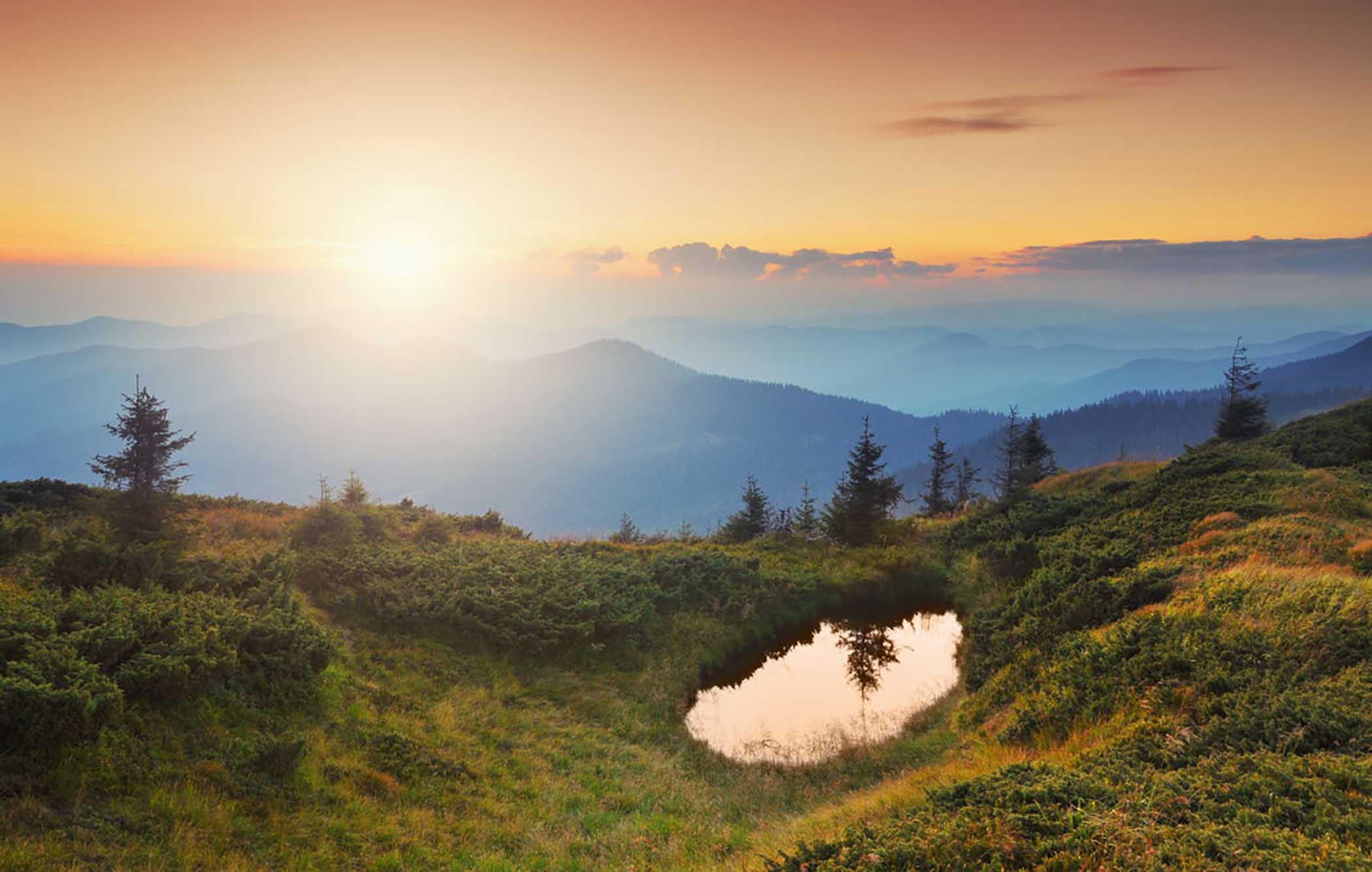
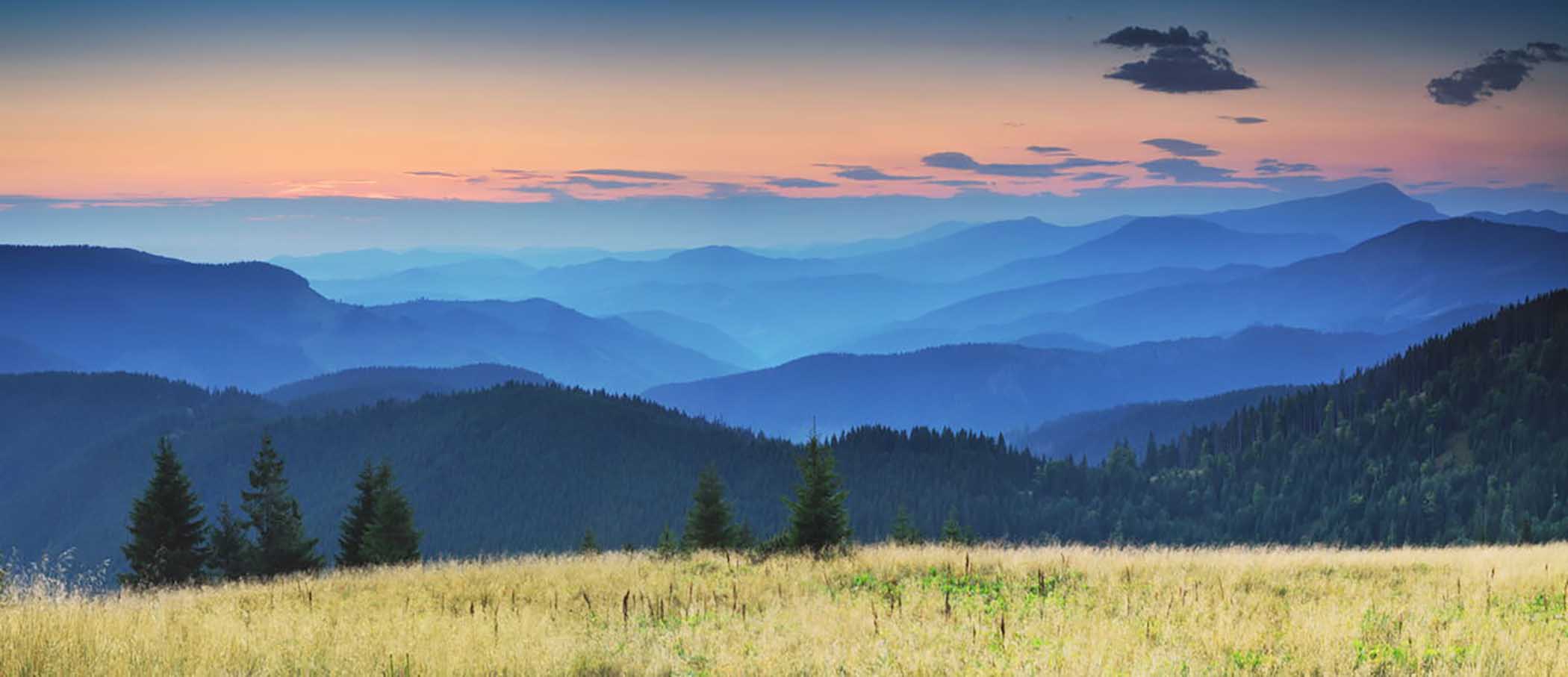
The rolling hills of the Carpathian Mountains, crisp autumn mornings at Ukraine’s national parks, wild horses grazing on grass surrounded by a picturesque natural landscape — these were the subjects of nature photographer Denys Kryvyi’s pictures, before Russia invaded Ukraine in February 2022. For more than a decade, Kryvyi’s passion for photography took him to the most secluded parts of his country, seemingly a world away from the geopolitical turmoil that would engulf the nation after Russia’s attack and ongoing occupation of parts of Ukraine. Nature was a constant inspiration for Kryvyi, something he turned to frequently before he was killed in combat by Russian soldiers during the siege of the eastern Ukrainian city of Bakhmut, in May 2023. But his work remains, and is currently on display through June 1 at the Ukrainian Institute of America, on East 79th Street, a reminder that Ukraine’s environment must be protected, now more than ever, as the country fights for its very existence.
Just as no Ukrainian has been spared the impact of Russia’s invasion, the same holds true for Ukraine’s environment. By land, sea, and air, Russia’s environmental destruction knows no bounds, and the devastation is catastrophic. Fires at oil depots, attacks on nuclear power plants, explosives releasing toxic chemicals into the environment, and forests studded with landmines are just some of the ways the war is poisoning Ukraine’s ecosystem. The destruction has been deemed one of Russia’s weapons of war and some of the damage is irreversible, leading many to label it “ecocide,” including Ruslan Strilets, Minister of Environmental Protection and Natural Resources of Ukraine.

Ukraine’s government has calculated the environmental cost at over $85 billion, and has estimated that there have been more than 8,240 documented incidents of environmental crime since the start of the war, with new occurrences happening every day. Since the beginning of the full-scale invasion, Svitlana Krakovska, a climate scientist and the head of the Ukrainian delegation to the Intergovernmental Panel on Climate Change, has deemed Russia’s invasion a “fossil fuel war,” given that both sides rely on fossil fuels for their combat missions.
“Russians, they’re just crazy. They don’t have any rules, any red lines. So they can do disasters.”
“We cannot even recognize this impact on the country,” Krakovska told me as we sat in her office at the Ukrainian Hydromet Institute, in Kyiv. “At the moment, we are in the mode of survival. And at the moment, we can only monitor this. We can only try to account, try to make Russia accountable for this … these emissions.”
Some of the environmental damage has happened gradually, and over time can become catastrophic. But one of the most shocking environmental attacks came swiftly, in the early morning hours of June 6, 2023, in Russian-occupied Nova Kakhovka. One moment, the decades-old Nova Kakhovka dam was there, holding back a reservoir nearly equal to the amount of water in Utah’s Great Salt Lake, and the next, it was destroyed. The floodwaters submerged 230 square miles of Ukraine’s southern territory, including Kherson, Mykolaiv, Dnipropetrovsk, and Zaporizhzhia. The immediate impact of the flood was disastrous — 100,000 residents were directly affected, 14,000 houses were destroyed, and at least 52 people were killed. Ukrainian president Volodymyr Zelensky said at the time that 20,000 animals and 10,000 birds were “under threat of imminent death,” and thousands of fish were seen dying at the bottom of the depleted reservoir.
First responders and volunteers rushed to the scene of the catastrophe, helping to evacuate as many civilians as possible. Animals were seen struggling to remain above water, clinging to detached doors floating in the water or to nearby trees. While rescue efforts were underway, Ukraine’s emergency services had to turn away calls for help that came from areas under Russian occupation — there is no way to safely get to the places Moscow controls.
The damages to the region totaled at least $14 billion, according to a report released by the Ukrainian government and the United Nations. Krakovska described it as the largest environmental crime of the war, and it is not only that. The destruction of the dam and the resulting floods wiped away entire neighborhoods, washed deadly landmines onto the shore, and left hundreds of people trapped under Russian occupation in the south to live amid the bacteria and biohazards caused by the inundation.
The dam housed a massive hydroelectric power station, explained Krakovska, adding that this has “Many, many impacts, and it’s not just about water resources. It’s about everything. It’s a huge territory. It’s a huge disaster for [the] south region.” The draining of the reservoir also stripped away vital irrigation to southern Ukraine’s farmlands, which have since begun to dry up.
“Russians, they’re just crazy,” said Krakovska with a sigh. “They don’t have any rules, any red lines. So they can do disasters. They already proved it with Kakhovka.”
On March 18, Kyiv and Moscow agreed to a U.S.-brokered ceasefire on attacks on energy infrastructure, which Russia has used throughout the war to inflict massive damage on Ukraine. Countless blackouts have left millions of Ukrainians without electricity, Internet, heat, and air conditioning over various periods throughout the war. But Russia’s attacks on the energy infrastructure go deeper — since the early days of the war, Russia has occupied the Zaporizhzhia nuclear power plant, the largest of its kind in Europe. For Ukrainians, the Zaporizhzhia plant is a constant reminder that the war could, indeed, get much worse. When threats of destruction of the plant arise, many Ukrainians rush to the nearest pharmacy, where they purchase iodine tablets, which help block the absorption of radioactive iodine — a remedy used in the aftermath of the 1986 nuclear disaster at Chornobyl.
Such threats of nuclear disaster exist across the country. On a Zoom call from Kyiv, Halyna Kryvyi, 32, told me that she and her husband, Denys Kryvyi, were awakened in their home near the South Ukraine Nuclear Power Plant, in the city of Pivdennoukrainsk, at “six in the morning — we heard the explosions. The shock was strong.” While millions of Ukrainians were fleeing their homes for safer regions of the country or abroad, Denys and Halina Kryvyi remained, volunteering to help their community as the war engulfed their country. “People were leaving from big cities, and indeed, there was bombing, but we saw the work that needed to be done,” says Halina. The pair volunteered to collect critically needed supplies, such as clothing, medication, and toiletries, for the people in their area.
But the situation in Pivdennoukrainsk grew more dangerous, and there were fears that Russia might attack the plant. The family decided to leave for Vinnytsia, a city in central Ukraine that became a hub for internally displaced people. Still, shortly after arriving in Vinnytsia, Denys decided to return to Pivdennoukrainsk, where he continued to volunteer until joining Ukraine’s military six months later. “We made this decision because, at that moment, everyone understood that these were the right steps to take, just supporting it,” says Halyna, when asked why she supported Denys’s decision to join the military.
While many Ukrainians have volunteered to work as drone operators, foot soldiers, or in the artillery brigades, Denys joined the special forces, one of the most dangerous branches of the military, which carries out special reconnaissance, direct action assaults, and sabotage behind enemy lines. The work is critically needed, but this is also one of the deadliest positions of the war.
“They worked in such a way that they spent one week on the frontline, and the next week they prepared for the next mission. He communicated while preparing, and then for the following week, there would be no communication,” recalls Halyna.
The last time Halyna saw her husband alive was early on Easter morning, in late April 2023. The couple had been without communication for more than a week before Halyna received word that her husband had been killed in combat at age 34. In the weeks that followed Denys’s death, Halyna says she was in a “terrible state.” The pair had been together for 15 years. She tells me, “I was always supporting him, always felt the need of being that person to support what he was doing … I was just like, what do I do now?”
While she mourned the loss of her husband, Halyna Kryvyi began to think of ways to honor his life and work, and 40 days after his death she opened the first exhibition of Denys’s work. For Halyna, these ongoing exhibits, such as the one in Manhattan, are one way to “keep his legacy alive.” Halyna says she hopes attendees of the exhibit in New York will walk away remembering Denys’s life and his sacrifice for Ukraine, and “That people will cherish what we have around us. That people will cherish his photographs, his love of nature, for us as humans to cherish, appreciate, and protect nature.” ❖
••• Denys Kryvyi’s photographs will be on display at the Ukrainian Institute of America through June 1. A panel discussion about the degradation of Ukraine’s environment will take place on April 22 at the Institute.
••• The exhibition of Kryvyi’s photographs was organized by Ukrainian Jersey City. Click here to see a full slate of events in support of Ukraine and its citizens.
Anna Conkling is a freelance journalist based in Berlin who, since the beginning of the Russian invasion, has been corresponding with and on the ground interviewing Ukrainian soldiers, students, and civilians, and writing about them for the Voice and other publications.


