






As the tech and entertainment industries race to render increasingly flawless digital worlds, senior creative technologist and new media artist John Luo is exploring a different question: How do we make digital art rely on the real-time presence of the viewer?
In the current digital art landscape, a common goal is rendering a perfect, static visual. Whether it is a highly polished CGI sequence or a seamlessly looping gallery projection, the medium is frequently designed for passive consumption. When interactivity is introduced, it is often confined to the realm of video games, where user input is tied to objectives, scores, and winning conditions. A more subtle challenge—and one gaining traction among a new generation of creative technologists—is how to strip away the “gameplay” entirely, using the immense computational power of real-time engines purely for spatial storytelling and psychological reflection.
Junqi “John” Luo brings a human-centered perspective to this challenge, operating comfortably at the intersection of mixed reality (MR), virtual reality (VR), and spatial computing.
In digital art production, there is often a separation of disciplines: 3D artists focus on visual fidelity, while interactive developers focus on systems and code. Luo belongs to a newer wave of creators working in the space between these approaches. With a foundation in Communication Design from Parsons School of Design, he trained in the psychology of visual communication—how to guide attention and evoke emotion. Realizing that traditional 2D design only allowed for passive experiences, he brought that visual focus to New York University’s Interactive Telecommunications Program (ITP), where he began working with the computational logic of real-time engines like Unreal Engine 5. Because of this specific trajectory, Luo’s practice centers on designing living visual systems rather than static scenes.
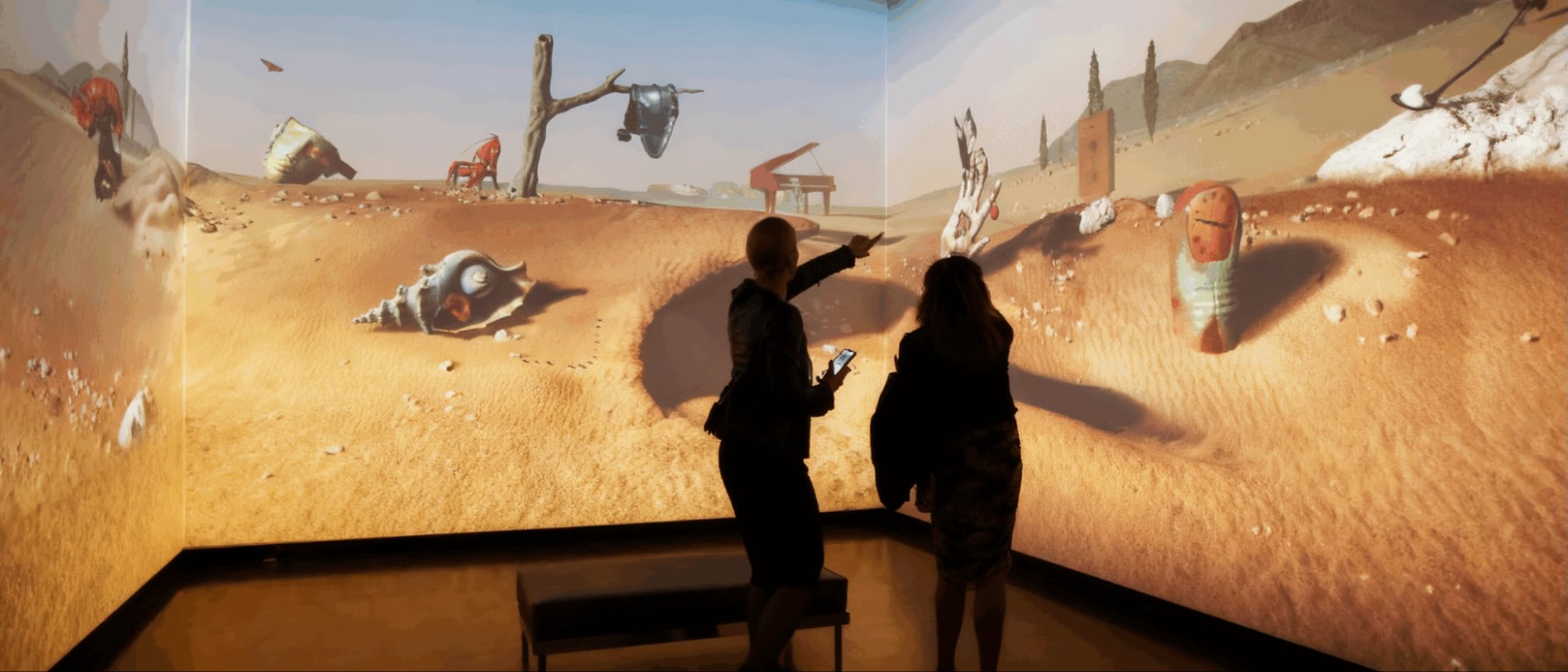
To understand this approach, it helps to look at Luo’s core creative focus: embodied storytelling. His work actively questions the fourth wall. This is evident in his spatial and environmental projects, such as Endless Garden. In a standard immersive exhibit, the environment is often a pre-rendered video mapped onto a wall. Endless Garden, where Luo served as a core developer and visual designer, operates differently. Powered by Unreal Engine, the environment recalculates and responds to the physical data of the audience in real-time. The room shifts with the audience, demonstrating an environment that uses the audience’s physical presence as a catalyst for the artwork.
This exploration scales from shared physical spaces into deeply personal virtual spaces. The VR project Rising River, which was accepted into the 2025 SIGGRAPH Immersive Pavilion program and exhibited at SXSW Sydney, is a prime example. Serving as a core developer, visual designer, and tech artist, Luo helped build a surreal, black-and-white noir journey. By integrating real-time text and audio AI, the system conducts an ongoing psychological Q&A with the user. The participant’s voice and input are required to drive the narrative forward.
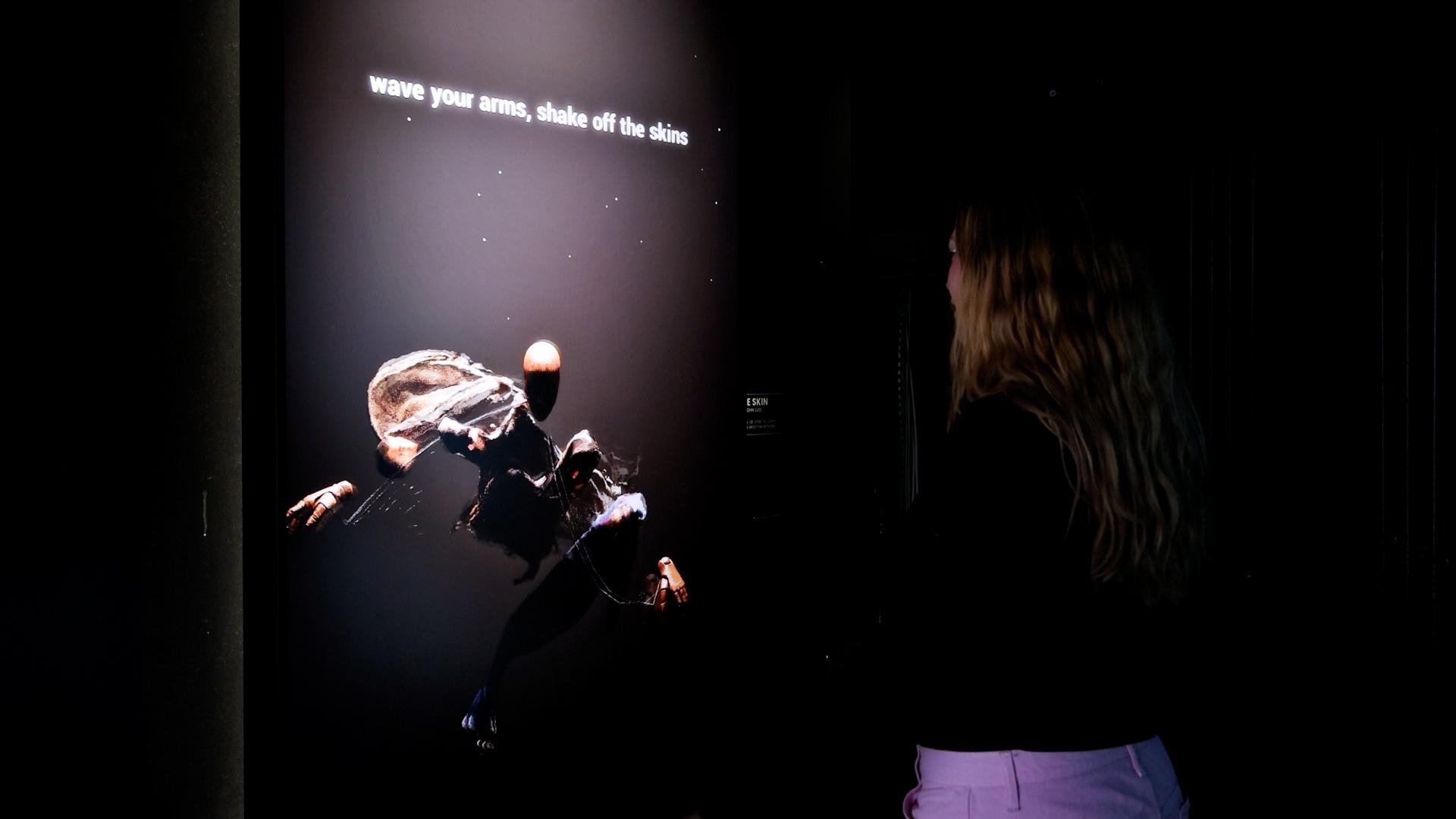
While Rising River explores internal dialogue, his work The Skin—featured at the Artechouse SUBMERGE exhibition—looks at external identity. This screen-based installation utilizes real-time motion capture to turn a digital puppet into a mirror of the participant. As the user physically shakes, the digital puppet sheds its “skins” on screen, requiring physical exertion to reveal the layers beneath.
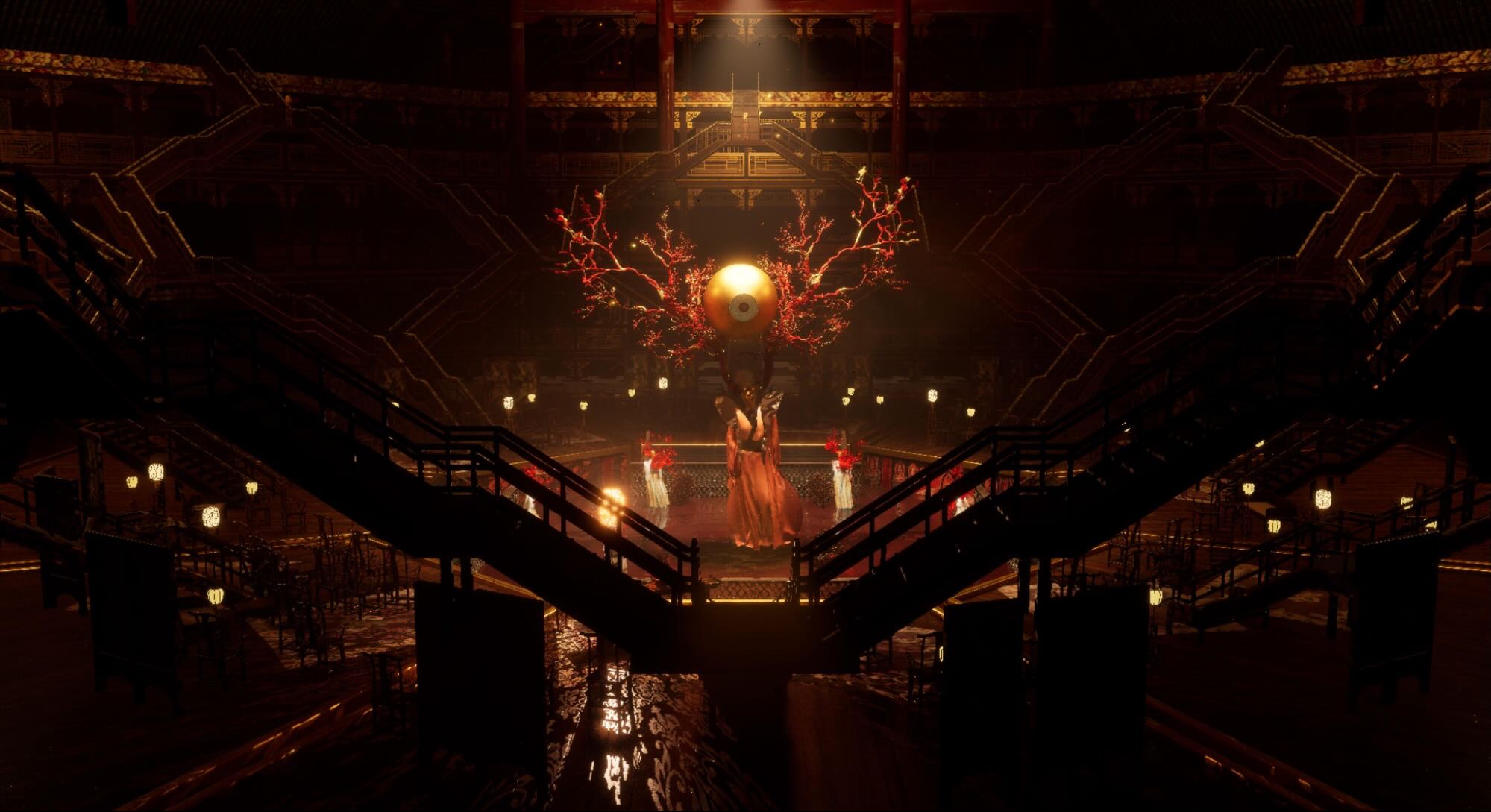
Luo’s practice finds another dimension when he applies these real-time systems to live performance, exploring the boundary between actor and digital world. In The Theater, an interactive VR project where Luo served as director and lead developer, he fused dance performance, fashion, and VR interaction. The user is placed inside the theatrical narrative, navigating their own role in the play. Similarly, in his mixed reality performance The Play, Luo utilized motion capture to connect a live human body to a digital avatar in real-time. His early explorations into technology and avant-garde theater led to an invitation to present his work as a guest speaker at the La MaMa Experimental Theatre Club in New York.
The resonance of Luo’s interactive philosophy is reflected in the wide-ranging recognition his individual and collaborative projects have received across the art, tech, and performance sectors. His installations and digital environments have been selected for prestigious international platforms, including SIGGRAPH, SXSW Sydney, and the PASEO festival, alongside gallery showcases at The Holy Art Gallery and the Palace of Fine Art’s Art X Gallery. Furthermore, his ability to bridge the gap between digital innovation and live human experience has earned his practice a presence at avant-garde institutions like La MaMa and CultureHub, as well as industry accolades including Webby recognition and a presenter nomination at the Meaningful XR Hackathon.
In a digital era that frequently rewards frictionless scrolling and passive consumption, John Luo’s emerging body of work insists on participation. By asking for physical movement, psychological input, and real-time engagement, he is building digital spaces that require human presence to feel complete.