





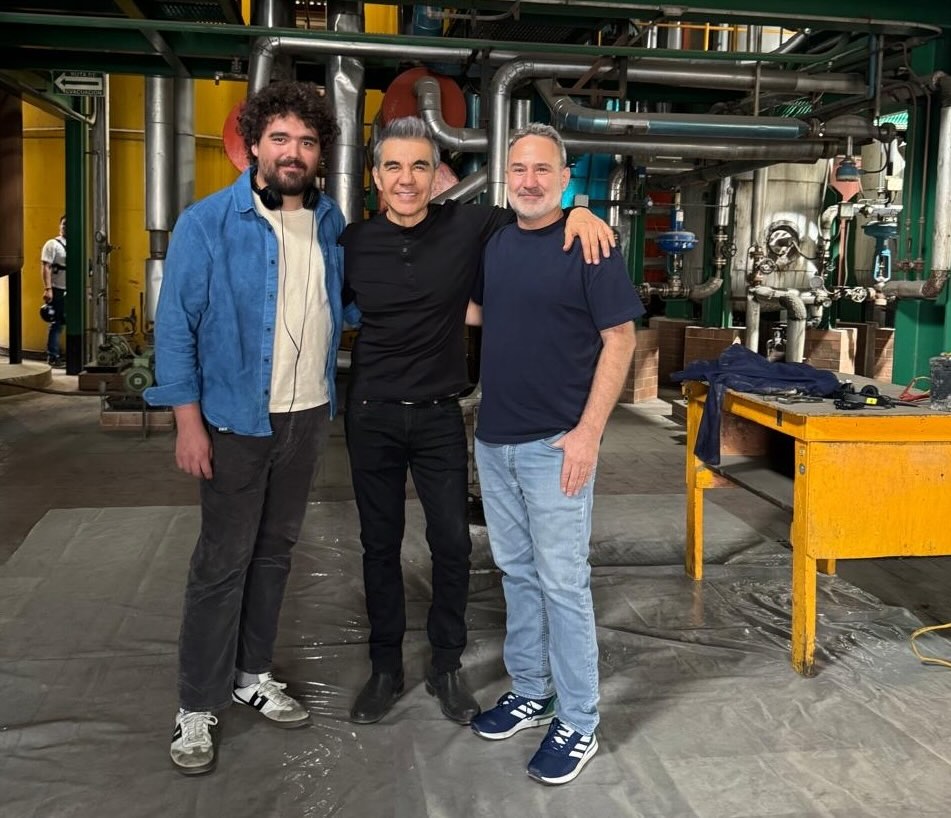
From Carnada to Mi Mundo to ¿Quién es mejor?, the TV producer and writer is helping bring new Spanish-language programming from idea to screen.
A good television idea can die in a dozen rooms before anyone ever sees it. Carlos N. Cerutti knows that part of the business well. The first room may love the premise. The next may worry about audience fit. Another may ask about budget, format, tone, rights, timing, casting, or whether the whole thing can survive the long road from development to production.
Cerutti has learned to live in that tension. He is a TV producer and writer who works across scripted and unscripted formats, with recent credits tied to a comedy series, a documentary series, and a Sunday primetime talent competition show. His work includes Carnada, an upcoming comedy series for ViX starring Adrian Uribe, the documentary series Mi Mundo, and ¿Quién es mejor?, the TelevisaUnivision talent format he co-created and co-executive produced.
“I never wanted to only be the person with a funny script,” Cerutti says. “I wanted to understand how the engine works, because that is how ideas actually get made.”
Cerutti came into the industry through story, comedy, and character. His roots are in improv and character-driven work, where the job is to listen closely, find the honest turn, and make something feel alive in the moment. Producing taught him a different kind of listening. It made him pay attention to the room where decisions happen.
“My roots are in comedy, but producing taught me how to survive the room where the yes or no happens,” he says. “You can have the best instinct in the world, but if you cannot explain why the show works for that audience and that platform, it may never leave the page.”
That skill has become especially valuable in a television market that can feel both crowded and cautious. Cerutti sees a deep disconnect between the people dreaming up shows and the executives deciding which projects move forward. Writers may not always understand the logistical needs of a network. Executives, trying to manage risk, may press a concept so hard that the original spark starts to fade.
Cerutti does not treat that conflict as grounds for complaint about the business. He treats it as part of the job.
“I like the part of the job where the idea has to become practical,” he says. “That is where you find out whether you really understand the show.”
That practical instinct has mattered across three very different recent projects. Mi Mundo required a documentary sensibility, the ability to shape truth, perspective, and pace without forcing the material into something false. Carnadadraws on Cerutti’s scripted comedy background and his comfort with performance-driven storytelling. ¿Quién es mejor?asked for a different muscle entirely: format thinking, pace, and the ability to make a new idea clear fast.
The projects do not ask for the same muscles. That is part of the appeal and the value that Carlos Cerutti brings to Blue Hummingbird corp, the production company he works for.
“I love moving between formats,” Cerutti says. “A comedy scene and a competition show do not work the same way, but they both need timing. They both need humanity. They both need a reason for people to care.”
That belief comes from years spent building his taste from more than one direction. Cerutti studied Audiovisual Communications at Universidad de Palermo in Buenos Aires, where he learned the many parts of making film and television, from writing and directing to editing, sets, and production. He later moved to the United States to pursue an MFA in Cinema Directing at Columbia College Chicago.
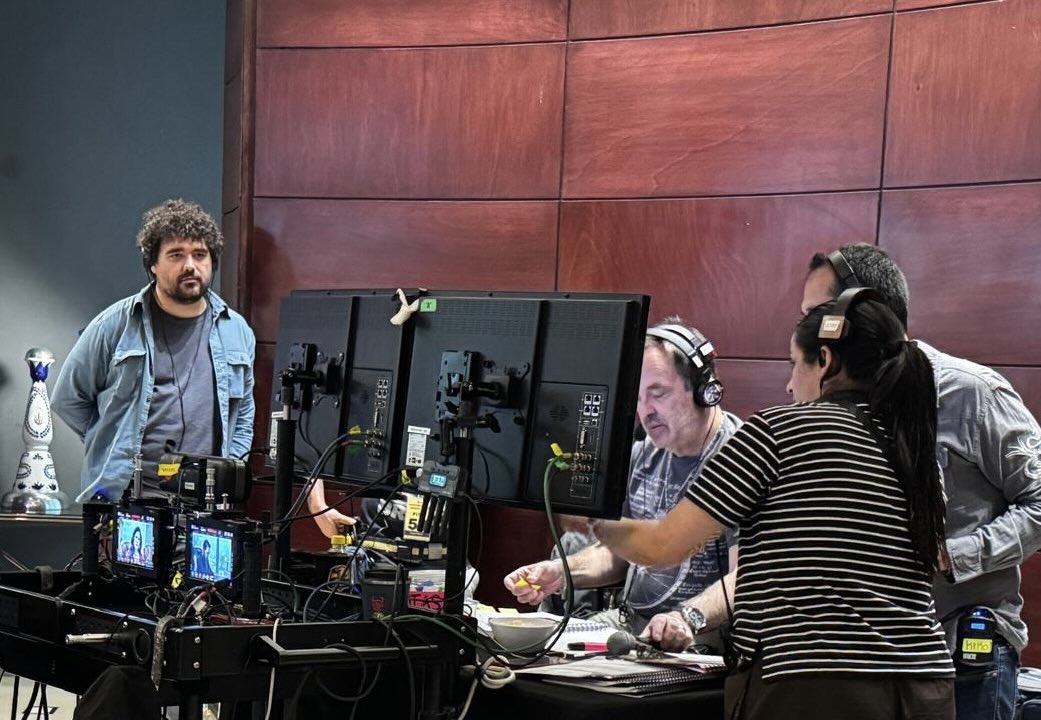
Chicago became more than a place to study film. It became the city where he sharpened his comedy voice. He took classes at iO Chicago and became part of the improv community, a training ground that helped him understand story as something responsive and physical, not only written.
“Improv changes the way you think,” Cerutti says. “You learn to watch people. You learn to react instead of forcing the moment. That is incredibly useful when you are making television, because a show has to breathe.”
His time with the Chicago International Film Festival also shaped him. He started as a volunteer, then became a programming intern and production assistant, and later served on the selection committee for multiple seasons. Watching and evaluating films helped him build a sharper sense of what works on screen and why.
Still, taste alone was not enough. Cerutti had to learn how to move from creative instinct into execution. He describes the hardest transition of his career as the shift from being a pure creative to operating inside the machinery of network television. In his earlier work, control was closer. On short films or comedy projects, the main obstacle was often time, money, or stamina. In network television, the obstacles multiply.
Budgets matter. Legal questions matter. Executives have notes. Formats have mechanics. Companies need cash flow. Development can stretch long enough to drain energy from a project before a camera ever turns on.
“At first, a note can feel like an attack on the idea,” Cerutti says. “Then you learn to ask what problem the note is trying to solve. Sometimes the solution is not doing the note literally. Sometimes it is finding a better creative answer to the same concern.”
That mental shift changed how he sees the producer’s role. He no longer views practical constraints as something separate from the creative process. He sees them as conditions the idea has to survive.
“A creative idea has to survive real conditions,” Cerutti says. “Budget, timing, notes, platform needs. The challenge is making those pressures sharpen the idea instead of flattening it.”
His experience on MasterChef for the Dominican Republic helped with that shift. Cerutti worked as a post-producer consultant filling the gaps between the local production and the owners of the format. The role gave him direct exposure to one of the world’s most recognized reality formats and helped prepare him for later work developing shows for the U.S. Hispanic market.
The pattern is clear across his work now. Cerutti is drawn to ideas with personality, but he wants to get them built. He wants the funny line, the strong character, the emotional beat, and the finished show that actually reaches people.
“I like making things that feel good,” he says. “Entertainment is part of people’s lives. It can give them joy. It can give them a way to connect. That deserves care.”
His next goal is to keep developing original television, explore new formats, push into new markets and languages, and bring a feature film to life. The throughline is not a single genre. It is the act of turning ideas into finished work.
Cerutti is still the person chasing the funny beat and the character moment. He is also the person asking how the scene, the pitch, the format, and the budget survive the next room. That combination is the work now, and it is the part of television he seems built for.