





With its Didion DNA and Tuesday-heartbreak glamour, few lost orphans of the American New Wave era have been pondered as lavishly as Frank Perry’s Play It As It Lays (1972). Where’s it been? Long unseeable, never released on home video, and now finally flaunting a new 4K restoration, the film, over a half-century later, feels like a forgotten family photograph that’s all the sadder for capturing your mother — or a gorgeous but unstable aunt — in her guileless youthful beauty. Except here, there’s no innocence left on the ground. Like the other urgently unhappy films of Frank and Eleanor Perry (working together or apart), it’s a cracked window thrown open on its best-and-worst-of-times era: days of wide-open bloodshed and ideological head-butting to rival our own (albeit with a lot more rioting and military caskets, and far less malevolent autocracy), feverish hope and idealism (generationally speaking), and the dawning awareness of the essential corruption and vacuity at the heart of the American project.
Most of the New Wave films reveled in the fringe-land loners and self-immolating rejects wandering the parts of the landscape Hollywood had never explored before. But for the Perrys, ground zero was the cheaply luxurious playpens of the despairing upper middle class, for whom material security only translated into an existential vacuum. The Perrys, Frank directing, Eleanor screenwriting, together and separately, attempted a homegrown Yankee version of the psychological gravitas and class attack of mid-century hall-of-famers like Bergman and Antonioni. (This was where film culture was pointing — between 1958 and 1968, more foreign films were released onto U.S. screens than domestic each year, sometimes at a ratio of more than two to one.) The gritty, intimate David and Lisa (1962), about the institutional romance between two disturbed teenagers, got both Perrys Oscar-nominated, but it was their rarely seen follow-up, Ladybug Ladybug (1963), that presaged the elliptical structure and sense of hopeless qualm that distinguished The Swimmer (1968), perhaps the most haunting film about collapsing certitude ever made in America. It was an interrogative postmodern vibe that the couple pursued, as a team or not, in Last Summer (1969), Trilogy (1969), Diary of a Mad Housewife (1970), The Lady in the Car with Glasses and a Gun (1970), The Deadly Trap (1971), and, of course, Play It as It Lays.
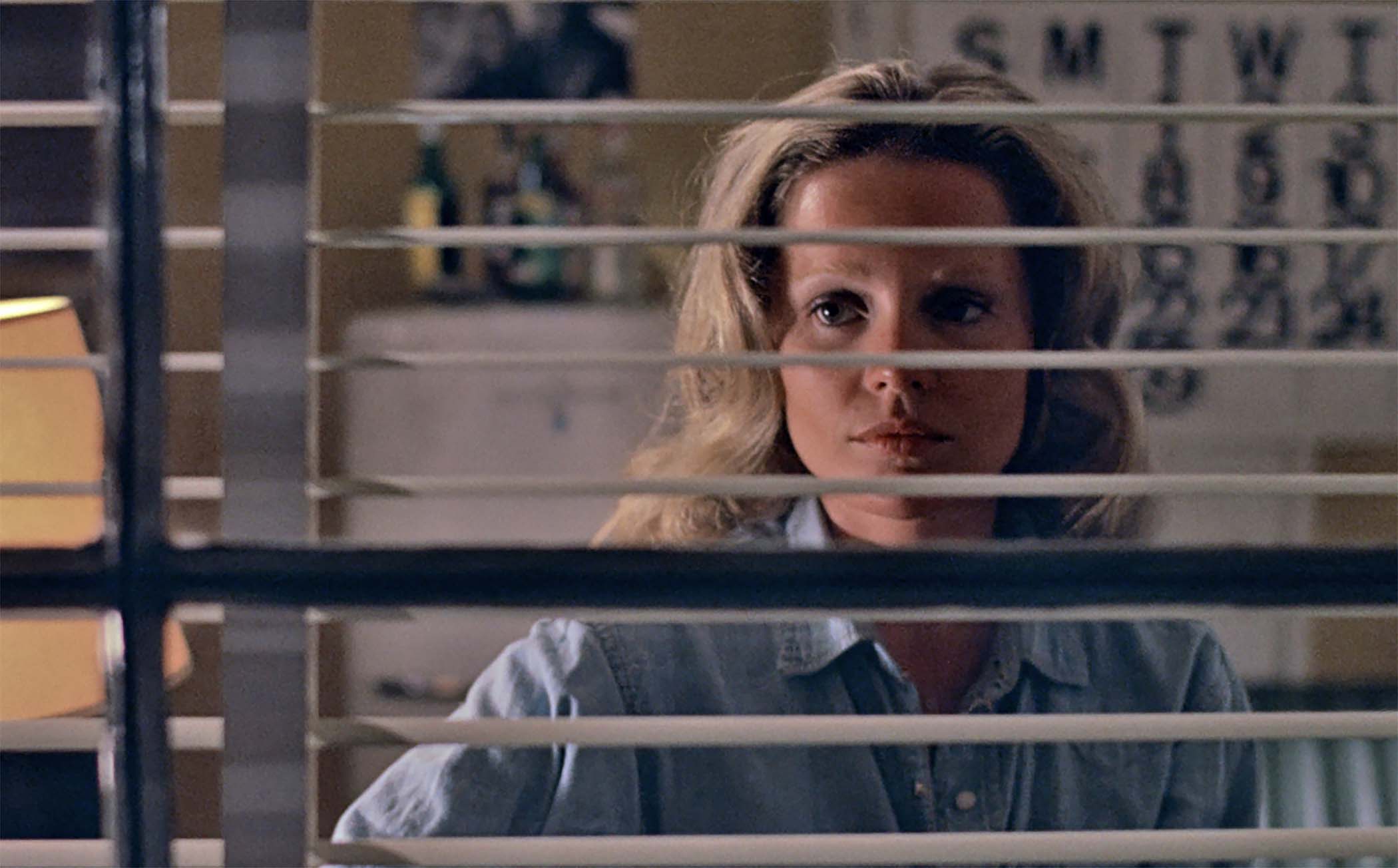
Like Weld herself, Play It As It Lays is superficially gorgeous, yet secretive about its dire vision.
They weren’t hits, but the films stood out: Whereas Cassavetes was fascinated by how ordinary middle-class American life can be shredded by desperation and loneliness, and Altman by how American communities bustle their way to tragedy, the Perrys honed in on the disintegration of consciousness amid the American haute bourgeoisie, wondering why it was that people with no real problems often seemed to have the worst problems of all. No wonder Frank Perry got the perhaps cursed job of taking on Mommie Dearest, in 1981 — as a hypertensive study of luxuriated misery, it can hardly be outscored.
Play It As It Lays explores the same territory — Hollywood — with a more ruminative yet pessimistic voice, an Eleanor Perry–ish vibe that actually belongs to Joan Didion, who co-wrote the screenplay (based on her 1970 novel) with husband John Gregory Dunne. (The Perrys had divorced in 1971, putting an effective end to their roughly decade-long unified theory of American lostness.) The movie is fragmented like a broken mirror, flitting from memory to memory, with very rare nods toward chronology — but we come to realize it’s all told as the meandering, nerve-raw flashbacks of one Maria Wyeth (Tuesday Weld), recalled and recounted from the grounds of a posh mental hospital. (Which looks instead like a tycoon’s estate garden and is in fact Greystone Mansion, locale for a notorious gay murder-suicide, in 1929. Weld, bathed in California sunlight, isn’t dressed for hospitalization — she looks like she’s going to a soiree at Chateau Marmont.)
Aptly, the film’s skittish form plays like the cinematic equivalent of close third-person prose — Didion’s novel is a splay of fragments too, first-person interior monologues giving way to third-person shards of memory. Maria, we gather, is a spoiled and unmoored Hollywood post-starlet, separated from her exploitative New Wave director ex-husband, Carter (Adam Roarke, as a kind of sub-Cassavetes), helpless with her institutionalized 7-year-old daughter, adrift in her own life, and long past the tipping point toward nihilistic self-implosion. Maria’s cohort is largely a zoo of gamblers and players, dominated by her pretentious ex and his producer, the disaffected, closeted, and finally suicidal BZ (Anthony Perkins), with whom Maria has a deep meaninglessness-of-it-all understanding.
Weld and Perkins trade repartee that amuses neither.
In Frank Perry’s film, the early vision of this glowing blonde driving through the desert in a yellow Corvette and blowing slugs through road signs with a massive handgun certainly suggests a critical mass, if not also iconic anti-establishment coolness, as well as the seeming evocation of the Chekhov’s-gun principle: We know things are going to hell, even if no one actually ends up getting shot. The landscape, so vital to Didion in general, is barely traced in the book, but on film it’s a living metaphor, as Maria bops between the no-man’s-lands of L.A., Vegas, and the Mojave Desert, where Carter and BZ are trying to make a new film that Maria refused to be in. The massive dystopia of L.A.’s freeway spaghetti, seen on the ground and from the air, is one of the film’s main characters, a galling nightmare terrain of concrete present-less-ness, relentless movement, and elusive destination. Didion may have been devoutly Californian, but for anyone who cannot tolerate Los Angeles, this is your anthem movie, perhaps the era’s definitive portrait of America’s final neurotic wasteland, where, to paraphrase Didion elsewhere, westward hope finally runs out of frontier.
“Nothing” — as in Maria’s response to her psychological eval form, “NOTHING APPLIES,” scrawled across the various probing questions, is the film’s desolate mantra, an absence of significance that applies to nearly everything, including the pregnancy she aborts in an outpatient process so matter-of-fact it haunts her right over the edge. Searching for connective tissue everywhere she can — in her past, in one-night stands, in just fleeing one sun-blasted spot for another — Maria faces few viable options: Everyone is either entirely self-absorbed, or gone. “I know what ‘nothing’ is — and I keep playing,” her narration informs us in the end. And finally, Perry goes full Godard (if you don’t count the famous boom mic dipping into the frame earlier, an accident Perry might have left in on purpose), as an off-screen director asks Maria, as Carter would, “Why?” Beaming straight into the lens with her implacable, still-adolescent beauty, Weld simply chirps, ”Why not?”
Weld is in fact the film’s crucial axiom — a child model and actress who supported her family and succumbed to nervous breakdowns, alcoholism, and suicide attempts by the time she was 12 (the mind boggles considering at what age men began using her sexually). By 1972, Weld was a battle-worn veteran of the worst Hollywood had to dish out, and more Maria than Maria. Grown-up, she was an uncooperative and even self-negating star; her serene, fragile, cornfed beauty only compounds our sense of Maria’s layers of masked neurosis. Her mysterious affect is twinned beautifully with Perkins’s idiosyncratic diffidence — just as in Pretty Poison, four years earlier, the two together mix to make a placid cocktail of weary bitterness and angry surrender. The pair trade repartee that amuses neither, their mutual self-hatred society boiling beneath the surface. That is, at least, until the film’s climactic motel meeting, and its why-not pill-popped cliff edge.
Like Weld herself, Play It As It Lays is superficially gorgeous, yet secretive about its dire vision — the ceaseless sun and sense of idle liberty, as well as the dry spoofery made at the expense of New Hollywood pretensions, conspire to put a shine on what is finally a formidably grim experience. Here’s where it became clear that you didn’t need to go searching for the modern desert of meaning, it was already everywhere, even in the sports cars and beds of the southern Californian rich and famous — perhaps even more so there, where circumstances are irrelevant and the void is the only enemy that matters. If Monte Hellman’s Two-Lane Blacktop (1971) was American backroad-Beckett, then Perry and Didion’s film was something like a Malibu-feminist take on Camus’s The Fall, groping for significance in a world bleached of Godly order. They certainly haven’t made films like this anymore for a very long time, untinctured by redemption or “arc” or “learning,” or the reach-around happy endings that became de rigueur in the Reagan era. Like the best of its erstwhile breed, and like Weld herself, the movie held its own truth to the light, and dared to stare us down. ❖
Frank Perry’s Play It as It Lays screens at Film Forum starting today through March 13.
Michael Atkinson has been writing for the Village Voice since 1994. His latest book is the new edition of his BFI tract on David Lynch’s Blue Velvet.


