



Editor’s note, Friday, March 13, 2026: While constantly bemoaning previous presidents’ inability to avoid foreign entanglements, Donald Trump neglected to end the seemingly endless Afghanistan war during his first term, leaving that responsibility to Joe Biden. Now the Rerun President has attacked Iran, but his changing (not to say incoherent) rationales for operation Epic Fury offer little reassurance that we are not plunging ourselves into America’s next “forever war.” Since past is too often prologue, we turn to the Voice archives to revisit one of our nation’s earlier encounters with this amorphous type of conflict.
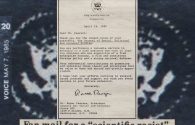
Although Richard Nixon never directly said he had a secret plan to end the Vietnam War if he won the presidency in 1968, he did imply that only a hard-nosed Republican schooled in foreign affairs could get America out of a conflict that had begun with the deployment of U.S. military advisers in the late 1940s, CIA operatives in the 1950s, and ever more troops in the 1960s to buttress anti-Communist forces in the small Southeast Asia nation. Nixon boasted during the ’68 campaign that his eight years as Dwight Eisenhower’s veep had prepared him to drive hard bargains with North Vietnam’s leaders, and that he would steadily withdraw American forces, which by then numbered in the six figures.
Whatever his plan, Nixon spent the first few years of his presidency increasing the carnage, ordering the military to secretly carpet bomb parts of Laos and Cambodia, where North Vietnamese logistical hubs were located. Infamously, U.S. forces dropped more than three times as many bombs on Indochina as they did in both theaters of World War II combined. Despite Nixon’s self-proclaimed toughness and willingness to rain down not just explosives but also the Agent Orange herbicide and phosphorus bombs — which burn even when doused with water — leaders in Hanoi did not bow to pressure and simply waited the U.S. out, despite heavy military and civilian casualties. The “end” of the war, which Nixon declared on January 23, 1973, was actually a cease-fire between North and South, but it did allow the vast majority of U.S. troops to come home, as well as the release of prisoners of war. Two years later, North Vietnamese forces rolled into Saigon — leading to iconic news photos of desperate South Vietnamese citizens and the last American personnel being evacuated by helicopters — and the war was effectively over for the U.S. However, it would continue in the region, including atrocities in Pol Pot’s Cambodia later in the decade.
When Nixon announced the cease-fire, one of the Voice‘s most intrepid reporters of the 1970s, Phil Tracy, hit the streets to capture the mood in the city, and found that the very buildings glowered in despair at what had been lost.
For that issue’s front page, editor Dan Wolf had picture editor Fred W. McDarrah choose a selection of his own photos covering the previous decade’s long march of protest against the war. —R.C. Baker
The day they said the killing was to end
February 1, 1973
by Phil Tracy
It rained the day they said the killing was to end. A ceaseless unremitting rain that was falling well before dawn broke over Battery Park. A block away, on the corner of Pearl and Whitehall Streets, the rain pelted the facefront of the U.S. Army building that served as the induction center for the men of this city who fought and died in the war. The building is closed now. The Army shut it down last April and gave it to the city. The windows of its lower floors are sheathed in corrugated tin. Each pellet of rain gave a muted report as it splattered against the blank eyes of the building. Listen to the echo of the rain. How do you rail against a closed and shuttered building? A carnage house that helped to butcher a thousand healthy men with triplicated forms and oaths of honor. The building seems to protest its innocence like everyone else who helped wage the war. “Why blame me? I’m only a building. I didn’t make the war.” The men who did, the men who merely shuffled the induction papers in the intake baskets and stamped the death certificates in the outgoing box, have all fled now. We shall never catch them. Nor shall we catch the men who ordered it, or the ones who planned it, or the ones who told the lies to justify it. They will melt away just like the rain melts away when it strikes the front of this innocent building. There will be no guilt, no responsibility. Only the sound of thousands of raindrops beating against an empty dead building on the day they said the killing was to stop.
***
It is mid-afternoon. The rain falls steadily on the square squat one-story room. For eight years plus, the Armed Forces Recruitment Center in Times Square has served as a focal point for one continuous protest against the slaughter. Every Saturday a small band of people have come together to witness for all of us who have hated this war. Today they do not appear. To not appear is a negative act, no sign of affirmation. There is nothing to celebrate here this afternoon. The war is ending? No, the war will not end today, merely our involvement in it. Right has triumphed? No, right has sought a desperate accommodation with Herod — a man who murders innocent children just to keep his power. America will once again become the just and democratic republic we were taught from childhood to believe it was? No, whatever innocence and virtue our country once had has been burned away by a million flecks of napalm clinging to the skin of tortured children. It is not a day to celebrate, merely to cry with the rain.
***
Of the 100-odd peace groups that inhabit this city not one has seen fit to mark this day. Where are the millions who begged for deliverance from this thing which has crippled us as a nation? Where are those to mark the sadness of 46,000 lives lost needlessly? Why is no final curse hurled at those who squandered our love and our trust and our faith in ourselves as a people? Why does this day of all days remain so silent? The traitors of peace are permitted to pray on our tv screens, twisting that which we have begged for into a gnarled and ugly thing. Why are there no gentle music and words of thanks for that which has soothed the running sore?
***
Instead there is prayer at St. Patrick’s Cathedral: a mighty temple to the cravenness of man. While bombs fell and innocent children died, the church kept her faith with Caesar. Now in the final moment, after Herod had given his blessing, the Church finally moves to sanctify peace.
At 7 p.m., they begin the service. Cardinal Cooke, who in war had blessed the troops and whose predecessor had blessed the warplanes, offers up a prayer that he might be made an instrument of Christ’s peace. The true instruments, those priests and nuns who have sacrificed their days behind bars so that peace might be achieved, are nowhere to be seen. Herod might have objected. The Cathedral reeks with hypocrisy.
***
And that is how it ended, the day they said the killing was to stop. Those who had suffered and begged for peace were silent, while those who had trucked with murderers tried to sanctify the moment in holy lies. It was the worst of days, with nothing but a cleansing rain to redeem it.
❖ ❖ ❖


→ This article from the archives is part of a series celebrating the Platinum Anniversary — 70 years! — of the Voice. The first issue hit the stands on October 26, 1955. ←