






There is a particular shape to the actor who keeps moving — who arrives in a city, learns its rhythm, gets handed a few small roles, and then leaves before the city can decide what she is. Some careers are built that way on purpose. Others get assembled in retrospect, by a person who only realizes mid-run that the throughline was there all along.
Jacqui Byrne is the second kind. An actor, singer and teaching artist out of Montreal, now based in New York, with a biography that reads less like a career arc and more like a passport: London, Bermuda, Switzerland, New Hampshire, with a year of childhood travel slotted in the middle and three citizenships at the end of it — Canada, Ireland, Saint Kitts. The places shaped the work.
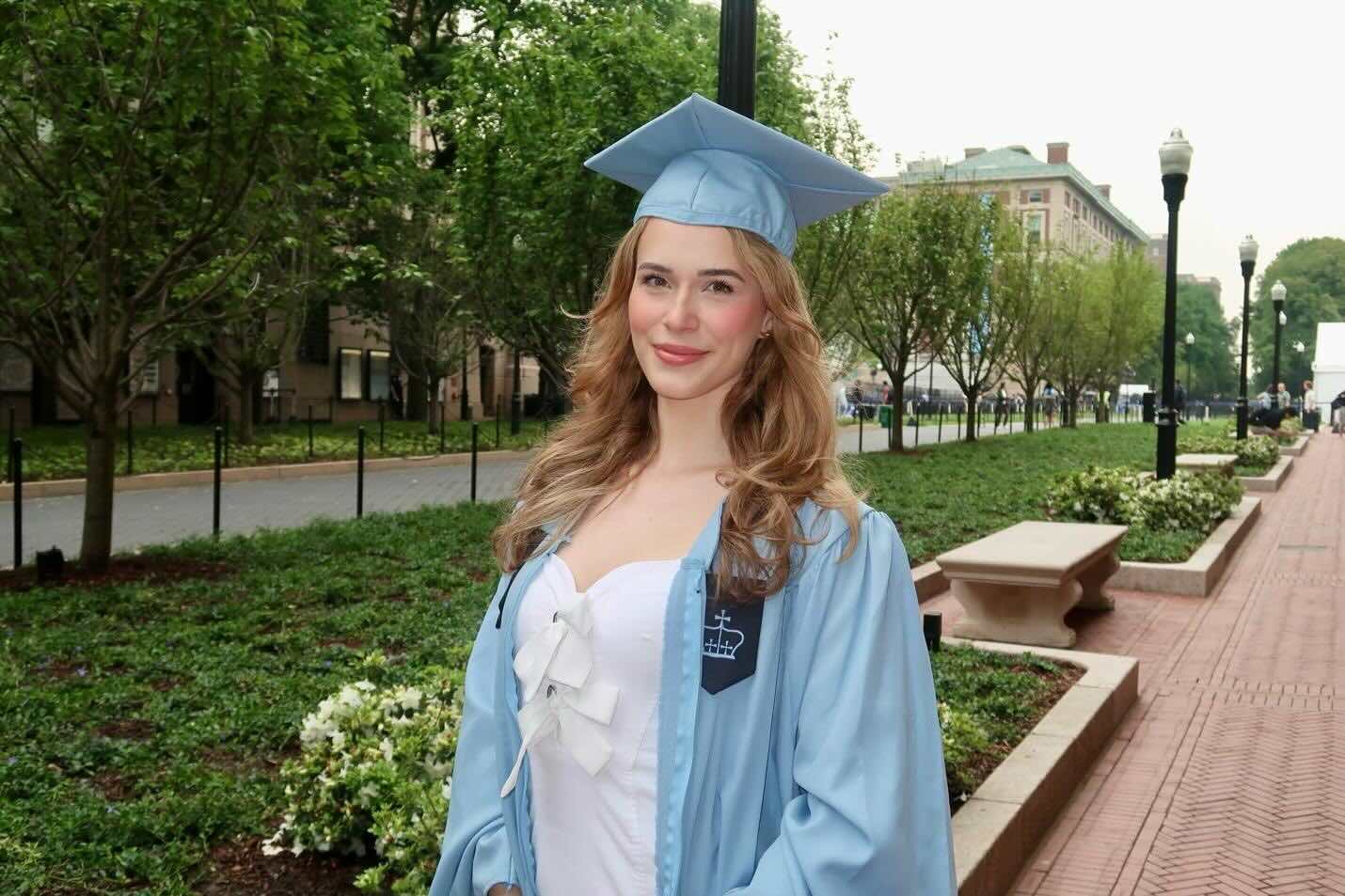
By the time she finished her Bachelor of Arts in Theater at Dartmouth College and arrived at Columbia University for a Master of Fine Arts in Acting, the discipline she was bringing into the rehearsal room had already been quietly built somewhere else: in classrooms with British accents, in summer evenings on a Bermudian island, in the strange neutral grammar of a Swiss schoolyard where everyone was a foreigner. Training is just one part of it. The rest is what training works on.

Her recent stage credits sit on either side of an interesting line. Some of the work is high-festival, scaffolded by industry: Do You Party? by Megan Rivkin, performed at the Vineyard Theater in August 2024 as part of the Samuel French Off-Off Broadway Festival, where the play was selected to the Top 30. Other pieces are smaller, harder to package — The Great Ignored by Finnegan Kruckemeyer at the Provincetown Playhouse, May 2024, programmed under New Plays for Young Audiences, and The Last Five Star Bowl America in America by Andrew Reid, directed by Benjamin Viertel, at The Chain Theatre in 2023.
Byrne’s current docket extends that pattern. She is in workshop on Here, Time Feels So… by Andrew Reid — a 1319 Press play where she is credited as part of the original cast. Her big plans include workshopping Andrew Reid’s new play commissioned by the Manhattan Arts Center called “Hype Economics” and his “We the People of These 50 Acre Woods”, workshopped at The Actor’s Theatre Workshop. She is also collaborating with composer Nate Weida on a musical adaptation of The Oresteia staged at Judson Memorial Church. Two pieces, two registers: one interior, the other choral.
And then there is the solo work. In May, at The Studio at the Tank, she will perform a piece she has been writing for ten years about grieving her father — a project that, by virtue of its decade-long gestation, qualifies as a slow art object in a city that mostly rewards fast ones. Solo shows about parents are not new. What gives a piece like this its claim is not its subject but its time signature: ten years is long enough for the writer to outgrow several versions of herself, and the version that lands on stage is necessarily a negotiation between the woman who began it and the woman who finished it. Different person. Same loss.
Here’s what is easy to miss. The earlier credits matter too.
In February 2020, at the Hopkins Center, Byrne played Matilda Blackwell in the US premiere of Joy Wilkinson’s The Sweet Science of Bruising — a play set among Victorian-era women in an underground boxing scene. The same year she played Violet in It’s a Wonderful Life: A Live Radio Play at Northern Stage. These are not the kind of credits that announce themselves on a Broadway marquee, which is exactly the point: the actor working in regional theaters and university stages is doing the apprenticeship that the industry’s public-facing economy refuses to pay for.

She also teaches. Elementary school in Brooklyn. There is a tendency in the discourse to treat teaching as a thing actors do when the auditions go quiet, and that framing is not just wrong, its inverted. The classroom is where the muscle gets used most often.
And there is the rest of the working actor’s ecosystem, which Byrne maintains without apology — hosting trivia, taking improv classes at the Upright Citizens Brigade, auditioning. Each is its own form of training, its own way of staying inside the practice when no production is paying you to. To do all at once is not multitasking. It is the actual job.
There is no good word in English for the kind of artist who builds a body of work this way. Polymath is too grand. Hustler is too narrow. What Byrne is closer to is something the contemporary American theater rarely names but consistently relies on: the practitioner who keeps multiple traditions alive at once, who can move between Victorian boxing dramas and Greek choruses and ten-year solo elegies because she has, quite literally, been moving between traditions her whole life.