





→ This article from the archives is part of an ongoing series celebrating the Voice’s Platinum Anniversary — 70 years! The first issue appeared on the streets of NYC on October 26, 1955. ←
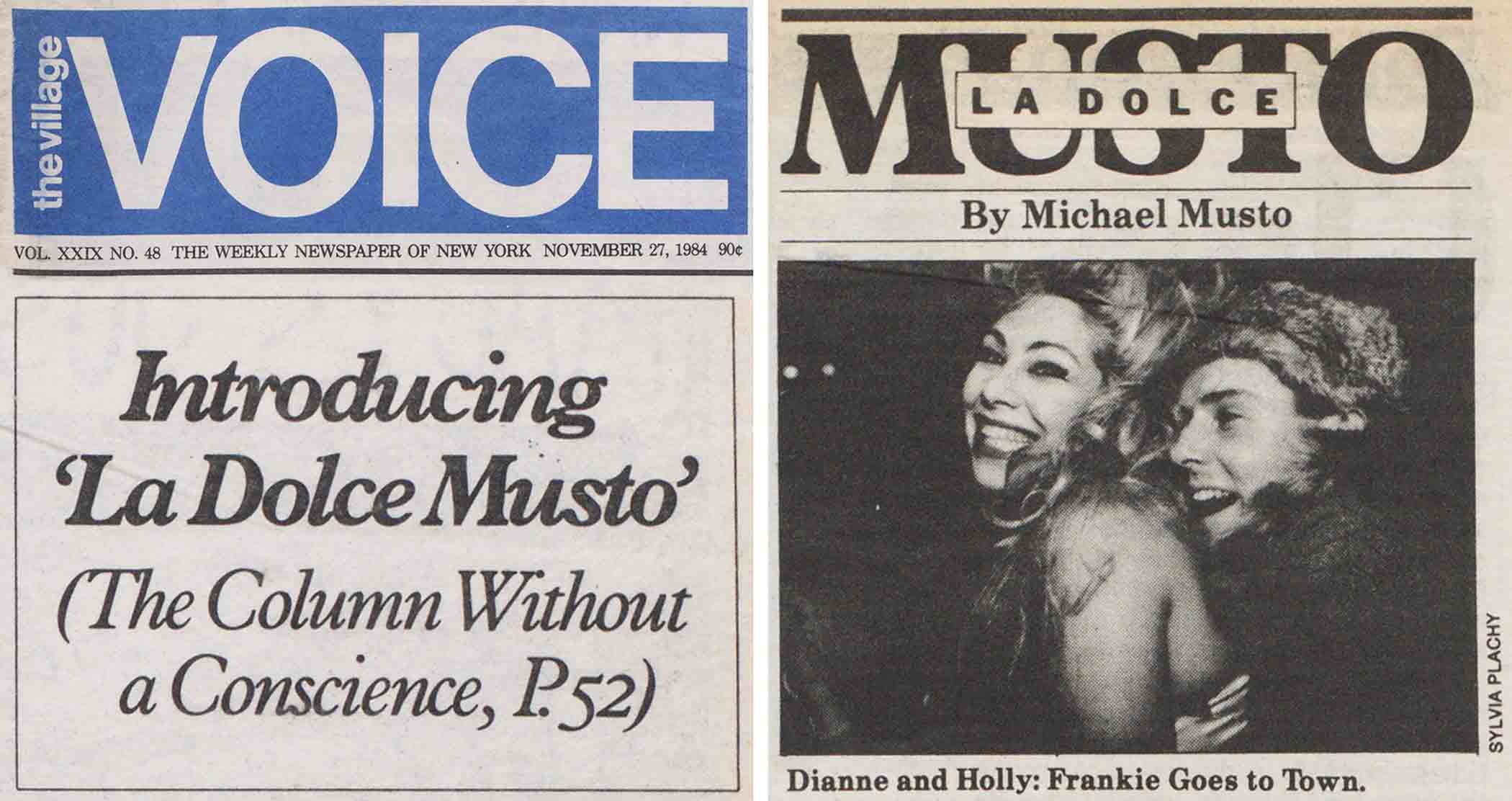
It was the kind of week where I’d wake up screaming, then realize I hadn’t even fallen asleep yet. But all worries dissolved when I landed this column. Sure the only gossip I knew was something about Nastassja Kinski changing the spelling of her name, but somehow the minute my appointment was announced, everyone turned delightfully informative and obsequious. Publicists volunteered to be my surrogate mothers. Surrogate mothers volunteered to be my publicists. Alan Rish — the Elsa Maxwell of the 80s (the streets, not the decade) — had called me a “filthy whore,” but was suddenly planning a Michael Musto party. Everyone was being so kind and understanding with only Anthony Haden-Guest cautioning, “That’s a difficult column to do with a conscience. Good luck.”
Breathlessly, I ran home and scurried through closets in search of a conscience — any conscience. All that turned up was a silver lamé shawl, so I wore it to lunch with venerable John Springer at the Russian Tea Room, still the best afternoon party in town. Springer, onetime confidante of Garland and Monroe, now says his big clients are Care Bears and Betty Boop.
We were seated next to Whoopi Goldberg, wearing a Death of a Salesman bomber jacket as she wheeled and dealed with RKO. “Pardon my derrière,” she laughed, showing us her best side. In barreled Dustin Hoffman himself, introducing luminaries to “my good friend Whoopi.” You haven’t lived until you’ve seen Glynis Johns shake hands with Whoopi Goldberg.
Same shawl, same face (deeper creases) at Studio 54’s birthday dinner for Randy Jones, the only Village Person who’s opening an East Village art gallery. Asha Putli, the only Indian disco diva with her own cable TV show, said, “Michael, you look fat! It’s fashionable. I look fat. Tell me it’s fashionable. My show will be about global shrinking. God, I’m making it sound like hemorrhoids.”
The buffet, inevitable, was Tex-Mex. “I love ribs, they make me feel so sexy,” I said, echoing Morgan Fairchild in Paper Dolls. Then I looked down and spotted a huge glob of sauce on my crotch. “Don’t say we don’t take care of you,” said publicist David Granoff, packing cactus plants into my bag.
Bristling with cactus spines and aching with psychosomatically induced hemorrhoids, I landed at Danceteria’s Frankie Goes to Hollywood fete accomplie. On a bad night, Danceteria lives down to its slogan, “the supermarket of style” (attention K-Mart shoppers), but on a good night it could make you believe in nightlife, and fairies, again. This was a good night; it could make you believe in Frankie again. No one wanted to hear two more words about these Crisco cuties, but they’d heard the right ones — “open bar” — so they went. All of them.
Dianne Brill, whose amazing bosoms are really holograms, and Rudolf, the Weimar Ed McMahon, were charming hosts amid the half-naked lumberjacks and sex changes with sequined nipples (and those were the hired guests). On meeting the group’s Holly Johnson, I didn’t dare mention Malcolm McLaren’s rude remarks about Frankie, Boy George’s condescending remarks about Frankie, or even McLaren’s unforgivable remarks about Boy George. (He told me he’d fired George for fear he’d seduce the male Bow Wow Wows in their dark motel rooms.) I only asked why he was sucking on his raccoon hat. Did he have a fetish? “Yeah,” Holly leered, unconvincingly. “Dianne Brill.” “Good answer,” I said, à la Richard Dawson. Then I gave him a phony kiss à la Richard Dawson and ran; Frankie’s dismal cover of “Born To Run” was coming, and so was the cash bar.
And so were those recurring nightmares. “Even my cuticles are hung over,” I said the next morning to no one in particular. It was a line from The Cartier Affair. But I didn’t feel like Joan Collins. I felt like Ma Rainey’s black bottom. Fortunately, my continuing search for a conscience has turned up some fabulous new outfits. ❖
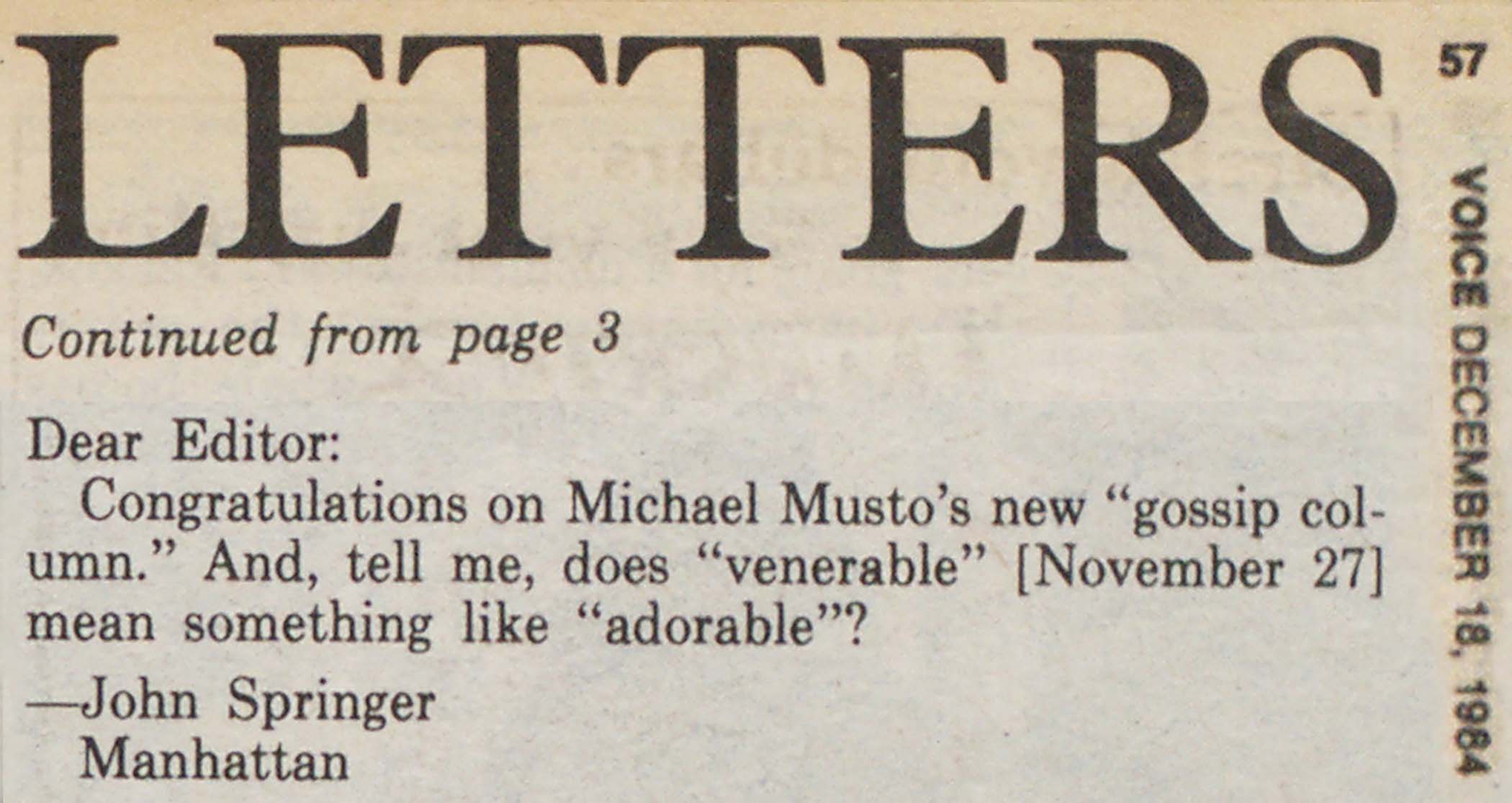
Editor’s note: Three weeks later — comments moved at a much slower pace last century — came the first of many letters praising (when not occasionally panning) Musto’s insights into the glamour and gutters of NYC’s nightlife:
❖ ❖ ❖


