








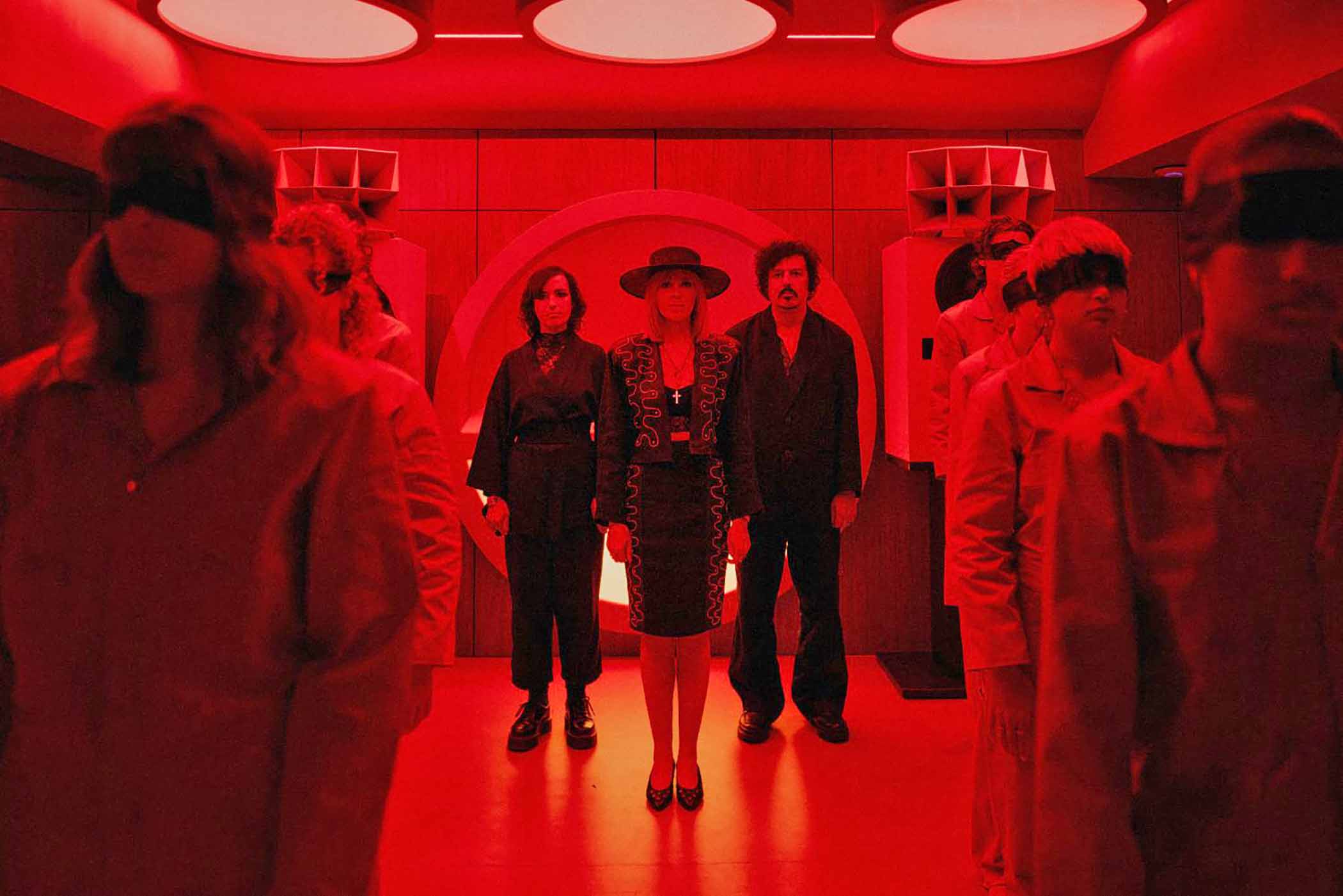
For a quarter of a century, Ladytron has occupied a singular space in the electronic music sphere — one defined by icy analog synths, shoegaze textures, and luxurious, cinematic soundscapes. But as they prepare to release their eighth studio album, Paradises, the Liverpool-born pioneers are shifting gears. Arriving as their longest and most expansive work to date, the 16-track odyssey is a sprawling, 73-minute journey that the band describes as their “danciest” and most “fun” project since their early days. Free from the logistical nightmares of their previous pandemic-era recording sessions, Paradises feels like a “slow reveal,” a disco-influenced record that retains the classic Ladytron DNA while embracing a newfound sense of creative freedom.
The album marks a turning point for the synth-pop group, now operating as a trio following the departure of founding member Reuben Wu (note: their first album without Wu was 2023’s Time’s Arrow). Rather than slowing down, the remaining members — Helen Marnie, Mira Aroyo, and Daniel Hunt — have hit a prolific stride. Hunt notes that the band hasn’t been this productive since 2002’s Light & Magic, attributing the burst of energy to a “nostalgic” and “carefree” approach in the studio. From the polyphonic vocal experiments of “For Life in London” to the propulsive groove of “A Death in London,” Paradises is the sound of a band comfortably existing in the present, rather than leaning on the laurels of their 25-year legacy.
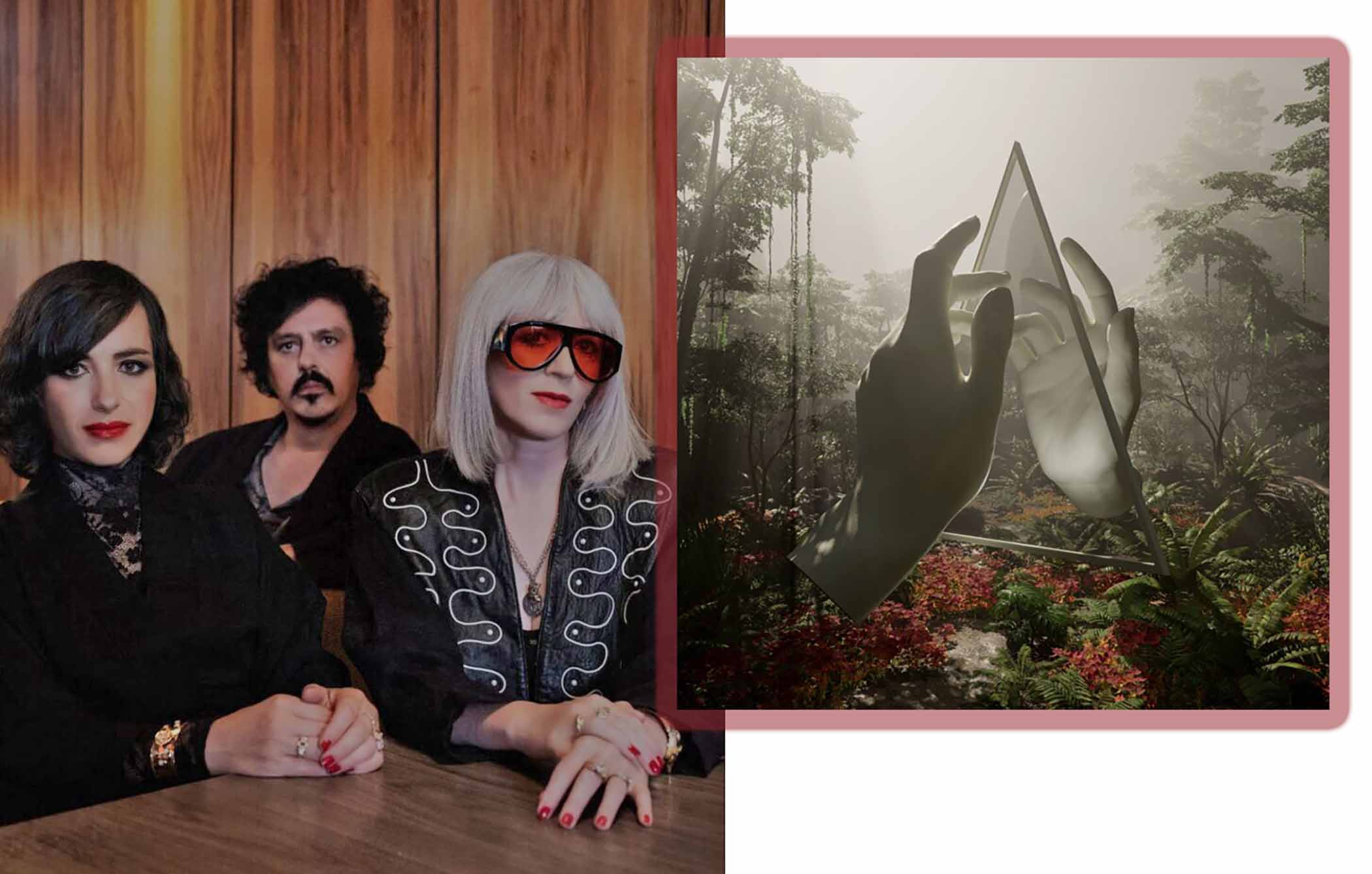
During our interview, Daniel Hunt and Helen Marnie open up about the “mental tricks” of time, the serendipity of writing their longest album, and the surreal experience of finally meeting the legendary Siouxsie Sioux.
Gil Macias: This is your eighth studio album, and you’ve injected 16 brand-new tracks into your catalog. It must get harder to create a set list for a live show.
Daniel Hunt: Harder and harder with every record, as you imagine.
Helen Marnie: We’re just back from rehearsal just now.
Hunt: And we just don’t know yet. We’re learning the new album and we’ve got 10 in a dish that we can play. We’re not necessarily going to play them all, but we can. At some point over the next 48 hours, we have to really decide what we’re going to do, but it’s sounding really, really great.
Your debut album, 604, just had its 25-year anniversary. Does that seem like ancient times or does it feel like yesterday?
Marnie: In some respects, it feels like a long, long time ago, but then in other ways, not so much. So much has happened in that time. If you think about when we started, I really think I was like a baby. I feel like I was a kid. I didn’t have a care in the world. In that respect, things have changed a lot.
Hunt: I think the way that we perceive time now — because everything is simultaneous — chronology has kind of gone out of the window, especially with music. Everything is simultaneous, right? So I feel like we’re naturally selective when we think about that 25 years. It actually feels, to me, quite compressed when you only think about the times we were actually working. I mean, we took like a six or seven-year break. I think doing all these interviews at the moment, and being asked questions about the early days, it’s started to feel closer in a way. It’s funny how our minds play these tricks.
Reuben Wu parted ways with the band in 2023. How did that impact the writing process and how long did it take to adjust to being a trio?
Hunt: Reuben wasn’t on the last record either. We haven’t worked together for six years, so in that respect, it’s no different. It’s just that this time, we weren’t up against the pandemic. That was the biggest obstacle with the last album. Very, very difficult to make for that reason. Reuben left while that was going on, but he just didn’t announce it until 2023. We didn’t know what was going to happen; we were leaving it open. But it’s not really different in that respect at all. This time, it was easier to make because we weren’t up against some insane external circumstances. Logistically, the last record was a nightmare. This one has felt like an open road. It was just fun and easy to make.
At 16 tracks and 73 minutes, this is the longest Ladytron album yet. Was there ever a hesitation to put out a record this length, considering attention spans these days?
Hunt: I’d say it wasn’t a decision; the material kept coming. We’re traditionalists — we make albums and think of them like movies. We’re not really thinking about short attention spans. I remember one day, I basically decided I think this is enough, because you can get in that creative space for too long and it starts being detrimental to your everyday life. I had this little voice in my head going, “It’s okay Daniel, you don’t have to write any more songs.” And then I walked into the kitchen and I had this two-note bassline in my head and I was like, “Oh no, I’ve got to go in the studio again.”
That’s why “I Believe in You” is track one. It came last and is like a prologue, in the same way as “For a Life in London” feels like an epilogue, and you have a reintroduction in the middle with “Metaphysica.” Without the length, you couldn’t have that expansive structure.
Marnie: Also, what the length has enabled us to do is release a lot of singles, which is what we’ve never done before. Being able to make a video for each single in advance of the album is new to us, so that’s been quite fun.
Hunt: And it allows the audience to really get it. The idea of just dropping this record — that’s the problem with attention spans and the way albums are consumed. Basically, we’ve had a single out every five weeks since the end of August. It’s a slow reveal, which I think is good. People complain and say, “Why can’t you just release it all now?” and it’s like, you’re going to thank us for this.
This album was recorded in São Paulo, Liverpool, Montrose, and London. What songs are prime examples of your personal surroundings bleeding into the sound of Ladytron?
Marnie: I think the environment definitely bleeds in. Danny’s in Brazil, so that definitely has an influence over him.
Hunt: I’m basically Brazilian now.
Marnie: Rhythmically, that has a huge influence on his part. For me, if you listen to “Sing,” lyrically you will hear Scotland in that. It’s obvious. Location definitely plays a huge part.
Daniel, you said the band hasn’t been this productive since Light & Magic. What caused this sudden creative burst?
Hunt: It was more fun than Light & Magic. It was a nostalgia for the early process. Like Helen described, we were kids and we were carefree; we weren’t so much thinking about the trajectory of the band. Sometimes you go into the studio and you’re sitting there for two weeks doing nothing. I think this album has a kind of fun around it that we haven’t had since the first album.
“For Life in London” is the first Ladytron song that contains the vocals of all three members. What took so long? And how do you determine who sings what?
Marnie: I think normally whoever writes a song has an idea of what it’s going to sound like in their head. Usually, you’ll know who is going to front it, but that rule doesn’t always apply.
Hunt: We played a bit more freely with it this time. That song in particular — the first half of it is me and Mira together and our voices are synchronized and create a kind of polyphonic androgynous voice. And then the second half is me and Helen together, the big torch song-y part. Then you have this really gentle outro with Helen’s voice. We did, for the second time in our career, a proper duet. We always play with this Nancy and Lee thing, but this is the most brazen one we’ve done so far: “Kingdom Undersea.”
Your producer Jim Abbiss called Paradises your best album since Witching Hour. Do you agree?
Hunt: It’s different. It’s like apples and oranges. To him, it was in terms of the material, the arrangements, and the diversity of it. I think it’s one of our best ones, but Witching Hour is so different.
Marnie: Paradises is a turning point for us. Witching Hour was a turning point. But I’m not disappointed with the albums that happened in between.
The classic Ladytron DNA is definitely present, but you could also hear the new brand of disco you injected into this one.
Hunt: I think this is the danciest record we’ve done. That’s something we’ve wanted to do for a long time — a disco record in the broadest possible sense. It was written completely from scratch, from a cold start. I think that really impacts how much of a jump it is.
Do each of you have a favorite song on Paradises?
Marnie: “A Death in London.” I just think it’s got such a nice vibe and a groove that makes me move on the spot, like in my kitchen or wherever I am.
Hunt: That song’s actually the soul of the album because in the first batch of material, that was the first track that had a vocal hook and a lyric. It was the catalyst for the rest of the record.
You shared the stage with the legendary Siouxsie Sioux in 2023. Please tell me you got to hang out with her.
Hunt: It was in Athens, and I was at the bar waiting for her to come on. I heard “Swan Lake” come on — I didn’t know she used it as intro music — and it was like a siren. I was desperate to pay for these drinks so I could get back. It was magic. Afterward, Mira and I went to her room and met her. She was very, very friendly. She knew about us. She was one that I did genuinely want to meet, and it all went well.
You once wrote and produced songs for Christina Aguilera. Do you have plans to produce and write from scratch in collaboration with another artist again?
Marnie: That will happen again in the future, but it has to be the right artist. You have to gel and want the same thing.
Hunt: It has to feel like you’re forming a new band with the artist. It can’t just be like a corporate service. It has to be the right person, the right circumstances.
Daniel, in the early days, you were quoted as saying you didn’t know if Ladytron was going to be long-term, yet here we are 25 years later. Is there another 25 years in you?
Marnie: It would be nice to retire at some point. Making music, I can say that I’m happy to do that, but for there to be no pressure. At age 70-plus, I feel like I might not want to be on stage. I don’t know if I want to take my walking stick on stage.
Hunt: I don’t understand how people can tour that long. But making records is a different thing. We’ve been going a long time, but we still feel like a new band. We exist in the present. We’re not a heritage act.
Marnie: We’re making albums every couple of years. Legacy acts are the people that harken back to their album from 30 years ago and that’s all they’ve got. We’ve continually produced.
Hunt: Yeah, we exist in the present. It’s like when we had the [viral] TikTok with “Seventeen” a few years ago. We didn’t lift a finger. We didn’t get involved; we were busy making a new record. People said, “Why don’t you re-release ‘Seventeen’?” or “Why don’t you do a Light & Magic tour?” I’m not saying that’s a bad thing, but no, we’re making new music. When that’s all you’re doing anymore, that’s a different thing. ❖
“Paradises” is out now. Follow Ladytron on Instagram @ladytron.
