






In 2002, Robin Brown sewed a backpack from a Last Supper tapestry and kite string. A stranger in a parking lot bought it on the spot for the exact amount Brown needed to retrieve her mother’s ashes from the funeral home. That transaction, equal parts practical and mythic, launched what would become Magnolia Pearl, an international fashion brand now stocked in over 350 boutiques worldwide, including Free People, with flagship stores in Fredericksburg, Texas and Malibu, California.
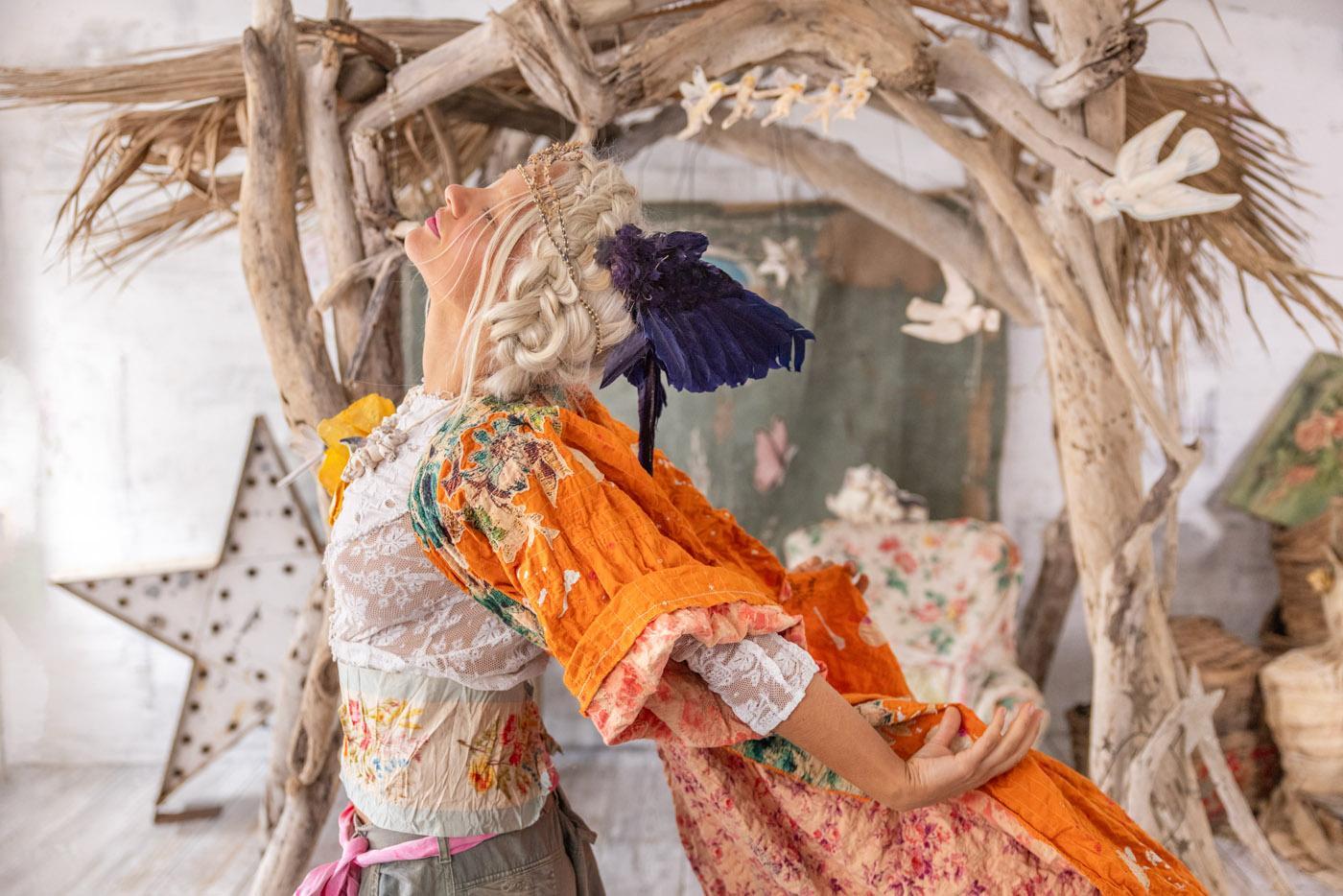
Brown grew up in abject poverty, experiencing homelessness, malnourishment, and abuse while raising two younger siblings. That history is not background noise at Magnolia Pearl, it is the blueprint. Every piece the brand produces features hand-applied distressing, sashiko-style stitching, patchwork, and paint work. A single dress can take up to 30 days to make. Prices range from $50 for accessories to $1,500 for one-of-a-kind hats.
A Collector Market With Measurable Momentum
Magnolia Pearl’s small-batch production model has produced an unusual secondary market dynamic. Garments that leave the brand at retail prices routinely resell at double or triple their original cost on consignment platforms and social media groups. This performance is notable against an industry backdrop where most apparel loses the majority of its value within a year of purchase.
In 2023, the brand formalized this market by launching Magnolia Pearl Trade, an authenticated in-house resale platform where collectors list pre-loved pieces and bid on rare samples and long-sold-out items. The timing was deliberate: the U.S. secondhand apparel market grew 14% in 2024, according to ThredUp, significantly outpacing the broader retail clothing sector. Globally, the secondhand apparel market is valued at $260 billion in 2025 and projected to reach $522 billion by 2030.
Celebrity Without a Publicist
Taylor Swift has worn Magnolia Pearl in a music video, and Whoopi Goldberg has been seen in the brand on television. Beyond those two, a broader circle of artists and public figures has embraced the clothing on their own terms, none through paid sponsorships or a formal gifting program.
The licensed collaborations follow the same pattern. Rather than standard logo-placement deals, Magnolia Pearl has partnered with a range of musicians, cultural estates, and artists to produce garments that reinterpret each collaborator’s visual catalog through Brown’s aesthetic — pieces that function as collectibles for fans of both the brand and the individual artist.
Philanthropy Baked Into the Business Model
The Magnolia Pearl Peace Warrior Foundation, a registered 501(c)(3) nonprofit co-founded by Brown in 2020, has raised over $550,000 to date. GuideStar filings confirm the Foundation directed $268,293 to charitable organizations in the 2024 fiscal year alone. Beneficiaries include organizations providing permanent housing to Indigenous American veterans, medical and veterinary care for people experiencing homelessness, arts education for children in Brooklyn, and disaster relief.
Magnolia Pearl Trade is structurally linked to this giving. Third-party sellers pay the lowest listing fee rate across major online resale platforms, and 100% of those fees go directly to the Foundation. An additional 25% of final sale prices on the brand’s own exclusive listings are donated as well. The platform is, simultaneously, a collector marketplace and a giving mechanism – an arrangement that feels less like a corporate social responsibility add-on and more like a natural extension of how Brown has always understood the purpose of making things.