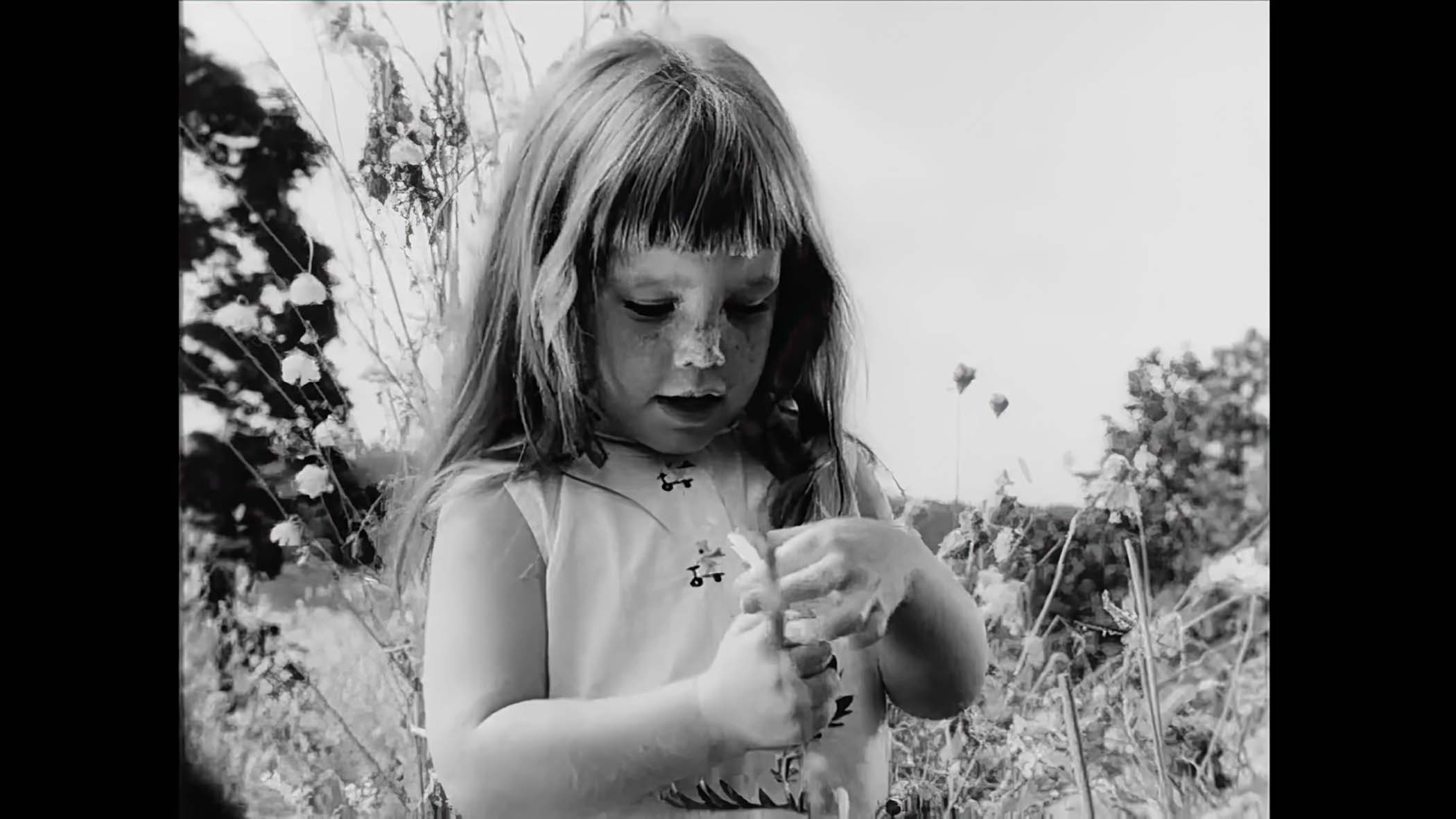




The Internet was once warm. Children felt it. You loaded a page on AOL or Netscape and each graphic seemed tangible, squishy: a floor of colorful, soft puzzle pieces. I began as an 8-year-old, around the millennium’s turn, the soundtrack of my days the dial-up tone’s mechanical racket. This telecommunication process clanged with IRL sounds, like an old steam-heat radiator battling through its condensation.
My sensory glee back then might have been the product of youth, but also, the Internet was an anarchy of aesthetics. Nothing had been standardized, not even websites of multinational corporations. Text was often unreadable, thanks to bad fonts and colors that clashed or blended. Early social media hubs, notably MySpace, allowed you to design your own page, down to the Flash widget that would automatically beam favorite songs by Blink-182 or Foo Fighters through the speakers of whoever had the misfortune of visiting your profile. Online presences were chaotic yet passionate representations of selfhood: They reached out a friendly, eight-bit hand and begged you to acknowledge the human behind the HTML.
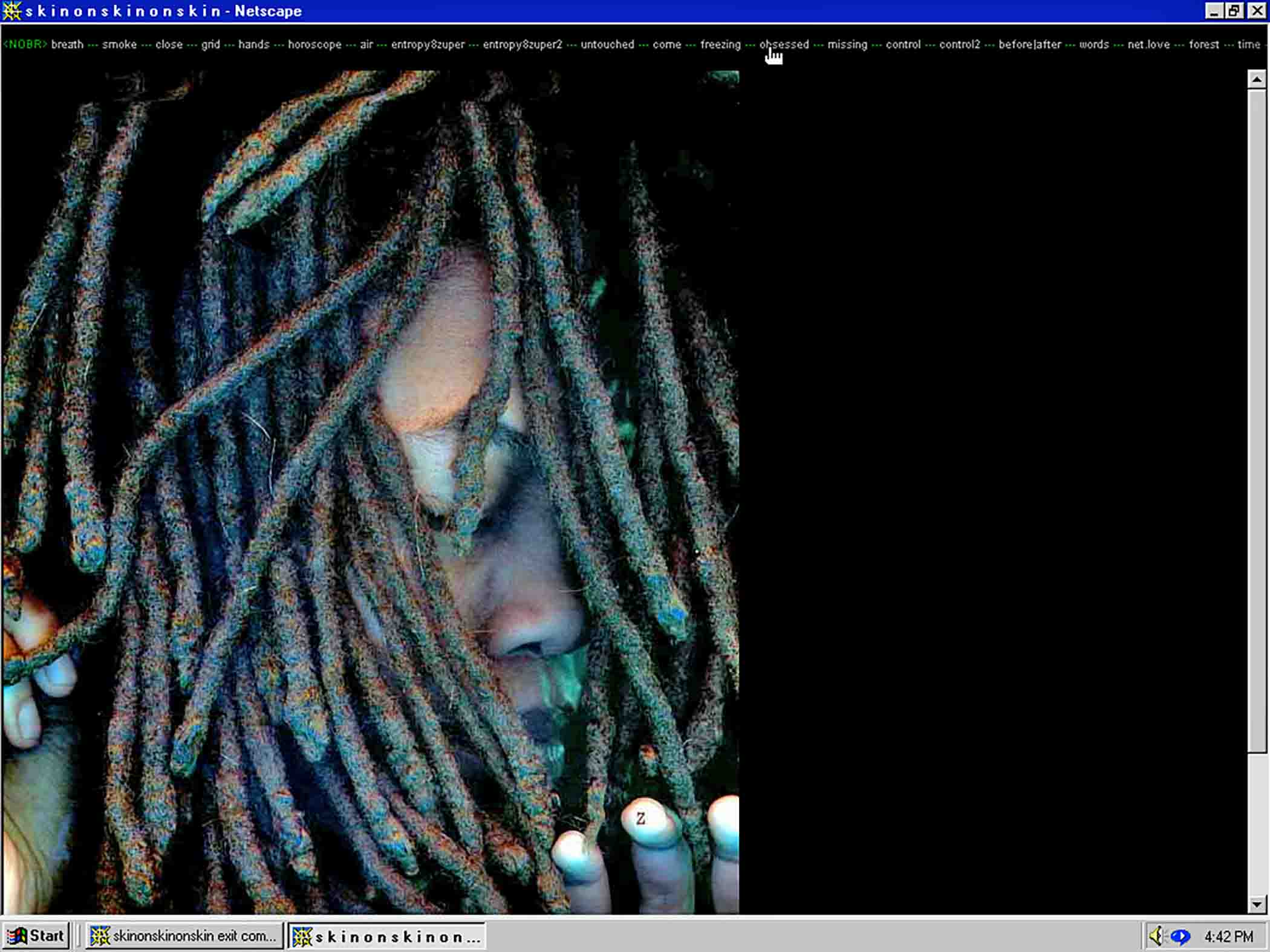
A recent trip to the Museum of the Moving Image put in mind this digital tactility. In a survey of nearly four decades of work by pioneering net artist Auriea Harvey, My Veins Are the Wires, My Body Is Your Keyboard, I browsed, with an old-school mouse, a website Harvey designed with her husband, Michaël Samyn, “skinonskinonskin” (1999). A centerpiece of the exhibition, the site began as a set of abstracted love letters that enabled the couple, who met online through their small, far-flung cohort of coders, to communicate while she was in her native United States and he was at home in Ghent, Belgium. “Skinonskinonskin” grew into an immersive art project for fans who paid 10 dollars: They could witness this couple’s romance through a furtive paywall that added to the work’s voyeurism, its pornography of tender emotion.
The fact that certain games are unplayable on any given day at the museum adds to her practice’s lifelike randomness.
“skinonskinonskin” is unusual and striking because it indeed approximates skin, not by depicting our bodies’ largest organ but by eliciting its sensations. A heartbeat scores the website, reminding visitors of its fleshy core. One page features rudimentary illustrations of hands pressed together. In another, an interactive GIF of Harvey’s upper torso and head jerks in pleasure when stroked with the bled-white finger of a Windows 98 cursor. “skinonskinonskin,” like most of Harvey’s early net art, is open-ended, unbound by the prerogatives of narrative, and allergic to painterly or filmic composition. She steered away from analog predecessors, and eventually skirted art history at large.
Which isn’t to say Harvey ignored what came before her. Born in Indianapolis and currently based in Rome, she studied sculpture at Parsons in the early 1990s. The exhibition starts with vitrines full of sketchbooks, juxtaposing an early Commodore computer and a guidebook to the programming language Basic, which provide hints of biography and cultural context. Her student drawings, bordered with heavy text and frequently figurative or diagrammatic, feel like plans for something far more complex — two-dimensional imaginings that would assume their natural shapes in a new, hybrid form.

Photographic collages from just after art school demonstrate how Harvey could fashion finished visions in an established mode. Her sense of image and color was strong. The patterning and visual texture on the gold-accented and fire-engine-red Mike Szabo (1995) feel proto-digital, like the busy wallpaper on an ancient webpage, with more than a hint of MTV’s flippant graphics tossed in.
Harvey deserted entrenched media later that year with the launch of her landmark website, entropy8, browsable at the museum on a gray desktop monitor. Her aim, as she put it, was to conduct a “personal experiment with a personal goal in a public space.” The result was both intimate and open to the wide forum of the nascent Internet; she included a random quote generator, a bibliography, and a contact form. Its poignance has only increased with time, because the very foundations that enabled it are now outdated.
The artist’s oeuvre has always spotlit novel questions about restoration. Many of her games and websites require complicated and finicky emulators that capture the original creations in all of their Windows 98 or XP glory. Yet preserving such real-time artworks is hardly foolproof, and emulators encounter unforeseen errors — one machine was out of order when I visited the show. We’re led to imagine the digital as precarious, delicate; no wonder the warm and welcoming cubes that displayed its information when we were kids moved us so. Like the bodies of parents, grandparents, elderly neighbors, or older friends, the Internet is on a strict timeline. Aspects of it die constantly, from the disease of obsolescence.

Harvey’s art personifies these technologies by investigating the limitations of their brief lifespans. The fact that certain games are unplayable on any given day at MoMI adds to her practice’s lifelike randomness. Other technological facets of the exhibition, though, failed without any thematic alibi. QR codes containing instructions for how to play games didn’t function on either of the afternoons that I visited. Museum representatives insisted that they would be fixed posthaste, yet the reason for their disrepair was inexcusable: Harvey’s survey was initially supposed to close in July, before the museum extended it until December. Particular links weren’t refreshed after the show was held over.
This laziness undermines a rambling, tech-reliant exhibition that pushes the boundaries of both digital conservation and expression. More recent games that Harvey and Samyn developed with the indie production company they founded, Tale of Tales, such as The Endless Forest (2005) and Sunset (2015), bear a brilliant ambiguity that she has spent her career exploring. Both are playable on large screens, with controllers awaiting museumgoers on bench seats and instructions painted sleekly on the walls. In Sunset, a 1970s period piece, the player is cast as the housekeeper of a wealthy, art-filled home in a fictional Latin American country on the verge of revolution. The tasks in the game are quotidian, domestic, yet its air of dread gives every errand a pressurized atmosphere — equally remarkable and, in our increasingly unstable world, normalized. Both of these projects have indeterminate objectives, a quality Harvey and Samyn lauded in their “Real-Time Art Manifesto” (2006), reprinted by MoMI in an accompanying exhibition reader. This style leaves room for a player’s probing and discovery, a divergence from both mainstream video games and traditional art forms.
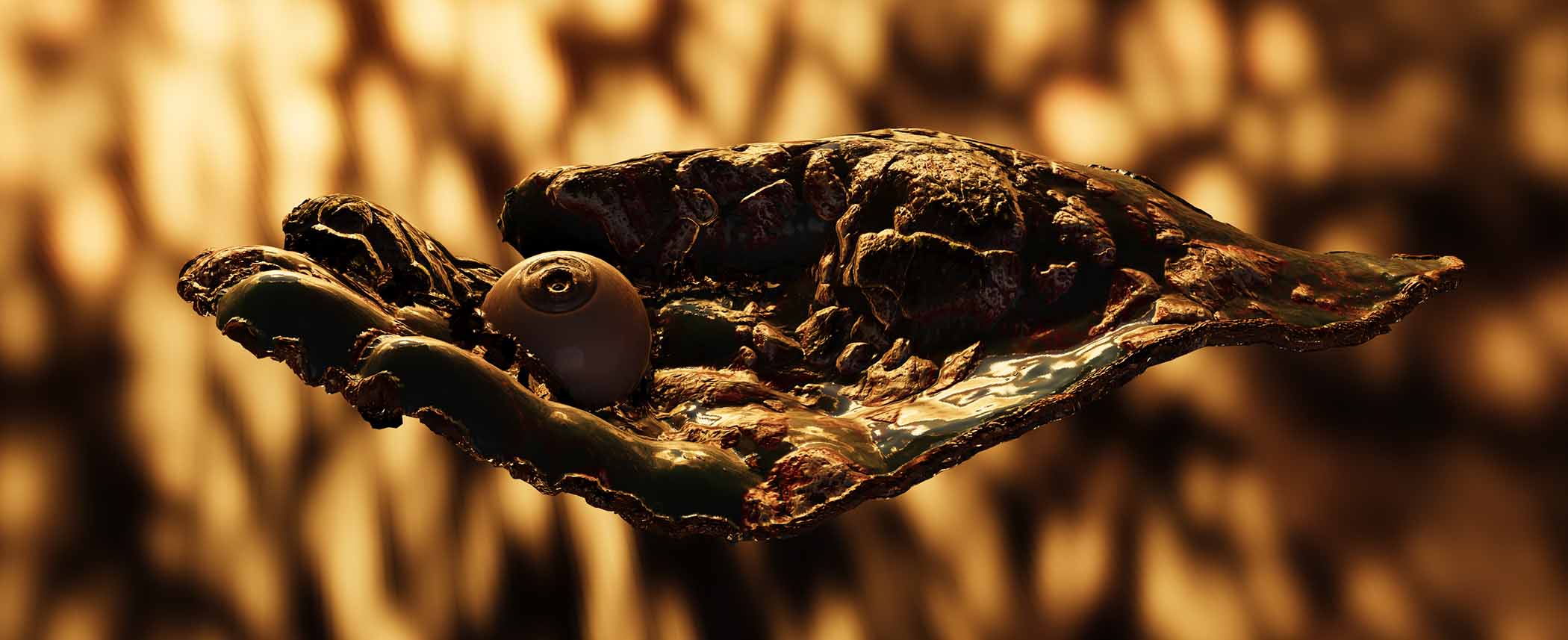
Since 2016, Harvey’s work has become simultaneously more orthodox and less urgent. Her newer sculptures, on view in the show’s final room, are 3D-printed, melding mythological characters, frequently Greco-Roman — Fauna, Cyclops — with likenesses she often models on her own face. Aside from the bronze Minomirror (2023), these objects are fabricated from plastic composites buttressed with recognizable materials, such as clay, and displayed in both virtual and augmented reality. Harvey’s constructions, whether simulated or real, use technology in service of the familiar, twisting tales that our culture has been telling itself for eons. They lack the thrill of an artist who abandoned the canon’s trappings in order to forge something far weirder. Several inclusions are also sold as NFTs, a cynical tech phenomenon that is redefining artistic commodity while flooding the world with fatuous art.
My Veins Are the Wires, My Body Is Your Keyboard succeeds because it mostly avoids these voguish yet tired moments. Instead, this exhibition offers perspective on the present by illustrating how quickly nostalgia develops for the recent past. It implants a history of the digital age within an appreciation of an auteur. We see how Auriea Harvey is bound by her era, and, at the same time, we become acutely aware that we’re only beginning to plumb the depths of her accomplishment. ❖
My Veins Are the Wires, My Body Is Your Keyboard
Museum of the Moving Image
36-01 35 Ave, Astoria, NY 11106
Through December 1
Daniel Felsenthal writes essays and criticism for a variety of publications, including the New Yorker, the Guardian, and the Atlantic, and is at work on a novel and an essay collection. He also helps fight for better pay and work conditions for writers with the Freelance Solidarity Project.