





I was dragged to Cats on Broadway by one of my Voice interns roughly a quarter-century ago, and I remember next to nothing about it. I’m happy to say that the new PAC NYC production, Cats: “The Jellicle Ball,” outclasses the little I do recall, and seems primed to become a smash hit downtown. Zhailon Levingston, of the Inheritance Theatre Project, and Bill Rauch, PAC NYC’s artistic director, co-helm the show, planting it firmly in the queer, Black ballroom community that blossomed here in the 1970s.
Originally conceived by Andrew Lloyd Webber, who through-composed a score to Old Possum’s Book of Practical Cats, a 1939 book of light verse by T. S. Eliot, Cats was a landmark theatrical experience on two continents and ran for more than 18 years. Eliot, the foremost poet of his day (in the English language), was a native of Missouri and the grandchild of a Unitarian minister; he settled in England in 1925 and became a British citizen two years later, converting to Anglicanism that same year. Cats won him a posthumous Tony, in 1983.
The rowdy preview crowd, primed for a party and onboard since the beginning, probably included superfans of either ballroom or the original Cats, or both.
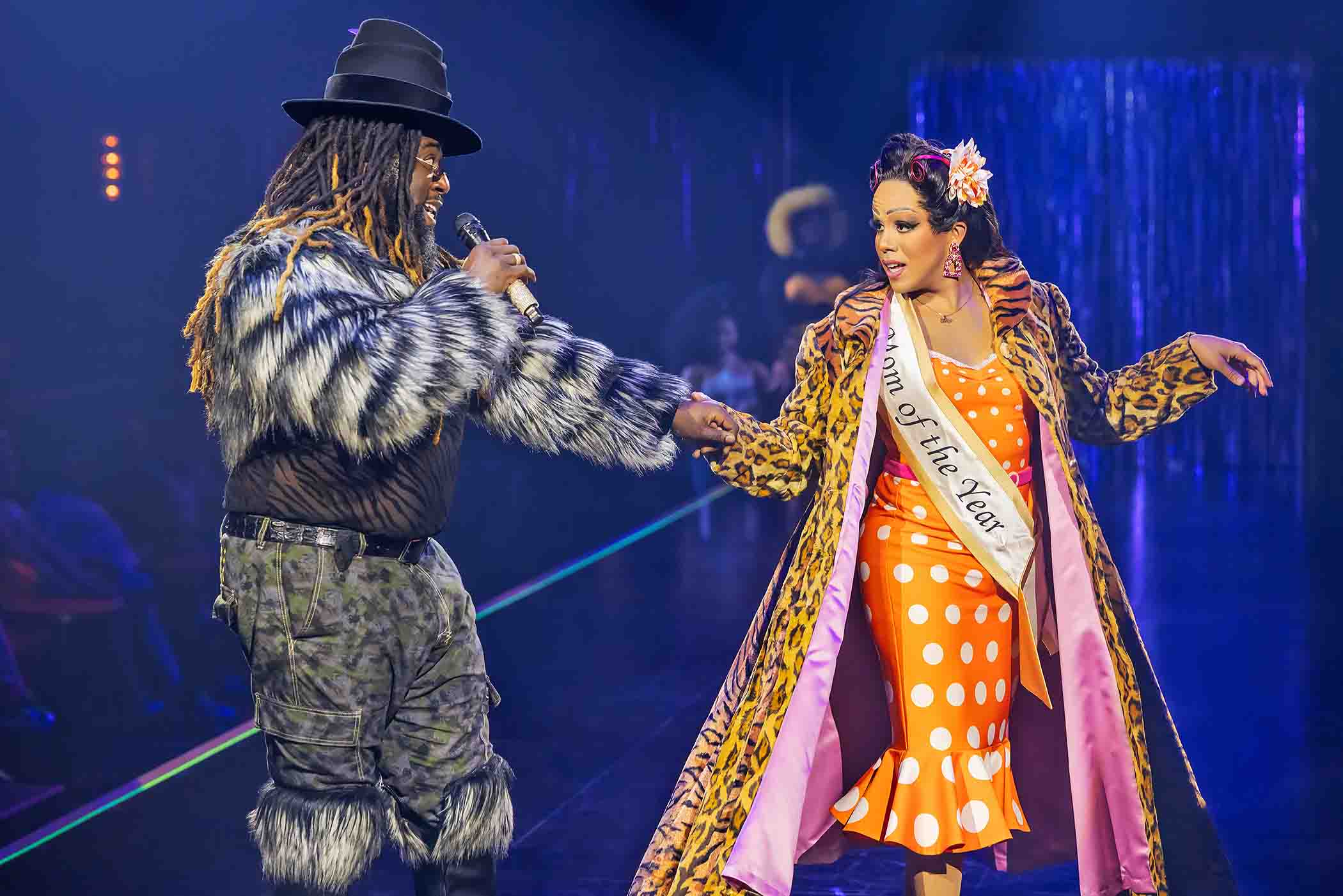
Unlike the thin plot of the original, “The Jellicle Ball” has a religious spine: A parade of cats has one of its number chosen to be reborn (can you say “born again”?) in what might be heaven. The new production, which I’ll call an “evangelical ball,” is a fusion of drag ball, rock concert, beauty pageant, and “celebration of life,” blending the magic of the runway with the sacredness of church; at one point we hear the command “All Rise.” The terrific performers, who have the same names as the characters in the original but dramatically different personalities, are simultaneously full of themselves and generous with attention, displaying their pecs and their great wigs (courtesy of Nikiya Mathis) even as they nurture the aging and the lost among their ranks. The forgettable music of the Broadway version is here reorchestrated into pulsating disco — the new show is not a satire or a parody but an homage, practically a transfiguration. The events of the story aren’t always easy to follow; helpfully provided is signage, scratched on cardboard or flashed on the far wall, identifying characters and themes (Opulence!), familiar from Paris Is Burning, Pose, and RuPaul’s Drag Race. At one point, we’re treated to a slideshow illustrating the “founding mothers” of the ballroom community.
The casts of the London and New York productions of Cats in the 1980s were trained to behave like actual felines. Here, Levingston and Rauch, along with choreographers Arturo Lyons and Omari Wiles, are working with a jazzier, hepper concept of “cat,” and with the vocabulary of drag balls: voguing and waacking and break-dance moves. The original setting was a junkyard; this version is set along a ballroom runway (perhaps in a warehouse), with spectacular lighting (by Adam Honoré), magnificent outfits (designed by Qween Jean), and the requisite huge disco ball overhead As in the original, cast members run wild through the audience. The performers are not pretend cats (no tails, just a few kitten ears) but real contenders in a dance competition; trophies are brandished, and most of the high-fashion costumes drip with faux fur. Gorgeous judges in drag anchor a table at one end of the runway, brandishing little paddles with which they vote “Meow!,” “Purr,” or “Chop.” In front of that table is a huge golden throne, where legendary actor André De Shields, who plays Old Deuteronomy, receives a pair of luminous tablets — in lieu of commandments, the tablets show the phases of the moon. Twenty-four performers dazzle in multiple costumes: Especially memorable are “Tempress” Chasity Moore, as Grizabella, who transforms herself from a lost bag lady into a royal icon in the course of two acts, singing “Memories” and ascending to ballroom heaven; Junior LaBeija, a 50-year veteran of the ballroom scene, who plays Gus; and Dudney Joseph Jr., as a cat named Munkustrap, who manifests a pair of giant golden wings.
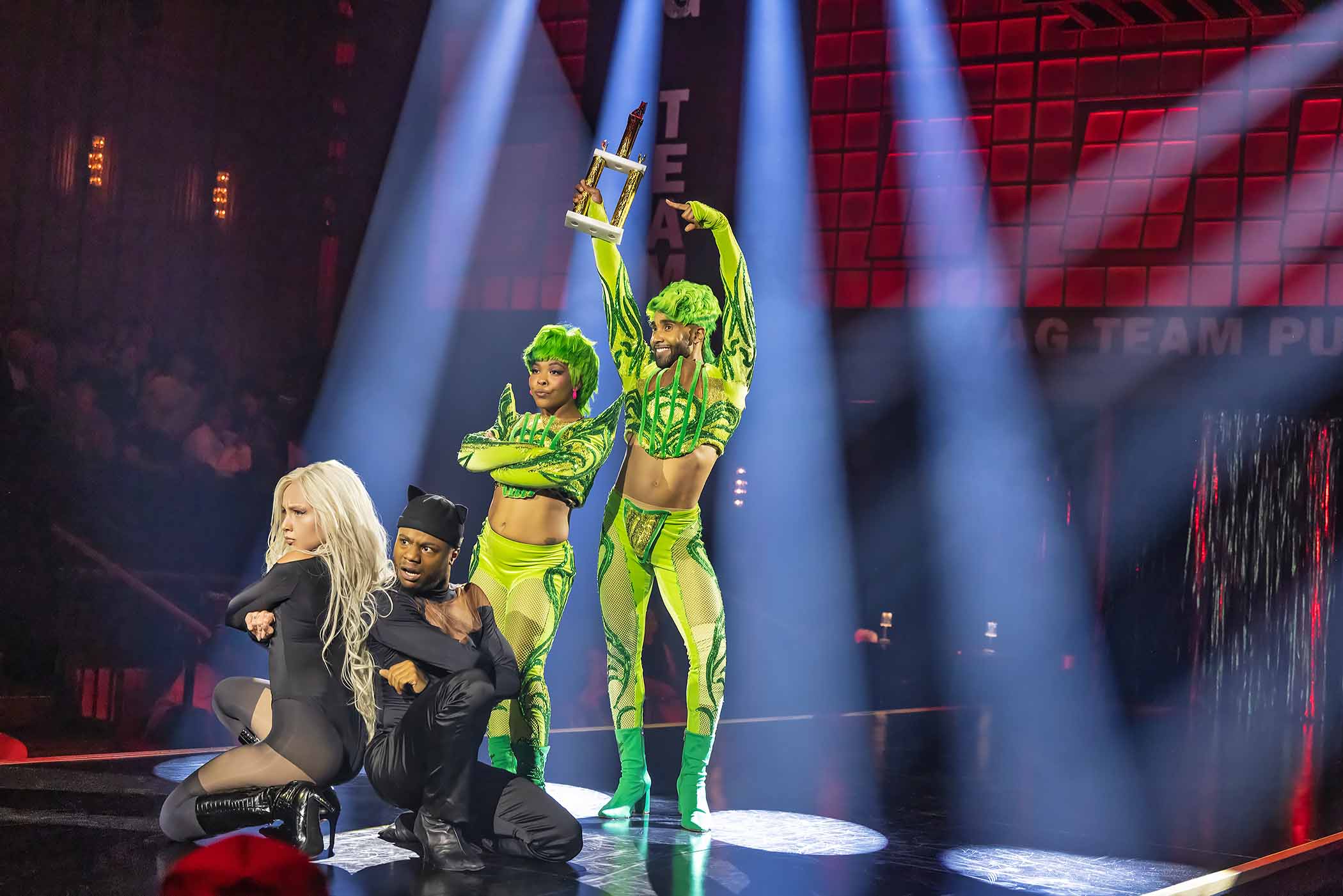
The last thud of the score resounds like a fervent “Amen.” A rowdy preview crowd, primed for a party and onboard since the beginning, probably included superfans of either ballroom or the original Cats, or both. We were all on our feet cheering.
PAC NYC’s new, marble-clad building, diagonally north of the Oculus, resembles nothing so much as an elegant tissue box holder. But be aware that it sits in a concrete desert, ideal for cyclists and skateboarders but tricky for humans with mobility issues. The facility’s three state-of-the-art theaters are constantly being reconfigured; this production fits the show itself into two of them combined, and the invisible nine-piece band, conducted by William Waldrop, into the third, behind a tinsel curtain through which the glorious performers enter and exit.
Go, if you’re rich. Ticket prices are astronomical, especially for what is essentially an off-Broadway house. Metropolis, the Marcus Samuelsson restaurant in the lobby, is a handy, very expensive treat. But hey — arriving as it did in the middle of 2024’s Pride month, Cats: “The Jellicle Ball” gets T. S. Eliot and Andrew Lloyd Webber better than the latter’s British compatriots did, back in 1981. The nearly all-Black, multi-generational, multi-gender cast crashes into the zeitgeist with exactly the right resonance for this moment. ❖
Cats: “The Jellicle Ball”
PAC NYC (Perelman Performing Arts Center)
251 Fulton Street
Through August 11
Elizabeth Zimmer has written about dance, theater, and books for the Village Voice and other publications since 1983. She runs writing workshops for students and professionals across the country, has studied many forms of dance, and has taught in the Hollins University MFA dance program.