






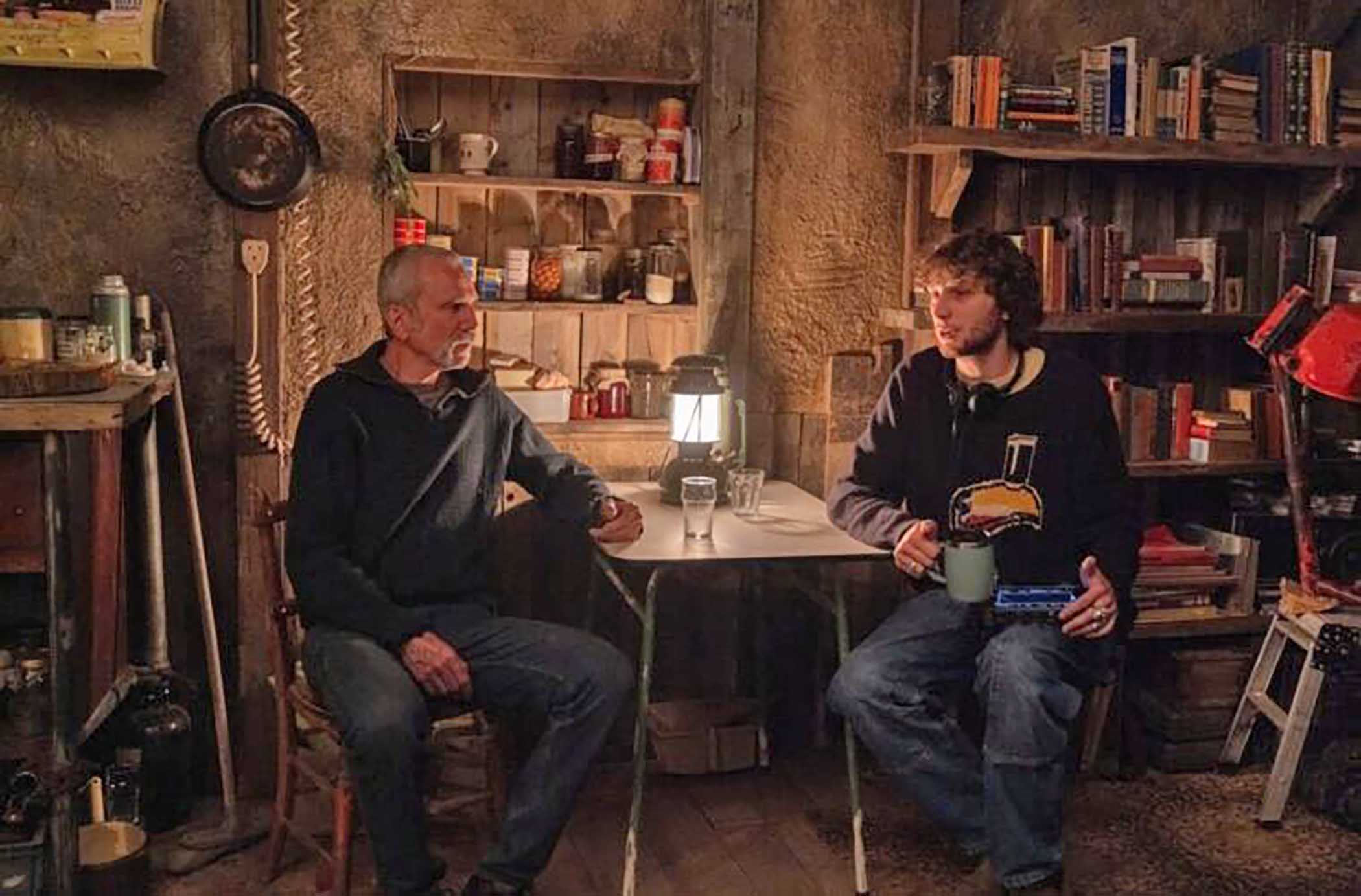
Ronan Day-Lewis doesn’t play coy about the trepidation that comes with being on the set of his debut feature, Anemone: “We’d be pulling up in the morning, and I’d see all the trucks with the machinery of it and everything, and I was like, ‘Oh man’ — there are moments of being really like, ‘Jesus, wow, why did I think I was capable of this?’” he laughs. “But you’re responding in real time to questions and problems that come up, and the film, I think, starts to tell you what to do.” The movie stars the director’s own father, Daniel Day-Lewis, with whom he also co-wrote the script, as the estranged hermit Ray, in his first onscreen appearance since the legendary performer announced his retirement eight years ago. Acting icon Sean Bean, who also took a brief hiatus from movie making, stars opposite as Ray’s stalwart brother Jem, a deeply devout veteran who attempts to reconcile with his sibling after two decades plus spent apart.
As it turned out, first-time filmmaker Ronan Day-Lewis had nothing to worry about. Anemone is a deeply moving portrayal of the complexities of brotherhood, cycles of generational violence, redemption, and the ways in which the universe itself can seemingly choreograph the course of our lives.

Somewhat semi-autobiographical, Anemone is an amalgamation of both father and son’s collective experiences. Set in the late 1980s, the film draws inspiration from the Troubles in Northern Ireland, as we learn early on that both war-torn brothers had previously fought for the British as paramilitary soldiers in the sixties. “I grew up in Ireland and went to Catholic school,” Day-Lewis Junior tells me one cloudy morning in Los Angeles. “My family wasn’t religious growing up, but I definitely think that gave me a fascination with organized religion, and Christianity, specifically.”
Although director Day-Lewis admits he’s not exactly pious, he saw buried within the confines of his adolescence a structure that he could manipulate to explore deeper familial themes. Both brothers Ray and Jem were raised Catholic, but as their paths diverged, the former ceased to be a man of the cloth, while the latter still bows his head before every meal. “The initial way in for me was the brotherhood archetype,” Day-Lewis explains. “I have two brothers, and the beauty and tragedy of brotherhood was something I wanted to find a way to do something about. At first, I thought maybe it would be more of a coming-of-age thing, and then my dad and I started talking about potentially writing something together.”
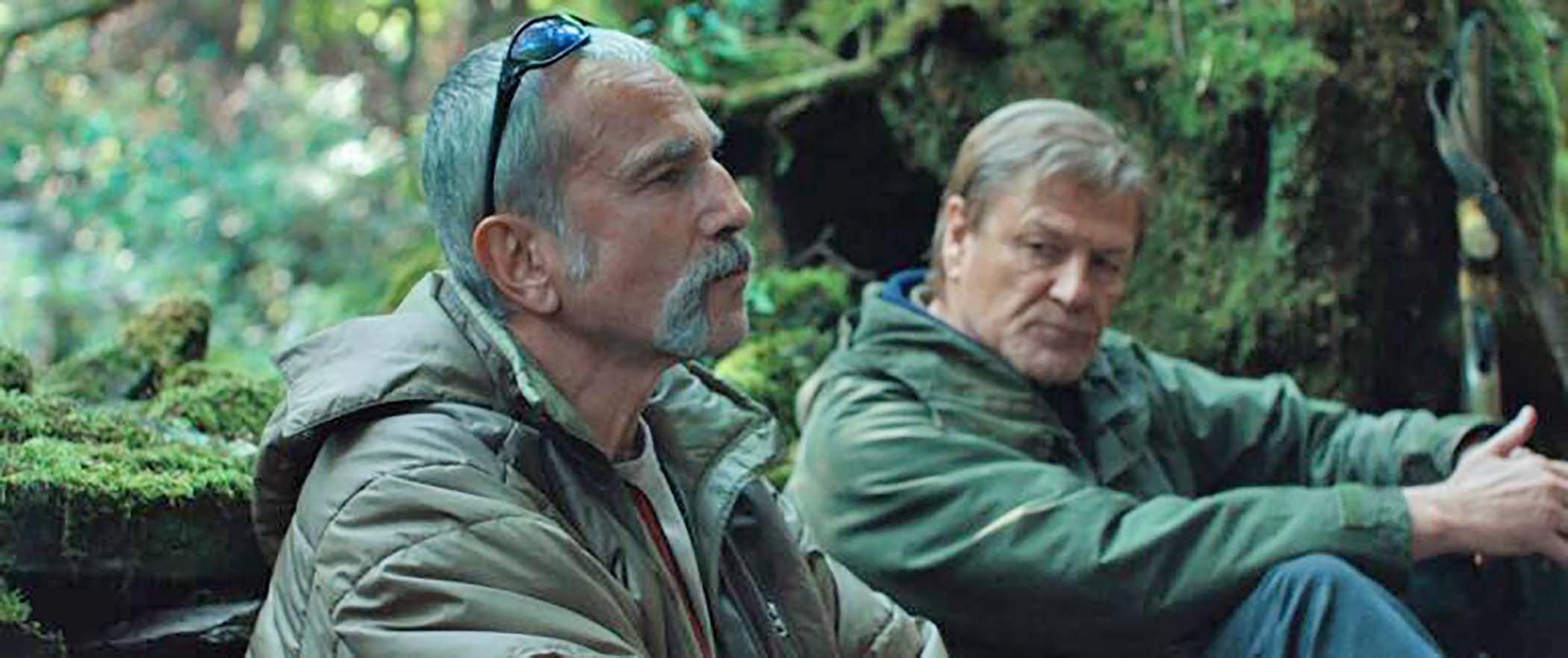
Anemone marks the first cinematic collaboration between father and son. The elder Day-Lewis was famously heavily involved in the script development for Paul Thomas Anderson’s exemplary 2017 production Phantom Thread, writing much of the dialogue for his fashion designer character Reynolds Woodcock. “It turned out he had independently actually been interested in this idea of brotherhood, and specifically the silence in sibling relationships, and that almost telepathic communication,” reveals the filmmaker about he and his dad’s creative partnership. “That was the seed.”
While the young auteur was raised in the Emerald Isle, his father relied upon his own upbringing in the U.K. to supply common English vernacular and societal ticks to their tale. Together, they flesh out a meatier story than either could on their own. “I think it ended up being a real blend, because he had a lot more experience of that part of the world,” recalls the filmmaker. “He grew up in England, and has friends from Northern England, and so he had a lot more familiarity with that kind of dialect, and in terms of the dialogue, that was incredible. And then I think for me, the brother aspect, again, was a big way in. I understood the volatility of brotherhood, and the ways it can jump unpredictably between mirth and rage in seconds. That was a big touchstone.”
He expands, “Also, just the visual language – having developed this sensibility in terms of color, and certain images and feelings I was drawn to in my paintings, I think was a big help in constructing that world, both in the script, and then also when it came to designing it, and imbuing it with that sense of there being something bigger going on than what’s happening in this hut.”

In the film, troubled teenager Brian (Samuel Bottomly) bares bloodied knuckles and a detached expression as he lies on his bed and listens to Jem say a prayer and talk about his plans to hunt down the boy’s birth father, Ray. Twenty years prior, Ray experienced an unspoken trauma during his time in the military, and returned home a changed man. Unable to cope, he then walked out on his pregnant partner Nessa (Samantha Morton) and wandered into the woods, leaving his brother Jem behind to fill the void as a pseudo father, and eventually, a stand-in husband. Now, with his son in peril and at his sibling’s insistent urging, Ray must make a choice: Can he finally put the past behind him and become the dad his boy so desperately needs? Or will he let his anguish forever define him, and in the process, condemn Brian to the same lonely, ostracized, rage-filled fate?
“This project crept up on us both,” the director says about penning the script with his father. “I never would have imagined it would be this. For a long time, I was actually working on a script that was very different. It was a nightmare coming-of-age story. This grew really unconsciously into the thing that we were both focused on — and then it took on a life of its own.”
As is the case with most families in any given profession, the offspring of talented performers often mimic their parents. Typically, renowned actors of a certain caliber, like Daniel Day-Lewis, have children who follow in their exact footsteps, lighting up the screen in a familiar fashion with chiseled jawlines and innate bravado. The Anemone filmmaker, however, says he prefers life on the other side of the lens.
“I was always more drawn to the mechanics of how a film is made,” he offers. “Growing up, I remember being on an airplane and seeing someone was watching a movie, and every time it cut, I was like, ‘What is that? What is this magic where it’s changing point of view?’ And so there was always something about the magic trick of filmmaking that was intriguing to me.”

Whereas performers in the film industry twist and mold and shape their bodies into living, breathing artwork, director Day-Lewis found his technique through a different kind of expression, embracing his individuality with a paintbrush in hand. “I was drawing for as long as I can remember, and that was my first love, so I guess the image-making quality of filmmaking was something that always just made sense to me more than acting,” he admits. “I feel like I’m a pretty shy person. I’ve always hated giving class presentations, or anything like that, so acting never really appealed to me in that way.”
In 1948, John Huston directed his own father, Walter Huston, in an Oscar-winning role as an old prospector in The Treasure of the Sierra Madre. The senior Huston was initially reluctant to join his son’s film — mostly he guffawed at the request to act without his false teeth — however, because of their connection, the filmmaker was able to shoot his old man in such a profound light, he was not only recognized by the Academy, but the duo actually received notes while in production from Warner Bros. telling them to tone down the actor’s performance so that he didn’t outshine his costar, Humphrey Bogart. A similar sorcery is at work here in Anemone, where director Day-Lewis proves there is something undeniably special about capturing someone you love, and doing it in a way that no one else can.
“I think that that did end up influencing the way we worked together, in his performance, and just the way I photographed him,” says Day-Lewis about directing his dad. “We photographed him in unconscious ways, I think, but going in, it was amazing to have that inbuilt familiarity, because I think most young filmmakers would obviously be so intimidated by working with him, and giving any notes, or having that kind of dialogue on set.”

He continues, “The other great thing was that since we had written the script together, we had exhaustively had so many of these conversations about the character and these different points in his journey, that it felt like we could relax into this shorthand once we were actually shooting. But there were moments where we just would stand there and look around and be like, ‘This is insane that we’re able to do this right now’. We have to laugh about it, because it was just so cosmically lucky.”
Music is a big part of Anemone. A highly personal picture in more ways than one, the movie is sonically infused with Day-Lewis’s uniquely stylized taste. One scene in particular really makes a statement. For much of the beginning of the film, Ray is only spoken about, but not seen. In one of his first moments onscreen, he is accompanied by an ax and the heavy riffs of the English rock band Black Sabbath. “Solitude,” a vastly underappreciated track off of their third studio album Master of Reality, shakes the walls of Ray’s puny, minimalist shack in a very pointed way, as he busies himself with yet another insignificant task to while away the hours of his self-imposed exile.
“That song has such a strange magic to it, and it’s so unlike most other Black Sabbath.” The director admits that since lead singer Ozzy Osbourne’s recent passing in July, the song’s sensation has taken on an even deeper meaning. “It’s strange, because I’ve been living with his voice in that song for so long, just watching that scene over and over again with the edit, that it was quite haunting to feel his presence in the film after he passed away. And it was right as we were finishing the mix, actually, so it was at this moment where things were being sealed in, in terms of the songs we were using.”

A seasoned painter, the imagery of Anemone mirrors the director’s own personal collection. In many ways, this movie has been years in the making, unbeknownst to even the filmmaker himself.
“There are images in the film that appeared directly from my paintings,” he remarks. “When [Ray and Jem are] walking past the fairground, it’s from a painting I did. There’s a creature in the film that’s appeared in my paintings, and generally, the sense of storminess, and the sky pressing down over the whole film is something that has been present in my work.”
“I’ve been really interested in extreme weather events for a long time,” he says, alluding to the movie’s turbulent nature. Towards the end of the film, moody clouds give way to a massive hail storm that breaks windows and beats up unsuspecting automobiles. “I did this series of tornado paintings, and my most recent body of work has that ominous sky that’s omnipresent.”
Like Day-Lewis’s paintings, Mother Nature, in all of her wild, unabashed glory, holds significant weight in his first feature. (“Anemone,” the flower in the Greek myth, is named after the Greek word for “wind.”)
“In some ways it’s a very claustrophobic film,” muses the director. “A lot of it takes place in this very stifling environment, but it places the human drama against this cosmic backdrop where the film has both this hyper subjective language, in terms of the camera and the story, but then it also has this omniscient perspective.”

In Day-Lewis’s world, atmospheric disturbances play just as big a role as his own father. “The wind, I started to realize, is almost like a narrator in the film. The elements are constantly pummeling this structure that he’s in, and you’re constantly aware of them on the periphery of the human strife at the center of the film. Also, I started to think about how this wind could infiltrate the camera language, in the way that we’re slowly moving through this world, and being pulled by this current, deeper and deeper into this guy’s psyche.”
Making the switch from habitual painter to a full-time filmmaker crafting visual compositions with a camera has been a process, but the up-and-comer is feeling invigorated.
“I think aspects of it were instinctual,” he reflects. “The tone of the film was what came to me, and as it connected to the visual language of it, it came to me pretty intuitively. And then, there were other aspects of filmmaking that I was far less familiar with. I’d done a lot of short films and music videos, and these shorter form things, and writing scripts and stuff. But there were a lot of aspects of the process that I was really intimidated by. It’s the kind of thing where you don’t know exactly if you’re gonna be able to do it, or what that experience is gonna be like, until you’re in it, in terms of making the leap to a future. For a long time, when we were shooting in one location for a while, I was able to delude myself into forgetting, I guess, just the scale of it, because it was quite an intimate set, and it would just be a few of us in a room at a time.”
He adds, “I guess I’ve learned to trust my instincts in terms of how aspects of my sensibility can translate from one medium to the other, as a painter.”

Having one of the greats, Sean Bean, at the helm, definitely helps guide the ship toward success. “It was amazing,” Day-Lewis beams. “I had grown up watching Game of Thrones, so he was a legend to me. I was pretty starstruck at first, but at a certain point, I couldn’t imagine anyone else playing Jem. It was such a relief that he wanted to do it.”
More than once in the film, Bean displays a range of emotions with a simple look, making it clear why the performer is one of the few on par with Day-Lewis Senior himself. “There were certain scenes where he had to do so much with so little, in terms of these torture chambers that he ends up in, where his brother’s almost performing for him. It’s almost like a 10-minute silent performance. So, it was amazing to work with him to find what was the least he could do at times physically while still exuding this powerful inner life, and the fluctuations of the ways he’s seeing his brother, and the wariness of that, and rediscovering who this guy is after that he knew so well and so deeply after 20 years of being apart.”
More than anything, director Day-Lewis learned to adapt, as he found a port in the storm by embracing the chaos.
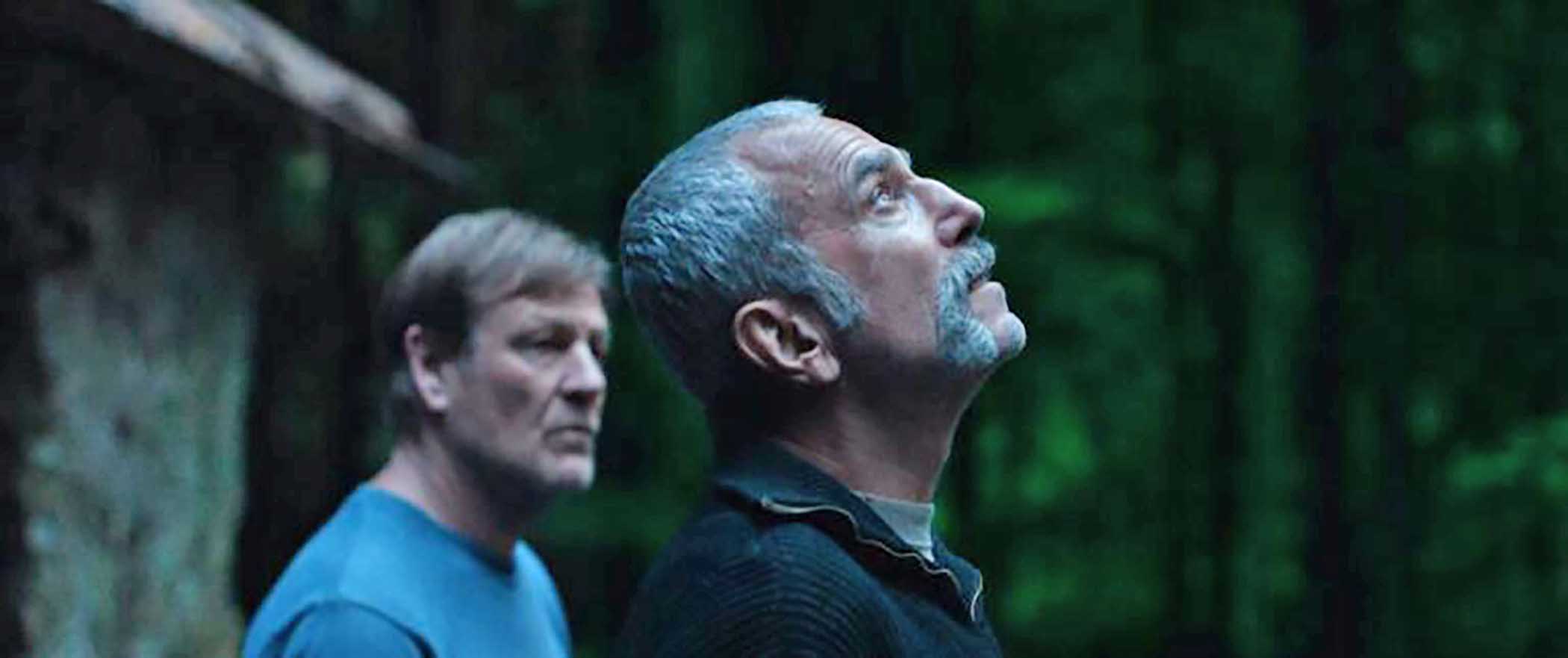
“One day that was an interesting challenge was we were shooting this extremely dialogue-heavy, emotionally vital scene on the beach, and we turned up, and it was just a gale,” he sighs. “The wind was just insane, and we were shooting on this island, Anglesey, off the coast of Wales, which was very beautiful, but the wind was constant and really intense. There was sand being blown in everyone’s faces. You could barely stay upright. And it was meant to be this long scene that we were gonna be shooting all day of these two characters sitting in the dunes, which would have been like the most exposed area. So we were just like, ‘This is impossible. What are we gonna do?’”
With a crew full of people depending on him and a shooting schedule to keep intact, director Day-Lewis chose to surrender to the tempest instead of fighting against the current.
“We ended up shooting the whole scene on this adjoining beach, actually, that was more sheltered from the wind, but shooting it tight enough that you couldn’t really tell that you were in a different environment,” remembers the filmmaker. “The light was changing all day — it was going from overcast to blindingly sunny. Raining and then not raining. Continuity-wise, it was a nightmare. But then, at the end of the day, we went back to the original location to shoot the end of the scene, which was this shot where they’re walking off the dunes and down the shore.
“The wind was still really intense at that point, but it ended up being this huge blessing, because it created this crazy current of wind, just moving in this massive liquid mass down the shore that ended up being one of my favorite moments visually in the film. Some of the most challenging parts of the shoot ended up being the most rewarding.”