



Dan Klitsner’s 1996 invention, Bop It, continues to bring joy in realms beyond toys and games. Now influencing artists and influencers, this multi-sensory nostalgia sings & dances through Bop Culture.

As the 122nd New York Toy Fair approaches, the world’s biggest toy companies, international inventors, and global press are getting ready to discover the newest takes on play for 2025. Nearly 30 years ago, nobody predicted that a quirky game launched here would have such a continuing impact on pop culture.
When Industrial Designer Dan Klitsner first invented Bop It in 1996, he had never expected the long-lasting, profound impact this multi-sensory, tactile, gesture-recognition game would have on pop culture. One of the most memorable experiences of many Millennials and Gen Zers’ childhoods, Bop It started as a hand-held electronic device that issued three actions: Bop It! Twist It! Pull It! Within a short time limit, players had to react to these commands by bopping the button, twisting the lever, or pulling the handle.
“I had heard that Bop It was in a song, so I searched for it,” Dan recalls. “Not only did I find one song, I found hundreds. Imagine my surprise. Try it for yourself, go look. Every time I search Spotify, I keep finding more.” The question is, why?
Dan thinks that a big part of Bop It’s popularity among musicians could be traced back to the fact that Bop It is experienced through multiple senses, physically, visually, and audibly. And that’s why it got inside so many kids and stuck with them to emerge 25 years later.
The famous Bop It! Pull It! Twist It! beat can be heard in thousands of songs, mostly in the hip-hop and EDM genres, with artists referencing the toy they have fond memories with throughout lyrics. Bop It is that phenomenon. And intentionally or not has morphed into an iconic name in pop culture. Dan calls the phenomenon “Bop Culture”.
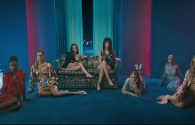
Hailing from New York City, Fivio Foreign’s Bop It single featuring Polo G is one of the most popular renditions of the toy’s catchy tune, amassing more than 6 million views. On the West Coast, LA-based artist MOTHICA featured a custom-made Bop It—called ‘Bopthica’—in her SENSITIVE music video. She adds, “There are thousands of songs inspired by Bop It, and it’s all because of its iconic catchphrases. They’re just as memorable & catchy as your favorite pop hook. Bop It is a cultural icon for so many kids who are now adults, creating their own art and music. It’s so cool to see them play into the nostalgia of our favorite childhood game.”
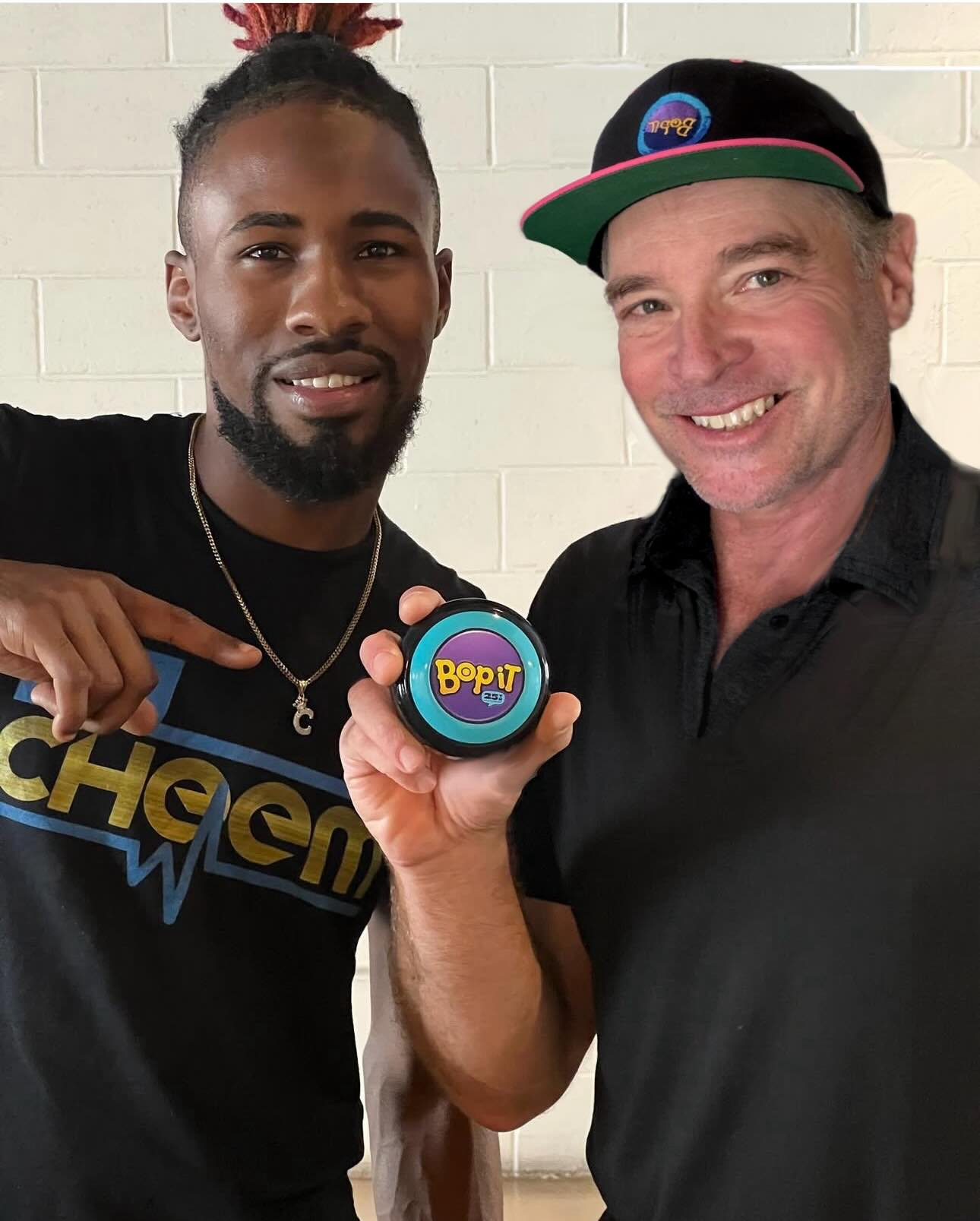
The beat has also traveled across the pond, inspiring artists from different nations and continents to join the Bop Culture Frenzy. For instance, in 2021, Dutch rapper Jason Imanuel collaborated with Brooklyn’s DJ CHEEM to create their own Bop It homage. For DJ CHEEM, it was a true trip down memory lane. He shares: “Bop It is so nostalgic for me but still so classic – the way it makes you move your body to the beat.”
Could it be that multi-sensory games, such as Bop It, actually stimulate creativity? Games like Bop It fuses what’s on the surface—humor, textures, competition—with the multi-sensory, creativity-inducing value embedded below that.
Because of its connection to innovating and problem-solving, creative thinking will be among the most desirable skills sought by CEOs in the next five to ten years, according to the World Economic Forum. Thankfully, contrary to popular (limiting) belief, no one grows out of creativity, and reigniting it is possible at any age.
The importance of striving for creativity cannot be understated, and even children understand that. In fact, 92% of kids surveyed in a recent study believed that creativity boosts their confidence and excitement to participate while filling them with a sense of pride. However, instead of nurturing this gift, many lose their creative confidence as they grow up. According to experts, this can be attributed to fear of judgment and a rising self-consciousness.
But how do games help foster creativity?
“Maybe it’s because, beyond the bright-colored 90s nostalgia,” says Dan. “Bop It helps you let go of inhibitions and simply embrace fun—without worrying about what others will think. A good game trains you to let go of inhibitions. You can’t be creative if you’re inhibited.”
For instance, even Saturday Night Live couldn’t resist Bop It’s witty humor and nostalgia. SNL created three parodies of the toy to date, further cementing its place in Bop Culture. Then came social media platforms like TikTok, where thousands of people, including rap icon Machine Gun Kelly, have shared videos of themselves dancing or playing along to Bop It-inspired songs.
Sound, an essential part of Bop It, has always been a powerful medium of communication. As research shows, auditory stimuli, even as simple as lullabies or educational rhymes, play a crucial role in shaping kids’ knowledge and world understanding.
Reflecting on the Bop Culture phenomenon—why it started, why it lasted, and why it will continue–Dan shares: “For today’s parents, it’s not just the nostalgia, and it’s not just that they loved playing Bop It in their childhood; it’s that they intuitively know this multi-sensory experience is good for their kids.”
From a simple toy into a global sensation, Bop It’s impact is far from over. In fact, Dan is attending his 30th New York Toy Fair this week. Bop It remains one of the only games that has been there all 30 years. Perhaps after all this time, Dan is finally starting to realize why.