






In an era where everything screams for attention, goroweko’s work stands out precisely because it refuses to yell. This is both her most intriguing strength and the starting point of any honest assessment: her subtle, atmospheric approach demands a viewer who is willing to slow down. Some might walk past it entirely — but those who stay find themselves rewarded with something far richer than the usual Comic Con spectacle. Her quietness is not a weakness; it is a deliberate artistic stance, and one that demonstrates a rare confidence in mood-driven storytelling. With slightly clearer framing, even more viewers would understand the worlds she’s inviting them into.
Before examining her work further, we reached out to someone who has been quietly observing the rise of indie psychological manga for several years – Timofey Razumov, a seasoned character artist who is specialising in creating compelling visual narratives and expressive character designs. With extensive experience in concept art and digital illustration, he brings deep expertise in character development, visual storytelling, and atmospheric design. He notes that goroweko’s linework often shifts subtly in weight and texture, guiding the eye through the composition, while muted color palettes and carefully placed highlights enhance emotional depth rather than distract.
I came across goroweko entirely by accident at London Comic Con this October. One of those rare moments when the crowd parts just enough for you to notice something you weren’t supposed to miss. Her display looked as if someone had dropped a fragment of a dream between two commercial stands. A split world: on one side, a Halloween-tinted stage with a striped cloth, a pumpkin, and a bowl of candy occupied by an ugly little baby doll holding a sign that simply read “eat me.” Surrounding them were her illustrations. Dark, delicate pieces that opened small windows into a mysterious, half-lit world — and showed an unusual level of control in their composition. The lines here are sometimes crisp, sometimes loose and sketch-like, creating a rhythm that mirrors the unease of her subject matter. Light is used sparingly, often just enough to suggest depth and shadow, while the subdued color choices anchor the mood in subtle tension. There is a precision in her linework that reveals discipline, patience, and a clear personal vocabulary of symbols.
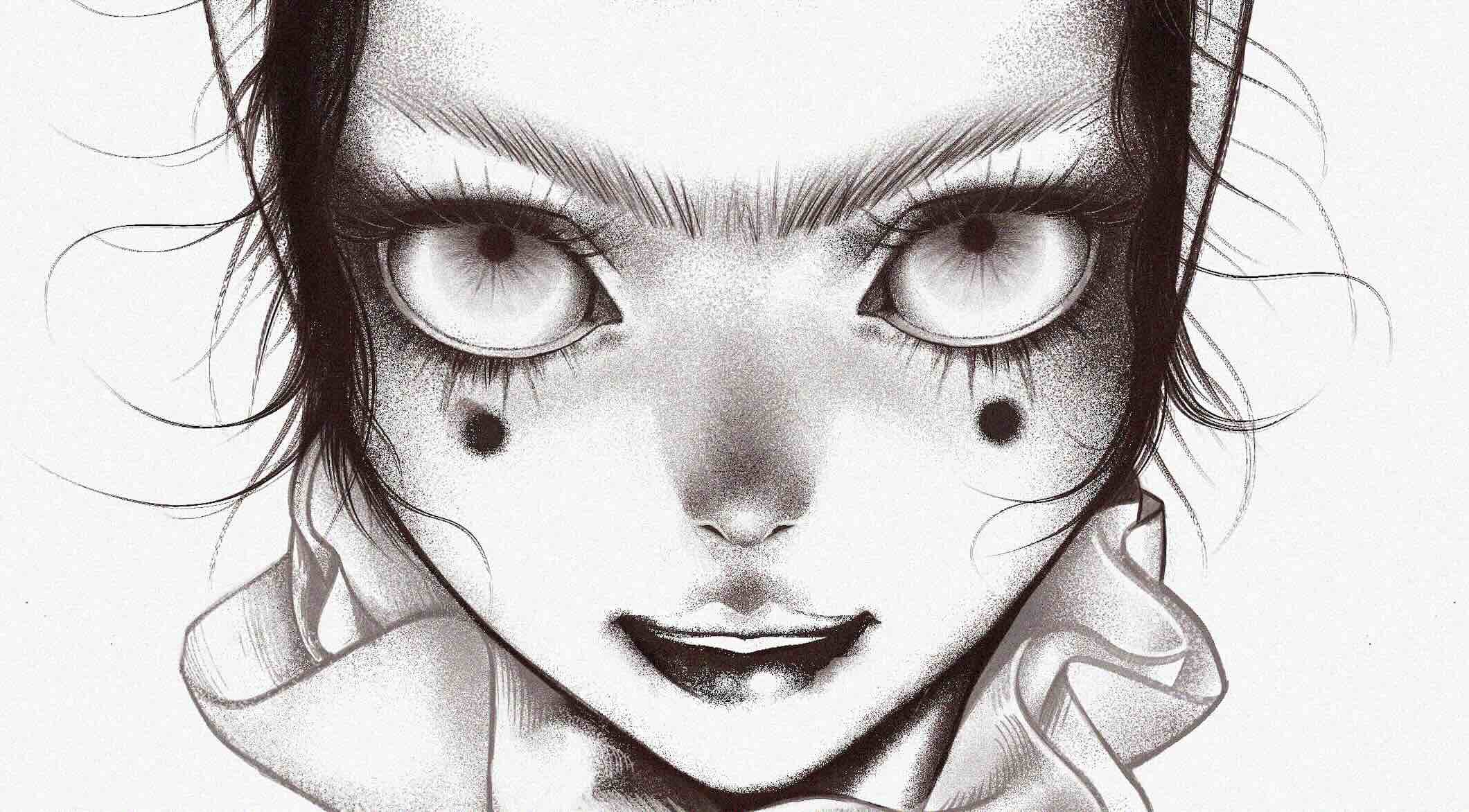
Her “Horrible Creatures” paper dolls — the daemon trickster, the wing-clipped judge, the porcelain performer — each arrived with a short, unsettling rhyme. They weren’t grotesque; they were quietly uncanny, like warnings whispered by a storybook that knows more than it says. The striking part is how elegantly she balances discomfort and charm. The creatures have a narrative stillness often missing in similar “dark cute” aesthetics; they suggest emotional histories rather than mere gimmicks. This restraint shows an artist who knows exactly where to stop.
On the other side lay Delirium, her first printed manga. The cover carries its own cold, the kind you almost feel on your fingers, as if drifting snow were settling onto your hands. Yet the girl at the center meets you with eyes so warm you fall into them before you realise it.
People kept picking up the book, surprised to learn the same person created both the manga and the creatures. Two projects, two aesthetics — yet unmistakably one hand. And this contrast deserves to be emphasised, because it reveals something distinctive about her approach: she is not a specialist in one narrow emotional register. She moves fluidly between melancholy, tenderness, tension, and calm. Colour is never garish; it is used sparingly to punctuate moments of emotional significance. Light and shadow interact dynamically, with stark contrasts emphasising tension, while muted tones keep the mood intimate and reflective. Showing the relationship between these worlds a bit more directly would allow viewers to see how deep the cohesion actually is.
The duality of the table was what held me in place. It wasn’t theatrical. It wasn’t ironic. It wasn’t trying to sell anything. It simply existed, self-contained and faintly magnetic, the way a flickering light deep in a midnight forest pulls at something instinctive. You know you shouldn’t walk toward it. But you do.
In a louder environment, this quiet magnetism is a rare achievement — something that demonstrates her intuitive sense of atmosphere. Even so, a little more spatial intention could turn this gentle pull into a stronger, more structured experience. Not noise. Just a clearer invitation.
goroweko herself added another layer to this contradiction. She sat quietly, almost hidden, but the moment someone spoke to her, she shifted: warm, funny, unexpectedly present. Visitors who assumed she was distant left laughing. A few admitted the art made them uneasy — and that they liked it.
This contrast between her personality and her artistic darkness adds depth to her work rather than diminishing it. If anything, the warmth makes the atmosphere more believable, because it suggests a creator who understands emotional nuance rather than leaning on clichés of gloom. Her use of negative space is deliberate, allowing both light and line to carry narrative weight, and the muted palette ensures the eye is never overwhelmed.
What makes her work linger is that it avoids the grotesque altogether. No shock, no gore, no loud gesture. The unease comes from atmosphere, not spectacle. Her drawings feel like invitations into places your rational mind insists you ignore… but your subconscious already knows.This is a rare skill. Many artists use noise to force reaction; she uses silence to earn it.
If anything could elevate her presence further, it would simply be offering viewers a slightly clearer entry point into these atmospheres. Not because the art lacks presence, but because its emotional complexity deserves more structured presentation. A little guidance would allow more people to recognise the strength already there.
goroweko calls herself a quiet, almost invisible artist. Maybe that’s true in the wide landscape of comics and indie art. But her work denies that invisibility. It filters for the kind of viewer who actually looks. And once they do, they rarely walk away indifferent. Her subtle modulation of line, tone, and color rewards patience: every shadow has meaning, every brushstroke suggests depth, and every panel invites the viewer to breathe.
Some artists chase visibility. goroweko builds small worlds that wait to be found. And for those who find them, the discovery feels deliberate — even if they stumbled into it by accident. Her worlds deserve to be seen not just by luck, but through clearer framing that highlights the rare balance she achieves: atmosphere without aggression, darkness without despair, and subtlety that rewards those willing to linger.