Top

news

Stories


Fred W. McDarrah, 1926-2007

Veteran Village Voice photographer Fred W. McDarrah died in his sleep at home in Greenwich Village early Tuesday morning. He was 81.

Fred W. McDarrah, April 1978
photo: Janie Eisenberg
Fred W. McDarrah, April 1978

Over a 50-year span, McDarrah documented the rise of the Beat Generation, the city’s postmodern art movement, its off-off-Broadway actors, troubadours, politicians, agitators and social protests.

Fred captured Jack Kerouac frolicking with women at a New Year’s bash in 1958, Andy Warhol adjusting a movie-camera lens in his silver-covered factory, and Bob Dylan offering a salute of recognition outside Sheridan Square near the Voice’s old office.

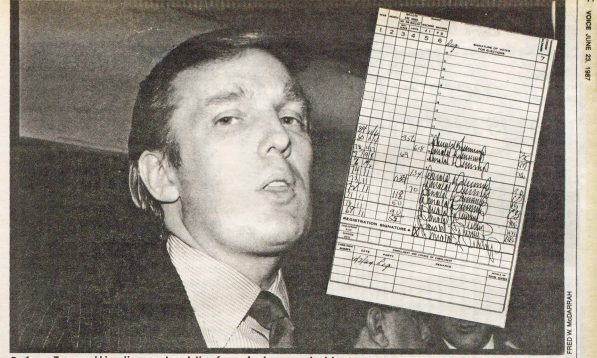
Not just a social chronicler, McDarrah was a great photo-journalist. He photographed the still-smoldering ruins of the Weather Underground bomb factory on W. 12th Street. His unerring eye for gesture and detail caught lawyer Roy Cohn whispering what appeared to be tough orders in the ear of a young Donald Trump.

For years, McDarrah was the Voice's only photographer and, for decades, he ran the Voice’s photo department, where he helped train dozens of young photographers, including James Hamilton, Sylvia Plachy, Robin Holland and Marc Asnin. His mailbox was simply marked "McPhoto."

An exhibit of McDarrah’s photos of artists presented last year by the Steven Kasher Gallery in Chelsea was hailed by The New York Times as “a visual encyclopedia of the era’s cultural scene.” It included candid shots of Janis Joplin, artist Jasper Johns, and avant-garde artist Charlotte Moorman.

Wayne Barrett Remembers McDarrah

In the days when politicians routinely let reporters and photographers inside their fundraising extravaganzas, Fred McDarrah never missed a fat cat with a fork or a knife in his hand. He got his camera right under their double chins. If they waved him away in anger, he took an extra shot. He circled the world of New York politics with me for two decades, responding to every brusque rejection with an irresistible charm and a grin wider than his lens. It wasn't just that Fred loved to photo the New York predator class and their political prey, he understood who they were and what they wanted. He collected names and public price tags as well as pictures. I remember standing with him in the rain outside Studio 54 for the birthday party of that infamous fixer Roy Cohn as we rushed toward every opening limo door, squeezing the story out of the street. I remember stakeouts that dragged on for hours and his edgy exuberance, a kid-like quality he carried with his camera into his 70s. Fred loved his town and his craft and his era and his family, and he has left a legacy of prints unparalleled in our time.

J. Hoberman Remembers McDarrah

Like anyone who ever looked at the Village Voice during the ‘60s, I was familiar with Fred McDarrah's world—long before I met him. Fred spent that decade (and three more) documenting the city’s be-ins, demonstrations, peace marches, happenings, free concerts, coffee-house readings, loft performances, jazz bars, and underground movie emporia, not to mention the flotsam and jetsam of Sheridan Square, Bleecker Street, Avenue C, St Marks Place, and the Bowery. He was a real newspaper guy and a genuine historian of his times. His street and studio portraits of downtown artists, avant-garde luminaries, local pols and boho celebs were often definitive.

Fred was a feisty, wiry Son of Brooklyn who knew how to get to the front of a crowd, hold onto his light, and make the most of any given situation. In 1960, he invented a sort of human catering service called Rent-a-Beatnik. Did I say he was feisty? Fred wrote irate letters to the Voice editor both before and after he became the paper’s staff photographer. (A proud populist, he always took regular issue with film critic Andrew Sarris’s annual ten best lists.) Fred was free with friendly counsel and fiercely protective of his work, as I learned when I, as Village Voice greenhorn, I asked him on behalf of an avant-garde filmmaker friend, if she could use one of his best known photographs in her movie. Fred lost his smile and gave me an earful. (I considered it career advice.) And he was right, the work he furnished the Voice for pennies was only going to grow more valuable. Fred may have been a terrific journalist but, as he’d have been the first to tell you, he wasn’t a hippie.

 
  • 09/09/2011 5:14:00 PM

    no matter what was said a year ago, his photo of Diane Arbus has certainly seen much renewed publication....

  • A. D. Coleman 01/08/2010 7:19:00 AM

    Curious to have "elison" describe me as a "mainstream critic," since I started my work as a critic at the very same Village Voice where Fred M. had esconced himself. And the mainstream of criticism has never considered me part of it. Fred didn't do any reviewing while I was there ('68-73); the Voice hadn't yet established its centerfold devoted to mini-blurbs on the arts. Certainly for the Voice, and for the Times ('70-74), I covered as wide a span as possible of exhibition spaces and publications, and, by my lights and in the opinions of many others, definitely "championed underdog photo artists" from the very beginning. ("Can't please everybody, so you better please yourself." -- Ricky Nelson)

  • donald Waits 11/22/2007 4:27:00 PM

    Back in the 60's, Fred came out with a paperback of photographs of the art scene in New York, with grainy black and white snapshots of the "stars" of the moment. As a would-be wanna-be myself, I studied every shot, drooled over every face, studied all the locations and bars. I wanted to be part of that scene. Living in the sticks of Louisiana, my goal was to be like de Kooning, Johns, Rauschenberg, and the rest. Fred's beautiful photographs told me every- thing I wanted to know about the art world as it existed at that time. I dreamed with this book. I kept a copy with me at all times. Alas, somewhere along the way, I lost that wonderful book. I can still see Betty Parsons, and Leo Castelli, drinks in hand, so regal and suave, presiding over openings at their galleries, joking and talking with the upcoming new stars such as Warhol and Frank Stella. Years later, after many false starts, I finally made it to Manhattan, and managed to meet some of those incredible men and women. But it was Fred McDarrah's photographs that stayed with me and kept my dreams alive.

  • elison 11/13/2007 10:56:00 PM

    What a great human being was that Fred McDarrah .Fred gave photography reviews that championed the unusual in the photography galleries that mainstream critics as A.D.Coleman overlooked. That is usually not known about Fred's career at the V.V. He championed underdog photo artists.


Most Popular Stories


Browse Voice Nation
  • Voice Places

    Voice Places

    Discover restaurants, nightlife, travel, shopping...

  • VOICE Daily Deals

    VOICE Daily Deals

    Get 50 to 90% off every day on restaurants, movies, massages...

  • Best Of

    Best Of...

    More than 10,000 of the BEST things to eat, drink, and experience

  • My Voice Nation

    My Voice Nation

    Join the Village Voice community and get exclusive deals and info

  • Happy Hour

    Happy Hour

    Your local Happy Hour guide at your fingertips

or

Log in or Sign up

Social Connect:

Use your favorite account to access My Voice Nation.


Use your My Voice Nation account to log in:


Forgot password?
or

Sign Up or Log in

Social Connect:

Sign up for My Voice Nation with your preferred network.


Sign up for a My Voice Nation account:


Privacy policy