Top

arts

Stories


When the Town Was Down: New York Noise and No Wave

Capturing the city's '70s and '80s underground

It's tempting to mythologize the downtown NYC of the late 1970s and '80s as an insurgent "artopia," a rebel frontier of creative cross-pollination where money hadn't yet erected barriers to creativity. In light of the breakneck speed at which the Lower East Side has become gentrified, the wide-open real estate and untapped potential of the near-past have been burnished with a nostalgic, sepia-toned glow.

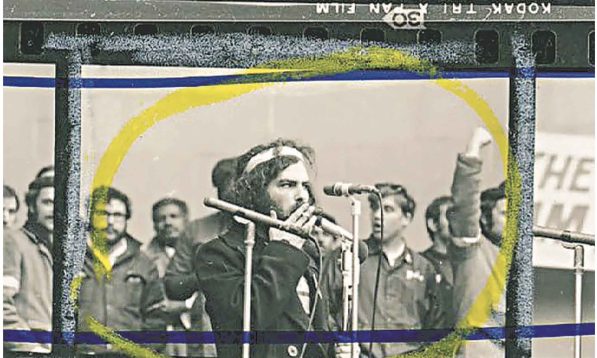
"A Gong Show for geniuses": No Wave's Arto Lindsay, of DNA
Courtesy of Edo Bertoglio
"A Gong Show for geniuses": No Wave's Arto Lindsay, of DNA

Details

New York Noise: Art and Music From the New York Underground
By Paula Court
Soul Jazz, 208 pp., $39.95

No Wave
By Marc Masters
Black Dog Publishing, 192 pp., $29.95

Related Content

More About

In reality, downtown was a tough place, where the tenements were often crumbling, the streets dangerous and poorly lit, and the rats far outnumbered people. But if you had the creative spark (part curatorial, part entrepreneurial), it was entirely possible to view the desolation as a potential Land of Plenty. Reconfigured into a thriving artistic community not through money but with inventive wit and sheer chutzpah, downtown's pioneering DIY spirit extended to clothing, music, art, and performance. For a time, at least, artists flew far enough under the radar that there was little danger of being co-opted or driven out by the toxic imposition of blandly corporate commercial interests.

Two lavish new books, New York Noise: Art and Music From the New York Underground and No Wave, trace the highs and lows of this short-lived scene, proving along the way that downtown—conceptually speaking—was less about geography than the importance of staking out one's cultural identity and artistic autonomy.

New York Noise is a collection of images by photographer Paula Court that roughly spans the years between 1975 and 1988. This densely populated but accessible tome maps the era's cultural topography. Capturing a scene in mid-flight is no easy task, but Court—a photographer long affiliated with the Wooster Group—has a gift for gaining her subjects' trust, as well as plenty of connections to the worlds of art, music, and theater. Her no-frills, often stark images have a stripped-down immediacy that enhances the book's overall documentary feel. Working quickly, often in low or nonexistent light, Court has a flair for the right moments—denouements, connections, chaos, joy. We are given access to galleries, clubs, and tiny loft spaces, enabling us to flit from avant-art space the Kitchen to the latest Robert Wilson production at BAM to smoke-filled late nights at the Mudd Club. The headlong, all-night party atmosphere is so pervasive that it's easy to overlook the book's more poignant moments—Warhol and Basquiat posing together, unaware they'll both be dead within a year of one another, or choreographer Arnie Zane, an early casualty of AIDS.

There's a welcome social equality at work here, with seemingly few boundaries drawn between the infamous, the self-invented, and the genuine stars. David Byrne acknowledges as much in his pithy introduction: "Borders were definitely fuzzy, which was inspiring. . . . There was a feeling that one could incubate one's work inside the supportive bubble of a close and sometimes desperate community."

Peppered throughout with first-person memories like these, New York Noise feels like a collective diary. Accordingly, the tone remains plainspoken and conversational (if, at times, a bit repetitive), and bluntly honest about how much of a struggle it was behind the scenes. In front of the camera, however, there is only raucous energy, an animating spirit that threads together impromptu moments (such as a group of musicians and performance artists—Kim Gordon, Eric Bogosian, and Cindy Sherman among them—enjoying a pickup game of volleyball) with the more reflective (Laurie Anderson lost in contemplation as she tunes her white violin; dancer Bill T. Jones in mid-leap, defying gravity).

While No Wave, Marc Masters's history of the punk offshoot (due out in late December), shares some thematic territory with Court's book—the cast of characters has a great deal of overlap—his book is more tightly focused. It's hardly narrow, however, given how stylistically slippery No Wave is to define. While New York City's contributions to punk have been endlessly dissected, the No Wave scene has never gotten the overview it deserved—until now.

From the beginning, No Wave was an anti-movement set up in stark opposition to punk's tired reliance on conventional three-chord riffs. Stylistically exploiting the frisson between crudity and sophistication, groups like Suicide, DNA, and Ut reflected the city's moral chaos back on itself, turning art into shock therapy. (TV Party's Glenn O'Brien once quipped that No Wave was "a Gong Show for geniuses.")

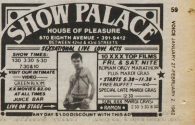
From such assaultive beginnings, No Wave proved to be a complicated, elastic, genre-hopping beast. Masters, who writes for U.K. magazine The Wire, traces its wayward experiments and stylistic switchbacks with critical engagement and thoughtfulness. Drawing on detailed interviews with many of the scene's key players (Lydia Lunch, Arto Lindsay, and Glenn Branca, among others), as well as an exhaustive amount of archival material, Masters brings this secret history to vivid life. Even if your interest in punk history is merely casual, the treasure trove of rare ephemera reprinted here—club flyers, ticket stubs, band photos, yellowing 'zines—is fascinating; much of it has a bracing rawness that hasn't faded one iota.

No Wave's influence has proven more long-lasting than the movement itself: Its blend of twitchy disco, corrosive noise, and lo-fi recording techniques is very au courant. (Groups as diverse as Erase Errata, LCD Soundsystem, and Lightning Bolt all owe fealty.) Thanks to reissues, however, much of No Wave's discography is newly available. Ahead of its time? Looks like that time is now.


Most Popular Stories

for free stuff, theater info & more!

Find A Coupon

Popular Coupons


Browse Voice Nation
  • Voice Places

    Voice Places

    Discover restaurants, nightlife, travel, shopping...

  • VOICE Daily Deals

    VOICE Daily Deals

    Get 50 to 90% off every day on restaurants, movies, massages...

  • Best Of

    Best Of...

    More than 10,000 of the BEST things to eat, drink, and experience

  • My Voice Nation

    My Voice Nation

    Join the Village Voice community and get exclusive deals and info

  • Happy Hour

    Happy Hour

    Your local Happy Hour guide at your fingertips

or

Log in or Sign up

Social Connect:

Use your favorite account to access My Voice Nation.


Use your My Voice Nation account to log in:


Forgot password?
or

Sign Up or Log in

Social Connect:

Sign up for My Voice Nation with your preferred network.


Sign up for a My Voice Nation account:


Privacy policy