



Adrian Brody is a lucky guy. You might not think so at first, considering that he was born in Woodhaven, Queens, in 1973, just two years before New York’s fiscal crisis gave birth to the immortal headline “Ford to City: Drop Dead.” By the time Brody turned 4, Gerald Ford was no longer president, but the Son of Sam, a madman in thrall to a demonic dog, was terrorizing the Big Apple by randomly shooting young women (and sometimes, their beaus) who wore their dark hair long — which led to a booming business in short bobs, dye jobs, and blonde wigs in outer-borough beauty parlours.
It was a tough time in Gotham, but with the Yankees preparing a run at a World Series ring after a 14-year drought, the city was brimming with mad energy.
Into this urban hurly-burly landed twine-wrapped bundles of the February 14,1977, issue of the Village Voice. The cover trumpeted articles about loan sharks, sardonic monuments to the disgraced former president Richard Nixon, and big red lips for Valentine’s Day. A headline on the lower left asked, “Do Psychiatrists Drive Their Kids Crazy?” and was accompanied by a photo of a dark-haired 3-ish-year-old with less a cherubic than an apprehensive expression, credited to Sylvia Plachy.

And thus, untold thousands of New Yorkers were greeted by Adrien Brody — at newsstands, bodegas, coffee shops — whose serious child’s face was unknown to readers but which moviegoers would become very familiar with over the coming decades.
Although this early brush with fame lasted a week more than Warhol’s decreed 15 minutes, it arrived only after a long, fraught journey: Brody’s mother, Sylvia Plachy, was born in Budapest in 1943 and was 13 when her family fled Hungary, leaving behind many relatives lost to the Holocaust, as well as her country’s trauma after the failed 1956 uprising against the Soviet yoke. Following a trek to Austria hidden inside a horse-drawn cart, Plachy’s family eventually found their way to an aunt’s home, in Union City, New Jersey, in 1958.
Plachy attended Pratt Institute, in Brooklyn, ultimately studying photography. After encouragement from an instructor, she worked up the nerve to hike to 2 Fifth Avenue, which overlooks Washington Square Park, and knock on the apartment door of photographer André Kertész, whose work she greatly admired and who, like Plachy, had been born in Budapest. Already established as a photographer in Paris, Kertész (1894–1985) had emigrated to the United States in the 1930s, becoming increasingly famous for scenes that featured rigorous — and often enigmatically emotional — formal dynamism. Plachy became friends with Kertész, whose work served as inspiration for what would soon be her own growing body of personal visions of the gritty angles of New York streets and the interiors of apartments and urban institutions, capturing with empathy and sometimes mordant humor the denizens of this frenzied metropolis.

Plachy first appeared on a Voice masthead in the April 14, 1975, issue, as “Sylvia Brody – Art Staff.” The following week, her title changed to “Picture Research.” On September 27, 1976, it became “Sylvia Plachy Brody – Photographer and Researcher,” signaling that she was taking more original photos for the paper. During a phone conversation, she tells me that early on, “I did research and photography. I found pictures either from a library or from collections or from agencies, and sometimes I took the pictures myself, or from my own files.” Twenty-two years after its founding, the Voice was rapidly expanding, with page counts and advertising rates growing by leaps and bounds, and on May 30, 1977, her name and title became the succinct one she would from then on be known by: “Sylvia Plachy – Photographer.” From the jump, her photos embodied what Henri Cartier-Bresson (1908–2004) termed the “decisive moment” — that instant when the photographer captures a powerful composition from which humans (or animals or plants or weather or any other phenomenon in our backwater bend of the cosmos) emerge at their most revealingly candid.
If appearing on the front page of that Valentine’s Day, 1977, issue might strike some as a fortunate break for a future actor (the Contents page noted that the young cover model was photographed by his mother, and that he “is not the son of a psychiatrist; nor is he driven crazy by his parents”), the real luck arrived when Brody’s mother began taking him behind the scenes, bundling him along to both the office and the street. During a recent conversation in his dressing room, before going onstage as a death-row inmate in the Broadway show The Fear of 13, the two-time Best Actor Oscar winner told me:
I grew up steeped in that imagery, and obviously coming to the Voice since the mid ’70s — just so much of my perspective of New York City is informed through her wonderful eye. Both the images speaking to me and me deciphering what I may as a boy, but also in discussions with her about images, discussions on assignment with her for “Unguided Tour” and in the car as she looks out the window and sees things. Even if she’s missed the photograph, she’s like, “I wish I had the camera there.” And what she saw — I can’t tell you how many beautiful conversations we’ve had about what she sees, and then, in so many ways, my work is very similar because of that.
Ah, “Unguided Tour.” Folks who read the Voice from the late ’70s through the early ’90s, or saw the later book collections, will remember those beguiling visions of the fauna, flora, flesh, pavement, concrete, glass, and steel of New York City caught on old-school film negatives, and, as Brody points out, with “no assistant, no lighting, and on the fly,” adding, “I’m in awe.”

Early on, there was no title for Plachy’s earthbound flights of fancy, just striking halftones — as in a cavalcade of heads emerging from a mysterious miasma — carved out of the Letters section or an unrelated article. One has to wonder on which assignments, exactly, Plachy took her young son along for the ride. In June 1977, she snapped a rising comedian named Steve Martin, seemingly pleading with the viewer for help to get around a recalcitrant sidewalk tree. Two years later, she was capturing the rapture and ruckus of Pope John Paul II’s mass for more than 80,000 faithful at Yankee Stadium.


Simply accompanying his mother to the Voice offices — at 80 University Place when he was very young, and later at 842 Broadway — proved illuminating for Brody, especially when he’d pop into the sanctum of writer Howard Smith, who had the enviable job of checking out the full spectrum of pop culture in his weekly “Scenes” column, from 1966 to 1983. Whether musing on the relative social relevance of Woodstock, Truman Capote’s Black and White Ball, or the Maharishi’s appearance at Madison Square Garden, or asking readers what sort of statue should be erected to dishonor Richard Nixon, Smith eyeballed all the trends and tchotchkes — just what was that pendant hanging around John Lennon’s neck on the cover of Two Virgins? — of those tumultuous times. Brody tells me:
Howard would let me hang in his office, and he had all those gizmos and gadgets that I loved. And I would go hang out with him, and he had some basic magic tricks that he would give me and I would go around and pester everybody in the photo department, and go and practice my magic routine that I learned from 4, 5 years old on. And I had this love of magic, which clearly is performance, and I look back at that as the gateway drug to becoming an actor — because I’ve gotten everyone’s attention. I know there’s a trick that I understand that I’ve got to carry on, whether it works or not — I’m making it entertaining enough that I’m captivating the adults. It’s something that gave me a lot of joy and, I think, understanding of performance at a very young age. And you also embellish on a trick. You’re told one thing, but you have to then create a whole patter, you have a whole story, you make it your own — and that’s improvisation, that’s all basic acting principles, and when you make a film, you’re inside of the illusion, you know how it’s being constructed.
Beyond magic shows in the rabbit-warren cubicles of the Voice, one more stroke of good fortune arrived via Plachy’s job: “My mom photographed, I think it was an assignment for the Voice, the American Academy of Dramatic Arts,” Brody says (though as yet we haven’t been able to find that particular story in the Voice’s slow-to-search archive). He adds, “She saw that they had this youth program, and saw these kids and came home and said, ‘I photographed these children, and they’re doing what you do all day long — you’re an actor!’ And I had this epiphany.”
Indeed, this was a bit like Andy Warhol reading his first movie magazine, Reggie Jackson joining Little League, or Carole King taking piano lessons — it was a seminal moment for someone who would eventually rise to the pinnacle of their profession.
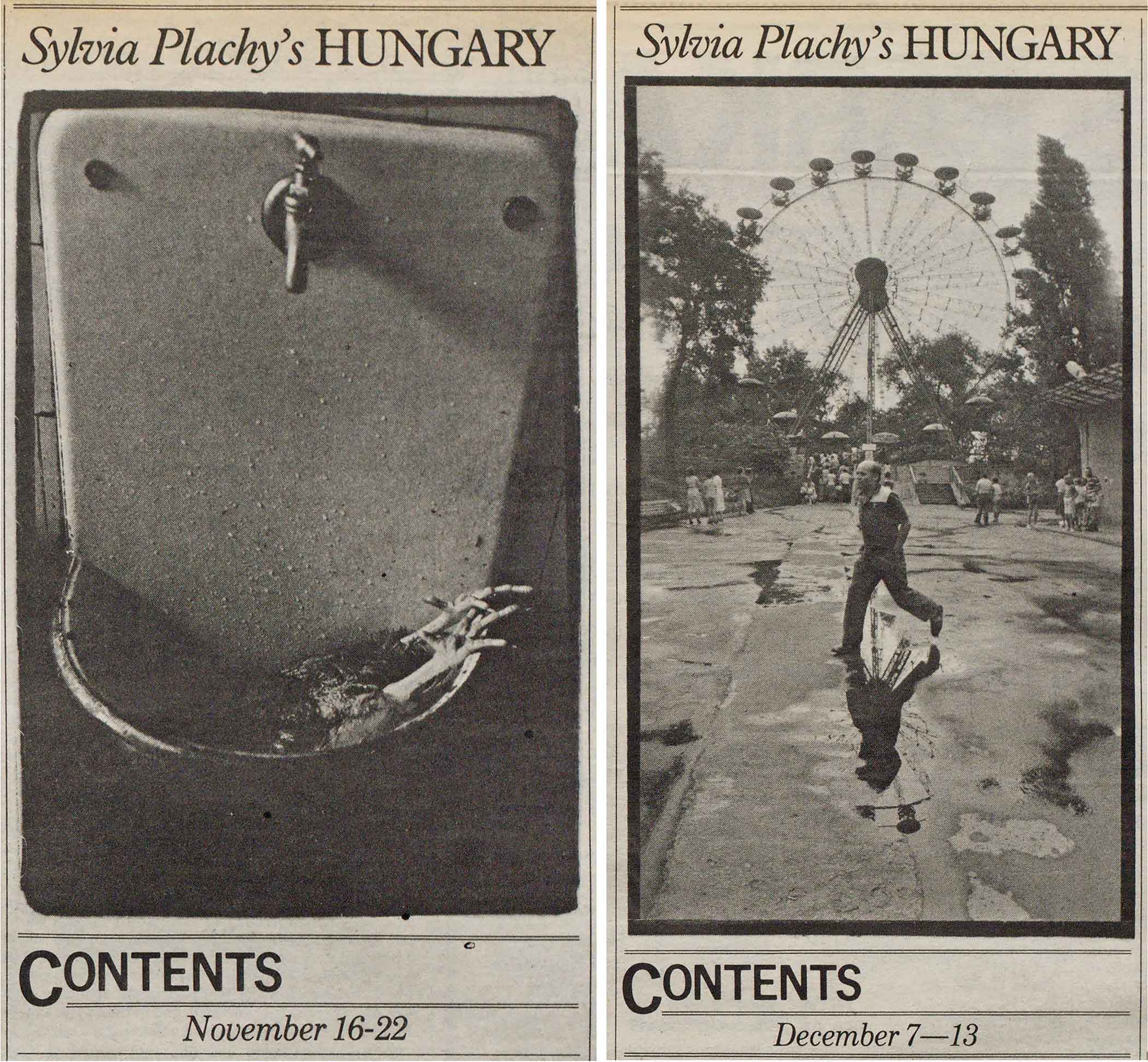
As her son’s career rolled onto this foundational track, Plachy began colonizing the Voice Contents page with individual photos that stretched into weeks- and even months-long visual essays. In 1983, she went back to her roots, and from mid-November until the end of December the paper hosted a single picture per issue of “Sylvia Plachy’s HUNGARY.” One tableau from the old country — replete with contrasting arches and a pedestrian galvanized by his reflection — clearly paid homage to Cartier-Bresson’s exhortation to wait until just that exact right moment to press the shutter button.
To ring in 1984, Plachy went to Booth Memorial Hospital, in Flushing (now NewYork-Presbyterian Queens) for her “EMERGENCY” series, which lasted into mid-March and chronicled doctors and nurses converging on patients, ambulance attendants on emergency calls, near abstractions of hospital equipment, naked feet contrasting with heavy-soled work shoes, seemingly disembodied bodies, a nurse letting off steam.
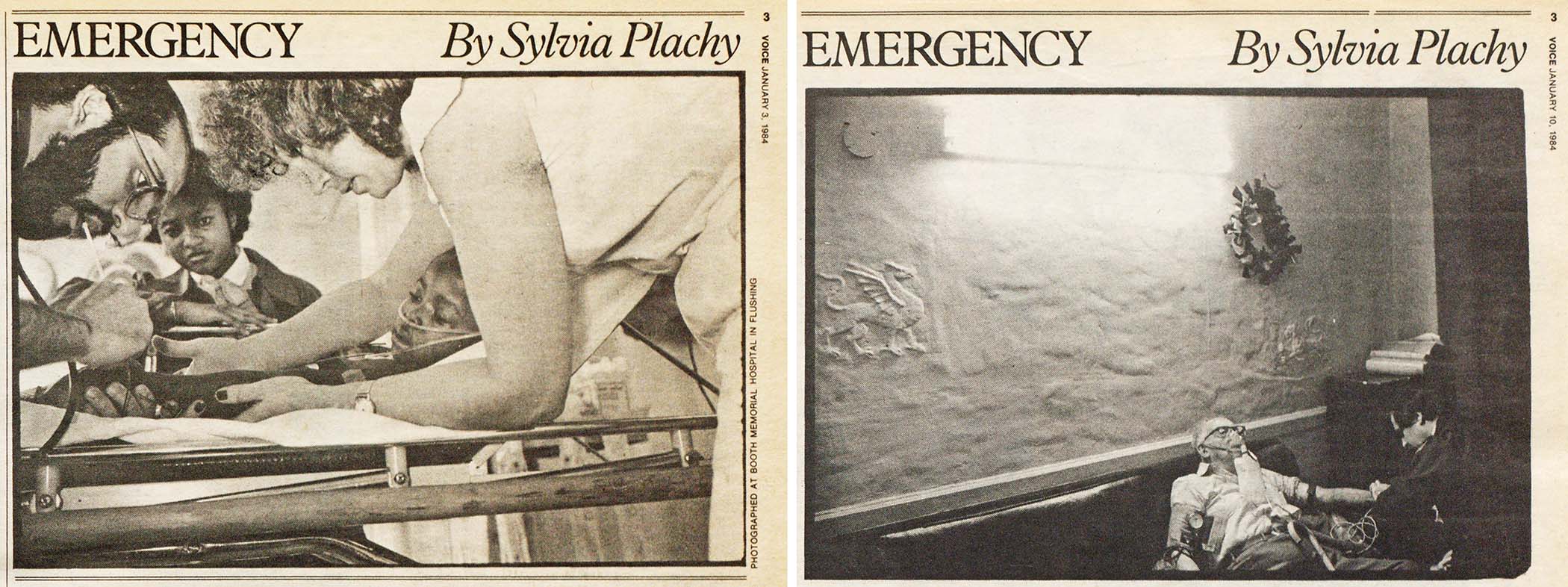


The expansive drama of Plachy’s compositions arrives when she shifts her viewfinder just enough to, for example, transform a strip of heavy molding into a vibrant diagonal supporting the head of an elderly man collapsed in a hallway, as a glaring fluorescent light fixture casts an incongruous bas-relief of a dragon into a specter. Was a 10- or 11-year-old Adrien along for that trip? In his dressing room, Brody mentions a particular memory from his days tagging along with his mom:
When I see things, I don’t capture it through an image, but I do capture all these wonderful idiosyncratic human things at opposition to one another, and I remember them, and I try to internalize that. And they stay with me. Witnessing the hands of a homeless person decades earlier played into my portrayal in The Pianist of a man whose sole form of expression and livelihood comes from the use of his hands, that have now been deteriorated through cold and starvation and fear and become brittle and inoperative. And then, in that final moment when he meets the German officer, to have to kind of come to terms with that and witness — I look down at my hands and have to kind of will them back into life. That only comes from my understanding of distilling that image and burning it into my own brain — being the darkroom.
The Pianist is, of course, the 2002 film about the Polish pianist and composer Władysław Szpilman’s harrowing experiences during the Nazis’ brutal occupation of Warsaw. For his portrayal of Szpilman, Brody put himself on a severe diet, lost 30 pounds, isolated himself (to the detriment of his relationship at the time), and practiced the piano four hours a day in order to convincingly appear as a world-class musician on film. At age 29, he became the youngest-ever winner of an Oscar for Best Actor.
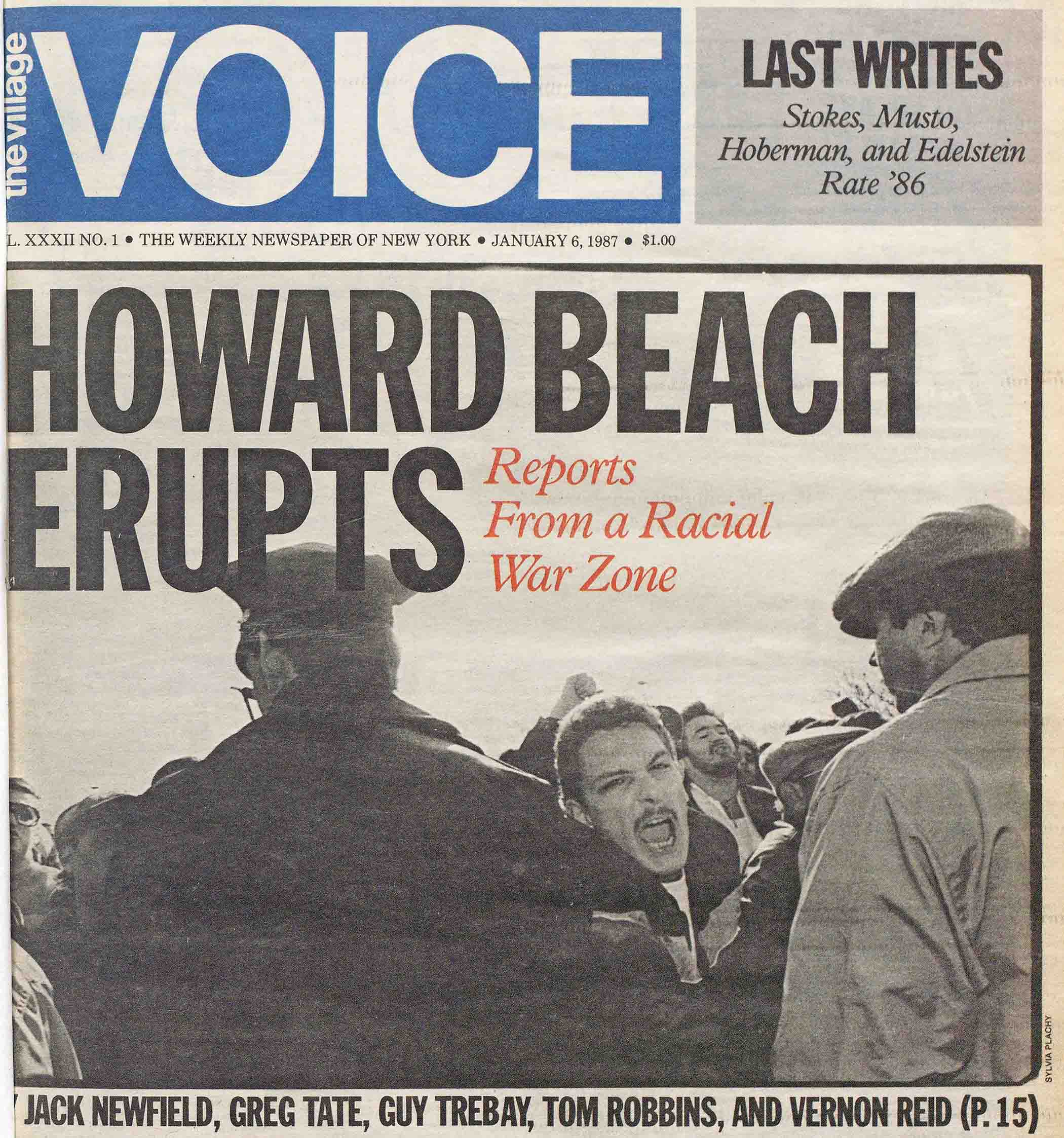
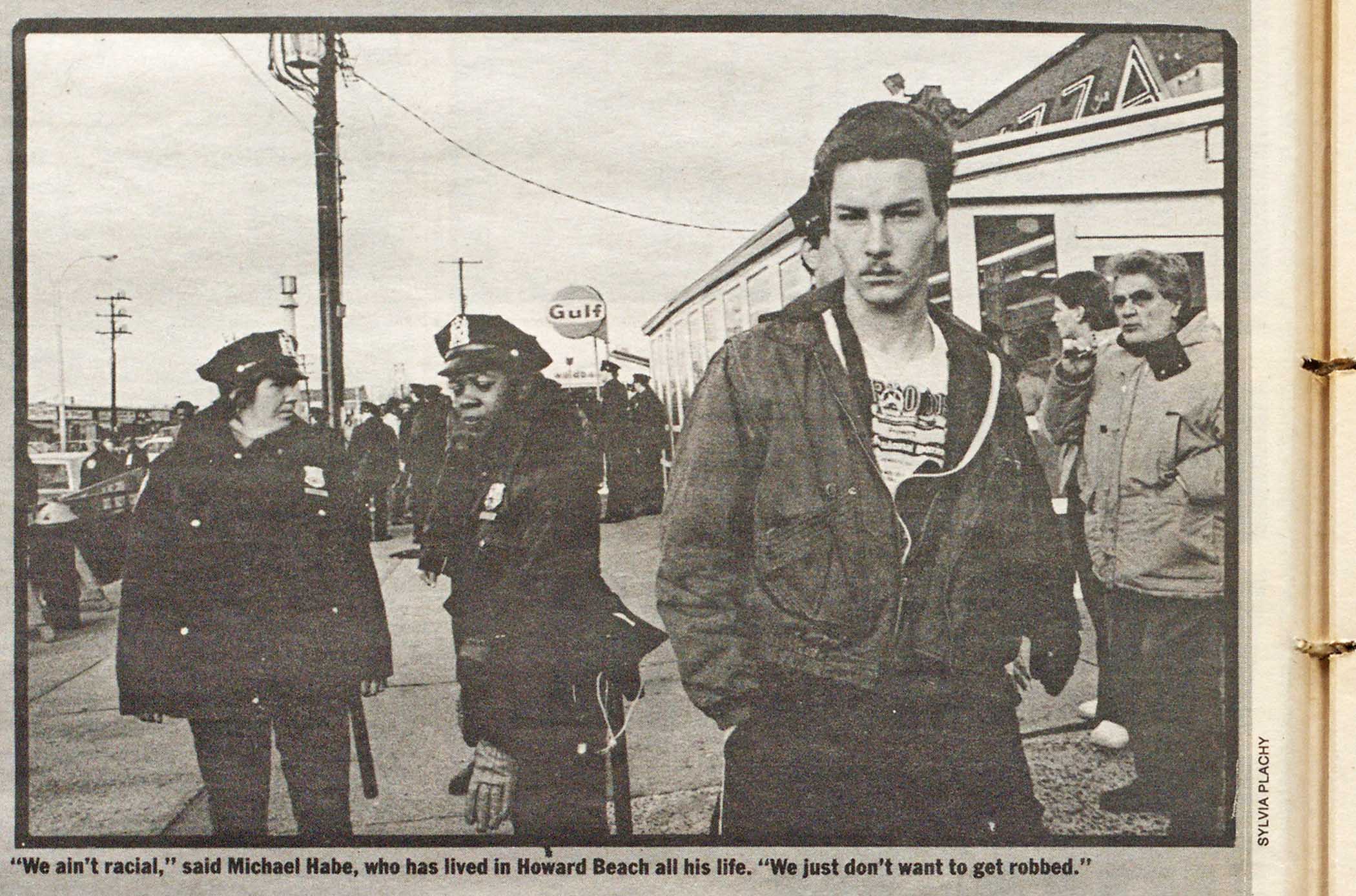
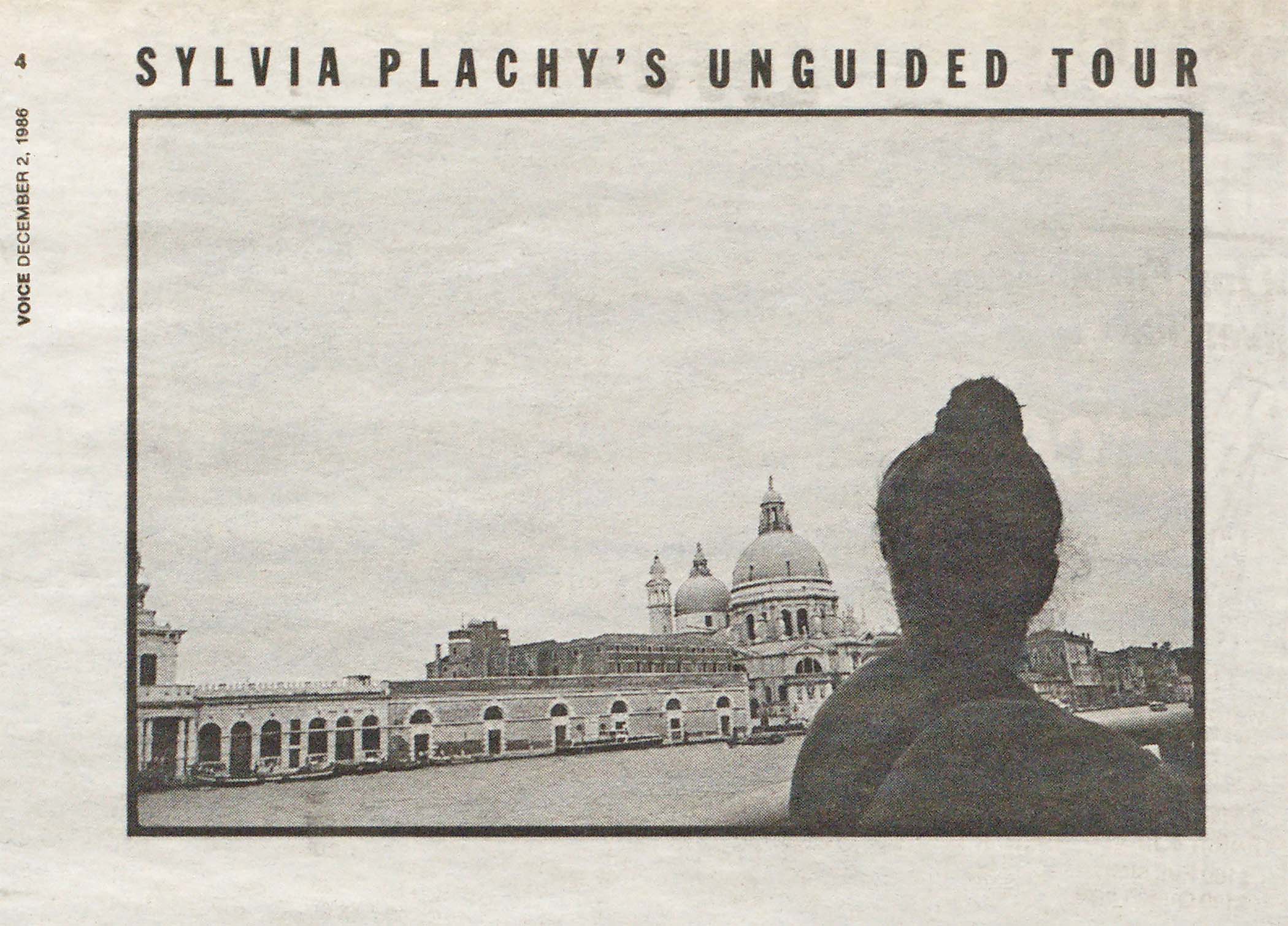
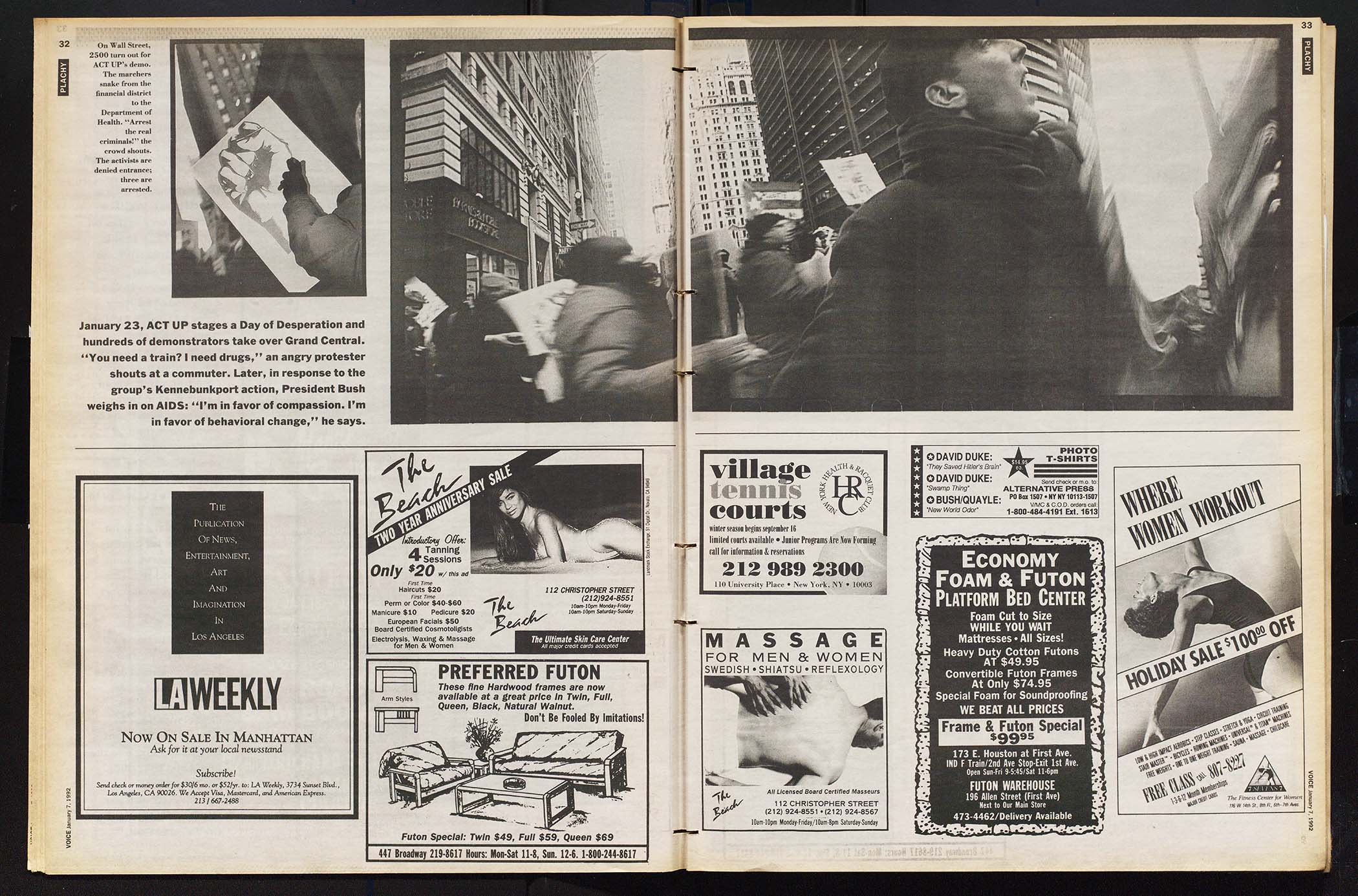
If Brody had long been guided by his mother, so had Voice readers. The title “Unguided Tour” first appeared on December 2, 1986, after roughly a decade of Plachy exploring the city’s most serendipitous byways. During this period, however, Plachy was also hitting the streets to do hard news reporting. Her photos from the December 1986 march through Howard Beach to protest the killing of a young Black man, Michael Griffith, by a white mob, capture faces contorted by hate and smoldering with resentment. The frames are chockablock with compelling detail, such as a Black and a white cop patrolling the scene together and — cranking the metaphor meter to 11 — a distant “Gulf” gas station sign. The first Voice edition of 1992 included a 12-page wrap-up of the previous year with a twist in the headline: “Sylvia Plachy’s Guided Tour of 1991,” which featured shots of refugees from the first Iraq War, oil fires in Kuwait, ACT UP demos, the Crown Heights riots, and muscular women trying out for the American Gladiators TV show.

In the spring of 1993, Plachy’s son’s face, now becoming known through small parts on TV and film — could there be a more apt title for his big-screen debut than 1989’s New York Stories? — appeared once again in the pages of the nation’s OG alternative weekly, as serene headshots atop an ambiguous altar. Later that year, a new editor-in-chief at the Voice would spike Plachy’s showpiece, a move that so incensed other staff members that the photographer was included on a list of demands printed on a union T-shirt during labor negotiations, through which members demanded first and foremost “Mo’ Money” (inspired by the 1992 Damon Wayans–scripted film), then “Mo’ Healthcare,” followed by other essentials, wrapping up with “Mo’ Plachy.” Whether it was union agitation or just good taste in the art department, Plachy remained on the masthead and continued shooting for the Voice through the mid-aughts, but she was also placing more and more work in other publications.

By the late ’90s, Brody’s career had kicked into high gear, and he was building on whatever luck had come before with a ferocious work ethic in preparation for his roles. One wonders if perhaps he revisited his mother’s most intense photos to prep for the character of Ritchie in Spike Lee’s sensational 1999 movie, Summer of Sam. With spiked hair (and later, a blond mohawk that would do a table saw proud), Brody nails the character of an Italian Bronx townie who wants to better himself by adopting a punk attitude and affecting a British accent, a conceptual two-step the actor deepened through the torquing, frustrated body language of a middling musician and furtive sex hustler. SoS captures the insular insecurities of neighborhood layabouts who, riled by a serial killer’s random attacks, turn their suspicions — and baseball bats — on anyone who doesn’t hew to the prevailing ethos of disco decadence on Saturday nights and hungover Mass on Sunday mornings. One clueless CBGB patron gets righteously stomped for being a Red Sox fan, and the Bronx yokels speculate that Reggie Jackson’s number 44 might mean he’s the “.44 Caliber Killer,” which they need to keep under wraps until after the Series. Back in 1977, Brody was too little to know just how brutally screwy the city of his early youth was, but one can easily wonder if his mother’s photos, forever capturing his hometown’s vexed contradictions, influenced his coruscating performance.

Brody did tell me of another influence from those years: “My father has provided a great deal of guidance and insight,” he explains, adding that Elliot Brody “has made me thoughtful and made me more empathetic than I would have been had I had a gruff dad.” Brody then points out that his dad is “a remarkable painter, he’s self-taught. He has wonderful creative potential that he probably couldn’t apply so freely because he was busy teaching and feeding our family.” (Elliot Brody — who is from the Bronx — and Plachy still live in the same house in Queens that Adrien grew up in.) With this mention of painting, our conversation turns to Brody’s own work in the visual arts — large-scale pop-cult mash-ups suffused with the energy of a hit-and-run graffitist bombing construction plywood or a D train in the Bronx back in the day — and I ask if, when he’s acting, he thinks about the volumetric space great painting can achieve, if he considers how his own body is relating to other actors and objects in a scene.

“Very much,” he replies, adding that he’ll sometimes propose things to a director “that can very much pertain to the composition or where my character fits in and how that can be more dynamic, or how certain shots can be more dynamic.” He goes on to point out that he “started drawing and painting on contact sheets and test prints of my Mom’s as a boy,” mentioning an image his mother took of Jean Michel Basquiat, which he subsequently enlarged, then painted and collaged on.
A bit later, Brody returns to his father’s influence:
I did a wonderful movie called Detachment with [director] Tony Kaye. If you haven’t seen it, you should see it. It’s a very small film about our dysfunctional public education system. My father being a public school teacher made me have some insight into that space, and me being a disciple of public schools in New York also spoke to that. And I play this wayward substitute teacher, who in spite of all of his own problems is really kind of there for these kids in a way. And it’s really a lovely movie, and Tony was the D[irector of] P[hotography] as well, so he operated and directed. We were hand-in-hand together, collaborating and conspiring to make things as meaningful as possible, and so I do anything that I can do — and he’s a very beautifully visual person as well — anything that I can do to aid that in my own work, my proximity with the lens. But there’s much more flexibility when you have a filmmaker like that, who is quite experimental and open to finding things together.
Indeed, Detachment includes some striking urban tableaux — a bus ride that might be a peepshow in Hell, a conversation against a red-painted brick wall as stark as a Barnett Newman canvas — and twists teen angst, hand-me-down cruelty, and adumbrated hope together like strands of bittersweet taffy.
That 2011 film landed roughly between Brody’s two Oscar triumphs. The second came in 2025, for his monumental portrayal of László Tóth in The Brutalist, a visual feast that leavens visions of stark architecture, sweeping green landscapes, subterranean labyrinths, misty slabs of marble, and other dynamic settings with human flesh that is by turns frail, broken, and defiantly resilient. An epic immigrant’s saga, it recalls the Plachy family’s own escape from war-ravaged Europe and Soviet tyranny.

When Brody was in rehearsals for his Broadway debut this past spring, his mother was there with her camera, further interweaving two generations of artistry. Brody’s rough-hewn character, Nick, hopes to beat various charges by helping the cops solve a much more serious crime. Less street-smart than stupidly optimistic, Nick rats out an acquaintance he believes to be dead as the perp of a vicious rape and murder:
DETECTIVE: Jimmy Brisbois got an airtight alibi. He’s clean, sober, and innocent.
NICK: Wait, hold on, Jimmy Brisbois is alive?
CAPTAIN: Wait, hold on. You thought he was dead?
NICK: No, nope. Wait, hold on — never mind that! You were saying?
DETECTIVE: His brother’s dead. Joey. Not Jimmy.
NICK: Fuck. Fuck everybody in Philly’s with the same damn sounding name.
Oh yeah, Philly’s a rawboned town, and of course the cops think they now have their man. Nick ends up on death row, where he meets an idealistic, if naive, advocate, Jacki, who informs an assembly of inmates, “We are just checking to see if the people on death row here are being treated fairly … Are you? Treated fairly?”
The answers are predictably profane, but when Nick tries to get over by grafting a gloss of literature onto his own sob story, the well-educated Jacki calls him out, saying, “That’s Catcher in the Rye.”
Surprised, he says, “Yo, you read that book…? I’ve never known anyone who’s read that book.”
To which she replies, “I’ve never known anyone who hasn’t.”
And so the first strands of what will be an improbable — but based on a true story, so there — romance begin their entanglement. When he discovers that Jacki is not a lawyer but a PhD student in poetry, Nick opines, “I like Charles Bukowski as much as the next guy, but poets aren’t who you want working your exoneration.”
What might, however, exonerate Nick is DNA evidence, a new science at the tail end of last century, when the real events in playwright Lindsey Ferrentino’s tale took place. The story slaloms through such setbacks as missing autopsy material, mishandled samples, and busted open packages: “I’m goin’ to the electric chair because — because of fucking FedEx?!”
Brody mixes pathos with patter, giving the gloomy story of a usurped life a glow around the edges, conveying his innocence through a gallows humor we all can relate to, especially in our age of ever-lengthening Internet trails: “All I’m guilty of was being a really dumb kid.…”
Whether seated in a cone of light, caught in a downpour, swaggering around a Florida pawnshop, or just slouching through his off-kilter life, Nick is on an unguided tour of fate, and when a bit of utterly unselfish love unexpectedly comes his way after so much has been taken away, you might perhaps grasp why Brody wanted to play this demanding role eight times a week.

Back in 1996, Sylvia Plachy was moving beyond the Voice, placing work in such pubs as The New Yorker, Granta, Fortune, and The New York Times Magazine; she’d already published one book devoted to her photos and more would come, as would numerous exhibitions, awards, and accolades. Along with this artistic success she has, for decades, sent out an annual holiday card to family, friends, and colleagues, the photos featuring her son as a character in her New Year’s wishes.
In ’96, Adrien Brody was not yet a star, but unlike the character he’s currently playing on Broadway, his horizons were wide and promising as he relentlessly worked on his acting chops. As we wrap up our discussion in his dressing room, I pull out a card his mother had sent out back then. He was delighted to see it: “I remember that. How lovely. That’s an amazing photograph. Look at that picture. This kind of dreaming, and they’re almost like thoughts, and each one of them is looking at the viewer. I’m gazing off, and dreaming.” ❖
The Fear of 13
James Earl Jones Theatre, 138 West 48th Street
Through July 12