




The Russian invasion of Ukraine in February 2022 was supposed to be an easy win for President Vladimir Putin. Eight years earlier, Russian soldiers had invaded eastern Ukraine, gained control of two cities, Donetsk and Luhansk, and annexed the Crimean Peninsula in just one month. In the aftermath of the invasion, many commentators predicted that Ukraine’s capital city, Kyiv, would fall to Russian soldiers in a matter of days. However, when offered evacuation by the U.S., Ukrainian president Volodymyr Zelensky retorted, “The fight is here; I need ammunition, not a ride.”
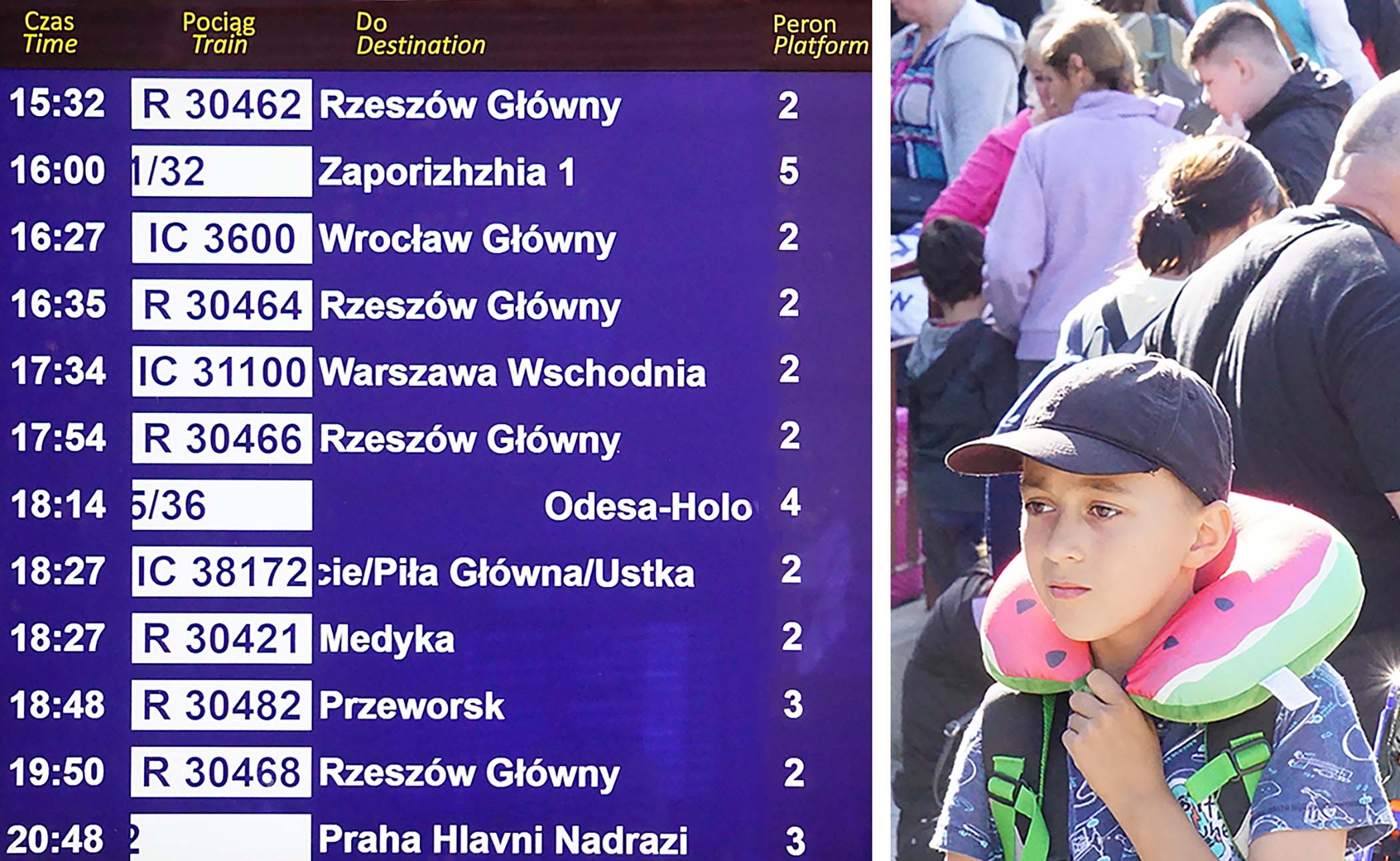
February 24 marks the two-year anniversary of the largest land war in Europe since World War II. No Ukrainian has been spared impact by the conflict, which has leveled entire towns, displaced 10 million, killed at least 10,000 civilians, and injured another 18,500.
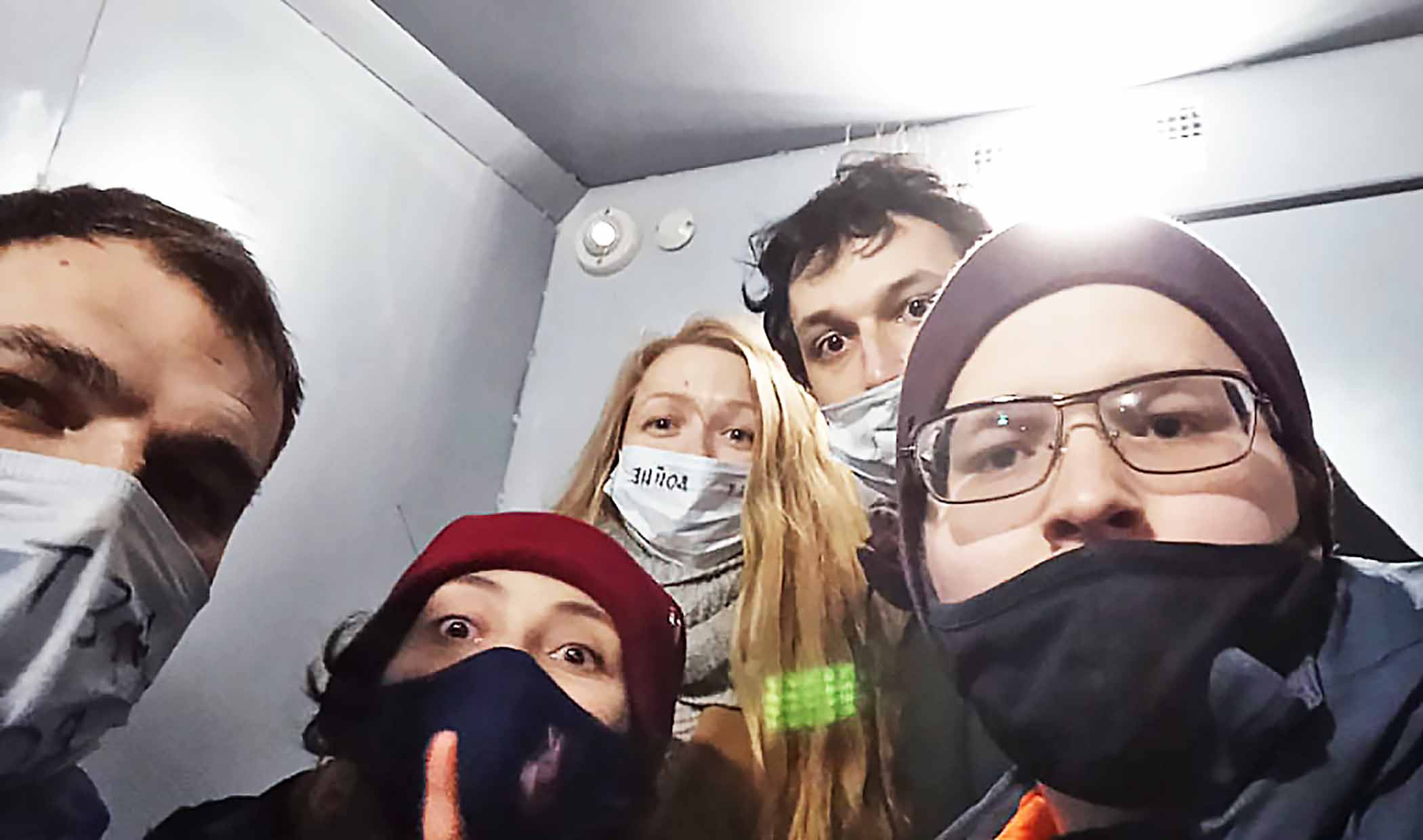
But in the darkness of war, Ukrainians have banded together to support their country and its people. Over the past two years, the Voice has corresponded with Ukrainian soldiers, volunteers, municipal workers, and civilians caught in a country in conflict. In light of the anniversary of the war, we reconnected with some of our previous correspondents to learn how their lives have changed since we last spoke.
A Soldier’s Life
The sound of explosions was one of the first things many Ukrainians heard in that early morning of February 24. Russia was attacking Ukraine from all sides, and shortly after that, fighting erupted on the streets of the country.
Detcom, a techno-DJ turned soldier who the Voice interviewed in August 2022, joined the territorial defense in Kyiv on the first day of the war. He had never been in combat before, but found himself on the frontlines of Kyiv as Russians fought for control of the city. One month later, Ukraine’s military was able to push Russian soldiers out of the Kyiv region.
“I could have never imagined this would happen to me. I see fear, pain, death, but I am here to the end.”
Since then, Detcom has served the 206th battalion of the 241st brigade as an infantryman and drone operator. Currently, instead of fighting in the trenches he is providing psychological support for his fellow soldiers. Detcom has served on the southern Kherson and Mykolaiv frontlines, in Kharkiv, the eastern city nearest the Russian border, and in the eastern Donbas region, an on-again off-again hotspot of military conflict since 2014. In February 2023, Detcom’s brigade was deployed to the suburbs outside Bakhmut, a city in Donbas that was the epicenter of the war for months. Weeks later, Detcom’s brigade pulled out of the Bakhmut area. In text messages, Detcom told me that his brigade “knew it would eventually come to this, because Russians have almost infinite human resources and we don’t. We had to pull [out], losing territory but saving lives of soldiers.”

After Bakhmut fell, in one of the bloodiest battles of the war, the lines of defense moved to nearby towns and cities, such as Chasiv Yar, a 26-minute drive away and a focus point for Russian troops. Further regions in Donbas, such as Kramtorsk and Siversk, have increasingly become more dangerous over the past year.
On February 15 of this year, Detcom texted that his brigade was being sent to Avdiivka, a town that had become the next Bakhmut, to try to stop Russia from taking control of the city. At the time, Detcom spoke to a friend who had been fighting there recently, who said, “Everything is simply destroyed there, the numerical advantage of manpower is seven [Russians] to one [Ukrainian].” According to Detcom, his friend described Bakhmut as a “walk in the park” compared to the current situation in Avdiivka.

Three days later, on February 17, President Zelensky announced at the Munich Security Conference that Avdiivka had fallen to Russian soldiers. Detcom sent a video message to me while he was driving a military car. “We didn’t have a chance to go [to Avdiivka]. We were still packing.” He said that he did not know where his brigade would go next, and that they were waiting to hear from their commander: “I’m just trying my best to be useful to my unit and, therefore, my country.” He then added, “Everybody’s exhausted by the war, the military, civilians, the whole world seems exhausted. Yet, we don’t have any other chance than fight. Because Russia has to be stopped.”
Winter Is Coming
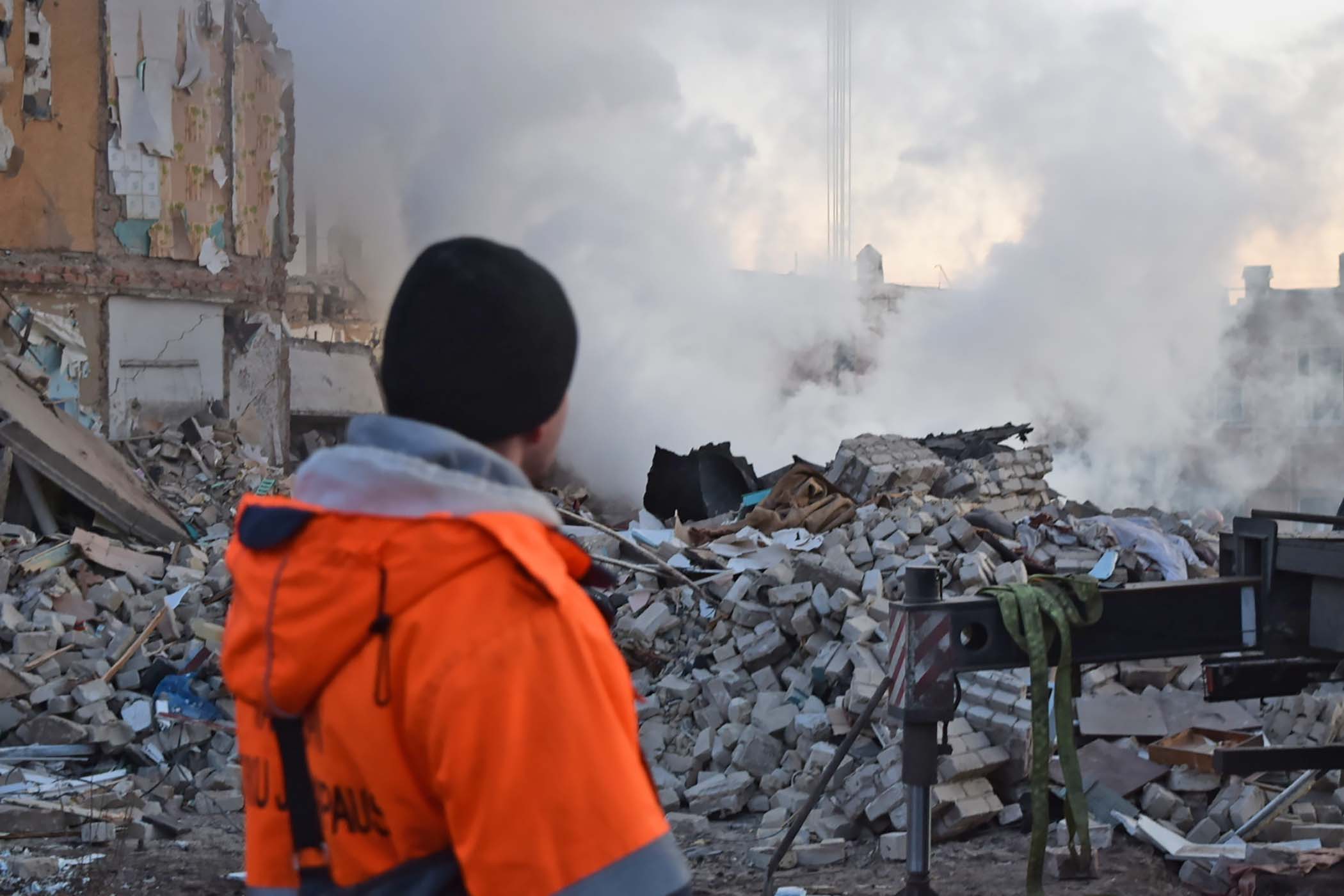
Russian attacks have ravaged cities across Ukraine in 2024, with new damage being recorded seemingly every day. About 18 miles from the Russian border, the Kharkiv region has been heavily impacted by attacks. In January, a barrage of missiles had hit Kharkiv and two other Ukrainian cities, in one of the heaviest bombardments since the start of the war. The attack damaged domiciles and killed at least 10 civilians. One rescue worker described the terrible scene to an Al Jazeera reporter: “We dug out a guy, alive, but his family — a wife and an eight-year-old daughter — were dead.”
The Voice has been reporting on the ground in Kharkiv for the past two weeks, and in that time air raid alarms have sounded constantly, and nearby villages have been attacked frequently. The frontlines have also been pushed to the Kharkiv region, where Kupyansk, a city that was once under Russian occupation, is again seeing fighting on its streets.

Stationed in the Kharkiv region is Vicktoria Fiognostova, a military medic with whom I first spoke in November 2022. At the time, Fiognostova was the head of the second-largest shelter for internally displaced people in Lviv, called Tvoya Opora. When I visited, the shelter was fighting to stay open amid a drop in new donations and funders, but now it has grown and is undergoing repairs to make it more comfortable for its residents.
However, Tvoya Opora is now operating without Fiognostova. She joined Ukraine’s military in 2023. “I decided to defend my country and signed a contract with the Armed Forces of Ukraine,” Fiognostova wrote to me over Telegram. She explained that she had already taken tactical medical courses before she signed up to join the military, and knew what the job would entail. Fiognostova now travels to frontline positions, where she collects wounded soldiers and takes them to the nearest medical checkpoint. “My life turned 180 degrees. I became a medic. I am engaged in evacuating the wounded and maintaining the personnel’s health,” she wrote.

The exact number of Ukrainian soldiers wounded or killed during the war is unknown, but some sources estimate that as many as 100,000 have been injured, and close to 70,000 killed. The role of military medics taking care of soldiers who have been wounded, often on frontline positions, is dangerous, as the medics can be caught under shelling as they race to the nearest hospital or medical stabilization point, located in trenches or underground bunkers equipped with medical supplies. “I could have never imagined this would happen to me. I see fear, pain, death, but I am here to the end,” Fiognostova added.
When she has a break from working on the frontlines, Fiognostova often goes to Lviv, where she can meet with the volunteers at Tvoya Opora, who have become like family to her. “We supported and helped each other. Now, my team is leading the development of another shelter. I am very proud of them. Volunteers are our strong support. Without them, we would not exist.”
Two Years Later, Are We Forgetting Ukraine?
Far from that war-torn country, in New York City, support for Ukraine has grown quieter. At the beginning of the war there were frequent protests throughout the city, calling for an end to Russia’s invasion. But much of the loudest support has died down, save for a few Ukrainian flags hanging from fire escapes and apartment windows. New York is home to 150,000 Ukrainian Americans, the largest community in the U.S., but as the war has dragged on it seems the city has moved on from Ukraine.
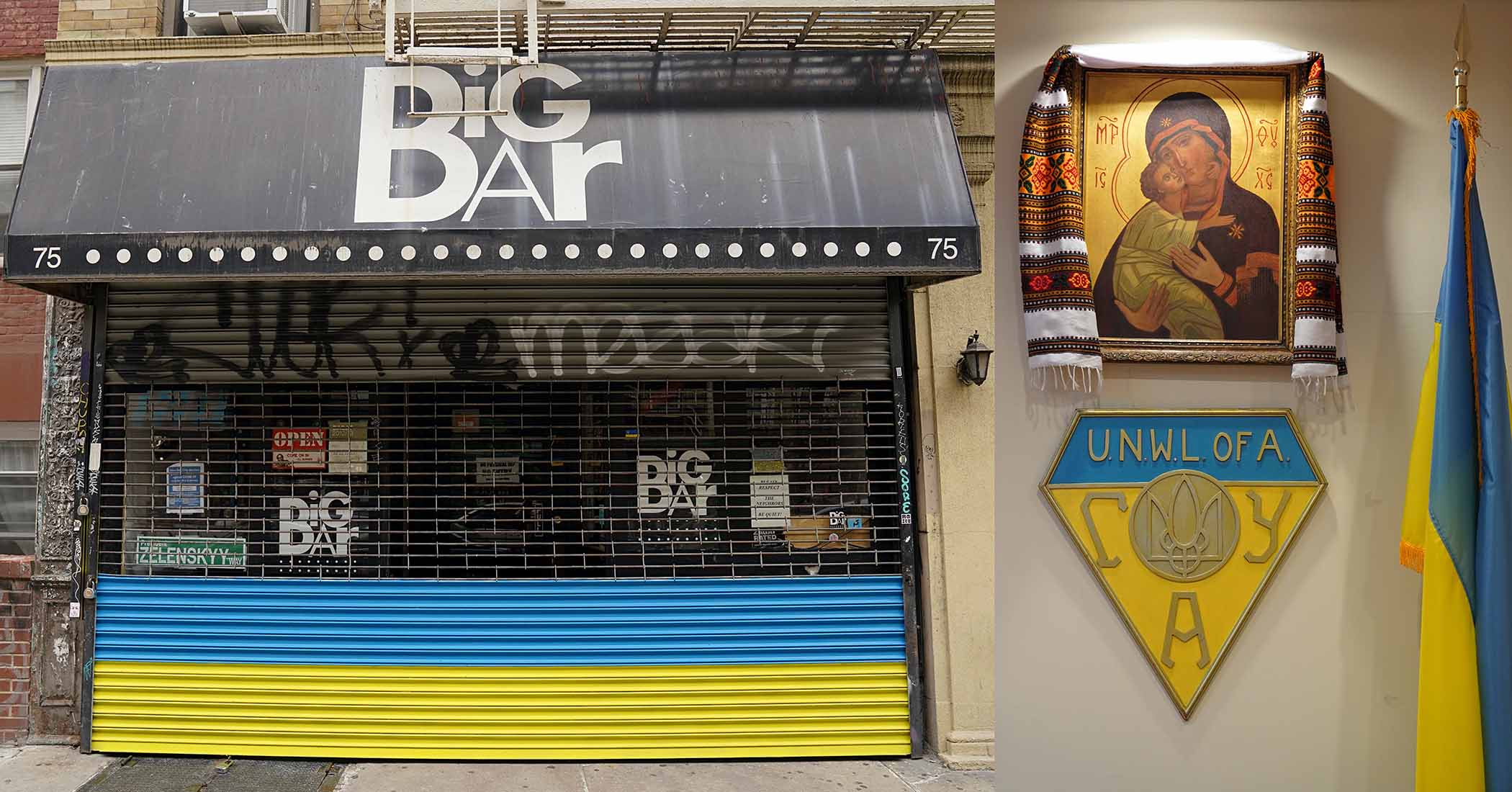
On the six-month marker of the conflict, I spoke with Natalie Pawlenko, president of the Ukrainian National Women’s League of America (UNWLA) and a first-generation Ukrainian American. When the war began, the UNWLA started getting six times the number of average donations; six months later, that number had been cut in half. “I don’t think people have forgotten about Ukraine, but they have gotten used to the status quo, as horrible as that sounds,” wrote Pawlenko in an email. “People become numb to images of violence. Yet the violence continues every hour in Ukraine. Two years of nonstop violence and numbness is the most dangerous thing.”

Although the UNWLA has seen a decline in donations over the course of the war, the organization is looking for new and creative ways to fundraise, and has increased its advocacy of Ukrainian women, the elderly, and children by showcasing Ukrainian culture. The group is also raising funds to provide medical supplies to Ukrainian hospitals, and raising awareness about the lack of new funding from the U.S. to Ukraine. New aid to Ukraine has been held hostage by Republican leadership in the House, and former president Donald Trump has said he would encourage Putin’s regime in Russia to do “Whatever the hell they want” to any NATO country that does not meet spending guidelines.
One of the most important messages Pawlenko hopes people will understand about Ukraine is that “These are just regular people who want their kids to have a peaceful childhood, adults who just want decent jobs, elders who want nothing more than to see their families thrive, and young people who are just learning about life and love.”
She adds, “If the U.S. significantly decreases its support of Ukraine, there will be disastrous consequences.” ❖
Anna Conkling is a freelance journalist based in New York City who, since the beginning of the Russian invasion, has been corresponding with and on the ground interviewing Ukrainian soldiers, students, and civilians, and writing about them for the Voice and other publications.