







American film criticism has spent the better part of the last decade celebrating “Latino storytelling” as a category worthy of serious attention, and Brazilian cinema hasn’t been absent from that conversation, with films like I’m Still Here and The Secret Agent having earned Oscar recognition and international acclaim.
But there is a difference between Brazilian stories told from Brazil and the stories of Brazilians living in the United States.
For the roughly two million Brazilian Americans in the United States, the immigrant experience, specifically the friction of straddling Portuguese and English and watching your culture disappear in your own children, has no established cinematic home.
Anna Gabriela de Mendonça, a 25-year-old Brazilian filmmaker and creative director based in the US, is making work that addresses that absence directly. Her festival-selected short Na Ponta da Língua (On the Tip of the Tongue) is not a general statement about immigration or identity. It’s a specific, deliberate film about a Portuguese-English language divide that most American audiences have never considered.
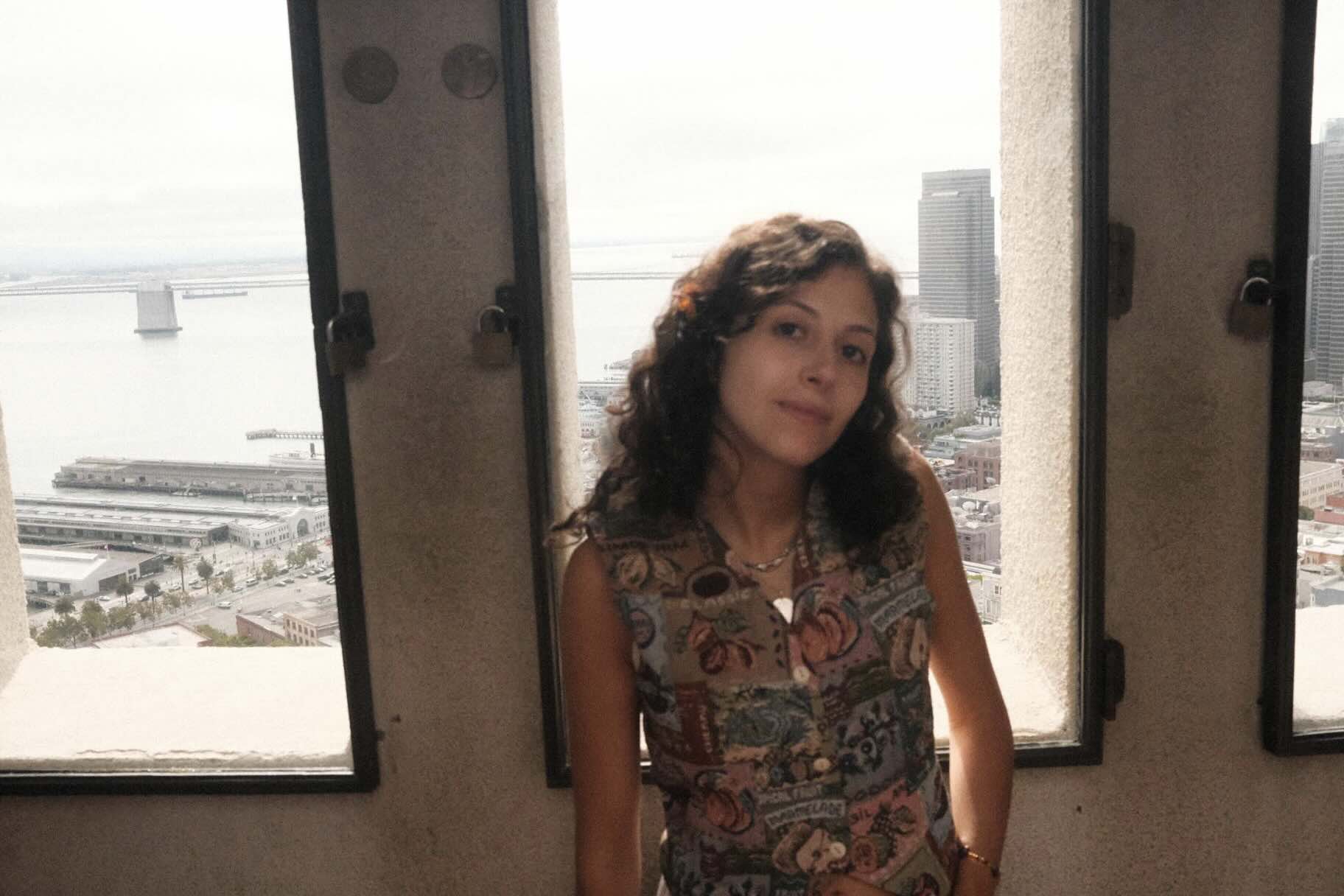
Anna Gabriela de Mendonça’s View On Brazilian-American Culture
Brazilian-Americans occupy an unusual position within the Latino category. They share a continent and, broadly, a colonial history with Spanish-speaking Latin America, but the linguistic and cultural differences are significant enough that the existing frameworks for telling Latino immigrant stories don’t naturally accommodate them.
De Mendonça encountered that vacuum firsthand after arriving in the United States. She met Brazilian Americans who did not speak Portuguese, had never been recognized within the Latino conversation, or had quietly set aside their heritage altogether. “When they think of anything regarding Latino films, people automatically think of Mexico, or any other country, but you never think about Brazilian or Brazilian immigrants, or Brazilians in the United States,” she says.
Her short, Na Ponta da Língua, takes that absence as its entire premise: a young woman who has never met her visiting grandmother from Brazil, the two of them left alone with no shared language, the girl’s rejection of her roots slowly giving way to something more fragile and harder to name.

One Granddaughter, One Grandmother, One Kitchen
Na Ponta da Língua follows a Brazilian-American girl whose grandmother visits from Brazil. The girl does not speak Portuguese; the grandmother speaks no English. Left alone together, they have no shared language at all. The resolution comes not through dialogue but through cooking, a connection rooted in something physical and inherited rather than verbal.
De Mendonça is careful to distinguish this from sentimentality. The cooking scene isn’t meant to be a warm ending tacked on for comfort, but rather a narrative argument: that diasporic identity can survive the loss of a shared language if something embodied (food, ritual, the memory held in someone’s hands ) remains intact.
“It shows how, sometimes, you can surpass the language barrier if somehow you can connect through something a bit deeper,” she explains. “It’s about her trying to understand — the young girl is someone who rejects her roots, and someone who is slowly being able to start accepting that.”
That rejection is central to the film’s architecture. De Mendonça saw the pattern repeatedly among the Brazilian Americans she met in college and beyond, people who spoke Portuguese reluctantly or not at all, who had never seen their experience reflected in the stories American cinema tells about Latino families.
“I met so many people when I went to college (and elsewhere) that I had no idea they had some Brazilian roots,” she recalls. The film draws its power from that specificity. It’s less about “the immigrant experience” in broad strokes and more about one particular silence between two people in one kitchen, built on a rupture that most American Latino narratives don’t typically address.

Stray Dog Syndrome
De Mendonça’s preoccupation with cultural rejection started early. Growing up in São Paulo, she consumed American television, wanted to be American, and treated her own Brazilianness as something to move past. She names this tendency through a concept most American readers will not have encountered: síndrome de vira-lata, or “stray dog syndrome.”
The term describes a collective Brazilian habit of admiring what is foreign while devaluing what is yours, a national inferiority complex with deep roots in Brazil’s colonial and economic history. “You always admire cultures from countries like the United States, but you never admire what you have,” she explains. “You just put yourself down.”
The concept is useful precisely because it names something that many discussions of immigrant identity tend to flatten. Assimilation narratives in American cinema typically frame cultural tension as a push and pull between two worlds. Síndrome de vira-lata describes something different: a rejection that begins before the emigration, rooted not in the pressure to fit into a new country but in a preexisting devaluation of one’s own.
For de Mendonça, the reversal happened only after she left Brazil. Arriving in the United States made her feel, as she put it, more Brazilian than she had ever felt, a paradox that transformed the way she approached her work. That arc of rejection, displacement, and eventual reclamation now runs beneath every project she takes on, whether foregrounded as in Na Ponta da Língua or embedded in quieter details elsewhere: a character’s surname, a family relocating to Brazil, a Portuguese phrase slipped into the background of a scene.

A Cinema Built on What Goes Unspoken
De Mendonça’s style seeks to prioritize showing interior states through silence, gesture, and negative space rather than exposition, something that translates to Na Ponta de Língua. A film whose central premise is two people who literally can’t speak to each other requires a director fluent in visual and nonverbal storytelling. The aesthetic isn’t a stylistic preference layered on top of the theme; the theme itself demands it.
Her creative process reflects a similar logic. She describes starting not with a plot or a thesis but with a single image, then building outward through extended brainstorming, collaborative writing sessions, and the study of reference films. She doesn’t identify as a screenwriter and treats that not as a deficit but as a philosophical position: filmmaking is collaborative by nature, and the strongest ideas emerge from multiple perspectives shaping a single vision.
Through projects like Na Ponta de Língua, Anna Gabriela de Mendonça seeks to prove the value of Brazilian-American stories and put them on the same scale and prestige as other diasporic narratives. For audiences and critics willing to look beyond the categories they have inherited, her films are a compelling place to start.
