






Peter Holsapple: Being a kid growing up in Winston-Salem, North Carolina exposed me to a lot of Southern Rock — Allman Brothers, Marshall Tucker Band, Cowboy, Wet Willie, and the like. All of whom are, of course, splendid artists each in their own right, who channeled all the joy and suffering of existing as hippies below the Mason-Dixon line in the 1970s.
But the tastes of my friend group were more directed toward what was going on in England at the time. We loved our Beatles and Kinks singles and albums, but once we discovered Shazam by the Move in 1970, we had found our Rosetta stone.
the Move never got to experience any real success in the USA, despite being chart-toppers in their homeland. Grazing the bottom of the Top 200 albums was about the best they managed two years later, but Shazam never got that far. I’d love to know that record’s sales figures to see how exclusive a group my pals and I found ourselves in.
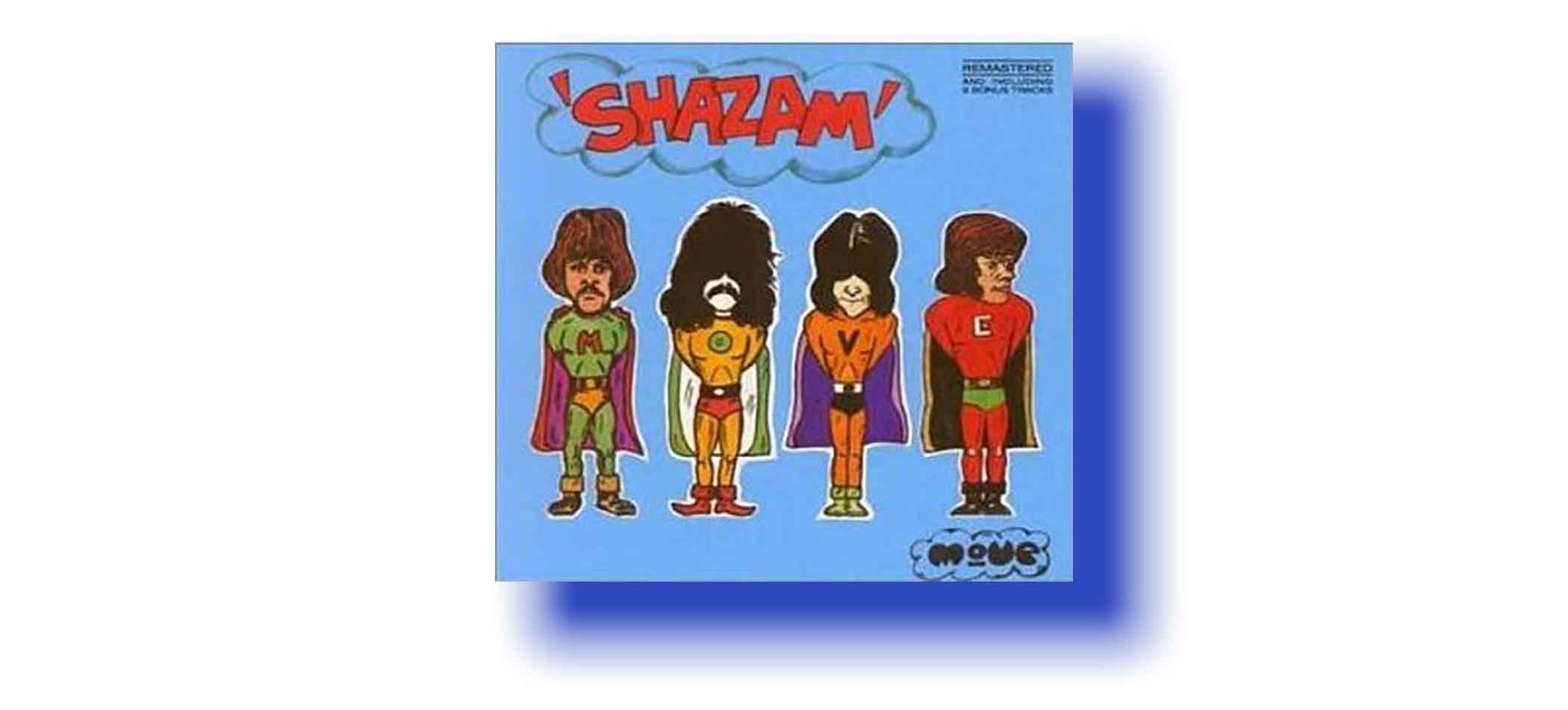
It was six songs, three Roy Wood originals on Side One, and three seemingly disconnected cover versions on the flip, all delivered with Rick Price’s growling electric bass, the off-kilter drum fills of Bev Bevan (the edges of which got sanded off somewhere around ELO’s second album), lots of 12-string electric guitars from Wood and the stylish veddy-veddy British vocals of Carl Wayne. (And some between-song comments from passers-by recorded on Great Portland Street in London.)
Shazam bears down and never lets up, even on would-be ballads like “Beautiful Daughter” that hold some elements of that gritty aftertaste of menace that the harder rocking tunes embrace, like “Hello Susie” which jumps into a 6/8 time middle-eight, stretching further afield with some Bevan tom-tom fills, drenched in a tight echo. The song in a more sanitized version was a hit for Amen Corner, sung by Andy Fairweather-Low, but said hit never equaled the nutty abandon of the Move’s original.
The centerpiece of Shazam is “Cherry Blossom Clinic Revisited,” a wayward revision of an earlier track the band had done on their debut album; with musical quotes from The Nutcracker, Bach’s “Jesu, Joy of Man’s Desiring” and Paul Dukas’ “The Sorcerer’s Apprentice” liberally ladled into the midsection of the song, the re-do stretches the original version into nearly nine minutes of musical insanity, topped by Carl Wayne’s neo-cabaret delivery of Wood’s sing-song lyrics.
And turning a Frankie Laine cover of Mann-Weil’s “Don’t Make My Baby Blue” into an exercise in glorious heaviosity highlights the disparity between Wayne’s sweet singing and the grinding electric backing track.
Overall, Shazam was and is an incredibly satisfying listening experience; fifty-four years old, and still a regular resident of my turntable. And when I play “Hello Susie” on my car stereo, the windows go down, the volume goes up and the singalong starts anew. ❖