







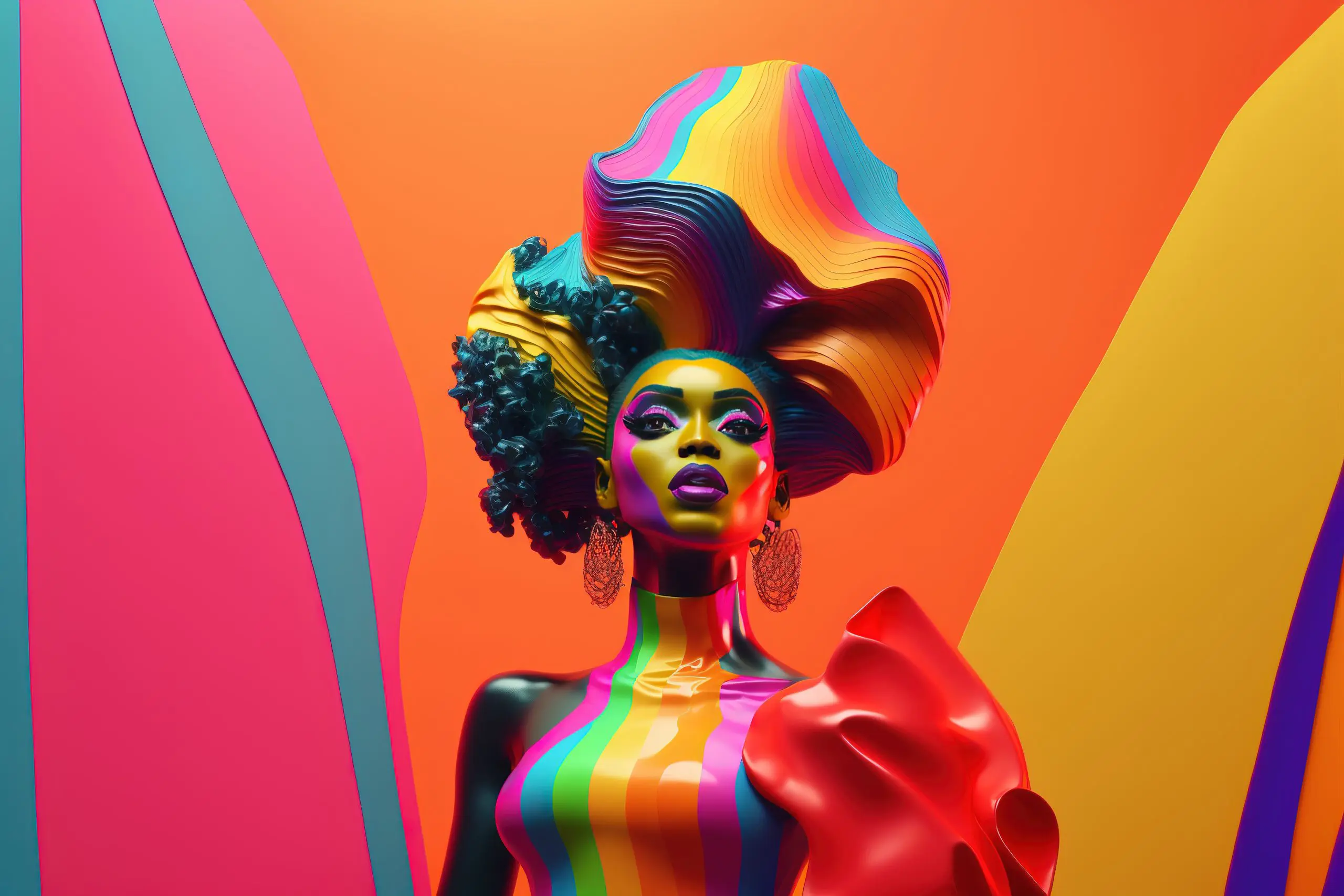
We can thank the internet for the new slangs, phrases, and words. But some aren’t exactly “new” — we sometimes use words from ballroom culture that date back as early as the 1970s. And most of these phrases came from the African-Americans and Latinx of Harlem who were members of the LGBTQ+ community.
But how far can we trace this once extremely exclusive and underground ballroom culture?
How Ballroom Culture Started
There’ve always been drag pageants decades and decades before, but in the 1968 documentary film The Queen — where a handful of drag queens were documented as they participated in Miss All-America Camp Beauty Contest — one black drag queen, Crystal LaBeija, was filmed angrily protesting about the results of the pageant (because she only managed to bag the third runner up title). She claims that the results were rigged.
Crystal LaBeija was so upset about the results of the pageant — she believed the winner (Rachel Harlow) was favored because she was white and Crystal was not. Because of this, she no longer participated in other pageants because of the discrimination towards non-Caucasian drag queens. Not long after, Crystal worked with another black drag queen and hosted the first ever ball that was exclusive to black drag queens. Eventually, they founded the House of LaBeija. This was believed to be the “birth” of modern-day balls.
Words From Ballroom Culture You Might Not Know Originated There:
Before Paris Is Burning made some words mainstream, and before RuPaul popularized them, many of the words we use came from ballroom culture.
(Throwing) Shade and Reading
Dictionary.com defines “throwing shade” as “a subtle way of disrespecting or ridiculing someone verbally or nonverbally.” But the phrase has ballroom culture roots.
In Paris Is Burning, Dorian Corey explains, “When you are all of the same thing, then you have to go to the fine point. In other words, if I’m a black queen and you’re a black queen, we can’t call each other ‘black queens’ because we’re both black queens. That’s not a read — that’s just a fact. So then we talk about your ridiculous shape, your saggy face, your tacky clothes. Then reading became a developed form, where it became shade. Shade is, I don’t tell you you’re ugly, but I don’t have to tell you, because you know you’re ugly. And that’s shade.”
Vogue
Before Madonna released the song Vogue, it was already a very-intricate and highly-stylized type of dance in the underground ballroom scene in Harlem. Voguing was inspired by Egyptian hieroglyphs and models’ poses in magazines.
To this day, voguing is still continuously evolving — it now has more acrobatic, gymnastic, and athletic moves. Thus, why voguing has categories now like “vogue fem,” “new way,” and “old way.” Some credit Paris Dupree to be the inventor of the dance vogue — but this is disputed.
Realness
Realness is a category in the ballroom scene that a person may participate in — it’s about how “real” a person may be able to pass off as whichever specific category it’s about. The most popular ones are “femme queen realness,” “butch queen realness,” “executive realness,” “military realness,” and many more. For instance, if someone walks in the “femme queen realness” category, they’ll show their best effort to look like a cisgender woman. The judges will then judge who looks the most believable among the competitors.
Yas
We’ve seen comments like “yaaas kween!” all over the web before. Some may have even commented it on your posts. But the term also has ballroom origins. This was an expression of support to other drag queens or whoever was walking in a certain category — it’s still pretty much the same to this day. Except it’s not exclusive to the ballroom community anymore — even the Oxford dictionary added the word last 2017!
Credits to the Community!
Many words came from ballroom culture and some of us aren’t even aware of it! As much as these terms and phrases seem convenient to add to our lexicon, we should all be sensitive so that we don’t end up appropriating the ballroom culture that was once a secret haven of the LGBTQ+ community.