



The Mets lowered the boom on manager Buck Showalter at the conclusion of the second year of his three-year, $11.5 million contract. After spending $45 million at the trade deadline to buy out the remaining balance of lavish contracts tendered to aging former ace pitchers Justin Verlander and Max Scherzer, plus the original $80 million for the combined 78-year-old pair’s services earlier in the season, it was chump change for owner Steve Cohen to let Buck walk off into the sunset of his managerial career with approximately $4 million in parting gifts.
In Showalter’s two seasons, the Mets compiled a 175-148 (.542) record. His brief tenure will be remembered for one good season (101-61), in 2022, and one bad season, in 2023 (74-87). Failing to live up to the heightened expectations that come with a record-setting $400-plus million payroll, it didn’t take long for this past season to dissolve in typically disappointing Mets fashion. Excluding the “Curse of the Bambino” Boston Red Sox and “Curse of the Goat” Chicago Cubs, no major league team in history has suffered the slings and arrows of outrageous misfortune and lent itself to dystopian literary treatment as consistently as the Mets during the team’s six-decade existence, dating back to 1962.
In his 1973 book The Wrong Season, poet and longtime (1969-1984) Village Voice columnist Joel Oppenheimer was put to task chronicling the New York Mets 1972 season. Writing in his signature no-caps style:
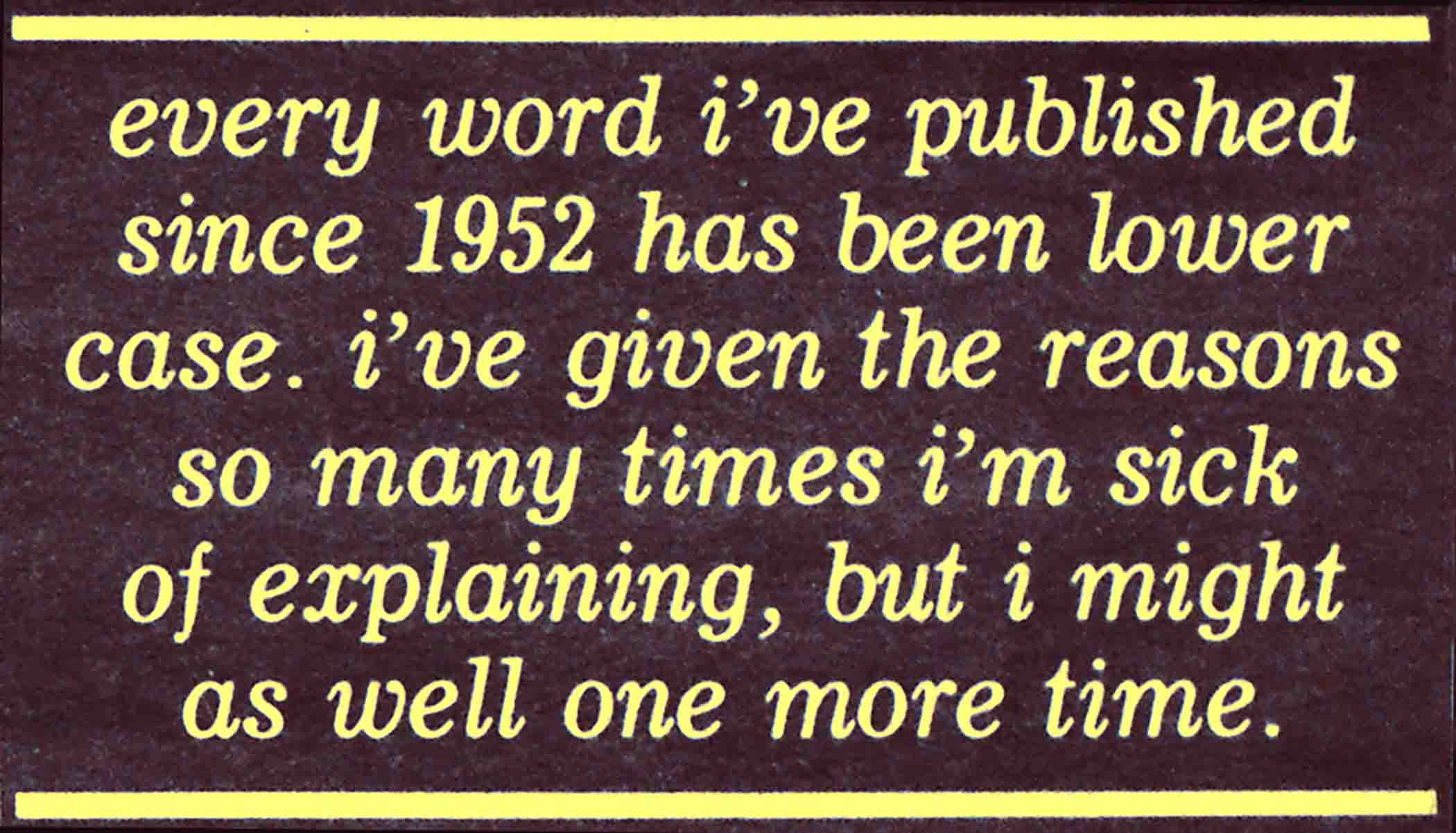
in any event I was searching for possible titles for this book and i garbled a quote. I kept thinking of shakespeare: now is the summer of our discontent, and finally I went and hauled out richard the three and there it was, only for some strange reason it said winter. oh well, you win a couple, you lose a couple, and this certainly has been the summer of my discontent, and there it is. because now is the summer, all the time. winter is the time you think about it, huddled too cold for anything else. winter sports are something they thought up so they could get all sweaty and make believe it was summer. even if it was the wrong season.
(For insight into Oppenheimer’s all lowercase prose, click on the “to tip a cap” link below.)
Oppenheimer was a bohemian poet of some renown, residing in the Village. Born in Yonkers, New York, in 1930, he bounced around academically, attending Cornell University for one year (1948) and the University of Chicago for less than one semester. He next enrolled at Black Mountain College, in North Carolina, where he studied poetry with writer and social critic Paul Goodman and poet Charles Olson and fell in with the Black Mountain Poets, a mid-20th-century group of avant-garde/post-modern poets that included beat-era contemporaries Fielding Dawson and Ed Dorn. A hopeless romantic at heart, Oppenheimer’s early and later poetry studied intimate relationships. A review of a biography of Oppenheimer, Don’t Touch the Poet (Lyman, Gilmore 1999), written by Stephan Delbos, defined his writing: “His great theme was love: Requited and Otherwise, domestic and wild, The Poetry combines tenderness with chatty intellectualism of the New York avant-garde, by way of Black Mountain’s Occam-sharp line breaks and diction.”
“the mets played like zombies that day, and I rooted like a zombie.”
Oppenheimer was also a member of the post-war New York School of vanguard artists, writers, musicians, and theater groups. He was the first director of the St. Mark’s Poetry Project, and went on to become a columnist for this paper. Back then, the Voice offices were located on Sheridan Square, above Oppenheimer’s favorite watering hole, the Lion’s Head Tavern, referred to as “The Head” by the editors of Drawing From Life, Robert J. Bertholf and David W. Landrey, in a collection of Oppenheimer’s columns from 1969 to 1984: “In February of ’69, Phillip Roth’s Portnoy’s Complaint had been reviewed in The Voice. The book and the review generated considerable discussion in The Head, with Joel at the center of it.”
According to Ross Wetzsteon, a prominent Voice editor at the time, this bar-room conversation was the impetus for the column “Oppenheimer’s Kvetch,” which first appeared on March 6, 1969. In a 1994 interview, Wetzsteon recalled the conversation: “He was obviously entertaining everybody at the table with all his jokes and comments and wry asides, and somebody suggested that he write a piece called ‘Oppenheimer’s Complaint’ and take it up to The Voice.” (The critical rap on Oppenheimer was that his paragraphs were too long. Wetzsteon limited him to 700 words made to fit in an outlined box; I’ve been afforded more than twice that here, but back-in-the-day print layouts required rigorous word counts.)
In 1972, the Mets were just three years removed from the “Miracle Mets” World Series championship of 1969. The Voice provided a perfect outlet for the intersection of his work as a poet and baseball writer. A sample of his poetry is included in Drawing From Life:
eleven years ago
i stopped making love
to watch cleon jones
put the team ahead
in a crucial gamestopped the act of love
to watch baseball
on television
a ballclub in
a pennant racenot important except
to remember committing
this act life vs art
art vs art culture vs
the individual whatevereleven years later
there is always something
embarrassing to remember
something we did that was
shameful ridiculous and
shameful something
to wish undone
but that marriage is gone
and the team won the pennant
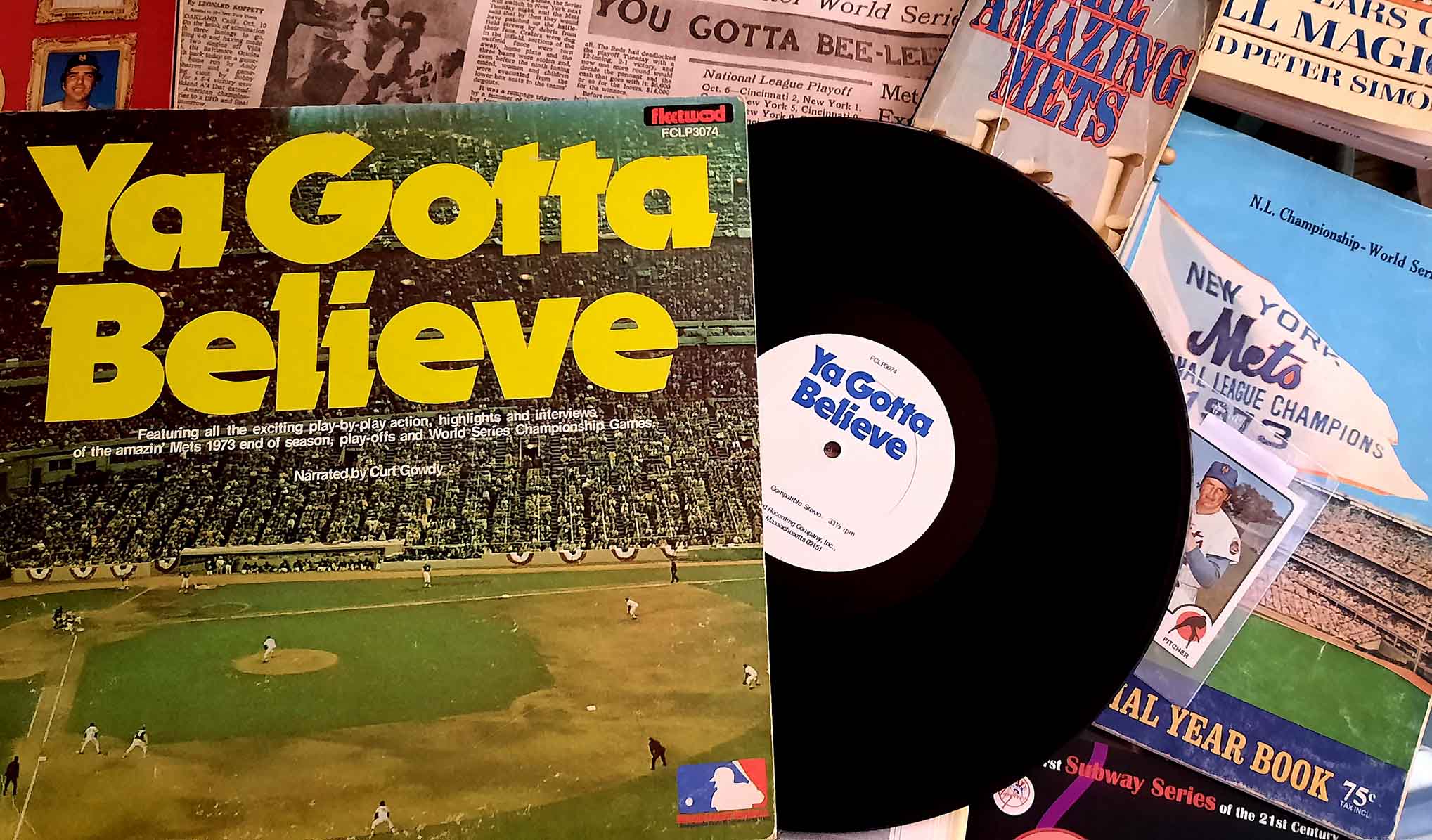
The ’72 Mets did not win the pennant. That team looked good on paper, with established frontline starters Tom Seaver and Jerry Koosman, and figured to compete in the National League race. The Mets flirted with first place during the first half of the season, but eventually finished third in the NL East, 13.5 games behind the Pittsburgh Pirates.
in august the magic ran out, or more likely, it became obvious to me that I couldn’t keep sending the waves out. nothing worked. if cleon came back and agee was close, fregosi and harrelson each came down with back problems. there comes a point at which the expenditure of energy just doesn’t pay off–not that you work magic for returns, but that fans can, i believe, supply that kind of energy, and everything will come together and the team will take off. that happened in ‘69. there were hits that fell in. eros that we forced the other team to make, breaks that “just happened,” that can be explained in no other way. some fans need the stands to do it, some can do it at home, some just walk around carrying the team with them. but each has some point where his energy gives out, and all he can do is watch. on august 3, for the first time in my life, I left a met game before the end of it. in the seventh inning of a game against philadelphia i turned to john and sais, okay let’s go…it was there that there was no zing, no excitement, no nothing. the mets played like zombies that day, and I rooted like a zombie.
That same hapless feeling was all too familiar to followers of this year’s Mets club. A horrendous 7-19 month of June sealed the Mets’ doom, prompting a trade deadline housecleaning not quite on par with 1977’s previously unthinkable “Midnight Massacre” dealing of “The Franchise” ace pitcher Tom Seaver, but a waving of the white flag just the same.
Like the ’72 Mets, the 2023 squad looked good on paper, after adding Verlander, the 2022 American League Cy Young Award–winner, to a pitching staff that included three-time Cy Young–winner Max Scherzer. The acquisitions helped make the Mets favorites to win the NL East, even if they were a little long in the tooth. But after going 3-1 to start the season, the Mets failed to get another whiff of first place after April 2.
In his fourth start of the season, Scherzer got caught with some sticky stuff on his hand and was suspended for 10 days. He finished with a 9-4 record and 4.01 ERA in 19 starts, before his trade to Texas in exchange for Braves superstar Ronald Acuña’s little brother, 21-year-old MLB Pipeline Top 100 (ranked 71) minor league prospect infielder Luisangel Acuña, prior to the trade deadline on July 30.
Verlander was 6-5 with a 3.15 ERA in 16 starts and was sent back to Houston, the site of his previous season’s glory, for a pair of minor league prospects. The Mets and owner Cohen are still on the hook for most of the money remaining on Scherzer’s and Verlander’s salaries, but lowered the team’s 2024 payroll by $13.5 million and saved another $12.5 in payroll tax.
By the time a doubleheader drubbing (21-6 and 6-0) was administered, on August 12, by the Braves, it was all over but the crying.
At the end of the 1972 season, Oppenheimer opined:
the season ended. The mets were severely ensconced in third place and about the only thing that could be said was that their percentage was better than the yankees. Praise god for small blessings.
This year’s wrong season was worse. The Mets finished 74-87, securely ensconced in fourth place, 29.5 games behind the Braves and just 3.5 games in front of last-place Washington. And the Mets couldn’t fall back on having a better record than a lowly fourth-place Yankees team.
At approximately $5.4 million per win, the 2023 Mets were the worst team money could buy — the worst cost-per-win ratio of any team in major league history. ❖
Baltimore-based Charlie Vascellaro is a frequent speaker on the academic baseball conference circuit and the author of a biography of Hall of Fame slugger Hank Aaron. His writing has appeared in the Washington Post, the Baltimore Sun, the Los Angeles Times, the Chicago Tribune, and other publications.