





Editor’s note: Joel Oppenheimer, who wrote for the Voice from 1969 to 1984, was told by his editors that his paragraphs were too long, so they limited him to 700 words inside a black box. Below is his column from the April 13, 1972, issue of the paper.
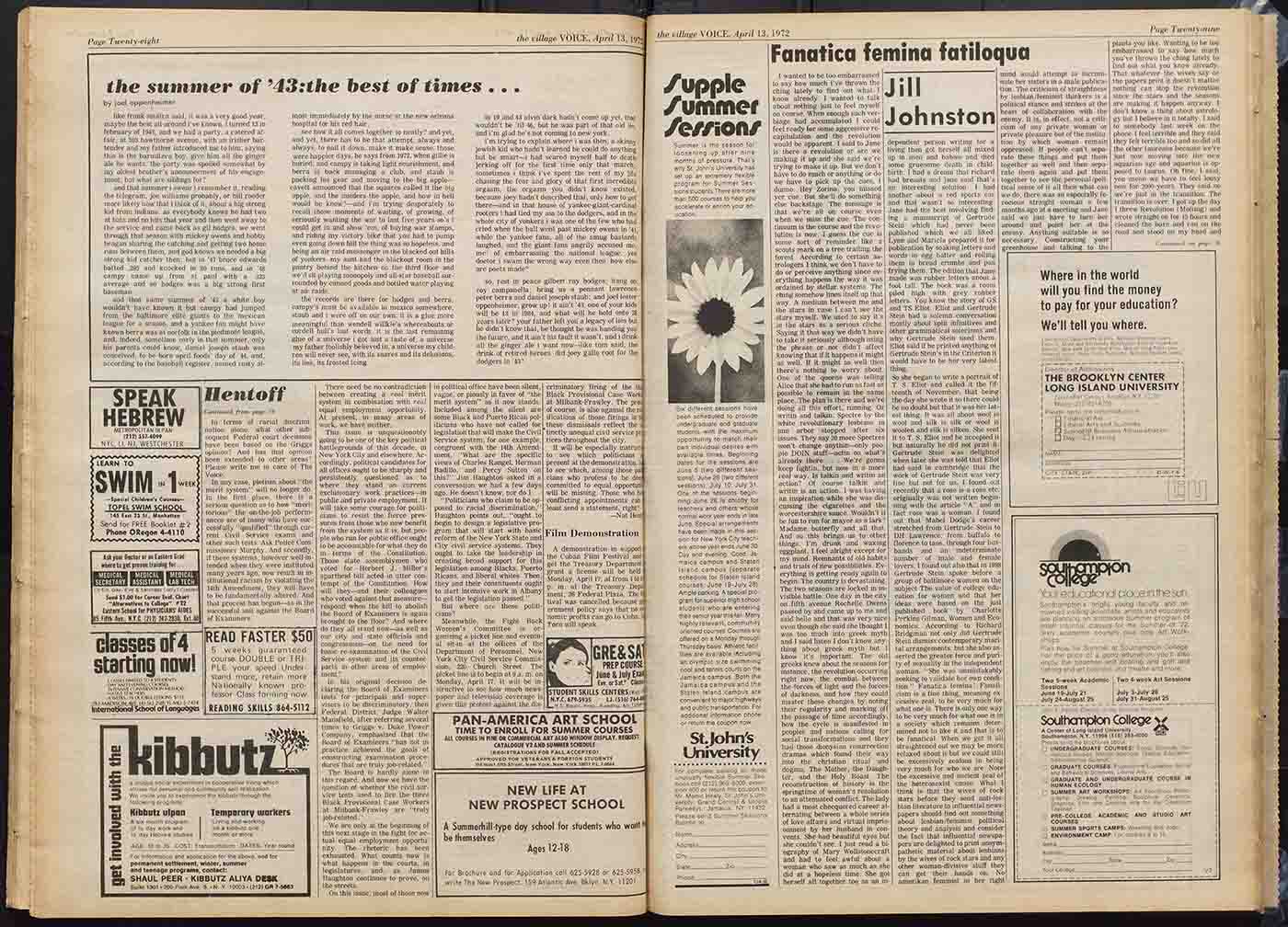
the summer of ’43: the best of times . . .
like frank sinatra said, it was a very good year, maybe the best all-around i’ve known. i turned 13 in february of 1943, and we had a party, a catered affair, at 303 hawthorne avenue, with an irisher bartender and my father introduced me to him, saying this is the barmitzva boy, give him all the ginger ale he wants. the party was spoiled somewhat by my oldest brother’s announcement of his engagement, but what are siblings for?
and that summer i swear i remember it, reading the telegram, joe williams probably, or bill roeder more likely now that i think of it, about a big strong kid from indiana. as everybody knows he had two at bats and no hits that year and then went away to the service and came back as gil hodges. we went through that season with mickey owens and bobby bragan sharing the catching and getting two home runs between them, and god knows we needed a big strong kid catcher then; but in ’47 bruce edwards batted .295 and knocked in 80 runs, and in ’48 came up from st paul with a .325 average and so hodges was a big strong first baseman.
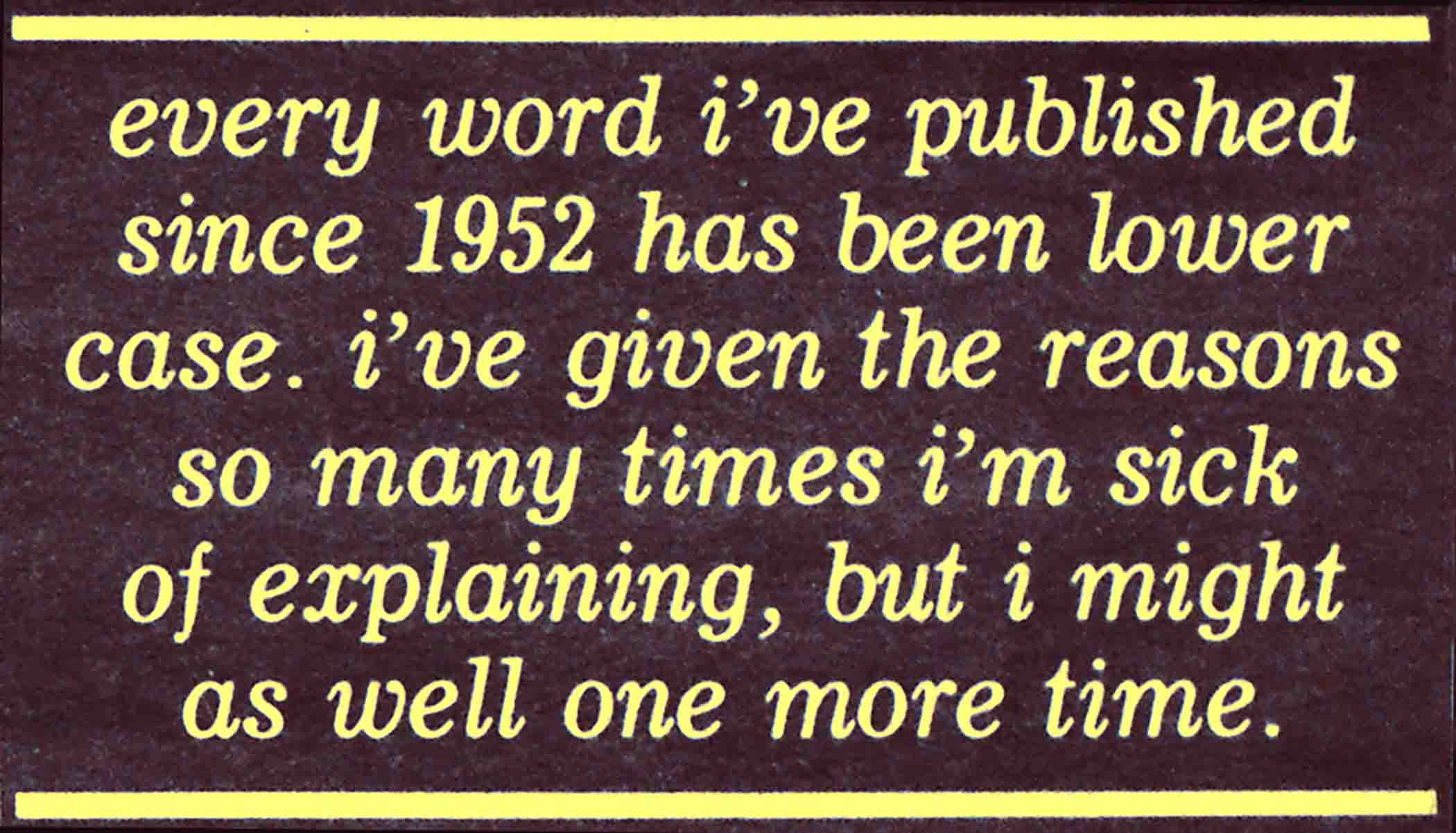
(For insight into Oppenheimer’s all lowercase prose, click on the “to tip a cap” link below.)
and that same summer of ’43 a white boy wouldn’t have known it but campy had jumped from the baltimore elite giants to the mexican league for a season, and a yankee fan might have known berra was at norfolk in the piedmont league, and, indeed, sometime early in that summer, only his parents could know, daniel joseph staub was conceived, to be born april foods’ day of ’44, and, according to the baseball register, named rusty almost immediately by the nurse at the new orleans hospital for his red hair.
the yankee fans, all of the smug bastards laughed
see how it all comes together so neatly? and yet, and yet, there has to be that attempt, always and always, to nail it down, make it make sense. those were happier days, he says from 1972, when gillie is buried, and campy is taking light nourishment, and berra is back managing a club, and staub is packing his gear and moving to the big apple — cavett announced that the squares called it the big apple, and the insiders the apple, and how in hell would he know? — and i’m trying desperately to recall those moments of waiting, of growing, of seriously wanting the war to last five years so’s i could get in and show ’em, of buying war stamps, and riding my victory bike that you had to pump even going down hill the thing was so hopeless, and being an air raid messenger in the blacked out hills of yonkers. my aunt had the blackout room in the pantry behind the kitchen on the third floor and we’d sit playing monopoly and all-star baseball surrounded by canned goods and bottled water playing at air raids.
the records are there for hodges and berra, campy’s must be available in mexico somewhere, staub and i were off on our own. it is a glue more meaningful than wendell willkie’s whereabouts or cordell hull’s last words. it is the last remaining glue of a universe i got just a taste of, a universe my father foolishly believed in, a universe my children will never see, with its snares and its delusions, its lies, its frosted icing.
in 19 and 43 alvin dark hadn’t come up yet, that wouldn’t be ’til ’46, but he was part of that old lie, and i’m glad he’s not coming to new york.
i’m trying to explain where i was then, a skinny jewish kid who hadn’t learned he could do anything but be smart — i had scared myself half to death jerking off for the first time only that march; sometimes i think i’ve spent the rest of my life chasing the fear and glory of that first incredible orgasm, the orgasm you didn’t know existed, because joey hadn’t described that, only how to get there — and in that house of yankee-giant-cardinal rooters i had tied my ass to the dodgers, and in the whole city of yonkers i was one of the few who had cried when the ball went past mickey owens in ’41, while the yankee fans, all of the smug bastards laughed, and the giant fans angrily accused me, me! of embarrassing the national league. yes doctor i swam the wrong way even then. how else are poets made?
so, rest in peace gilbert ray hodges; hang on, roy campanella; bring us a pennant lawrence peter berra and daniel joseph staub; and joel lester oppenheimer, grow up! it ain’t ’43, one of your kids will be 13 in 1984, and what will he hold onto 28 years later? your father left you a legacy of lies but he didn’t know that, he thought he was handing you the future, and it ain’t his fault it wasn’t. and i drink all the ginger ale i want now — like tom said, the drink of retired heroes. did joey gallo root for the dodgers in ’43?

❖ ❖ ❖