







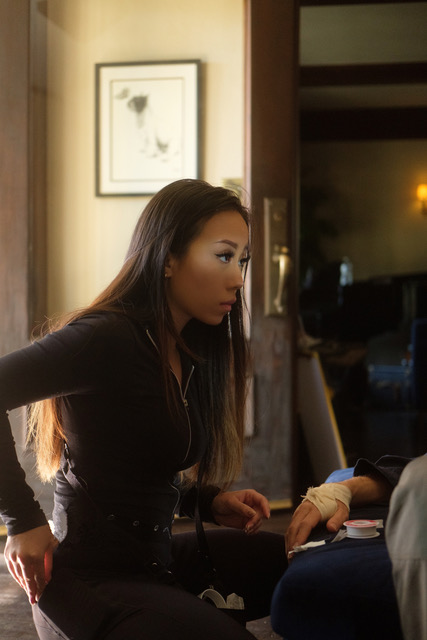
The arts and sports might be the only modern industries which are truly a meritocracy. In both, there is no sustaining a career without the talent and skill to back it up. Film producer Yuxing Lei has been establishing herself for years with a string of respected Indie films which focus on the unique aspects of people and cultures who might be under appreciated. From Bad Secret (Official Selection of the 19th Annual Chinese American Film Festival) to Snow Whisper (featuring Kathryn Kelley of the Primetime Emmy Award–Winning Series Homicide: Life on the Street) to Over Easy (featuring Alexandre Chen of multiple Oscar Award–Nominated film Babylon), and others, Yuxing is committed to exposing viewers to the deeply moving and even sometimes absurd situations of those among us. A producer is often the unsung hero of a film production, the person who does the most behind-the-scenes to brighten the spotlight on those whose work is most visible. Ms. Lei explains what motivates her declaring, “I see myself as an artist who strives to create universal stories — narratives that can emotionally resonate with people, regardless of where they come from. I believe that, at the heart of it, every filmmaker is engaged in the process of telling universal stories. That’s because human emotions — love, fear, loss, joy, hope — are inherently shared experiences. No matter what language we speak or what culture we come from, these feelings are deeply familiar to all of us. That’s what makes storytelling such a powerful form of art: it connects people on an emotional level that transcends boundaries. At the same time, I recognize that each storyteller has a unique perspective shaped by their personal background and experiences. The way we approach a story, the themes we emphasize, the characters we choose to develop — all of that reflects who we are. So while I don’t see myself as someone who imposes a particular viewpoint or agenda on the audience, I also acknowledge that my voice and vision naturally influence the work I produce.” In the hopes of understanding more of the role of a modern-day film producer working with within the Indie film world, we’ve posed a number of questions to Yuxing about her experiences and approach in this rapidly evolving environment.
While Hollywood may be the most widely recognized film capital of the past century, China, India, and London have certainly grown in both size and respect as filmmaking industries. What attracted you to Hollywood and to pursuing work here?
Yuxing Lei (YL): Hollywood has always held a unique allure for me—not just because it’s the historical heart of the global entertainment industry, but because of the international and artistic environment it fosters. Hollywood offers a level of creative convergence and infrastructure. First and foremost, Hollywood is a melting pot of global talent. During my time working here, I’ve had the extraordinary opportunity to collaborate with filmmakers, artists, and technicians from all over the world—Japan, South Korea, the UK, India, and beyond. That kind of international interaction brings a magical creative energy that is hard to replicate elsewhere. It’s incredibly inspiring to be in a place where diverse perspectives and storytelling traditions are not only welcomed but actively integrated into the filmmaking process. Moreover, Hollywood offers a highly developed, professionalized ecosystem for filmmaking. The resources available here are unparalleled. Whether you need high-end equipment rentals, specialized production supplies, or simply the perfect shooting location, Los Angeles provides everything a filmmaker could possibly need. For example, something as specific as a certain type of chair for a production setup can easily be sourced locally. This accessibility to both major and minor production elements allows for a smoother workflow and higher production value, especially for independent or international filmmakers trying to bring their visions to life. Finally, what truly drew me to Hollywood was its deeply ingrained artistic atmosphere. There’s a passion for storytelling here that’s palpable. The level of craftsmanship, the dedication to innovation, and the respect for both traditional and experimental narratives create a powerful environment for creative growth.
Over the past decade we have seen many Chinese born film professionals, both in front of the camera and behind it, involved in American films. Do you feel that this is a sign of eventual global cross-pollination of artists in the industry, a willingness of American audiences to embrace diversity, an increase in the talent available from the world, or something completely different?
YL: I believe that the global cross-pollination of artists in the film industry didn’t just begin in the past decade — it started much earlier. Many renowned filmmakers and talents in Hollywood have come from all over the world. For example, directors like Alfred Hitchcock and Alejandro González Iñárritu are from outside the U.S., and Ang Lee brought Crouching Tiger, Hidden Dragon to the Oscars over 20 years ago. Jackie Chan’s Rush Hour was also a co-production between different countries. So, this trend of international collaboration is not new. However, with the rise of the internet and streaming platforms, American audiences today have more access to global content. For instance, Squid Game on Netflix became a worldwide hit. I personally had the opportunity to work at a popular Mini-drama platform called ReelShort. One of the projects I worked on, Fake Married to My Billionaire CEO, received over million views on ReelShort. With the success of platforms like ReelShort, I believe vertical films and short-form episodic content could become a new form of filmmaking. This format suits the smartphone era, where people consume content quickly and on the go. The mini-drama industry in China actually started earlier than in the U.S. and has grown rapidly. I see strong potential for this format to take off in the U.S. as well, especially as viewing habits continue to shift. So, while diversity and increased talent from China are part of the equation, the real driving force might be the evolution of platforms and global audience behavior.
Let’s discuss your role as a producer who works with both American and Chinese film communities in specific terms. The film Snow Whisper which you produced has both American and Chinese members in its crew & cast. What are the obstacles that you faced in “setting the table” so that the cast and crew can create in a comfortable environment?
YL: One of the biggest challenges I faced as a producer on Snow Whisper —a project that brought together both American and Chinese crew & cast—was navigating the differences in work culture and atmosphere. People who grow up and work in different countries often have distinct expectations about how a set should run. For example, some crew members are used to a highly focused and serious working environment, while others thrive in a more relaxed, friendly, and collaborative atmosphere where everyone feels like part of a family. Neither approach is right or wrong—they each have their own strengths. But when you’re bringing together such different working styles, mutual understanding and respect become essential. As the producer, my role was to “set the table” so that everyone could do their best work without cultural or interpersonal friction. That meant encouraging open communication, making space for everyone’s voice, and sometimes even acting as a bridge to explain one team’s expectations or habits to the other. On a more practical level, I also tried to create comfort through small but meaningful gestures—like offering a diverse selection of lunches and snacks (crafty) on set, even though we were working with a limited budget. Food is a simple but powerful way to make people feel at home, and I hoped that providing options that suited different tastes could help create a welcoming and inclusive environment. Ultimately, producing a cross-cultural project means paying close attention to both the big-picture dynamics and the small everyday details that make a crew feel supported. It’s challenging, but deeply rewarding when you see everyone come together and create something special.

You were also the producer of the film To Kill the Chicken which presented a young man’s social and emotional anxiety with his family in China. Do you feel that the social issues brought up in this film are received by American and Chinese audiences in the same light? Do they react the same or differently and how is this indicative of potential material for films in the future?
YL: While the core emotional experiences in To Kill the Chicken—such as familial pressure, identity struggles, and the longing for acceptance—are universally relatable. The underlying emotions resonate with both cultures, but the context in which those emotions are experienced and interpreted can be quite different. This difference in reception doesn’t weaken the impact of the story—it actually highlights the value of cross-cultural storytelling. It shows that while cultures may differ, the emotional core of stories can create bridges. For filmmakers, this opens up tremendous potential: stories that are deeply rooted in local realities can still resonate globally if they tap into universal emotions.
As the producer of Mom is Visiting (2023 Official Selection of both the Burbank International Film Festival and LA Shorts International Film Festival) you were a part of exploring the intersect of two different generations of Chinese people and their views of marriage. In your own opinion, how are these two different perspectives accurately presented in films like this?
YL: It’s about the struggle between a new generation internationally-oriented Chinese actress and her traditional, somewhat domineering Chinese mother. Rather than focusing on cultural perspectives, the film delves deeply into generational conflict, especially around the roles and expectations placed on women. The younger generation, represented by the daughter, is redefining what it means to be a successful woman. She prioritizes her career and maintains an independent worldview, and she doesn’t feel that marriage or having children are required milestones. This stands in stark contrast to her mother’s more conventional values, which emphasize family, obedience, and fulfilling traditional roles like motherhood. One scene that illustrates this divide well is when the mother arrives unannounced and begins rearranging her daughter’s life—literally and metaphorically—out of what she believes is love and care. For the mother, this is an act of protection and involvement. But for the daughter, it feels like a form of control, undermining her autonomy and the life she’s built abroad. This dynamic is not only a reflection of generational differences within the Chinese community but also of a broader, global conversation about modern womanhood. What makes the film resonate beyond cultural boundaries is that this mother-daughter tension is universal. The emotional core of the film—the struggle to balance personal identity with familial expectations—speaks to audiences everywhere. That’s likely one reason why Mom is Visiting was selected by multiple international festivals like the Burbank International Film Festival and LA Shorts. Audiences connected with the film not because it’s exclusively Chinese, but because its themes are human and widely relatable. In short, while cultural identity and generational perspective are definitely present in the film, the real story is about a universal emotional journey—one that just happens to be told through a uniquely Chinese lens.
One of the few positive effects of the Covid pandemic was that the appetite for international films by American audiences increased. There were already indications of this with the success of films like Parasite and others but the demand for entertainment during lockdown brought a new curiosity to US audiences and willingness to explore. Would you agree?
YL: I do agree that there has been a noticeable increase in the availability and consumption of international films in the U.S. market after the pandemic. Before COVID-19, platforms like Netflix primarily offered older international content, but during and after the pandemic, the volume and variety of foreign films available expanded significantly. However, I believe this shift is not solely due to the pandemic itself. Another major factor is the rise of short-video platforms like TikTok, which have transformed how audiences access information and entertainment. These platforms expose American viewers to global cultures more frequently and casually—whether it’s K-pop, viral mini-dramas, or other trends from overseas. This broader exposure has cultivated a new curiosity and openness among U.S. audiences to explore international content. So, while the lockdown and increased home entertainment demand definitely played a role, the digital landscape’s evolution and social media’s global reach have been equally, if not more, influential in driving the growing appetite for foreign films in America.
What does the future hold for Yuxing Lei in a professional sense? Do you see your future in the US or somewhere else? What is calling to you?
YL: I want to be an international filmmaker. I studied filmmaking in the United States, so I’m most familiar and comfortable with the American way of filmmaking. My training has focused on Hollywood-style production, from how crews work together on set to how stories are developed and told. This has become the foundation of my creative and technical skills. Hollywood is known around the world for its high standards in filmmaking. Its production quality, storytelling techniques, and professional systems have influenced film industries globally. I also hope to work on films in different countries and explore global stories. I want to be an international filmmaker.
Is the role of a producer evolving? Do you feel that it’s different from what is has been traditionally?
YL: I believe the role of a producer today remains largely the same as it was ten or even twenty years ago. While the tools and platforms may have evolved, the core responsibilities and creative influence of a producer have remained constant. A producer has always been — and still is — the person who holds the project together, ensuring that the creative direction is supported by practical execution, managing logistics, coordinating with various departments, and keeping everything on track financially and temporally. Even with technological advancements such as digital production tools, streaming platforms, or remote collaboration software, the essence of the producer’s role hasn’t fundamentally changed. It’s still about balancing the creative with the logistical, bringing the best out of the team, and making sure that the final product aligns with the original vision. Producers still need to have strong leadership, communication skills, and the ability to problem-solve in real time — and that’s something that has been true in every era of production.
I’m going to return to my earlier question about your future. What’s right in front of you now that you are excited about?
YL: Looking ahead, I’m especially excited about participating in more mini-drama series. I believe this format represents one of the most popular directions in today’s content landscape. As audiences evolve, there’s an increasing demand for compact, emotionally rich storytelling — and mini-series are meeting that demand with creativity and efficiency. What draws me to this format is its flexibility and room for innovation. With fewer episodes and shorter runtimes, creators are pushed to focus on the essence of the story, making every scene intentional and impactful. This opens up opportunities to experiment with tone, pacing, and structure in ways that longer formats might not always allow. Additionally, I’ve noticed that mini-drama series are becoming more diverse in theme and style — from character-driven dramas to genre-bending narratives. This growing variety inspires me to think more boldly about the kind of stories I want to help bring to life. My hope is to contribute fresh perspectives and creative ideas that push the boundaries of what this format can do.